ExamBharo · SSC MTS 2023 — 8 September 2023, Shift 2 · exambharo.com/ssc-mts/previous-year-papers/ssc-mts-2023-8-sep-shift-2/
Question paper · SSC MTS & Havaldar
SSC MTS 2023 — 8 September 2023, Shift 2
8 September 2023 · 12:30 PM–2:30 PM83 of the paper’s 90 questions1 per correct answer
Questions from the Staff Selection Commission’s paper of 8 September 2023, 12:30 PM–2:30 PM.
Preparing for SSC MTS & Havaldar? Get more, free
Daily previous-year questions as quizzes, and every SSC MTS & Havaldar notice the day it is out.
Numerical and Mathematical Ability
1.

- (a)

- (b)

- (c)

- (d)

Show answer
Answer: (a)
- (a)
2.

- (a)

- (b)

- (c)

- (d)

Show answer
Answer: (d)
- (a)
3.

- (a)

- (b)

- (c)

- (d)

Show answer
Answer: (b)
- (a)
5.

- (a)

- (b)

- (c)

- (d)

Show answer
Answer: (b)
- (a)
7.

- (a)

- (b)

- (c)

- (d)

Show answer
Answer: (b)
- (a)
8.

- (a)

- (b)

- (c)

- (d)

Show answer
Answer: (a)
- (a)
9.
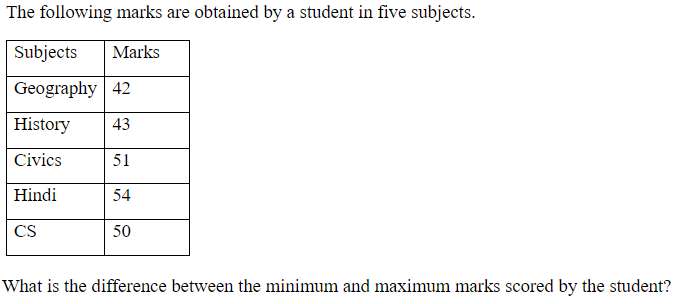
- (a)

- (b)
- (c)

- (d)

Show answer
Answer: (d)
- (a)
10.
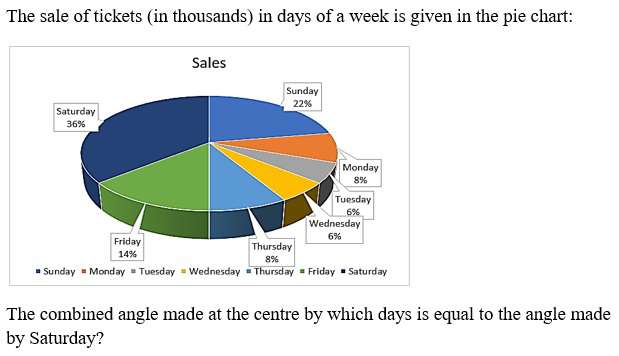
- (a)

- (b)

- (c)

- (d)

Show answer
Answer: (a)
- (a)
12. A dealer buys some goods for ₹3,600. If the overhead expenses be 5% of the cost price, then at what price should it be sold to earn 15%?
- (a) ₹4,347
- (b) ₹4,734
- (c) ₹4,437
- (d) ₹4,743
Show answer
Answer: (a)
14.

- (a)

- (b)

- (c)

- (d)

Show answer
Answer: (b)
- (a)
15.

- (a)

- (b)

- (c)

- (d)

Show answer
Answer: (c)
- (a)
16.

- (a)

- (b)

- (c)

- (d)

Show answer
Answer: (d)
- (a)
17.

- (a)

- (b)
- (c)

- (d)

Show answer
Answer: (c)
- (a)
18.
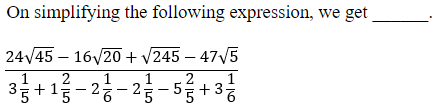
- (a)

- (b)

- (c)

- (d)
Show answer
Answer: (a)
- (a)
19.

- (a)

- (b)

- (c)

- (d)

Show answer
Answer: (d)
- (a)
20.

- (a)

- (b)

- (c)

- (d)

Show answer
Answer: (c)
- (a)
Reasoning Ability and Problem Solving
1.

- (a)
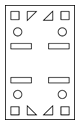
- (b)
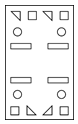
- (c)
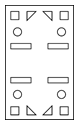
- (d)
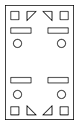
Show answer
Answer: (c)
- (a)
3.
- (a)

- (b)

- (c)

- (d)

Show answer
Answer: (b)
- (a)
4.

- (a)

- (b)
- (c)
- (d)

Show answer
Answer: (a)
- (a)
6.

- (a)

- (b)

- (c)

- (d)

Show answer
Answer: (a)
- (a)
7.

- (a)

- (b)

- (c)

- (d)

Show answer
Answer: (d)
- (a)
8.

- (a)

- (b)

- (c)

- (d)

Show answer
Answer: (d)
- (a)
9.

- (a)

- (b)

- (c)

- (d)

Show answer
Answer: (c)
- (a)
10.

- (a)
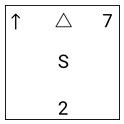
- (b)
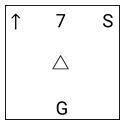
- (c)
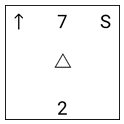
- (d)
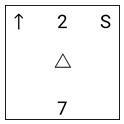
Show answer
Answer: (d)
- (a)
11.

- (a)

- (b)

- (c)

- (d)

Show answer
Answer: (b)
- (a)
12.
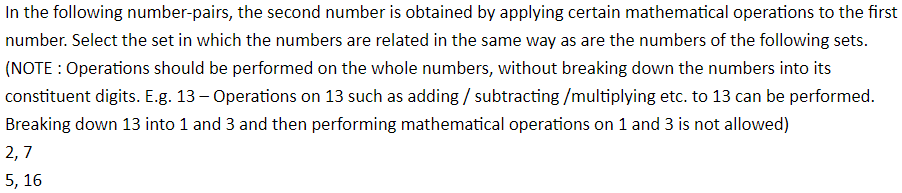
- (a)

- (b)

- (c)

- (d)

Show answer
Answer: (d)
- (a)
13.

- (a)

- (b)

- (c)

- (d)

Show answer
Answer: (b)
- (a)
14.
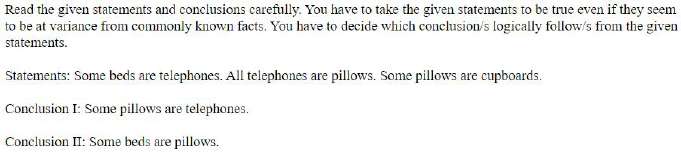
- (a)

- (b)

- (c)

- (d)

Show answer
Answer: (a)
- (a)
15.

- (a)
- (b)

- (c)

- (d)

Show answer
Answer: (a)
- (a)
16.

- (a)

- (b)

- (c)

- (d)

Show answer
Answer: (a)
- (a)
17.

- (a)

- (b)

- (c)

- (d)

Show answer
Answer: (d)
- (a)
18.
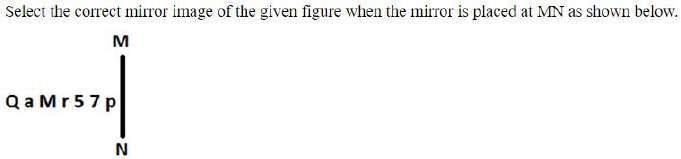
- (a)
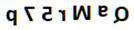
- (b)
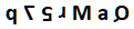
- (c)
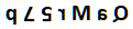
- (d)
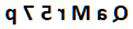
Show answer
Answer: (d)
- (a)
19.

- (a)

- (b)

- (c)

- (d)

Show answer
Answer: (d)
- (a)
20.

- (a)

- (b)

- (c)

- (d)

Show answer
Answer: (b)
- (a)
General Awareness
1. The 11th Fundamental Duty provides opportunities for education for the ______ age group of children.
- (a) 6-14
- (b) 5-15
- (c) 2-11
- (d) 6-18
Show answer
Answer: (a)
2. As per the Census of India 2011, which Union Territory recorded the lowest population growth rate?
- (a) Lakshadweep
- (b) Delhi
- (c) Daman and Diu
- (d) Chandigarh
Show answer
Answer: (a)
3. In which year were the Arms Act and Vernacular Press Act passed?
- (a) 1878
- (b) 1879
- (c) 1877
- (d) 1876
Show answer
Answer: (a)
4. In which state of India is Kaziranga National Park located?
- (a) Assam
- (b) Gujarat
- (c) Karnataka
- (d) West Bengal
Show answer
Answer: (a)
5.

- (a)
- (b)

- (c)

- (d)

Show answer
Answer: (a)
- (a)
6. By what name are the flat membrane-enclosed sacs present in the Golgi apparatus known?
- (a) Lamellae
- (b) Cisternae
- (c) Cristae
- (d) Stroma
Show answer
Answer: (b)
7. The Swarna Jayanti Shahari Rojgar Yojana (SJSRY) was launched in the year ________ by Government of India.
- (a) 1990
- (b) 1997
- (c) 2010
- (d) 2004
Show answer
Answer: (b)
8.

- (a) Science
- (b) Games
- (c) Politics
- (d) Music
Show answer
Answer: (d)
9. ‘Chapchar Kut’ is a festival from the state of _________. It is celebrated during March after the completion of the most arduous task of Jhum operation i.e., jungle clearing (clearing of the remnants of burning).
- (a) Mizoram
- (b) Nagaland
- (c) Jharkhand
- (d) Chhattisgarh
Show answer
Answer: (a)
11. In which of the following States was the 2023 World Squash Championship held?
- (a) Kerala
- (b) Tamil Nadu
- (c) Odisha
- (d) Karnataka
Show answer
Answer: (b)
12. Mumtaz Khan was named ‘FIH Women’s Rising Star of the Year’ in 2022. She plays which of the following sports?
- (a) Hockey
- (b) Fencing
- (c) Football
- (d) High Jump
Show answer
Answer: (a)
13. Which of the following is a common financial service provided by Micro Finance Institutions?
- (a) Mortgage loans for luxury homes
- (b) Investment advisory services for high-net-worth individuals
- (c) Credit card issuance
- (d) Small loans to low-income individuals for entrepreneurial activities
Show answer
Answer: (d)
14. The Rathwas, who dwell in the state of ___________, perform the Rathwa dance on the occasion of Holi (festival of colours).
- (a) Andhra Pradesh
- (b) Telangana
- (c) Maharashtra
- (d) Gujarat
Show answer
Answer: (d)
15. Which Article of the Constitution of India provides for a governor for each state?
- (a) Article 173
- (b) Article 157
- (c) Article 153
- (d) Article 156
Show answer
Answer: (c)
16. Who was the first Woman President of Indian National Congress?
- (a) Sarojini Naidu
- (b) Asaf Ali
- (c) Annie Besant
- (d) Usha Mehta
Show answer
Answer: (c)
17. _____________ was a star of the Kathak dance form described as ‘Nritya Samragini’ (the empress of dance) by Rabindranath Tagore.
- (a) Sitara Devi
- (b) Rukmini Devi Arundale
- (c) Mrinalini Sarabhai
- (d) Mallika Sarabhai
Show answer
Answer: (a)
18. Which of the following methods is used to calculate national income by summing up the total spending on final goods and services in an economy?
- (a) Value-added method
- (b) Output method
- (c) Expenditure method
- (d) Income method
Show answer
Answer: (c)
19. Former Governor of Jharkhand from the year 2004 to 2009, __________, passed away in Lucknow in 2022.
- (a) Ramesh Bais
- (b) Syed Ahmed
- (c) Syed Sibtey Razi
- (d) Kateekal Sankaranarayanan
Show answer
Answer: (c)
20. According to the IUPAC nomenclature system, which functional group is characterised by the presence of a −OH group, usually in a water-like bent shape?
- (a) Carbonyls
- (b) Amines
- (c) Alcohols
- (d) Esters
Show answer
Answer: (c)
21. Ajmer Sharif is the shrine of which of the following Sufi saints?
- (a) Mohammad Ghori
- (b) Mohammad Bin Tughlaq
- (c) Khwaja Moinuddin Chishti
- (d) Bhaktiyar Khilji
Show answer
Answer: (c)
22.

- (a)

- (b)

- (c)
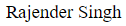
- (d)

Show answer
Answer: (b)
- (a)
23. Which of the following Carnatic musicians was the first to receive the Bharat Ratna?
- (a) Tyagaraja
- (b) MS Subbulakshmi
- (c) Syama Sastri
- (d) KJ Yesudas
Show answer
Answer: (b)
24. Which of the following is the highest navigable lake in the world?
- (a) Huron
- (b) Titicaca
- (c) Superior
- (d) Como
Show answer
Answer: (b)
25.

- (a)

- (b)

- (c)
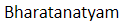
- (d)
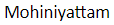
Show answer
Answer: (c)
- (a)
English Language and Comprehension
1. Select the option that rectifies the spelling of the underlined word in the given sentence. He felt priviledged to have received the country’s greatest honour.
- (a) previllaged
- (b) privileged
- (c) privilegede
- (d) privilaged
Show answer
Answer: (b)
2. Select the option that can be used as a one-word substitute for the underlined segment in the following sentence. Hundreds of people were removed from a place by the government recently due to a war-like situation.
- (a) assassinated
- (b) evacuated
- (c) invaded
- (d) terminated
Show answer
Answer: (b)
3. Select the most appropriate meaning of the underlined idiom in the following sentence. Buying a home in the city centre will cost you an arm and a leg.
- (a) Nothing extra
- (b) A large amount of money
- (c) A small amount of money
- (d) Physical pain
Show answer
Answer: (b)
4. Select the option that can be used as a one-word substitute for the given group of words. One who has love for mankind OR One who makes an active effort to promote human welfare
- (a) Philosopher
- (b) Patriot
- (c) Autocrat
- (d) Philanthropist
Show answer
Answer: (d)
5. Select the most appropriate meaning of the given idiom. From scratch
- (a) From a skin disease
- (b) From the beginning
- (c) From utter disorder
- (d) From death
Show answer
Answer: (b)
6. The following sentence has been divided into four parts. Identify the part that contains an error. (A) Four divided by / (B) two is coming / (C) out to / (D) be two.
- (a) D
- (b) C
- (c) B
- (d) A
Show answer
Answer: (c)
7. Select the most appropriate meaning of the underlined idiom. The detective went the whole nine yards in his investigation.
- (a) Measuring every step
- (b) Everything, all the way
- (c) Close affinity with the law
- (d) Taking the distant call
Show answer
Answer: (b)
8. Select the most appropriate option to fill in the blank. Many soldiers marched in ________ at the international border.
- (a) dress
- (b) uniform
- (c) fabric
- (d) clothes
Show answer
Answer: (b)
9. The following sentence has been split into four segments. Identify the segment that contains a grammatical error. This scripture / has been /translated in / seventy languages.
- (a) seventy languages
- (b) This scripture
- (c) has been
- (d) translated in
Show answer
Answer: (d)
10. Select the sentence that has NO spelling errors.
- (a) The elderly woman was delighted to receive a bouquet of fragrant flowers from her thoughtful grandson, who had come to visit her at the nursing home
- (b) The elderly woman was delighted to receive a bouque of fragrant flowers from her thoughtfull grandson, who had come to visit her at the nursing home
- (c) The elderly woman was deligted to receive a bouque of fregrant flowers from her thoughtful grandson, who had come to visit her at the nursing home
- (d) The elderly woman was delighed to recive a bouquet of fragrant flowers from her thoughtfull grandson, who had come to visit her at the nursing home
Show answer
Answer: (a)
11. Select the most appropriate option to fill in the blank. She was known for her __________ attention to detail, always making sure everything was perfectly organised and in its proper place.
- (a) fastidious
- (b) scornful
- (c) tedious
- (d) exact
Show answer
Answer: (a)
12. Select the option that can be used as a one-word substitute for the given group of words. The killing of a king
- (a) Regicide
- (b) Fratricide
- (c) Sororicide
- (d) Patricide
Show answer
Answer: (a)
13. Select the most appropriate option to fill in the blanks. (Ø = No article) ____ doctor suggested doing some eye exercises and wearing ____ pair of powered glasses.
- (a) A; a
- (b) Ø; a
- (c) A; Ø
- (d) The; a
Show answer
Answer: (d)
14. Parts of the following sentence have been given as options. Select the option that contains an error. They have less books than I have.
- (a) I have
- (b) They have
- (c) than
- (d) less books
Show answer
Answer: (d)
15. Select the most appropriate meaning of the given idiom. Into hot water
- (a) Not on good terms
- (b) In favour with
- (c) Came to nothing
- (d) Into trouble
Show answer
Answer: (d)
16. Select the most appropriate synonym of the bracketed word in the following sentence to fill in the blank. The sun was setting over the mountains, painting the sky with ________(energetic) shades of orange and pink.
- (a) vibrant
- (b) reactive
- (c) faded
- (d) bright
Show answer
Answer: (a)
17. The following sentence has been split into four segments. Identify the segment that contains an error. She was writing / a letter to her grandmother / when the power / gone out.
- (a) gone out
- (b) a letter to her grandmother
- (c) She was writing
- (d) when the power
Show answer
Answer: (a)
18. Select the most appropriate ANTONYM of the given word. Nonchalant
- (a) Flexible
- (b) Caring
- (c) Marvellous
- (d) Covert
Show answer
Answer: (b)
19. Select the most appropriate synonym of the given word. Grief
- (a) Pleasure
- (b) Jollity
- (c) Pain
- (d) Content
Show answer
Answer: (c)
20. There is a spelling error in the given sentence. Select the option that contains the INCORRECTLY spelt word. The profesor’s niece was planning a pleasant surprise for him.
- (a) profesor
- (b) planning
- (c) pleasant
- (d) niece
Show answer
Answer: (a)
PassageFor questions 21–25
In the following passage, some words have been deleted. Read the passage carefully and select the most appropriate option to fill in each blank. Tim Cook, CEO of Apple who has recently ________(1) India, has some ________ (2) for parents: limit the screen time for children. He says: “Kids are born ________ (3), they’re digital kids now. And it is, I think, important to set some hard rails around it.” Various surveys of Indian children show alarming findings. A Saurashtra University survey of ________ (4) a thousand children and their parents in Rajkot finds that 92% students prefer playing mobile games over playing outside and 78% students ________ (5) to having their phone while having meals. In another survey by Local Circles, nearly 55% of parents admit that their children aged 9-13 have access to a smartphone throughout the day.
21. Select the most appropriate option to fill in blank number 1.
- (a) visiting
- (b) visited
- (c) visit
- (d) visits
Show answer
Answer: (b)
22. Select the most appropriate option to fill in blank number 2.
- (a) suggesting
- (b) advise
- (c) suggest
- (d) advice
Show answer
Answer: (d)
23. Select the most appropriate option to fill in blank number 3.
- (a) digitally
- (b) digitalise
- (c) digital
- (d) digitalised
Show answer
Answer: (c)
24. Select the most appropriate option to fill in blank number 4.
- (a) closer than
- (b) bigger than
- (c) above than
- (d) more than
Show answer
Answer: (d)
25. Select the most appropriate option to fill in blank number 5.
- (a) habituated
- (b) habituating
- (c) will be habituating
- (d) are habituated
Show answer
Answer: (d)
Show answers
Answer key
Answer key as marked in the Staff Selection Commission’s response sheet. “—” means the sheet did not show it clearly.
Numerical and Mathematical Ability
- Q 1
- (a)
- Q 2
- (d)
- Q 3
- (b)
- Q 5
- (b)
- Q 7
- (b)
- Q 8
- (a)
- Q 9
- (d)
- Q 10
- (a)
- Q 12
- (a)
- Q 14
- (b)
- Q 15
- (c)
- Q 16
- (d)
- Q 17
- (c)
- Q 18
- (a)
- Q 19
- (d)
- Q 20
- (c)
Reasoning Ability and Problem Solving
- Q 1
- (c)
- Q 3
- (b)
- Q 4
- (a)
- Q 6
- (a)
- Q 7
- (d)
- Q 8
- (d)
- Q 9
- (c)
- Q 10
- (d)
- Q 11
- (b)
- Q 12
- (d)
- Q 13
- (b)
- Q 14
- (a)
- Q 15
- (a)
- Q 16
- (a)
- Q 17
- (d)
- Q 18
- (d)
- Q 19
- (d)
- Q 20
- (b)
General Awareness
- Q 1
- (a)
- Q 2
- (a)
- Q 3
- (a)
- Q 4
- (a)
- Q 5
- (a)
- Q 6
- (b)
- Q 7
- (b)
- Q 8
- (d)
- Q 9
- (a)
- Q 11
- (b)
- Q 12
- (a)
- Q 13
- (d)
- Q 14
- (d)
- Q 15
- (c)
- Q 16
- (c)
- Q 17
- (a)
- Q 18
- (c)
- Q 19
- (c)
- Q 20
- (c)
- Q 21
- (c)
- Q 22
- (b)
- Q 23
- (b)
- Q 24
- (b)
- Q 25
- (c)
English Language and Comprehension
- Q 1
- (b)
- Q 2
- (b)
- Q 3
- (b)
- Q 4
- (d)
- Q 5
- (b)
- Q 6
- (c)
- Q 7
- (b)
- Q 8
- (b)
- Q 9
- (d)
- Q 10
- (a)
- Q 11
- (a)
- Q 12
- (a)
- Q 13
- (d)
- Q 14
- (d)
- Q 15
- (d)
- Q 16
- (a)
- Q 17
- (a)
- Q 18
- (b)
- Q 19
- (c)
- Q 20
- (a)
- Q 21
- (b)
- Q 22
- (d)
- Q 23
- (c)
- Q 24
- (d)
- Q 25
- (d)