ExamBharo · SSC MTS 2023 — 8 September 2023, Shift 1 · exambharo.com/ssc-mts/previous-year-papers/ssc-mts-2023-8-sep-shift-1/
Question paper · SSC MTS & Havaldar
SSC MTS 2023 — 8 September 2023, Shift 1
8 September 2023 · 9:00 AM–11:00 AM80 of the paper’s 90 questions1 per correct answer
Questions from the Staff Selection Commission’s paper of 8 September 2023, 9:00 AM–11:00 AM.
Preparing for SSC MTS & Havaldar? Get more, free
Daily previous-year questions as quizzes, and every SSC MTS & Havaldar notice the day it is out.
Numerical and Mathematical Ability
3.
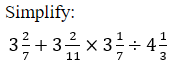
- (a)

- (b)

- (c)

- (d)

Show answer
Answer: (c)
- (a)
4.

- (a)

- (b)

- (c)

- (d)

Show answer
Answer: (d)
- (a)
5.

- (a)

- (b)

- (c)

- (d)

Show answer
Answer: (d)
- (a)
6.

- (a)

- (b)

- (c)

- (d)

Show answer
Answer: (a)
- (a)
7.

- (a)

- (b)

- (c)

- (d)

Show answer
Answer: (d)
- (a)
8.

- (a)

- (b)

- (c)

- (d)

Show answer
Answer: (a)
- (a)
9.

- (a)

- (b)

- (c)

- (d)

Show answer
Answer: (c)
- (a)
10.

- (a)

- (b)

- (c)

- (d)

Show answer
Answer: (d)
- (a)
12.
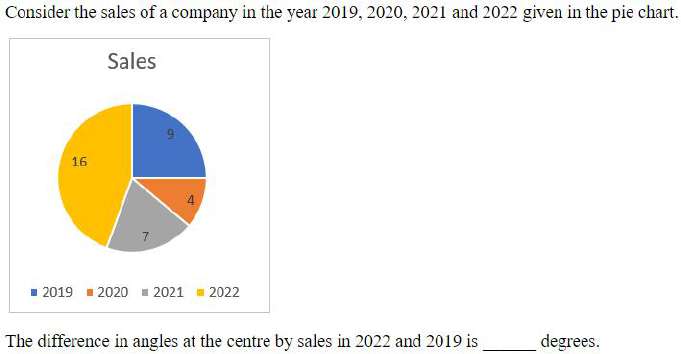
- (a)

- (b)

- (c)

- (d)

Show answer
Answer: (d)
- (a)
13.

- (a)

- (b)

- (c)

- (d)

Show answer
Answer: (b)
- (a)
14.

- (a)

- (b)

- (c)

- (d)

Show answer
Answer: (c)
- (a)
15.

- (a)

- (b)

- (c)

- (d)

Show answer
Answer: (c)
- (a)
18. The cost price of an item is ₹4,850. What is the profit percentage (rounded off to 1 decimal place) if it is sold at ₹6,680?
- (a) 44.6%
- (b) 37.7%
- (c) 39.5%
- (d) 35.5%
Show answer
Answer: (b)
19.

- (a)

- (b)

- (c)

- (d)

Show answer
Answer: (c)
- (a)
20.

- (a)

- (b)

- (c)

- (d)

Show answer
Answer: (b)
- (a)
Reasoning Ability and Problem Solving
1.

- (a)

- (b)

- (c)

- (d)

Show answer
Answer: (d)
- (a)
4.
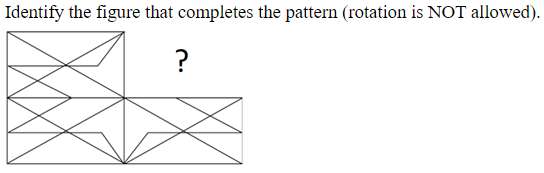
- (a)
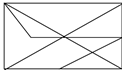
- (b)
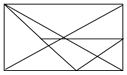
- (c)
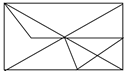
- (d)
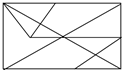
Show answer
Answer: (a)
- (a)
5.

- (a)

- (b)

- (c)

- (d)

Show answer
Answer: (d)
- (a)
6.

- (a)
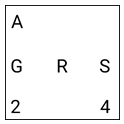
- (b)
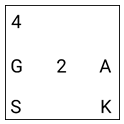
- (c)
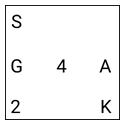
- (d)
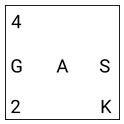
Show answer
Answer: (c)
- (a)
7.

- (a)

- (b)

- (c)
- (d)

Show answer
Answer: (c)
- (a)
8.
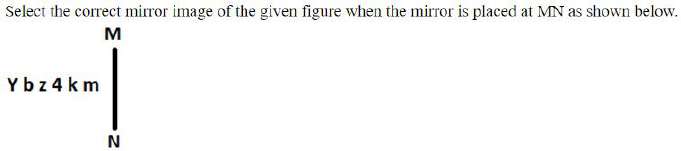
- (a)
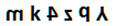
- (b)
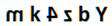
- (c)

- (d)

Show answer
Answer: (d)
- (a)
9.

- (a)

- (b)

- (c)
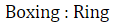
- (d)

Show answer
Answer: (c)
- (a)
10.

- (a)

- (b)

- (c)

- (d)

Show answer
Answer: (d)
- (a)
11.

- (a)

- (b)

- (c)

- (d)

Show answer
Answer: (b)
- (a)
12. Seven people, U, M, K, G, B, R and D are sitting in a straight line, facing south. Only two people sit to the left of B. M sits third to the right of G. U is the immediate neighbour of M and B. D sits to the immediate left of K. Total how many people sit between D and G?
- (a) Two
- (b) Three
- (c) One
- (d) Four
Show answer
Answer: (b)
13.

- (a)

- (b)

- (c)

- (d)

Show answer
Answer: (c)
- (a)
15.
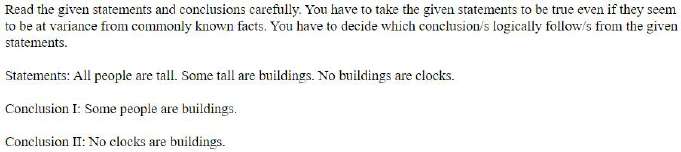
- (a)

- (b)

- (c)

- (d)

Show answer
Answer: (a)
- (a)
16.

- (a)

- (b)

- (c)

- (d)

Show answer
Answer: (a)
- (a)
18.

- (a)

- (b)

- (c)

- (d)

Show answer
Answer: (a)
- (a)
19.
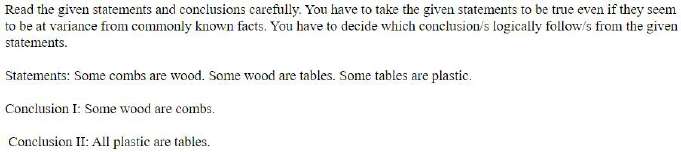
- (a)
- (b)
- (c)
- (d)
Show answer
Answer: (c)
- (a)
General Awareness
1. Which Indian Mass Movement began with the famous ‘Dandi March’ of Mahatma Gandhi?
- (a) Civil Disobedience Movement
- (b) Non-Cooperation Movement
- (c) Quit India Movement
- (d) Kheda Movement
Show answer
Answer: (a)
2.

- (a)
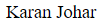
- (b)
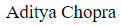
- (c)

- (d)
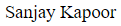
Show answer
Answer: (a)
- (a)
3. The length of the men's kabaddi court is _____ metres.
- (a) 10
- (b) 13
- (c) 17
- (d) 15
Show answer
Answer: (b)
4.

- (a)
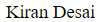
- (b)
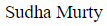
- (c)
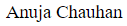
- (d)
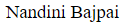
Show answer
Answer: (c)
- (a)
5.

- (a)

- (b)

- (c)

- (d)

Show answer
Answer: (b)
- (a)
6. Which of the following is NOT a Directive Principle based on the ideals of Mahatma Gandhi?
- (a) To promote industrialisation in urban areas
- (b) To organise village Panchayats
- (c) To prohibit intoxicating drinks and drugs that are injurious to health
- (d) To promote cottage industries in rural areas
Show answer
Answer: (a)
7. Which of the following methods is used to calculate national income by summing up the total incomes earned by individuals and businesses in an economy?
- (a) Value-added method
- (b) Output method
- (c) Income method
- (d) Expenditure method
Show answer
Answer: (c)
8. What is personal income?
- (a) The income earned by individuals and households after taxes and other deductions
- (b) The total income earned by businesses and corporations in an economy
- (c) The income earned by individuals through their own business or self-employment
- (d) The total income earned by individuals and households before taxes and other deductions
Show answer
Answer: (d)
9. Who founded the Hindu reform organisation Brahmo Samaj?
- (a) Ramkrishna Paramhans
- (b) Rabindranath Tagore
- (c) Atmaram Pandurang
- (d) Raja Ram Mohan Roy
Show answer
Answer: (d)
10. Whom among the following Indian singers is known as ‘Gazal King’?
- (a) Manna Dey
- (b) Mukesh
- (c) Shailendra
- (d) Jagjit Singh
Show answer
Answer: (d)
11. Dree Utsav is celebrated in the state of ____________.
- (a) Arunachal Pradesh
- (b) Kerala
- (c) Assam
- (d) Andhra Pradesh
Show answer
Answer: (a)
12. ___________ word of Indian dance is derived from a Sanskrit word and literally means ‘taking towards’.
- (a) Nritta
- (b) Laasya
- (c) Taandava
- (d) Abhinaya
Show answer
Answer: (d)
13. Which of the following is an example of the Western Coast Port?
- (a) Tuticorin Port
- (b) Paradip Port
- (c) Mumbai Port
- (d) Vishakhapatnam Port
Show answer
Answer: (c)
14. What are the three tiers of the Government in India?
- (a) Union government, Judiciary government and Federal government
- (b) Union government, State Government and Federal Government
- (c) Union government, State government and Judiciary government
- (d) Union Government, State Government and Local Government
Show answer
Answer: (d)
15. The foundation of Sanchi Stupa was laid by which of the following Kings?
- (a) Samudragupta
- (b) Bimbisara
- (c) Ashoka
- (d) Chandragupta Maurya
Show answer
Answer: (c)
16. During which months do retreating monsoons occur in India?
- (a) January and February
- (b) May and June
- (c) October and November
- (d) March and April
Show answer
Answer: (c)
17. Which is the primary structural component responsible for most of the mechanical strength of the cell wall?
- (a) Heparin
- (b) Glycogen
- (c) Chitin
- (d) Cellulose
Show answer
Answer: (d)
18. Ball and spring model of chemical bonds obey:
- (a) Hooke's law
- (b) Charles' law
- (c) gravitational law
- (d) Newton's law
Show answer
Answer: (a)
19. Pandit Janki Prasad was associated with which of the following Gharanas of Kathak?
- (a) Banaras
- (b) Raigarh
- (c) Jaipur
- (d) Lucknow
Show answer
Answer: (a)
20. In 2023, Ajay Singh, the chief of SpiceJet was appointed as president of which of the following?
- (a) FICCI
- (b) ASSOCHAM
- (c) CII
- (d) NASSCOM
Show answer
Answer: (b)
21. Rohit Sharma became the first ever Indian to play how many T20 cricket matches in October 2022?
- (a) 300
- (b) 100
- (c) 200
- (d) 400
Show answer
Answer: (d)
22. Which form of Indian dance is said to be ‘soft and suitable for female presentation’?
- (a) Nritta
- (b) Taandava
- (c) Laasya
- (d) Nritya
Show answer
Answer: (c)
23. Which of the following oceans is surrounded by the continent of North America and South America to the east?
- (a) Pacific Ocean
- (b) Atlantic Ocean
- (c) Indian Ocean
- (d) Arctic Ocean
Show answer
Answer: (a)
24. The famous ‘Pashupatinath Temple’ is located in which country from the following?
- (a) Nepal
- (b) Bhutan
- (c) Maldives
- (d) Sri Lanka
Show answer
Answer: (a)
25. In which of the following years was the first Janjatiya Khel Mahotsav held?
- (a) 2023
- (b) 2021
- (c) 2020
- (d) 2022
Show answer
Answer: (a)
English Language and Comprehension
1. Select the option that can be used as a one-word substitute for the given group of words. One who does not believe in the existence of God
- (a) Atheist
- (b) Priest
- (c) Monk
- (d) Believer
Show answer
Answer: (a)
2. Select the most appropriate option that can rectify the underlined segment in the given sentence. If there is no need to rectify it, select ‘no rectification needed’. You are the beautiful woman I have ever seen.
- (a) no rectification needed
- (b) more beautiful
- (c) beauty
- (d) most beautiful
Show answer
Answer: (d)
3. Choose the option which best expresses the meaning of the given idiom. By fair means or foul
- (a) To work without planning
- (b) To find difficulty in completing some work
- (c) To get one’s way with honesty or dishonesty
- (d) To provoke someone into quarrelling
Show answer
Answer: (c)
4. The following sentence has been split into four segments. Identify the segment that contains a grammatical error. My younger daughter, / Kanu prefer / dark chocolate / to yoghurt.
- (a) dark chocolate
- (b) My younger daughter
- (c) Kanu prefer
- (d) to yoghurt
Show answer
Answer: (c)
5. Choose the sentence that contains an error.
- (a) I saw a movie that was directed by Steven Spielberg.
- (b) She is the only person who can solve this difficult math problem.
- (c) He is an lawyer who works for a prestigious law firm.
- (d) The Great Wall of China is a popular tourist attraction.
Show answer
Answer: (c)
6. Parts of the following sentence have been given as options. Select the option that contains an error. Ishita will playing Tennis for her favourite team.
- (a) will playing
- (b) Tennis for
- (c) her favourite team
- (d) Ishita
Show answer
Answer: (a)
7. Select the most appropriate option that can substitute the underlined segment in the given sentence. He apologised in her silently before he pushed deeper into her thoughts.
- (a) apologise in her
- (b) apologised with her
- (c) apologised of her
- (d) apologised to her
Show answer
Answer: (d)
8. Select the correctly spelt word.
- (a) Bihavior
- (b) Behavier
- (c) Behaviour
- (d) Behaveor
Show answer
Answer: (c)
9. Select the most appropriate synonym of the given word. Obvious
- (a) Clear
- (b) Murky
- (c) Ambiguous
- (d) Opaque
Show answer
Answer: (a)
10. Select the most appropriate meaning of the given idiom. As phony as a three-dollar bill
- (a) Something that is attractive
- (b) Something that is genuine
- (c) Something that is disgusting
- (d) Something that is fake
Show answer
Answer: (d)
11. Select the most appropriate option to fill in the blank. They are going to give me a lovely present, but I cannot ____ what it will be.
- (a) give
- (b) gist
- (c) guess
- (d) guest
Show answer
Answer: (c)
12. Select the INCORRECTLY spelt word.
- (a) Important
- (b) Maintanance
- (c) Friend
- (d) Rhythm
Show answer
Answer: (b)
13. Select the most appropriate synonym of the given word. Determined
- (a) Flexible
- (b) Famous
- (c) Decisive
- (d) Elevated
Show answer
Answer: (c)
14. Select the most appropriate synonym of the underlined word. Ray was cynical about love.
- (a) prolific
- (b) obese
- (c) trusting
- (d) pessimistic
Show answer
Answer: (d)
15. Select the option that rectifies the spelling of the underlined word in the given sentence. The company sent out a questionaire to its employees to gather feedback on their work environment.
- (a) questioneire
- (b) questionnaire
- (c) questionnire
- (d) questionaiare
Show answer
Answer: (b)
16. Select the option that can be used as a one-word substitute for the given group of words. A person who feeds on human flesh
- (a) Cannibal
- (b) Carnivore
- (c) Nudge
- (d) Omnivore
Show answer
Answer: (a)
17. Select the most appropriate option that can substitute the underlined segment in the given sentence. If there is no need to substitute it, select ‘No substitution required’. Larger emissions of greenhouse gases lead to higher concentrations in the atmosphere.
- (a) leaded to higher concentrations
- (b) have lead to higher concentrations
- (c) is lead to higher concentrations
- (d) No substitution required
Show answer
Answer: (d)
18. Select the most appropriate meaning of the underlined idiom. Ramesh always blows his own trumpet.
- (a) praises himself
- (b) criticises himself
- (c) does his own work
- (d) depends on others
Show answer
Answer: (a)
19. Select the most appropriate meaning of the underlined idiom. He was on cloud nine when he got admission in Cambridge University.
- (a) involved in useless journey
- (b) very happy
- (c) unsettled
- (d) available to be called to go to work
Show answer
Answer: (b)
20. Select the option that can be used as a one-word substitute for the given group of words. An examination of a body after death
- (a) Post room
- (b) Post death
- (c) Post partum
- (d) Post mortem
Show answer
Answer: (d)
PassageFor questions 21–25
In the following passage some words have been deleted. Fill in the blanks with the help of the alternatives given. Select the most appropriate option for each number. One of the (1)______ tragedies is seeing someone with incredible talent get (2)_______ because he or she lacks some basic skills. This book (3)_______ the number one reason executives derail, and it provides extremely helpful tools to operate in a fast-paced, resultoriented environment. I am impressed by how insightful, (4)_______, well organised and focused it is. It will surely help one (5)______ several difficult situations.
21. Select the most appropriate option to fill in blank number 1.
- (a) more great
- (b) great
- (c) greater
- (d) greatest
Show answer
Answer: (d)
22. Select the most appropriate option to fill in blank number 2.
- (a) uplifted
- (b) damaged
- (c) derailed
- (d) channelised
Show answer
Answer: (c)
23. Select the most appropriate option to fill in blank number 3.
- (a) demeans
- (b) devours
- (c) addresses
- (d) neglects
Show answer
Answer: (c)
24. Select the most appropriate option to fill in blank number 4.
- (a) sophisticated
- (b) pessimistic
- (c) cumbersome
- (d) readable
Show answer
Answer: (d)
25. Select the most appropriate option to fill in blank number 5.
- (a) condemn
- (b) salvage
- (c) reject
- (d) discourage
Show answer
Answer: (b)
Show answers
Answer key
Answer key as marked in the Staff Selection Commission’s response sheet. “—” means the sheet did not show it clearly.
Numerical and Mathematical Ability
- Q 3
- (c)
- Q 4
- (d)
- Q 5
- (d)
- Q 6
- (a)
- Q 7
- (d)
- Q 8
- (a)
- Q 9
- (c)
- Q 10
- (d)
- Q 12
- (d)
- Q 13
- (b)
- Q 14
- (c)
- Q 15
- (c)
- Q 18
- (b)
- Q 19
- (c)
- Q 20
- (b)
Reasoning Ability and Problem Solving
- Q 1
- (d)
- Q 4
- (a)
- Q 5
- (d)
- Q 6
- (c)
- Q 7
- (c)
- Q 8
- (d)
- Q 9
- (c)
- Q 10
- (d)
- Q 11
- (b)
- Q 12
- (b)
- Q 13
- (c)
- Q 15
- (a)
- Q 16
- (a)
- Q 18
- (a)
- Q 19
- (c)
General Awareness
- Q 1
- (a)
- Q 2
- (a)
- Q 3
- (b)
- Q 4
- (c)
- Q 5
- (b)
- Q 6
- (a)
- Q 7
- (c)
- Q 8
- (d)
- Q 9
- (d)
- Q 10
- (d)
- Q 11
- (a)
- Q 12
- (d)
- Q 13
- (c)
- Q 14
- (d)
- Q 15
- (c)
- Q 16
- (c)
- Q 17
- (d)
- Q 18
- (a)
- Q 19
- (a)
- Q 20
- (b)
- Q 21
- (d)
- Q 22
- (c)
- Q 23
- (a)
- Q 24
- (a)
- Q 25
- (a)
English Language and Comprehension
- Q 1
- (a)
- Q 2
- (d)
- Q 3
- (c)
- Q 4
- (c)
- Q 5
- (c)
- Q 6
- (a)
- Q 7
- (d)
- Q 8
- (c)
- Q 9
- (a)
- Q 10
- (d)
- Q 11
- (c)
- Q 12
- (b)
- Q 13
- (c)
- Q 14
- (d)
- Q 15
- (b)
- Q 16
- (a)
- Q 17
- (d)
- Q 18
- (a)
- Q 19
- (b)
- Q 20
- (d)
- Q 21
- (d)
- Q 22
- (c)
- Q 23
- (c)
- Q 24
- (d)
- Q 25
- (b)