ExamBharo · SSC MTS 2023 — 14 September 2023, Shift 2 · exambharo.com/ssc-mts/previous-year-papers/ssc-mts-2023-14-sep-shift-2/
Question paper · SSC MTS & Havaldar
SSC MTS 2023 — 14 September 2023, Shift 2
14 September 2023 · 12:30 PM–2:30 PM83 of the paper’s 90 questions1 per correct answer
Questions from the Staff Selection Commission’s paper of 14 September 2023, 12:30 PM–2:30 PM.
Preparing for SSC MTS & Havaldar? Get more, free
Daily previous-year questions as quizzes, and every SSC MTS & Havaldar notice the day it is out.
Numerical and Mathematical Ability
2.

- (a)

- (b)

- (c)

- (d)

Show answer
Answer: (a)
- (a)
3. By selling an article for ₹5,280, Geeta lost 12%. For what amount should she sell it to make a profit of 12%?
- (a) ₹6,820
- (b) ₹7,150
- (c) ₹5,780
- (d) ₹6,720
Show answer
Answer: (d)
5. Suresh could save 20% of his income. But 4 years later, when his income increased by 40%, he could save the same amount only as before. By how much percentage did his expenditure increase?
- (a) 23%
- (b) 50%
- (c) 22%
- (d) 45%
Show answer
Answer: (b)
6.

- (a)

- (b)

- (c)

- (d)

Show answer
Answer: (d)
- (a)
7.

- (a)

- (b)

- (c)

- (d)

Show answer
Answer: (a)
- (a)
8.

- (a)

- (b)

- (c)

- (d)

Show answer
Answer: (c)
- (a)
9.

- (a)

- (b)

- (c)

- (d)

Show answer
Answer: (d)
- (a)
10.

- (a)

- (b)

- (c)

- (d)

Show answer
Answer: (c)
- (a)
11.

- (a)

- (b)

- (c)

- (d)

Show answer
Answer: (d)
- (a)
12.

- (a)

- (b)

- (c)

- (d)

Show answer
Answer: (a)
- (a)
13.

- (a)
- (b)
- (c)

- (d)

Show answer
Answer: (d)
- (a)
14.

- (a)

- (b)

- (c)

- (d)

Show answer
Answer: (d)
- (a)
15.
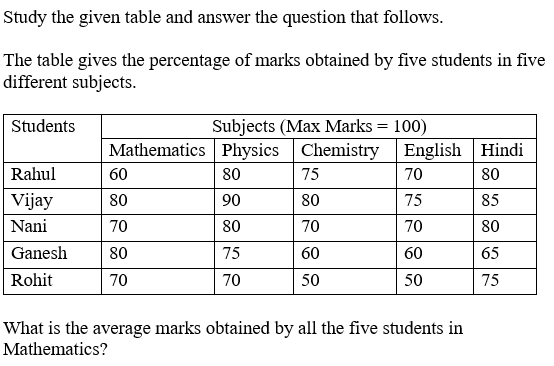
- (a) 70
- (b) 75
- (c) 72
- (d) 65
Show answer
Answer: (c)
16.
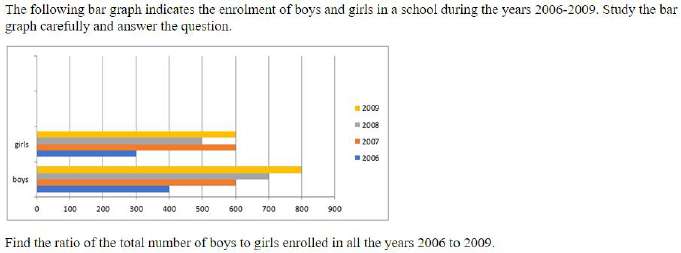
- (a)

- (b)

- (c)

- (d)

Show answer
Answer: (d)
- (a)
17.

- (a)

- (b)

- (c)

- (d)

Show answer
Answer: (a)
- (a)
18.

- (a)

- (b)

- (c)

- (d)

Show answer
Answer: (c)
- (a)
19.

- (a)

- (b)

- (c)

- (d)

Show answer
Answer: (d)
- (a)
20.

- (a)

- (b)

- (c)

- (d)

Show answer
Answer: (d)
- (a)
Reasoning Ability and Problem Solving
1.

- (a)

- (b)

- (c)

- (d)

Show answer
Answer: (c)
- (a)
2.

- (a)
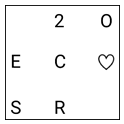
- (b)
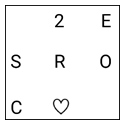
- (c)
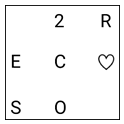
- (d)
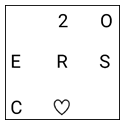
Show answer
Answer: (d)
- (a)
3.

- (a)

- (b)

- (c)

- (d)

Show answer
Answer: (b)
- (a)
4.

- (a)

- (b)

- (c)

- (d)

Show answer
Answer: (a)
- (a)
5.

- (a)

- (b)

- (c)

- (d)

Show answer
Answer: (b)
- (a)
6.

- (a)

- (b)

- (c)

- (d)

Show answer
Answer: (a)
- (a)
7.

- (a)

- (b)

- (c)

- (d)

Show answer
Answer: (d)
- (a)
8.

- (a)

- (b)

- (c)

- (d)

Show answer
Answer: (b)
- (a)
10.
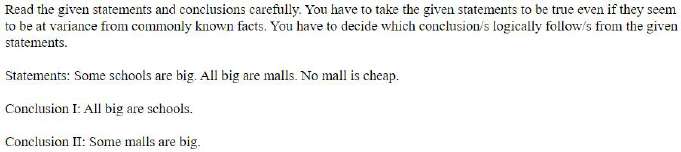
- (a)

- (b)

- (c)

- (d)

Show answer
Answer: (b)
- (a)
11.
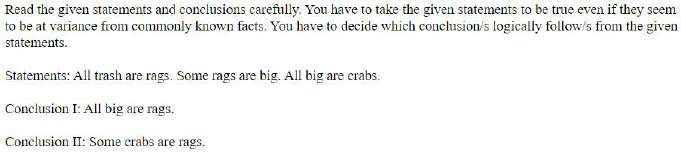
- (a)
- (b)
- (c)
- (d)
Show answer
Answer: (d)
- (a)
13.

- (a)

- (b)

- (c)

- (d)

Show answer
Answer: (a)
- (a)
14.

- (a)

- (b)

- (c)

- (d)

Show answer
Answer: (b)
- (a)
15.

- (a)

- (b)

- (c)

- (d)

Show answer
Answer: (c)
- (a)
16.
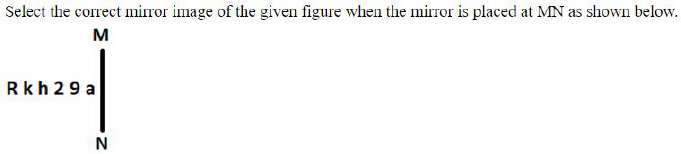
- (a)
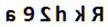
- (b)
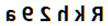
- (c)
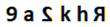
- (d)
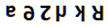
Show answer
Answer: (b)
- (a)
17.

- (a)

- (b)

- (c)

- (d)

Show answer
Answer: (b)
- (a)
18.

- (a)

- (b)

- (c)

- (d)

Show answer
Answer: (a)
- (a)
19.

- (a)

- (b)

- (c)

- (d)

Show answer
Answer: (a)
- (a)
General Awareness
1. Swami Dayanand Saraswati founded a reform organisation in 1875 that attempted to reform Hinduism. What was it called?
- (a) Arya Samaj
- (b) Prarthna Samaj
- (c) Satyashodhak Samaj
- (d) Brahmo Samaj
Show answer
Answer: (a)
2. The Brihadeswara Temple at Tanjavur built by:
- (a) Rajaraja II
- (b) Samudragupta
- (c) Rajendra Chola
- (d) Rajaraja I
Show answer
Answer: (d)
3.

- (a)

- (b)

- (c)

- (d)

Show answer
Answer: (c)
- (a)
4. What is the minimum voting age for the citizens of India?
- (a) 18 years
- (b) 21 years
- (c) 30 years
- (d) 25 years
Show answer
Answer: (a)
5.

- (a)

- (b)
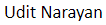
- (c)

- (d)

Show answer
Answer: (c)
- (a)
6.

- (a)

- (b)

- (c)

- (d)

Show answer
Answer: (d)
- (a)
7. The four Nattuvanars namely Ponaiyah, Vadivelu, Sivanandam and Chinnaiya, who are renowned as Tanjaore Bandhu shaped up the modern day ___________.
- (a) Bharatanatyam
- (b) Kuchipudi
- (c) Kodiattam
- (d) Kathakali
Show answer
Answer: (a)
8. In February 2023, Uttar Pradesh government launched a/an _____ called Family ID-One Family One Identity.
- (a) Portal
- (b) News letter
- (c) WhatsApp Group
- (d) Email Id
Show answer
Answer: (a)
9.

- (a)

- (b)

- (c)

- (d)

Show answer
Answer: (b)
- (a)
10. Why are intermediate goods NOT included in the calculation of national income?
- (a) Including intermediate goods would result in double counting.
- (b) Intermediate goods are not produced within the country's borders.
- (c) Including intermediate goods would decrease the value of national income.
- (d) Intermediate goods are not important for measuring economic activity.
Show answer
Answer: (a)
11. According to the Global Multidimensional Poverty Index (MPI) 2021,India’s rank is ________ out of 109 countries.
- (a) 66th
- (b) 71st
- (c) 59th
- (d) 63rd
Show answer
Answer: (a)
12.

- (a)

- (b)

- (c)

- (d)

Show answer
Answer: (c)
- (a)
13. What is the main purpose of a bank statement?
- (a) To track income and expenses
- (b) To transfer funds to another account
- (c) To advertise new banking products
- (d) To have locker facility in the bank
Show answer
Answer: (a)
14. The Konark Dance Festival (KDF) has been held at Konark since 1986 between ___________ every year.
- (a) 1st and 5th October
- (b) 1st and 5th August
- (c) 1st and 5th January
- (d) 1st and 5th December
Show answer
Answer: (d)
15. Identify the southernmost range of the Himalaya from the following.
- (a) Shiwaliks Range
- (b) Trans Himalaya Range
- (c) Lesser Himalaya Range
- (d) Greater Himalaya Range
Show answer
Answer: (a)
18. The novel ‘Train to Pakistan’ was written by ______.
- (a) Khushwant Singh
- (b) Nawaz Sharif
- (c) Zakir Hussain
- (d) Imran Khan
Show answer
Answer: (a)
19. Popular Bollywood actor Kriti Sanon is a trained __________ dancer.
- (a) Kuchipudi
- (b) Kathak
- (c) Odissi
- (d) Bharatanatyam
Show answer
Answer: (b)
20. In which of the following cities was the final match of the 2022 Vijay Hazare Trophy held?
- (a) Ahmedabad
- (b) Raipur
- (c) Lucknow
- (d) Ranchi
Show answer
Answer: (a)
21. Who started the chemical revolution in the 18th century by naming oxygen and helping to organize chemical nomenclature?
- (a) Dame Kathleen Lonsdale
- (b) Svante August Arrhenius
- (c) Joseph Priestley
- (d) Antoine-Laurent Lavoisier
Show answer
Answer: (d)
22. Aman Sehrawat became the first Indian to win a gold medal in World Wrestling Championship in which category?
- (a) U-15
- (b) U-20
- (c) U-23
- (d) U-25
Show answer
Answer: (c)
23. Independence Day is celebrated every year in Pakistan on ________.
- (a) 30 January
- (b) 14 August
- (c) 31 December
- (d) 23 March
Show answer
Answer: (b)
24. Which of the following Indian musicians was called ‘Mallika-e-Ghazal’?
- (a) Prabha Bharti
- (b) Begum Akhtar
- (c) Chitra Singh
- (d) Farida Khanum
Show answer
Answer: (b)
25. The word ‘yorker’ is related to which sport?
- (a) Kho Kho
- (b) Cricket
- (c) Basketball
- (d) Kabaddi
Show answer
Answer: (b)
English Language and Comprehension
1. Select the most appropriate option to fill in the blank. I wish we had ______ come here.
- (a) right
- (b) clear
- (c) never
- (d) agreed
Show answer
Answer: (c)
2. Select the most appropriate ANTONYM of the given word. Carnal
- (a) Material
- (b) Spiritual
- (c) Temporal
- (d) Somatic
Show answer
Answer: (b)
3. Select the option that can be used as a one-word substitute for the given group of words. Fail to function normally
- (a) Maltreat
- (b) Mangle
- (c) Manipulate
- (d) Malfunction
Show answer
Answer: (d)
4. Select the most appropriate meaning of the given phrase. All of a sudden
- (a) Intentionally
- (b) Quickly and unexpectedly
- (c) Quickly and Expectedly
- (d) Accidently
Show answer
Answer: (b)
5. The following sentence has been split into four segments. Identify the segment that contains a grammatical error. My daughter was / invited to lunch / hosted by the Governor / at his residence.
- (a) at his residence
- (b) invited to lunch
- (c) hosted by the Governor
- (d) My daughter was
Show answer
Answer: (b)
6. Select the INCORRECTLY spelt word.
- (a) Resist
- (b) Rectifie
- (c) Recruit
- (d) Repulse
Show answer
Answer: (b)
7. Select the option that rectifies the spelling of the underlined word in the given sentence. The maintenence department did a fabulous job.
- (a) mainteanance
- (b) maintenance
- (c) maintenannce
- (d) meintenance
Show answer
Answer: (b)
8. Select the most appropriate synonym of the bracketed word in the following sentence to fill in the blank. The novel’s intricate plot and rich character development kept readers ________(committed) from the beginning to the end.
- (a) engaged
- (b) secluded
- (c) detached
- (d) dismantled
Show answer
Answer: (a)
9. Select the most appropriate meaning of the underlined idiom. These things are very hard to swallow.
- (a) difficult to resist
- (b) difficult to speak
- (c) difficult to believe
- (d) difficult to eat
Show answer
Answer: (c)
10. Select the most appropriate idiom to fill in the blank. The decision to go on a trip after my vacations was the ________.
- (a) ice on the cake
- (b) icing on the cake
- (c) apple on the cake
- (d) icing on the brownie
Show answer
Answer: (b)
11. The following sentence has been split into four segments. Identify the segment that contains a grammatical error. The new software / consists from / several features / and tools.
- (a) consists from
- (b) several features
- (c) and tools
- (d) The new software
Show answer
Answer: (a)
12. Select the most appropriate idiom to fill in the blank. It's easy to say that you'll start exercising every day, but it is ______________.
- (a) like fish out of water
- (b) easier said than done
- (c) crying wolf
- (d) going the extra mile
Show answer
Answer: (b)
13. Select the INCORRECTLY spelt word.
- (a) Paralycis
- (b) Lyricist
- (c) Indigestion
- (d) Patron
Show answer
Answer: (a)
14. Select the most appropriate ANTONYM of the word given in brackets to fill in the blank. Uncle Joe is ___________________(reputable) for spending 10 years of his youth in prison due to armed robbery.
- (a) mournful
- (b) anxious
- (c) well-known
- (d) notorious
Show answer
Answer: (d)
15. Parts of the following sentence have been given as options. Select the option that contains an error. If you work hard, you secure good marks.
- (a) good marks
- (b) If you
- (c) work hard
- (d) you secure
Show answer
Answer: (d)
16. Select the option that can be used as a one-word substitute for the given group of words. A person who is skilled in making maps
- (a) Calligrapher
- (b) Curator
- (c) Cacographer
- (d) Cartographer
Show answer
Answer: (d)
17. Select the option that can be used as a one-word substitute for the underlined group of words. Sita loves her glass container in which she has many fish.
- (a) aquarium
- (b) cannister
- (c) planetarium
- (d) museum
Show answer
Answer: (a)
18. Select the most appropriate option that can rectify the underlined segment in the given sentence. If there is no need to rectify it, select ‘no rectification needed’. His claim to be the smartly kid in the school was a bit hyperbole!
- (a) no rectification needed
- (b) smartest
- (c) smarter
- (d) smart
Show answer
Answer: (b)
19. Select the option that can be used as a one-word substitute for the given group of words. Easily set on fire
- (a) Innocuous
- (b) Ingrained
- (c) Inflammable
- (d) Inimical
Show answer
Answer: (c)
20. The following sentence has been split into four segments. Identify the segment that contains an error. She has / bought / a car / two years ago.
- (a) She has
- (b) bought
- (c) two years ago
- (d) a car
Show answer
Answer: (a)
PassageFor questions 21–25
In the following passage, some words have been deleted. Read the passage carefully and select the most appropriate option to fill in each blank. Students put their heart and soul into studies while (1)________ for examinations. They prepare the syllabus by giving many revisions, making important points on flash cards, preparing notes throughout the year. They read reference books in order to score good marks in the examination. This is the demanding (2)________ of all the students who are appearing in the examinations. But, most students feel tensed on the day before an examination. Everyone is in a state of (3)________ as to what questions would be asked in the paper and whether they could write their answers properly to get good marks. Such overthinking is the cause of (4)________ which definitely affects their performance. They should revise the subject regularly and should not keep their doubts pending. This will not create a (5)________ of backlog and they will get sufficient time to resolve their problem.
21. Select the most appropriate option to fill in blank number 1.
- (a) calculating
- (b) guiding
- (c) producing
- (d) preparing
Show answer
Answer: (d)
22. Select the most appropriate option to fill in blank number 2.
- (a) principle
- (b) method
- (c) routine
- (d) habit
Show answer
Answer: (c)
23. Select the most appropriate option to fill in blank number 3.
- (a) confidence
- (b) hesitation
- (c) assurance
- (d) uncertainty
Show answer
Answer: (d)
24. Select the most appropriate option to fill in blank number 4.
- (a) anxiety
- (b) agitation
- (c) peace
- (d) comfort
Show answer
Answer: (a)
25. Select the most appropriate option to fill in blank number 5.
- (a) burden
- (b) mass
- (c) weight
- (d) power
Show answer
Answer: (a)
Show answers
Answer key
Answer key as marked in the Staff Selection Commission’s response sheet. “—” means the sheet did not show it clearly.
Numerical and Mathematical Ability
- Q 2
- (a)
- Q 3
- (d)
- Q 5
- (b)
- Q 6
- (d)
- Q 7
- (a)
- Q 8
- (c)
- Q 9
- (d)
- Q 10
- (c)
- Q 11
- (d)
- Q 12
- (a)
- Q 13
- (d)
- Q 14
- (d)
- Q 15
- (c)
- Q 16
- (d)
- Q 17
- (a)
- Q 18
- (c)
- Q 19
- (d)
- Q 20
- (d)
Reasoning Ability and Problem Solving
- Q 1
- (c)
- Q 2
- (d)
- Q 3
- (b)
- Q 4
- (a)
- Q 5
- (b)
- Q 6
- (a)
- Q 7
- (d)
- Q 8
- (b)
- Q 10
- (b)
- Q 11
- (d)
- Q 13
- (a)
- Q 14
- (b)
- Q 15
- (c)
- Q 16
- (b)
- Q 17
- (b)
- Q 18
- (a)
- Q 19
- (a)
General Awareness
- Q 1
- (a)
- Q 2
- (d)
- Q 3
- (c)
- Q 4
- (a)
- Q 5
- (c)
- Q 6
- (d)
- Q 7
- (a)
- Q 8
- (a)
- Q 9
- (b)
- Q 10
- (a)
- Q 11
- (a)
- Q 12
- (c)
- Q 13
- (a)
- Q 14
- (d)
- Q 15
- (a)
- Q 18
- (a)
- Q 19
- (b)
- Q 20
- (a)
- Q 21
- (d)
- Q 22
- (c)
- Q 23
- (b)
- Q 24
- (b)
- Q 25
- (b)
English Language and Comprehension
- Q 1
- (c)
- Q 2
- (b)
- Q 3
- (d)
- Q 4
- (b)
- Q 5
- (b)
- Q 6
- (b)
- Q 7
- (b)
- Q 8
- (a)
- Q 9
- (c)
- Q 10
- (b)
- Q 11
- (a)
- Q 12
- (b)
- Q 13
- (a)
- Q 14
- (d)
- Q 15
- (d)
- Q 16
- (d)
- Q 17
- (a)
- Q 18
- (b)
- Q 19
- (c)
- Q 20
- (a)
- Q 21
- (d)
- Q 22
- (c)
- Q 23
- (d)
- Q 24
- (a)
- Q 25
- (a)