ExamBharo · SSC MTS 2023 — 12 September 2023, Shift 1 · exambharo.com/ssc-mts/previous-year-papers/ssc-mts-2023-12-sep-shift-1/
Question paper · SSC MTS & Havaldar
SSC MTS 2023 — 12 September 2023, Shift 1
12 September 2023 · 9:00 AM–11:00 AM80 of the paper’s 90 questions1 per correct answer
Questions from the Staff Selection Commission’s paper of 12 September 2023, 9:00 AM–11:00 AM.
Preparing for SSC MTS & Havaldar? Get more, free
Daily previous-year questions as quizzes, and every SSC MTS & Havaldar notice the day it is out.
Numerical and Mathematical Ability
1.

- (a)

- (b)

- (c)

- (d)

Show answer
Answer: (c)
- (a)
2.

- (a)

- (b)

- (c)

- (d)

Show answer
Answer: (b)
- (a)
3.

- (a)

- (b)

- (c)

- (d)

Show answer
Answer: (b)
- (a)
6.

- (a)

- (b)

- (c)

- (d)

Show answer
Answer: (b)
- (a)
7.

- (a)

- (b)

- (c)

- (d)

Show answer
Answer: (a)
- (a)
8.

- (a)

- (b)

- (c)

- (d)

Show answer
Answer: (d)
- (a)
9.

- (a)

- (b)

- (c)

- (d)

Show answer
Answer: (d)
- (a)
10.

- (a)

- (b)

- (c)

- (d)

Show answer
Answer: (b)
- (a)
11.
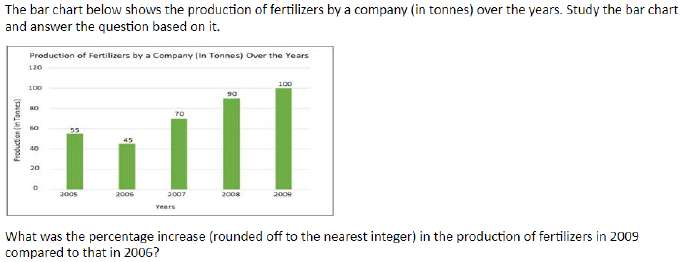
- (a)

- (b)

- (c)

- (d)

Show answer
Answer: (c)
- (a)
12.

- (a)

- (b)

- (c)

- (d)

Show answer
Answer: (b)
- (a)
13.

- (a)

- (b)

- (c)

- (d)

Show answer
Answer: (a)
- (a)
14. The monthly income of a person was ₹27,000 and his monthly expenditure was ₹18,000. In the next year, his income increased by 28% and his expenditure increased by 14%. Find the percentage increase in his savings.
- (a) 51.5%
- (b) 61.5%
- (c) 56%
- (d) 50.5%
Show answer
Answer: (c)
15.

- (a)

- (b)
- (c)

- (d)

Show answer
Answer: (a)
- (a)
16.

- (a)

- (b)

- (c)

- (d)

Show answer
Answer: (a)
- (a)
17.

- (a)

- (b)

- (c)
- (d)

Show answer
Answer: (a)
- (a)
18.
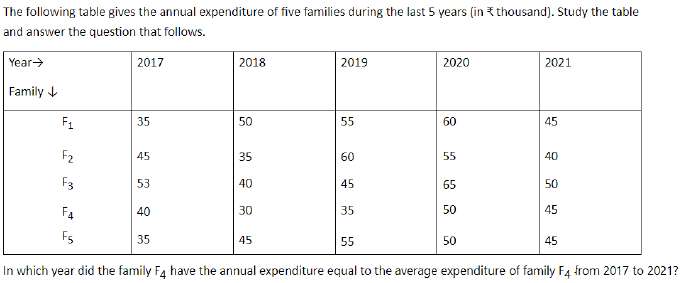
- (a)

- (b)

- (c)

- (d)

Show answer
Answer: (a)
- (a)
20.

- (a)

- (b)

- (c)

- (d)

Show answer
Answer: (c)
- (a)
Reasoning Ability and Problem Solving
1.

- (a)

- (b)

- (c)

- (d)

Show answer
Answer: (d)
- (a)
2.

- (a)

- (b)

- (c)

- (d)

Show answer
Answer: (d)
- (a)
3.

- (a)
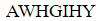
- (b)

- (c)
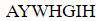
- (d)

Show answer
Answer: (a)
- (a)
4.

- (a)

- (b)

- (c)

- (d)

Show answer
Answer: (b)
- (a)
5.
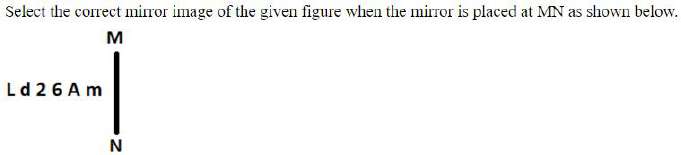
- (a)
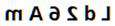
- (b)
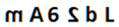
- (c)
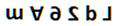
- (d)
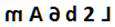
Show answer
Answer: (a)
- (a)
6.

- (a)

- (b)

- (c)

- (d)

Show answer
Answer: (c)
- (a)
7.

- (a)

- (b)

- (c)

- (d)

Show answer
Answer: (d)
- (a)
8.
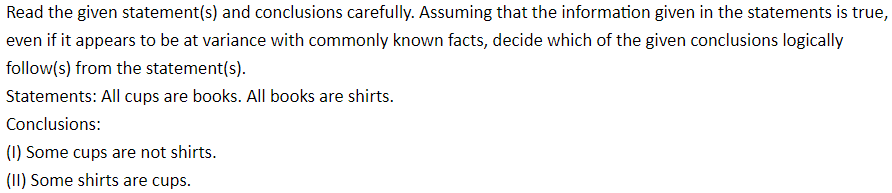
- (a)

- (b)

- (c)

- (d)

Show answer
Answer: (c)
- (a)
9.

- (a)

- (b)

- (c)

- (d)

Show answer
Answer: (b)
- (a)
11.
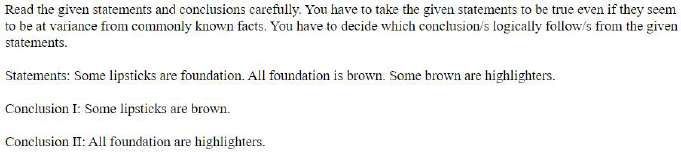
- (a)

- (b)

- (c)

- (d)

Show answer
Answer: (d)
- (a)
12.

- (a)
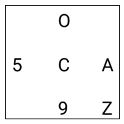
- (b)
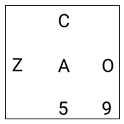
- (c)
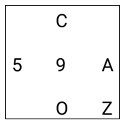
- (d)
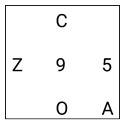
Show answer
Answer: (c)
- (a)
13.

- (a)
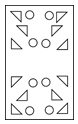
- (b)
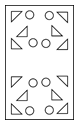
- (c)
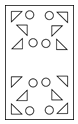
- (d)
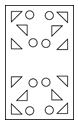
Show answer
Answer: (d)
- (a)
16.

- (a)

- (b)

- (c)

- (d)

Show answer
Answer: (d)
- (a)
17.

- (a)

- (b)

- (c)

- (d)

Show answer
Answer: (a)
- (a)
18.

- (a)

- (b)

- (c)

- (d)

Show answer
Answer: (c)
- (a)
19.

- (a)

- (b)

- (c)

- (d)

Show answer
Answer: (a)
- (a)
20.

- (a)

- (b)

- (c)

- (d)

Show answer
Answer: (b)
- (a)
General Awareness
2. How long can a person remain a minister without being a member of either House of the State Legislature?
- (a) 15 days
- (b) 6 months
- (c) 1 year
- (d) 2 months
Show answer
Answer: (b)
3. The world’s largest camel fair is held in which of the following cities?
- (a) Bikaner
- (b) Pushkar
- (c) Barmer
- (d) Udaipur
Show answer
Answer: (b)
4. Who among the following Indian musicians is the inventor of Mohan Veena?
- (a) Totaram Sharma
- (b) Braj Bhushan Kabra
- (c) Pandit Vishwa Mohan Bhatt
- (d) Sandeep Das
Show answer
Answer: (c)
6. Which of the following musicians of medieval India is referred to as ‘Tuti-e-Hind’ and is also regarded as the father of qawwali?
- (a) Miyan Tansen
- (b) Amir Khusrau
- (c) Purandara Dasa
- (d) Swami Haridas
Show answer
Answer: (b)
7. The blue green alga Anabaena lives in the leaves of Azolla, a freshwater fern, forming which of the following relationships?
- (a) Autotrophic
- (b) Symbiotic
- (c) Parasitic
- (d) Saprophytic
Show answer
Answer: (b)
8. Who was famous for publishing a formula in 1827 that shows the mathematical relationship between current, resistance and voltage?
- (a) William Gilbert
- (b) William Watson
- (c) Gustav Kirchhoff
- (d) Georg Simon Ohm
Show answer
Answer: (d)
9. Identify the correct pair (name of shifting agriculture and related state) from the following.
- (a) Bewar – Madhya Pradesh
- (b) Kuruwa – Punjab
- (c) Podu – Tamil Nadu
- (d) Bringa – Uttar Pradesh
Show answer
Answer: (a)
10. The Balti dance of ____________ is distinct as it has its own costume, music and songs in the Balti language. The dance is only performed on rare occasions, such as feasts or celebrations.
- (a) Uttarakhand
- (b) Ladakh
- (c) Kashmir
- (d) Himachal Pradesh
Show answer
Answer: (b)
11. The Fundamental Duties of Indian Citizens were adopted from the Constitution of which country?
- (a) Soviet Union
- (b) Japan
- (c) United Kingdom
- (d) United States of America
Show answer
Answer: (a)
12. Which state hosted the 36th National Games of India?
- (a) Maharashtra
- (b) Karnataka
- (c) Gujarat
- (d) Punjab
Show answer
Answer: (c)
13. Jet streams are a particular form of:
- (a) weather fronts
- (b) atmospheric pollution
- (c) geostrophic winds
- (d) periodic water motion
Show answer
Answer: (c)
14. According to the Global Multidimensional Poverty Index Report 2022, a total of 415 million people exited multidimensional poverty in India in the last ________.
- (a) 15 years
- (b) 5 years
- (c) 10 years
- (d) 20 years
Show answer
Answer: (a)
15. What is the primary function of a commercial bank?
- (a) Issuing currency notes and coins
- (b) Conducting monetary policy
- (c) Granting loans and accepting deposits
- (d) Regulating the money supply
Show answer
Answer: (c)
16. Which of the following is an example of revenue receipt in the government budget?
- (a) Sale of government-owned land
- (b) Repayment of a loan by a state-owned company
- (c) Dividends received from a state-owned enterprise
- (d) Borrowing money from international organisations
Show answer
Answer: (c)
17. Birsa Munda Hockey Stadium was built in which state?
- (a) Gujarat
- (b) Maharashtra
- (c) Jharkhand
- (d) Odisha
Show answer
Answer: (d)
18. Who received the title Pandita from the faculty of Calcutta University for her knowledge of Sanskrit?
- (a) Rokaya Sakhawat Hossain
- (b) Ramabai Sarasvati
- (c) Sarojini Naidu
- (d) Rash Sundari Devi
Show answer
Answer: (b)
19. Rani Machaiah from Karnataka was awarded the Padma Shri for her contribution to popularising ___________ in and outside Karnataka.
- (a) Kamsale Nritya
- (b) Kunitha
- (c) Karadi Majalu
- (d) Ummathat
Show answer
Answer: (d)
20.

- (a)

- (b)
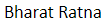
- (c)

- (d)

Show answer
Answer: (c)
- (a)
21. Which of the following hills are located in Purvachal?
- (a) Mizo hills and Naga hills
- (b) Shevroy hills and Javadi hills
- (c) Khasi and Jaintia hills
- (d) Anai Mudi and Doda Betta
Show answer
Answer: (a)
22. The mausoleum of the Taj Mahal was designed by _______________.
- (a) Bhaktiyar Lahori
- (b) Mohammad Isha
- (c) Shah Jahan
- (d) Ustad Ahmad Lahori
Show answer
Answer: (d)
23. What was the Swadeshi Movement called in the state of Andhra Pradesh?
- (a) Gadar Movement
- (b) Quit India Movement
- (c) Khilafat Movement
- (d) Vande Mataram Movement
Show answer
Answer: (d)
24. ‘Midnight’s Children’ is a novel by which of the following writers?
- (a) Jane Austen
- (b) Vikram Seth
- (c) Chetan Bhagat
- (d) Salman Rushdie
Show answer
Answer: (d)
25. Which of the following countries hosted the IBA Women’s World Boxing Championships for the third time in March 2023?
- (a) Hungary
- (b) United Kingdom
- (c) Malaysia
- (d) India
Show answer
Answer: (d)
English Language and Comprehension
1. Select the most appropriate meaning of the given idiom. Castles in the air
- (a) Unrealistic and impossible plan
- (b) Unexpected change in the climate
- (c) Realistic and possible plan
- (d) Strong hope to get success
Show answer
Answer: (a)
2. Four words of the following sentence have been underlined and given as options. Select the option that contains a spelling error. Ongoing climate change, caused by the acumulation of greenhouse gases in the atmosphere, is happening on a timescale of decades to centuries and is driving environmental changes worldwide.
- (a) environmental
- (b) atmosphere
- (c) acumulation
- (d) decades
Show answer
Answer: (c)
3. Select the most appropriate synonym of the given word. Laconic
- (a) Reasonable
- (b) Fanciful
- (c) Concise
- (d) Certain
Show answer
Answer: (c)
4. Select the most appropriate option to fill in the blank. Make-up was _______ she hardly wore.
- (a) anything
- (b) something
- (c) anybody
- (d) someone
Show answer
Answer: (b)
6. Select the option that can be used as a one-word substitute for the given group of words. Pause indecisively
- (a) Hibernate
- (b) Hesitate
- (c) Hoist
- (d) Hobble
Show answer
Answer: (b)
7. The following sentence has been split into four segments. Identify the segment that contains a grammatical error and select the option which rectifies that error. The SNAP-10 A / was launched on 3 April 1965 / on a Atlas-Agena D rocket / from Vandenberg Air Force Base.
- (a) at Vandenberg Air Force Base.
- (b) A SNAP-10 A
- (c) was launch on 3 April 1965
- (d) on an Atlas-Agena D rocket
Show answer
Answer: (d)
8. Select the correct spelling of the underlined word in the following sentence. He dispised the taste of black coffee.
- (a) despisid
- (b) disspised
- (c) despised
- (d) despeded
Show answer
Answer: (c)
9. Parts of the given sentence have been underlined. One of them contains an error. The underlined parts are given as options with some changes. Select the option that correctly rectifies the error. This car is lesser expensive than the one I had come to buy.
- (a) for
- (b) came
- (c) ones
- (d) less
Show answer
Answer: (d)
10. Select the appropriate meaning of the given idiom. Grasping at straws
- (a) Futile attempts to win
- (b) Desperate attempt to succeed
- (c) Holding the last strands of straw
- (d) Wasting time enjoying and relaxing
Show answer
Answer: (b)
11. Select the most appropriate idiom to fill in the blank. She told me, ________, that she was going to live in New York.
- (a) blue blood
- (b) black and blue
- (c) out of the blue
- (d) once in a blue moon
Show answer
Answer: (c)
12. Select the most appropriate synonym of the bracketed word in the following sentence to fill in the blank. The medical procedure was successful, but the patient experienced some minor ________(troubles) during recovery.
- (a) applications
- (b) complications
- (c) transformations
- (d) obligations
Show answer
Answer: (b)
13. The following sentence has been divided into four parts. Identify the part that contains an error. (A) It is said / (B) that fortune / (C) favour the / (D) brave.
- (a) B
- (b) C
- (c) A
- (d) D
Show answer
Answer: (b)
14. Select the most appropriate option that can substitute the underlined segment in the given sentence. Teenage is that phase of life when you are proposed to the world outside.
- (a) you are exposed to
- (b) you are excited with
- (c) one are proposed to
- (d) you are interrupted to
Show answer
Answer: (a)
15. Select the INCORRECTLY spelt word.
- (a) Sergeant
- (b) Playwright
- (c) Experiance
- (d) Leisure
Show answer
Answer: (c)
16. Select the most appropriate option to fill in the blank. Ravi has little in _____________ with his friend, Senthil.
- (a) common
- (b) contention
- (c) formal
- (d) normal
Show answer
Answer: (a)
17. Select the most appropriate ANTONYM of the given word. Dense
- (a) Sparse
- (b) Opaque
- (c) Closed
- (d) Thick
Show answer
Answer: (a)
18. The following sentence has been divided into parts. One of them may contain an error. Select the part that contains the error from the given options. If you don’t find any error, mark ‘No error’ as your answer. The fight of the cobra and the mongoose / is a classic drama often seen in India, / and the outcome was largely the same.
- (a) The fight of the cobra and the mongoose
- (b) No error
- (c) is a classic drama often seen in India
- (d) and the outcome was largely the same
Show answer
Answer: (d)
19. The following sentence has been split into four segments. Identify the segment that contains a grammatical error. The little child / wrote his name / quick / on the wall.
- (a) quick
- (b) wrote his name
- (c) on the wall
- (d) The little child
Show answer
Answer: (a)
PassageFor questions 21–25
In the following passage, some words have been deleted. Read the passage carefully and select the most appropriate option to fill in each blank. Health is the most valuable of all earthly possessions. Without it all the rest are worth (1)_________. To enjoy good health we should refrain from excess in eating. We should eat moderately and devour whatever (2)_____ get. When you sit among many for a dinner, do not reach your hand out (3)______ of all. A little food is sufficient for us. Sound sleep comes of a light stomach. Such a man rises (4)______ in the morning and is at ease with himself. So to (5)_____ good health we should eat moderately, for a man who does not overeat enjoys sound sleep and rises early completely refreshed.
21. Select the most appropriate option to fill in blank no. 1.
- (a) it
- (b) nothing
- (c) everything
- (d) all
Show answer
Answer: (b)
22. Select the most appropriate option to fill in blank no. 2.
- (a) us
- (b) he
- (c) we
- (d) it
Show answer
Answer: (c)
23. Select the most appropriate option to fill in blank no. 3.
- (a) first
- (b) second
- (c) last
- (d) end
Show answer
Answer: (a)
24. Select the most appropriate option to fill in blank no. 4.
- (a) late
- (b) early
- (c) active
- (d) idle
Show answer
Answer: (b)
25. Select the most appropriate option to fill in blank no. 5.
- (a) lose
- (b) benefit
- (c) reward
- (d) enjoy
Show answer
Answer: (d)
Show answers
Answer key
Answer key as marked in the Staff Selection Commission’s response sheet. “—” means the sheet did not show it clearly.
Numerical and Mathematical Ability
- Q 1
- (c)
- Q 2
- (b)
- Q 3
- (b)
- Q 6
- (b)
- Q 7
- (a)
- Q 8
- (d)
- Q 9
- (d)
- Q 10
- (b)
- Q 11
- (c)
- Q 12
- (b)
- Q 13
- (a)
- Q 14
- (c)
- Q 15
- (a)
- Q 16
- (a)
- Q 17
- (a)
- Q 18
- (a)
- Q 20
- (c)
Reasoning Ability and Problem Solving
- Q 1
- (d)
- Q 2
- (d)
- Q 3
- (a)
- Q 4
- (b)
- Q 5
- (a)
- Q 6
- (c)
- Q 7
- (d)
- Q 8
- (c)
- Q 9
- (b)
- Q 11
- (d)
- Q 12
- (c)
- Q 13
- (d)
- Q 16
- (d)
- Q 17
- (a)
- Q 18
- (c)
- Q 19
- (a)
- Q 20
- (b)
General Awareness
- Q 2
- (b)
- Q 3
- (b)
- Q 4
- (c)
- Q 6
- (b)
- Q 7
- (b)
- Q 8
- (d)
- Q 9
- (a)
- Q 10
- (b)
- Q 11
- (a)
- Q 12
- (c)
- Q 13
- (c)
- Q 14
- (a)
- Q 15
- (c)
- Q 16
- (c)
- Q 17
- (d)
- Q 18
- (b)
- Q 19
- (d)
- Q 20
- (c)
- Q 21
- (a)
- Q 22
- (d)
- Q 23
- (d)
- Q 24
- (d)
- Q 25
- (d)
English Language and Comprehension
- Q 1
- (a)
- Q 2
- (c)
- Q 3
- (c)
- Q 4
- (b)
- Q 6
- (b)
- Q 7
- (d)
- Q 8
- (c)
- Q 9
- (d)
- Q 10
- (b)
- Q 11
- (c)
- Q 12
- (b)
- Q 13
- (b)
- Q 14
- (a)
- Q 15
- (c)
- Q 16
- (a)
- Q 17
- (a)
- Q 18
- (d)
- Q 19
- (a)
- Q 21
- (b)
- Q 22
- (c)
- Q 23
- (a)
- Q 24
- (b)
- Q 25
- (d)