ExamBharo · SSC MTS 2021 — 7 July 2022, Shift 1 · exambharo.com/ssc-mts/previous-year-papers/ssc-mts-2021-7-jul-shift-1/
Question paper · SSC MTS & Havaldar
SSC MTS 2021 — 7 July 2022, Shift 1
7 July 2022 · 9:00 AM–10:30 AM92 of the paper’s 100 questions1 per correct answer
Questions from the Staff Selection Commission’s paper of 7 July 2022, 9:00 AM–10:30 AM.
Preparing for SSC MTS & Havaldar? Get more, free
Daily previous-year questions as quizzes, and every SSC MTS & Havaldar notice the day it is out.
General English
1. Select the most appropriate option to substitute the underlined segment in the given sentence. If there is no need to substitute it, select ‘No substitution required’. The playground was way large then I had imagined, and in cleaning it, my back began to ache.
- (a) larger than I had
- (b) No substitution required
- (c) largest to what I have
- (d) large then I have
Show answer
Answer: (a)
2. Select the most appropriate meaning of the given idiom. To foot the bill
- (a) To reveal a secret
- (b) To be friendly
- (c) To hold grudges
- (d) To make payment
Show answer
Answer: (d)
3. Select the option that will improve the underlined part of the sentence. In case no improvement is needed, select ‘No improvement required’. Shall you pass me that pasta bowl?
- (a) Shall pass you
- (b) Can you pass
- (c) Could passing you
- (d) No improvement required
Show answer
Answer: (b)
4. The following sentence has been split into four segments. Identify the segment that contains a grammatical error. He had begun to dig / diligent along the / low tideline and had / captured two clams.
- (a) captured two clams
- (b) low tideline and had
- (c) diligent along the
- (d) He had begun to dig
Show answer
Answer: (c)
5. Select the most appropriate option to fill in the blank. I ______ your remaining project if you get groceries for me from the market.
- (a) would do
- (b) will do
- (c) will have done
- (d) would have done
Show answer
Answer: (b)
6. Select the correctly spelt word.
- (a) Magestic
- (b) Flexibal
- (c) Stringent
- (d) Faltoring
Show answer
Answer: (c)
7. Select the most appropriate option to fill in the blank. Which _____ should I take to reach the railway station?
- (a) root
- (b) route
- (c) rote
- (d) riot
Show answer
Answer: (b)
8. Select the most appropriate option to fill in the blank. Writing books about how to ______ on the internet seems like a great idea.
- (a) make a promise
- (b) make a fortune
- (c) make a habit
- (d) make a list
Show answer
Answer: (b)
9. Select the most appropriate option to fill in the blank. I can’t control my _____ these days because I got selected for a job.
- (a) casualness
- (b) nepotism
- (c) pollution
- (d) excitement
Show answer
Answer: (d)
10. Select the most appropriate option to fill in the blank. The Lebanese army raided the boat and ______ dozens of water bottles, tuna cans, loaves of bread, boxes of Picon cheese and life jackets.
- (a) discovered
- (b) learnt
- (c) created
- (d) invented
Show answer
Answer: (a)
11. Select the most appropriate meaning of the underlined idiom in the given sentence. My elder brother is so innocent that winning an argument against him is like shooting fish in a barrel.
- (a) Indulge in an illegal activity
- (b) Exceptionally easy to do
- (c) Asking for charity
- (d) Making someone uneasy
Show answer
Answer: (b)
12. Select the most appropriate synonym of the given word. Sacred
- (a) Consecrated
- (b) Submissive
- (c) Passionate
- (d) Adamant
Show answer
Answer: (a)
13. Select the option that can be used as a one-word substitute for the given group of words. The study of different skin diseases
- (a) Neurology
- (b) Dermatology
- (c) Psychology
- (d) Radiology
Show answer
Answer: (b)
14. Select the option that will improve the underlined part of the given sentence. In case no improvement is needed, select 'No improvement required'. It has been my great misfortune to follow a speech more notable for its volume than for any sense.
- (a) following a speech most notable
- (b) No improvement required
- (c) to follow a speech much notable
- (d) to have being following a speech more notable
Show answer
Answer: (a)
15. Select the option that can be used as a one-word substitute for the given group of words. One who is hostile and violent
- (a) Idle
- (b) Aggressive
- (c) Legendary
- (d) Agreeable
Show answer
Answer: (b)
16. Select the most appropriate synonym of the given word. Plausible
- (a) irresistible
- (b) Irrational
- (c) Untenable
- (d) Credible
Show answer
Answer: (d)
17. Select the correctly spelt word.
- (a) Exploitation
- (b) Conversatian
- (c) Reveneue
- (d) Pashion
Show answer
Answer: (a)
18. Select the most appropriate ANTONYM of the given word. Hilarious
- (a) Ridiculous
- (b) Pretentious
- (c) Usual
- (d) Humourless
Show answer
Answer: (d)
19. Parts of the following sentence have been given as options. One of them may contain an error. Select the part that contains the error from the given options. If you don’t find any error, mark ‘No error’ as your answer. A significant number of students volunteers each year for environmental projects.
- (a) volunteers each year for
- (b) No error
- (c) A significant number of students
- (d) environmental projects
Show answer
Answer: (a)
20. Parts of the following sentence have been given as options. One of them contains an error. Select the part that contains the error from the given options. Time and technology are two important factor that change substances into resources.
- (a) Time and technology
- (b) resources
- (c) factor that
- (d) two important
Show answer
Answer: (c)
PassageFor questions 21–25
In the following passage, some words have been deleted. Read the passage carefully and select the most appropriate option to fill in each blank.
Can you (1) ______ a deaf woman writing stories about a war? Well, Laura Redden Searing did this. Moreover, she went to foreign countries to write stories. She was very ill when she was 11 years old. Because of this, she lost her (2) ______. She went to the Missouri School for the Deaf. Laura was 19 years old when she went to work for a newspaper. She wrote about people, places and art. In 1859, most women were just wives and (3) ______. They did not work outside the home; otherwise, their husbands would be angry. Due to this feeling, Laura used a (4) ______ name when she wrote her stories. She called herself Howard Glyndon. She thought that unless she used a masculine name, people would be (5) ______ since they did not think that women should write for newspapers.
21. Select the most appropriate option to fill in blank number 1.
- (a) malign
- (b) create
- (c) conjure
- (d) imagine
Show answer
Answer: (d)
22. Select the most appropriate option to fill in blank number 2.
- (a) hearing
- (b) suffering
- (c) enduring
- (d) inspiring
Show answer
Answer: (a)
23. Select the most appropriate option to fill in blank number 3.
- (a) artists
- (b) writers
- (c) mothers
- (d) teachers
Show answer
Answer: (c)
24. Select the most appropriate option to fill in blank number 4.
- (a) woman's
- (b) children's
- (c) adult's
- (d) man's
Show answer
Answer: (d)
25. Select the most appropriate option to fill in blank number 5.
- (a) infantile
- (b) versatile
- (c) hostile
- (d) infertile
Show answer
Answer: (c)
General Intelligence and Reasoning
1. After interchanging the given two signs, what will be the value of the following expression? × and ÷ 20 + 5 ÷ 6 × 2 – 5
- (a) 30
- (b) 35
- (c) 25
- (d) 40
Show answer
Answer: (a)
2. The IQ of 7 boys B1, B2, B3, B4, B5, B6 and B7 is tested and the values are compared. B2 has a higher IQ than B6. B5 has the third lowest IQ. B4 has a higher IQ than 6 boys. B3 has an IQ less than B2. B1 has a higher IQ than B2. B7 has the least IQ. Who has the second highest IQ?
- (a) B2
- (b) B7
- (c) B1
- (d) B3
Show answer
Answer: (c)
3. Identify the number that does NOT belong to the following series. 49, 98, 196, 394, 784, 1568
- (a) 196
- (b) 784
- (c) 394
- (d) 1568
Show answer
Answer: (c)
4. Read the given statements and conclusions carefully. Assuming that the information given in the statements is true, even if it appears to be at variance with commonly known facts, decide which of the given conclusions logically follow(s) from the statements. Statements: No T is G. Some M are T. Conclusions: I. No G is T. II. All M are G.
- (a) Neither conclusion I nor II follows.
- (b) Both conclusions I and II follow.
- (c) Only conclusion I follows.
- (d) Only conclusion II follows.
Show answer
Answer: (c)
5.

- (a)

- (b)

- (c)

- (d)

Show answer
Answer: (a)
- (a)
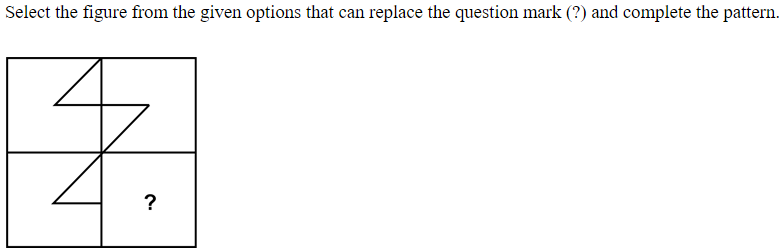
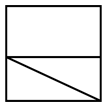
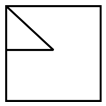
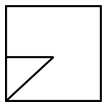
6.
- (a)
- (b)
- (c)
- (d)
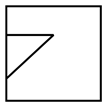
Show answer
Answer: (c)
- (a)
7.

- (a)

- (b)

- (c)

- (d)

Show answer
Answer: (d)
- (a)
8. Select the option in which the numbers shares the same relationship as that shared by the numbers in the given set. (132, 186, 240) (NOTE: Operations should be performed on the whole numbers, without breaking down the numbers into its constituent digits. E.g. 13 – Operations on 13 such as adding /deleting /multiplying etc. to 13 can be performed. Breaking down 13 into 1 and 3 and then performing mathematical operations on 1 and 3 is not allowed)
- (a) (124, 158, 202)
- (b) (148, 202, 256)
- (c) (118, 172, 198)
- (d) (142, 176, 194)
Show answer
Answer: (b)
9. After interchanging which two signs will the value of the given expression be ‘35’? 13 + 91 – 3 ÷ 529 × 23
- (a) + and –
- (b) × and ÷
- (c) × and +
- (d) – and ÷
Show answer
Answer: (b)
10. 8 persons D, E, F, G, H, I, J and K are sitting around a square table, facing towards the centre (not necessarily in the same order). Four persons are sitting at the corners and four persons are sitting at the middle of the sides of the square table. D is sitting at one side and opposite to K. G is sitting at a corner and to the immediate right of D. D is the immediate neighbour of E and G. I is not the immediate neighbour of H. F is sitting at one side and opposite to H. Who is sitting just diagonally opposite to I?
- (a) K
- (b) H
- (c) D
- (d) E
Show answer
Answer: (d)
11. 6 persons A, B, C, D, E and F are sitting around a rectangular table, facing towards the centre (not necessarily in the same order). One person is sitting on each of the smaller sides. Two persons are sitting on each of the bigger sides. No person is sitting at the corners. C and F are sitting on the same side. B is sitting opposite to A. F is the immediate neighbour of B. A is sitting second to the left of D. Counting towards the left of D, how many persons are sitting between A and D?
- (a) Two
- (b) Three
- (c) One
- (d) Zero
Show answer
Answer: (c)
12. Select the option that is related to the sixth number in the same way as the first number is related to the second number and the third number is related to the fourth number. 34 : 12 :: 28 : 16 :: ? : 15
- (a) 26
- (b) 24
- (c) 32
- (d) 35
Show answer
Answer: (d)
13. Identify the number that does NOT belong to the following series. 14, 21, 63, 378, 3402
- (a) 3402
- (b) 14
- (c) 21
- (d) 378
Show answer
Answer: (a)
14.

- (a)

- (b)

- (c)

- (d)

Show answer
Answer: (c)
- (a)
15.
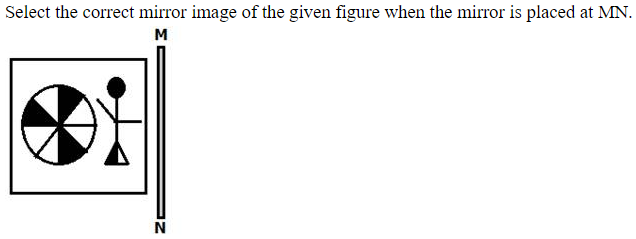
- (a)

- (b)

- (c)

- (d)

Show answer
Answer: (b)
- (a)
16. In a certain code language, 'POKER' is written as 'IHDXK' and 'FANDS' is written as 'YTGWL'. How will 'AQBCG' be written in that code language?
- (a) TJVVG
- (b) TKUVZ
- (c) TJVUZ
- (d) TJUVZ
Show answer
Answer: (d)
17. Select the option in which the pair of letter-clusters share the same relationship as that shared by the given pair of letter-clusters. ROP : NMP :: ?
- (a) TIN : LGV
- (b) MUG : ESK
- (c) CRB : DPA
- (d) LAN : LXJ
Show answer
Answer: (b)
18. In a certain code language 'who are you' is written as 'Sue Re Nik', 'they is you' is written as 'Pi Re Sor', and 'they are dangerous' is written as 'Pi Nik Zhi'. What is the code for 'dangerous' in that code language?
- (a) Sue
- (b) Nik
- (c) Pi
- (d) Zhi
Show answer
Answer: (d)
19. Select the option that is related to the fifth word in the same way as the second word is related to the first word and the fourth word is related to the third word. Pitch : Cricket :: Court : Badminton :: Ring : ?
- (a) Football
- (b) Boxing
- (c) Hockey
- (d) Rugby
Show answer
Answer: (b)
20.
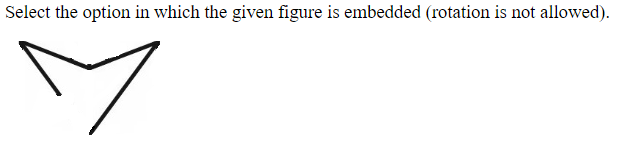
- (a)
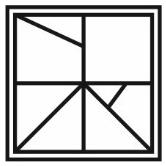
- (b)

- (c)

- (d)

Show answer
Answer: (d)
- (a)
21. Read the given statements and conclusions carefully. Assuming that the information given in the statements is true, even if it appears to be at variance with commonly known facts, decide which of the given conclusions logically follow(s) from the statements. Statements: I. All X are B. II. No C is X. Conclusions: I. Some B are not C. II. All C are B. III. Some X are C.
- (a) Only conclusion I follows
- (b) None of the conclusion follow
- (c) Only conclusions I and II follow
- (d) Only conclusions II and III follow
Show answer
Answer: (a)
22. In a certain code language, ‘random boys talk’ is written as ‘8 3 P’, ‘talk too much girls’ is written as ‘3 4 2 6’. How will ‘talk’ be written in that language?
- (a) 3
- (b) P
- (c) 2
- (d) 8
Show answer
Answer: (a)
23. Select the letter-cluster from among the given options that can replace the question mark (?) in the following series. BOND, FKRZ, JGVV, NCZR, ?
- (a) RYDN
- (b) RYDM
- (c) RXDN
- (d) RYCN
Show answer
Answer: (a)
24. In a certain code language, 'DELHI' is written as 'CDKGH', 'NERVOUS' is written as 'MDQUNTR' and 'SURE' is written as 'RTQD'. What is the code for the word 'MILLION' in that code language?
- (a) HHSKNMK
- (b) LHKKHNM
- (c) SKHHALO
- (d) LADAKHN
Show answer
Answer: (b)
25. Select the option that is related to the third letter-cluster in the same way as the second letter-cluster is related to the first letter-cluster. PV : MQ :: FB : ?
- (a) CX
- (b) DW
- (c) DX
- (d) CW
Show answer
Answer: (d)
Numerical Aptitude
1.

- (a)

- (b)

- (c)

- (d)

Show answer
Answer: (b)
- (a)
2.
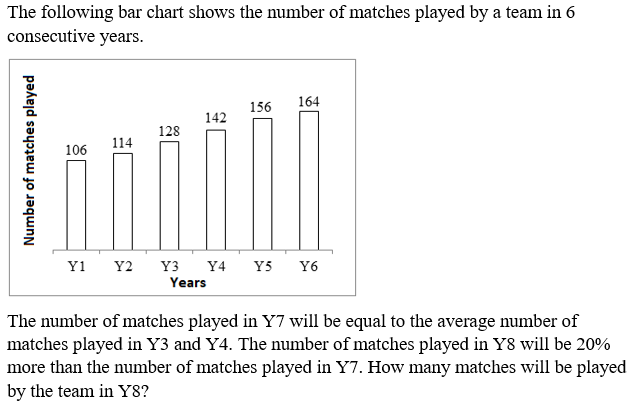
- (a)

- (b)

- (c)

- (d)

Show answer
Answer: (d)
- (a)
5.

- (a)

- (b)

- (c)

- (d)

Show answer
Answer: (c)
- (a)
6.

- (a)

- (b)

- (c)

- (d)

Show answer
Answer: (c)
- (a)
8.

- (a)

- (b)

- (c)

- (d)

Show answer
Answer: (d)
- (a)
9.

- (a)

- (b)

- (c)

- (d)

Show answer
Answer: (c)
- (a)
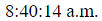
10.

- (a)
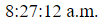
- (b)
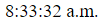
- (c)
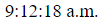
- (d)
Show answer
Answer: (a)
- (a)
11.

- (a)

- (b)

- (c)

- (d)

Show answer
Answer: (c)
- (a)
12.

- (a)

- (b)

- (c)

- (d)

Show answer
Answer: (a)
- (a)
14.

- (a)

- (b)

- (c)

- (d)

Show answer
Answer: (c)
- (a)
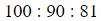
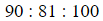
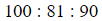
15.

- (a)
- (b)
- (c)
- (d)
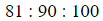
Show answer
Answer: (d)
- (a)
16.
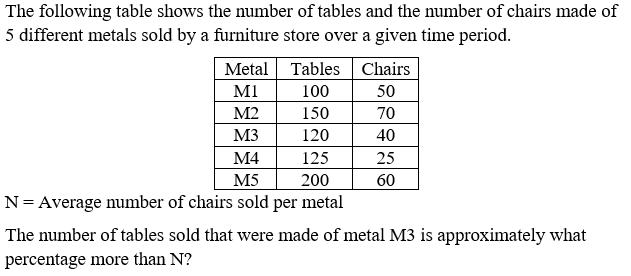
- (a)

- (b)

- (c)

- (d)

Show answer
Answer: (a)
- (a)
17.

- (a)

- (b)

- (c)

- (d)

Show answer
Answer: (b)
- (a)
18.

- (a)

- (b)

- (c)

- (d)

Show answer
Answer: (c)
- (a)
19.

- (a)

- (b)

- (c)

- (d)

Show answer
Answer: (a)
- (a)
20.

- (a)

- (b)

- (c)

- (d)

Show answer
Answer: (b)
- (a)
21.

- (a)

- (b)

- (c)

- (d)

Show answer
Answer: (a)
- (a)
22.

- (a)

- (b)

- (c)

- (d)

Show answer
Answer: (c)
- (a)
23.

- (a)

- (b)

- (c)

- (d)

Show answer
Answer: (b)
- (a)
General Awareness
1. Hariprasad Chaurasia is a _____ player.
- (a) flute
- (b) mandolin
- (c) shehnai
- (d) guitar
Show answer
Answer: (a)
2. In which year did Bhagat Singh and BK Dutt throw a bomb in the Central Legislative Assembly?
- (a) 1928
- (b) 1929
- (c) 1930
- (d) 1931
Show answer
Answer: (b)
3. As per the 2011 census of India, population density of which of the following states was less than 100 people per square kilometre?
- (a) Himachal Pradesh
- (b) Rajasthan
- (c) Sikkim
- (d) Tripura
Show answer
Answer: (c)
5. 'Red Light On Gaadi Off' campaign was launched by the government of ______.
- (a) Uttar Pradesh
- (b) Haryana
- (c) Delhi
- (d) Punjab
Show answer
Answer: (c)
6. Who among the following has been ranked as the richest person in the world, as per the Forbes’ Real-Time Billionaires list 2022?
- (a) Elon Musk
- (b) Jeff Bezos
- (c) Bernard Arnault
- (d) Warren Buffet
Show answer
Answer: (a)
7. Which of the following organisms is responsible for sleeping sickness?
- (a) Algae
- (b) Protozoa
- (c) Bacteria
- (d) Viruses
Show answer
Answer: (b)
8. In which state of India, is the Chapchar Kut festival celebrated?
- (a) Jharkhand
- (b) Goa
- (c) Mizoram
- (d) Kerala
Show answer
Answer: (c)
9. Rainfall is measured by an instrument called the ______.
- (a) rain gauge
- (b) barometer
- (c) pirani gauge
- (d) altimeter
Show answer
Answer: (a)
10. The temples of Khajuraho are a magnificent example of the ______ of the temple.
- (a) Vesara style
- (b) Nagara style
- (c) Eastern style
- (d) Dravidian style
Show answer
Answer: (b)
11. ‘Bhavai’ is the traditional theatre form of which Indian state?
- (a) Gujarat
- (b) Nagaland
- (c) Tamil Nadu
- (d) Karnataka
Show answer
Answer: (a)
12. As per the Union Budget 2022-23, how many new jobs are to be created under the productivity linked incentive scheme in 14 sectors?
- (a) 60 lakhs
- (b) 80 lakhs
- (c) 40 lakhs
- (d) 20 lakhs
Show answer
Answer: (a)
13. Manuscripts were usually written on:
- (a) marbles
- (b) palm leaf
- (c) tulsi leaves
- (d) iron
Show answer
Answer: (b)
14. Gatka, a traditional fighting style of the Nihang Sikh warriors, used both for selfdefence as well as a sport, has originated from which of the following states of India?
- (a) Gujarat
- (b) Rajasthan
- (c) Bihar
- (d) Punjab
Show answer
Answer: (d)
16. ‘Total Recall : My Unbelievably True Life Story’ is an autobiography of:
- (a) Chris Gayle
- (b) Eddie Huang
- (c) IK Gujral
- (d) Arnold Schwarzenegger
Show answer
Answer: (d)
17. Where are villi present in the human alimentary canal?
- (a) Pancreas
- (b) Oesophagus
- (c) Stomach
- (d) Small intestine
Show answer
Answer: (d)
18. Rajaraja I, the most powerful Chola ruler, became king in ______ C.E.
- (a) 985
- (b) 970
- (c) 977
- (d) 995
Show answer
Answer: (a)
19. Guru Bipin Singh was known for which classical dance form?
- (a) Manipuri
- (b) Kathak
- (c) Bihu
- (d) Kathakali
Show answer
Answer: (a)
20. The premier iron ore exporting port of India is situated in _____.
- (a) Uttar Pradesh
- (b) Goa
- (c) Maharashtra
- (d) Gujarat
Show answer
Answer: (b)
21. Article 43B was inserted as a _______ in the Constitution of India.
- (a) Constitutional body
- (b) Fundamental duty
- (c) Directive principle of state policy
- (d) Fundamental right
Show answer
Answer: (c)
22. The Constitution of India states that 'no person shall be eligible for election as President of India unless he has completed the age of ______ years’.
- (a) twenty-five
- (b) forty
- (c) thirty-five
- (d) forty-five
Show answer
Answer: (c)
23. If a batsman hits a ball twice other than for the purpose of protecting his wicket or with consent from the opposition then:
- (a) the batsman is given a warning
- (b) the ball is declared dead
- (c) he is out
- (d) a bye of five runs is declared
Show answer
Answer: (c)
24. The Tendulkar Committee Report (2011-2012) was based on ____________.
- (a) population growth
- (b) commerce
- (c) poverty
- (d) unemployment
Show answer
Answer: (c)
25. Which of the following pairs of name of battle and year is/are correctly matched? I. Battle of Buxar – 1764 II. Battle of Plassey – 1757
- (a) Only I
- (b) Both I and II
- (c) Only II
- (d) Neither I nor II
Show answer
Answer: (b)
Show answers
Answer key
Answer key as marked in the Staff Selection Commission’s response sheet. “—” means the sheet did not show it clearly.
General English
- Q 1
- (a)
- Q 2
- (d)
- Q 3
- (b)
- Q 4
- (c)
- Q 5
- (b)
- Q 6
- (c)
- Q 7
- (b)
- Q 8
- (b)
- Q 9
- (d)
- Q 10
- (a)
- Q 11
- (b)
- Q 12
- (a)
- Q 13
- (b)
- Q 14
- (a)
- Q 15
- (b)
- Q 16
- (d)
- Q 17
- (a)
- Q 18
- (d)
- Q 19
- (a)
- Q 20
- (c)
- Q 21
- (d)
- Q 22
- (a)
- Q 23
- (c)
- Q 24
- (d)
- Q 25
- (c)
General Intelligence and Reasoning
- Q 1
- (a)
- Q 2
- (c)
- Q 3
- (c)
- Q 4
- (c)
- Q 5
- (a)
- Q 6
- (c)
- Q 7
- (d)
- Q 8
- (b)
- Q 9
- (b)
- Q 10
- (d)
- Q 11
- (c)
- Q 12
- (d)
- Q 13
- (a)
- Q 14
- (c)
- Q 15
- (b)
- Q 16
- (d)
- Q 17
- (b)
- Q 18
- (d)
- Q 19
- (b)
- Q 20
- (d)
- Q 21
- (a)
- Q 22
- (a)
- Q 23
- (a)
- Q 24
- (b)
- Q 25
- (d)
Numerical Aptitude
- Q 1
- (b)
- Q 2
- (d)
- Q 5
- (c)
- Q 6
- (c)
- Q 8
- (d)
- Q 9
- (c)
- Q 10
- (a)
- Q 11
- (c)
- Q 12
- (a)
- Q 14
- (c)
- Q 15
- (d)
- Q 16
- (a)
- Q 17
- (b)
- Q 18
- (c)
- Q 19
- (a)
- Q 20
- (b)
- Q 21
- (a)
- Q 22
- (c)
- Q 23
- (b)
General Awareness
- Q 1
- (a)
- Q 2
- (b)
- Q 3
- (c)
- Q 5
- (c)
- Q 6
- (a)
- Q 7
- (b)
- Q 8
- (c)
- Q 9
- (a)
- Q 10
- (b)
- Q 11
- (a)
- Q 12
- (a)
- Q 13
- (b)
- Q 14
- (d)
- Q 16
- (d)
- Q 17
- (d)
- Q 18
- (a)
- Q 19
- (a)
- Q 20
- (b)
- Q 21
- (c)
- Q 22
- (c)
- Q 23
- (c)
- Q 24
- (c)
- Q 25
- (b)