ExamBharo · SSC MTS 2021 — 26 July 2022, Shift 3 · exambharo.com/ssc-mts/previous-year-papers/ssc-mts-2021-26-jul-shift-3/
Question paper · SSC MTS & Havaldar
SSC MTS 2021 — 26 July 2022, Shift 3
26 July 2022 · 5:00 PM–6:30 PM96 of the paper’s 100 questions1 per correct answer
Questions from the Staff Selection Commission’s paper of 26 July 2022, 5:00 PM–6:30 PM.
Preparing for SSC MTS & Havaldar? Get more, free
Daily previous-year questions as quizzes, and every SSC MTS & Havaldar notice the day it is out.
General English
1. Select the most appropriate option to fill in the blank. I __________ walked down the stairs, careful to be as quiet as possible.
- (a) furiously
- (b) neatly
- (c) orderly
- (d) cautiously
Show answer
Answer: (d)
2. The following sentence has been divided into parts. One of them may contain an error. Select the part that contains the error from the given options. If you don’t find any error, mark ‘No error’ as your answer. I am looking forward / to meets you / at the convocation party.
- (a) to meets you
- (b) at the convocation party
- (c) I am looking forward
- (d) No error
Show answer
Answer: (a)
3. Select the most appropriate ANTONYM of the given word. Escalate
- (a) Attack
- (b) Pretend
- (c) Plunge
- (d) Employ
Show answer
Answer: (c)
4. Select the most appropriate option to fill in the blank. Most natural diamonds have some type of______.
- (a) flow
- (b) flaw
- (c) flour
- (d) floor
Show answer
Answer: (b)
5. Select the option that will improve the underlined part of the given sentence. In case no improvement is needed, select 'No improvement required'. The eggs are warm into a suitable temperature for the larvae to hatch from eggs.
- (a) No improvement required
- (b) are warmed for
- (c) are warmed to
- (d) is warmed at
Show answer
Answer: (c)
6. Select the most appropriate option to substitute the underlined segment in the given sentence. If there is no need to substitute it, select ‘No substitution required’. Peterkin readjusted his hat and soon was listening to the conversation with as much interest as I was.
- (a) so many interest
- (b) so much interest
- (c) as many interest
- (d) No substitution required
Show answer
Answer: (d)
7. Select the most appropriate synonym of the given word. Delighted
- (a) Disliked
- (b) Unsuited
- (c) Joyful
- (d) Coarse
Show answer
Answer: (c)
8. Select the most appropriate option to fill in the blank. It was the last ______ of the puzzle.
- (a) priest
- (b) pique
- (c) piece
- (d) peace
Show answer
Answer: (c)
9. Select the most appropriate option to fill in the blank. My father ______ home last week.
- (a) go
- (b) gone
- (c) has gone
- (d) went
Show answer
Answer: (d)
10. Select the option that can be used as a one-word substitute for the given group of words. A collection of selected writings of various authors
- (a) Trilogy
- (b) Sequel
- (c) Anthology
- (d) Etymology
Show answer
Answer: (c)
11. Select the correctly spelt word.
- (a) Exeacutve
- (b) Exacutive
- (c) Exicutive
- (d) Executive
Show answer
Answer: (d)
12. Select the most appropriate meaning of the given idiom. By hook or by crook
- (a) By a narrow margin
- (b) By any means
- (c) By default
- (d) By mistake
Show answer
Answer: (b)
14. Select the most appropriate option to fill in the blank. It’s not possible to ______ this house in this amount.
- (a) astonish
- (b) console
- (c) bleat
- (d) renovate
Show answer
Answer: (d)
15. Parts of the following sentence have been given as options. One of them may contain an error. Select the part that contains the error from the given options. If you don’t find any error, mark ‘No error’ as your answer. Soon or later, our efforts will be rewarded.
- (a) be rewarded
- (b) Soon or later
- (c) our efforts will
- (d) No error
Show answer
Answer: (b)
16. Select the most appropriate meaning of the given idiom. Bolt from the blue
- (a) To receive unexpected news
- (b) To get good news
- (c) To win a large sum of money
- (d) To get lucky
Show answer
Answer: (a)
17. The following sentence has been divided into parts. One of them may contain an error. Select the part that contains the error from the given options. If you don’t find any error, mark ‘No error’ as your answer. I have not saw / your sister since she / came to this city.
- (a) I have not saw
- (b) No error
- (c) your sister since she
- (d) came to this city
Show answer
Answer: (a)
18. Select the option that can be used as a one-word substitute for the given group of words. A short story with a moral
- (a) Memoir
- (b) Parable
- (c) Biography
- (d) Axiom
Show answer
Answer: (b)
19. Select the most appropriate synonym of the given word. Imitate
- (a) Surrender
- (b) Copy
- (c) Imagine
- (d) Invent
Show answer
Answer: (b)
20. Select the most appropriate ANTONYM of the given word. Variety
- (a) Similarity
- (b) Fusion
- (c) Diversity
- (d) Medley
Show answer
Answer: (a)
PassageFor questions 21–25
In the following passage, some words have been deleted. Read the passage carefully and select the most appropriate option to fill in each blank.
Every now and then there are going to be bad days, tough days, moods swings and all things nasty that may put a (1) ______ on our happy days. At any given moment, however, we are the ones who can make a (2)______ between letting these things get in the way or pushing them right out by (3) ______ time in things or people (4) ______ make us happy. I've had this list of things that has made me happy for years now. I made it back in college to help me deal with some difficult times that I faced then. Even today, every now and then when things go (5) ______ I always go back to this, and one or more things listed here always lights me up!
21. Select the most appropriate option to fill in blank number 1.
- (a) makeup
- (b) smile
- (c) marker
- (d) damper
Show answer
Answer: (d)
22. Select the most appropriate option to fill in blank number 2.
- (a) choice
- (b) difference
- (c) gap
- (d) bridge
Show answer
Answer: (a)
23. Select the most appropriate option to fill in blank number 3.
- (a) investing
- (b) spending
- (c) expanding
- (d) spreading
Show answer
Answer: (a)
24. Select the most appropriate option to fill in blank number 4.
- (a) which
- (b) whom
- (c) who
- (d) where
Show answer
Answer: (c)
25. Select the most appropriate option to fill in blank number 5.
- (a) wrong
- (b) slow
- (c) right
- (d) fast
Show answer
Answer: (a)
General Intelligence and Reasoning
1. Six people, Ambika, Charu, Riya, Ashi, Rahul and Ajay, are sitting in a straight row facing north (but not necessarily in the same order). Only two people sit between Rahul and Riya. Neither Ajay nor Riya is sitting at any of the corners. Ashi is sitting second to the left of Riya. Ajay and Charu are immediate neighbours. Who is sitting next to Ashi?
- (a) Riya
- (b) Ajay
- (c) Ambika
- (d) Rahul
Show answer
Answer: (c)
2. Select the option in which the two numbers are related in the same way as are the numbers in the given number-pair. 40 : 19 :: ?
- (a) 28 : 13
- (b) 20 : 11
- (c) 34 : 17
- (d) 46 : 23
Show answer
Answer: (a)
3. Among seven brothers, Aman, Bunty, Chintu, Deepak, Ishan, Hari and Golu, Bunty is taller than only four other brothers. Chintu is taller than Deepak. Aman is taller than Hari. Ishan is taller than only Golu, who is the shortest among all the brothers. Bunty is taller than Aman. Given that no two brothers have the same height, who is the tallest among the seven brothers?
- (a) Hari
- (b) Aman
- (c) Chintu
- (d) Deepak
Show answer
Answer: (c)
4. Select the option that is related to the third letter-cluster in the same way as the second letter-cluster is related to the first letter-cluster. CA : GH :: TK : ?
- (a) XR
- (b) YR
- (c) YS
- (d) XS
Show answer
Answer: (a)
5. In a certain code language, if star is called moon, moon is called planet, planet is called sun, sun is called solar system, and solar system is called galaxy, then what is the Earth's only natural satellite?
- (a) Galaxy
- (b) Sun
- (c) Planet
- (d) Moon
Show answer
Answer: (c)
6. Select the option that is related to the fifth letter-cluster in the same way as the second letter-cluster is related to the first letter-cluster and the fourth letter-cluster is related to the third letter-cluster. SON : TPO :: BRO : CSP :: BIL : ?
- (a) CHM
- (b) CJN
- (c) CJM
- (d) DJM
Show answer
Answer: (c)
7.

- (a)

- (b)

- (c)
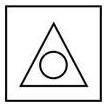
- (d)
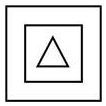
Show answer
Answer: (b)
- (a)
8. In a certain code language, 'GEAR' is coded as '16', 'ANT' is coded as '9' and 'HEART' is coded as '25'. How will 'TEAR' be coded in that language?
- (a) 16
- (b) 49
- (c) 9
- (d) 36
Show answer
Answer: (a)
9. Which two signs need to be interchanged to make the following equation correct? 72 − 12 + 8 × 6 ÷ 22 = 32
- (a) − and ×
- (b) − and +
- (c) × and ÷
- (d) − and ÷
Show answer
Answer: (d)
10. What will be the value of the following expression, if ‘+’ and ‘–’ are interchanged and ‘×’ and ‘÷’ are interchanged? 5 − 3 ÷ 8 × 12 + 4
- (a) 2
- (b) 3
- (c) 14
- (d) 42
Show answer
Answer: (b)
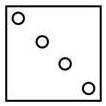
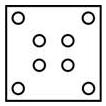
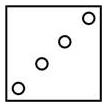
11.
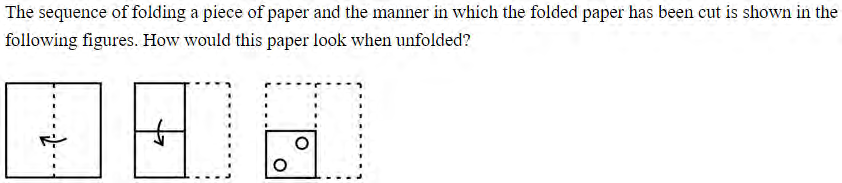
- (a)
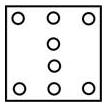
- (b)
- (c)
- (d)
Show answer
Answer: (c)
- (a)
12. Six friends are sitting around a circular table facing the centre. Aman is sitting second right to Sneha. Tushar is immediate left to Sneha. Ritika is not the immediate neighbour of either Sneha or Tushar. Ritika is sitting second right to Prerna. Sharique is sitting in between Ritika and Tushar. Who is is the immediate neighbour of both Tushar and Prerna?
- (a) Ritika
- (b) Sharique
- (c) Aman
- (d) Sneha
Show answer
Answer: (d)
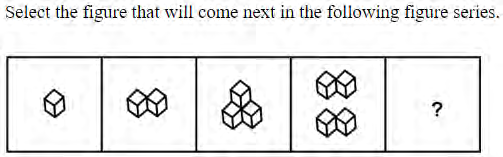
13.
- (a)
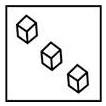
- (b)
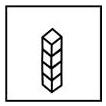
- (c)

- (d)

Show answer
Answer: (d)
- (a)
14. Select the option that is related to the fifth number in the same way as the second number is related to the first number and the fourth number is related to the third number. 39 : 72 :: 217 : 428 :: 135 : ?
- (a) 153
- (b) 137
- (c) 264
- (d) 298
Show answer
Answer: (c)
15. In a certain code language, 'HALT' is written as 'SZOG', and 'CROM' is written as 'XILN'. How will 'PIGY' be written in that language?
- (a) KRBT
- (b) KSBT
- (c) KRTB
- (d) KSTB
Show answer
Answer: (c)
16. Read the given statements and conclusions carefully. Assuming that the information given in the statements is true, even if it appears to be at variance with commonly known facts, decide which of the given conclusions logically follow(s) from the statements. Statements: I. No B is L. II. No C is B. Conclusions: I. Some L are C. II. Some B are C.
- (a) Both conclusions I and II follow
- (b) Only conclusion I follows
- (c) Neither conclusion I nor II follows
- (d) Only conclusion II follows
Show answer
Answer: (c)
17. Select the number from among the given options that can replace the question mark (?) in the following series. 21, 23, 20, 22, 19, 21, ?
- (a) 17
- (b) 18
- (c) 23
- (d) 22
Show answer
Answer: (b)
18. In a certain code language, 'RARE' is written as '2' and 'CAT' is written as '1'. How will 'RICKSAW' be written in that language?
- (a) 4
- (b) 2
- (c) 3
- (d) 8
Show answer
Answer: (b)
19.

- (a)

- (b)

- (c)

- (d)

Show answer
Answer: (a)
- (a)
20. Select the letter-cluster from among the given options that can replace the question mark (?) in the following series. PC, NA, LY, JW, ?
- (a) IV
- (b) IU
- (c) HV
- (d) HU
Show answer
Answer: (d)
21. Select the option that is related to the fifth term in the same way as the second term is related to the first term and the fourth term is related to the third term. VIOLET : WUJHPNMKFDUS :: RING : SQJHOMHF :: NEED : ?
- (a) OMFDFDEC
- (b) CEDFFDMO
- (c) NEEDDEEN
- (d) ONFEFEED
Show answer
Answer: (a)
22.
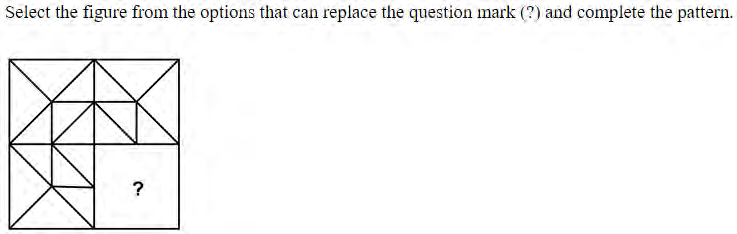
- (a)

- (b)

- (c)

- (d)

Show answer
Answer: (d)
- (a)
23.
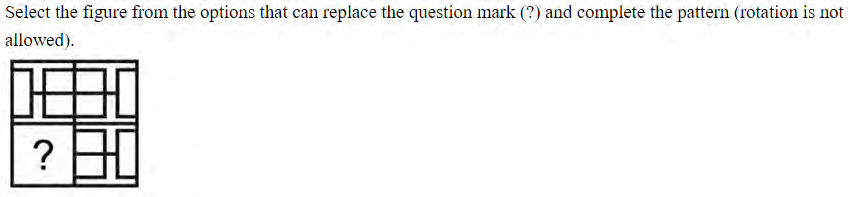
- (a)

- (b)

- (c)

- (d)

Show answer
Answer: (b)
- (a)
24. Select the option that is related to the fifth number in the same way as the second number is related to the first number and the fourth number is related to the third number. 3678 : 3747 :: 1052 : 1121 :: 96 : ?
- (a) 1025
- (b) 822
- (c) 165
- (d) 467
Show answer
Answer: (c)
25. Read the given statements and conclusions carefully. Assuming that the information given in the statements is true, even if it appears to be at variance with commonly known facts, decide which of the given conclusions logically follow(s) from the statements. Statements: Some fans are bulbs. Some bulbs are tube lights. Some tube lights are coolers. Conclusions: I. Some fans are coolers. II. Some tube lights are fans.
- (a) Only conclusion II follows
- (b) Only conclusion I follows
- (c) Both conclusions I and II follow
- (d) Neither conclusion I nor II follows
Show answer
Answer: (d)
Numerical Aptitude
1.

- (a)

- (b)

- (c)

- (d)

Show answer
Answer: (a)
- (a)
2.

- (a)

- (b)

- (c)

- (d)

Show answer
Answer: (c)
- (a)
3.

- (a)

- (b)

- (c)

- (d)

Show answer
Answer: (d)
- (a)
4.

- (a)

- (b)

- (c)

- (d)

Show answer
Answer: (c)
- (a)
5.

- (a)

- (b)

- (c)

- (d)

Show answer
Answer: (b)
- (a)
6.

- (a)

- (b)

- (c)

- (d)

Show answer
Answer: (a)
- (a)
7.

- (a)

- (b)

- (c)

- (d)

Show answer
Answer: (a)
- (a)
8.

- (a)

- (b)

- (c)

- (d)

Show answer
Answer: (c)
- (a)
9.
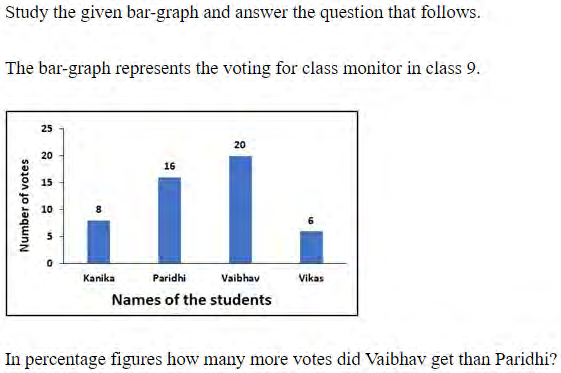
- (a)

- (b)

- (c)

- (d)

Show answer
Answer: (b)
- (a)
10.
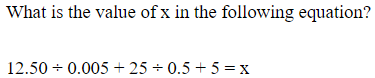
- (a)

- (b)

- (c)

- (d)

Show answer
Answer: (a)
- (a)
12.

- (a)

- (b)

- (c)

- (d)

Show answer
Answer: (d)
- (a)
13.

- (a)

- (b)

- (c)

- (d)

Show answer
Answer: (a)
- (a)
14.

- (a)

- (b)

- (c)

- (d)

Show answer
Answer: (d)
- (a)
15.
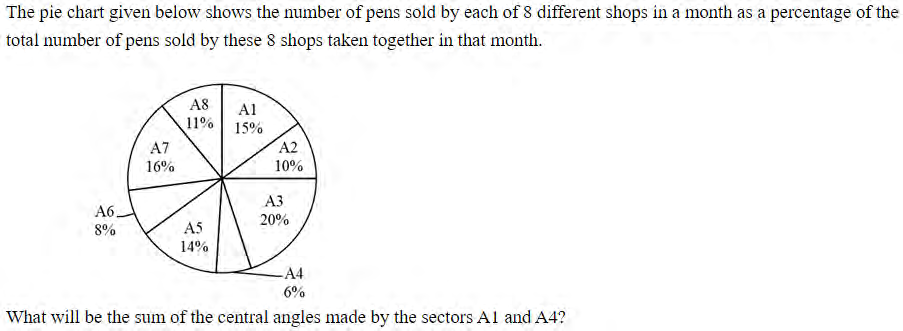
- (a)

- (b)

- (c)

- (d)

Show answer
Answer: (a)
- (a)
16.

- (a)

- (b)

- (c)

- (d)

Show answer
Answer: (d)
- (a)
17.

- (a)
- (b)

- (c)
- (d)

Show answer
Answer: (b)
- (a)
18.

- (a)
- (b)
- (c)

- (d)

Show answer
Answer: (d)
- (a)
19.

- (a)

- (b)

- (c)

- (d)

Show answer
Answer: (d)
- (a)
20.

- (a)

- (b)

- (c)

- (d)

Show answer
Answer: (d)
- (a)
21.

- (a)

- (b)

- (c)

- (d)

Show answer
Answer: (a)
- (a)
22.

- (a)

- (b)

- (c)

- (d)

Show answer
Answer: (a)
- (a)
23.

- (a)

- (b)

- (c)

- (d)

Show answer
Answer: (c)
- (a)
24.

- (a)

- (b)

- (c)

- (d)

Show answer
Answer: (d)
- (a)
25.

- (a)
- (b)

- (c)
- (d)

Show answer
Answer: (a)
- (a)
General Awareness
1. What is the duration of a football match (in regular time)?
- (a) 90 minutes
- (b) 80 minutes
- (c) 70 minutes
- (d) 60 minutes
Show answer
Answer: (a)
2. What is the total number of periods and groups in the Modern Periodic Table?
- (a) Period: 9Group: 7
- (b) Period: 18Group: 7
- (c) Period: 7Group: 9
- (d) Period: 7Group: 18
Show answer
Answer: (d)
3. In which year did India win its first International Cricket Council(ICC) ODI World Cup?
- (a) 2011
- (b) 1983
- (c) 2007
- (d) 1992
Show answer
Answer: (b)
4. Bhagwant Mann became the Chief Minister of ________ in March 2022.
- (a) Himachal Pradesh
- (b) Haryana
- (c) Delhi
- (d) Punjab
Show answer
Answer: (d)
5. Sayyid Ahmed Khan founded Mohammedan Anglo-Oriental College in _________ in 1875.
- (a) Aligarh
- (b) Calcutta
- (c) Delhi
- (d) Lahore
Show answer
Answer: (a)
6. Vedantam Satyanarayana Sarma is known for which classical dance form?
- (a) Mohiniyattam
- (b) Kuchipudi
- (c) Kathak
- (d) Kathakali
Show answer
Answer: (b)
7. The revenue system of Mughal period during Akbar’s reign was called ______.
- (a) Iqta
- (b) Zabt
- (c) Ghari
- (d) Charai
Show answer
Answer: (b)
8. The Government of India flagship scheme called UJALA completed 7 years in January 2022. Under this scheme the Ministry of Power distributed ______.
- (a) electric fans
- (b) air conditioners
- (c) LED bulbs
- (d) fluorescent lamps
Show answer
Answer: (c)
9. Which of the following is a neighbouring country of India?
- (a) Australia
- (b) Iran
- (c) Russia
- (d) Maldives
Show answer
Answer: (d)
10. The deficiency of which of the following vitamins causes Pellagra?
- (a) B1
- (b) B5
- (c) B3
- (d) B2
Show answer
Answer: (c)
11. The Deccan festival is a five-day long festival which reflects the culture of the Deccan. The festival is associated with which state?
- (a) Kerala
- (b) Karnataka
- (c) Maharashtra
- (d) Andhra Pradesh
Show answer
Answer: (d)
13. The Constitution of India has given power to the Supreme court to issue certain writs. How many types of these writs are mentioned in the constitution?
- (a) Four
- (b) Five
- (c) Two
- (d) Six
Show answer
Answer: (b)
14. Harmandar Sahib is situated in which city of Punjab?
- (a) Bathinda
- (b) Amritsar
- (c) Kapurthala
- (d) Patiala
Show answer
Answer: (b)
15. Which of the following books was written by Indian author RK Narayan?
- (a) The White Tiger
- (b) Think Like a Monk
- (c) The Shadow Lines
- (d) Malgudi Days
Show answer
Answer: (d)
16. Who among the following is referred to as ‘Prince of Bhangra’, due to his Bhangra music?
- (a) Diljit Dosanjh
- (b) Sukhbir Singh
- (c) Arijit Singh
- (d) Shaan
Show answer
Answer: (b)
17. Through which of the following states does the Brahmaputra river enter India?
- (a) Punjab
- (b) Manipur
- (c) Assam
- (d) Arunachal Pradesh
Show answer
Answer: (d)
18. Which of the following is also known as ‘New Stone Age’ in the civilisation history of India?
- (a) Epipaleolithic
- (b) Mesolithic
- (c) Paleolithic
- (d) Neolithic
Show answer
Answer: (d)
19. Mushroom rocks are formed due to _____.
- (a) glacial deposition
- (b) deposition of sea waves
- (c) running water erosion
- (d) wind erosion
Show answer
Answer: (d)
21. _____________ is a type of mask dance that tells mythological stories via ferocious martial moves, popular in Odisha.
- (a) Paika
- (b) Danda-Jatra
- (c) Chhau
- (d) Jhumar
Show answer
Answer: (c)
22. Which tax slab is applied in India if Individual taxpayer’s annual taxable income is more than ₹15 lakh?
- (a) 20%
- (b) 30%
- (c) 10%
- (d) 40%
Show answer
Answer: (b)
23. Tea cultivation is an example of which type of agriculture system?
- (a) Mixed agriculture
- (b) Plantation agriculture
- (c) Mediterranean agriculture
- (d) Shifting agriculture
Show answer
Answer: (b)
24. Who among the following British Viceroys partitioned Bengal in 1905?
- (a) Lord Lytton
- (b) Lord Hardinge
- (c) Lord Curzon
- (d) Lord Irwin
Show answer
Answer: (c)
25. As per Census 2011, which of the following states of India has the highest population?
- (a) Uttar Pradesh
- (b) Tamil Nadu
- (c) Bihar
- (d) Chhattisgarh
Show answer
Answer: (a)
Show answers
Answer key
Answer key as marked in the Staff Selection Commission’s response sheet. “—” means the sheet did not show it clearly.
General English
- Q 1
- (d)
- Q 2
- (a)
- Q 3
- (c)
- Q 4
- (b)
- Q 5
- (c)
- Q 6
- (d)
- Q 7
- (c)
- Q 8
- (c)
- Q 9
- (d)
- Q 10
- (c)
- Q 11
- (d)
- Q 12
- (b)
- Q 14
- (d)
- Q 15
- (b)
- Q 16
- (a)
- Q 17
- (a)
- Q 18
- (b)
- Q 19
- (b)
- Q 20
- (a)
- Q 21
- (d)
- Q 22
- (a)
- Q 23
- (a)
- Q 24
- (c)
- Q 25
- (a)
General Intelligence and Reasoning
- Q 1
- (c)
- Q 2
- (a)
- Q 3
- (c)
- Q 4
- (a)
- Q 5
- (c)
- Q 6
- (c)
- Q 7
- (b)
- Q 8
- (a)
- Q 9
- (d)
- Q 10
- (b)
- Q 11
- (c)
- Q 12
- (d)
- Q 13
- (d)
- Q 14
- (c)
- Q 15
- (c)
- Q 16
- (c)
- Q 17
- (b)
- Q 18
- (b)
- Q 19
- (a)
- Q 20
- (d)
- Q 21
- (a)
- Q 22
- (d)
- Q 23
- (b)
- Q 24
- (c)
- Q 25
- (d)
Numerical Aptitude
- Q 1
- (a)
- Q 2
- (c)
- Q 3
- (d)
- Q 4
- (c)
- Q 5
- (b)
- Q 6
- (a)
- Q 7
- (a)
- Q 8
- (c)
- Q 9
- (b)
- Q 10
- (a)
- Q 12
- (d)
- Q 13
- (a)
- Q 14
- (d)
- Q 15
- (a)
- Q 16
- (d)
- Q 17
- (b)
- Q 18
- (d)
- Q 19
- (d)
- Q 20
- (d)
- Q 21
- (a)
- Q 22
- (a)
- Q 23
- (c)
- Q 24
- (d)
- Q 25
- (a)
General Awareness
- Q 1
- (a)
- Q 2
- (d)
- Q 3
- (b)
- Q 4
- (d)
- Q 5
- (a)
- Q 6
- (b)
- Q 7
- (b)
- Q 8
- (c)
- Q 9
- (d)
- Q 10
- (c)
- Q 11
- (d)
- Q 13
- (b)
- Q 14
- (b)
- Q 15
- (d)
- Q 16
- (b)
- Q 17
- (d)
- Q 18
- (d)
- Q 19
- (d)
- Q 21
- (c)
- Q 22
- (b)
- Q 23
- (b)
- Q 24
- (c)
- Q 25
- (a)