ExamBharo · SSC MTS 2021 — 20 July 2022, Shift 2 · exambharo.com/ssc-mts/previous-year-papers/ssc-mts-2021-20-jul-shift-2/
Question paper · SSC MTS & Havaldar
SSC MTS 2021 — 20 July 2022, Shift 2
20 July 2022 · 1:00 PM–2:30 PM93 of the paper’s 100 questions1 per correct answer
Questions from the Staff Selection Commission’s paper of 20 July 2022, 1:00 PM–2:30 PM.
Preparing for SSC MTS & Havaldar? Get more, free
Daily previous-year questions as quizzes, and every SSC MTS & Havaldar notice the day it is out.
General English
1. Select the most appropriate meaning of the given idiom. Give someone a taste of their own medicine
- (a) Sell something back to someone
- (b) Mistreat someone in the same way they have treated others
- (c) Show someone their faults
- (d) Make fun of someone
Show answer
Answer: (b)
2. The following sentence has been split into four segments. Identify the segment that contains a grammatical error. Uttar Pradesh / accounts for about 16 per cent / of the / country population.
- (a) of the
- (b) country population
- (c) Uttar Pradesh
- (d) accounts for about 16 per cent
Show answer
Answer: (b)
3. Select the most appropriate option to fill in the blank. We are ______ to the true legacy of humanism, and we must never forget this.
- (a) Heirs
- (b) Hair
- (c) Hares
- (d) Here
Show answer
Answer: (a)
4. Parts of the following sentence have been given as options. One of them may contain an error. Select the part that contains the error from the given options. If you don’t find any error, mark ‘No error’ as your answer. You have to understood what normal political rhetoric looks like.
- (a) understood what normal
- (b) political rhetoric looks like
- (c) No error
- (d) You have to
Show answer
Answer: (a)
5. Select the most appropriate ANTONYM of the underlined word in the given sentence. Community leaders were baffled by the sudden arrival of the President.
- (a) flustered
- (b) composed
- (c) thwarted
- (d) confused
Show answer
Answer: (b)
6. Select the option that rectifies the incorrectly spelt words in the given sentence. Our webcite is no longer avaialbale to the users.
- (a) Our webcite is no longer available to the users.
- (b) Our websight is no longer availbale to the users.
- (c) Our website no longer available to the users.
- (d) Our website is no longer availbale to the users.
Show answer
Answer: (c)
7. Select the option that will improve the underlined part of the given sentence. In case no improvement is needed, select 'No improvement required'. I has no doubts that there is a lesson which stands to be learnt from Alice's misfortune.
- (a) have no doubt that there is a lesson
- (b) have had no doubts that their is a lesson
- (c) am having no doubts that there are a lesson
- (d) No improvement required
Show answer
Answer: (a)
8. Select the most appropriate meaning of the underlined idiom. He was on cloud nine after passing the test.
- (a) Very depressed
- (b) Very happy
- (c) Not educated
- (d) Busy at work
Show answer
Answer: (b)
9. The following sentence has been divided into parts. One of them may contain an error. Select the part that contains the error from the given options. If you don’t find any error, mark ‘No error’ as your answer. Discrimination at the basis / of gender is not / acceptable in this office.
- (a) of gender is not
- (b) acceptable in this office
- (c) No error
- (d) Discrimination at the basis
Show answer
Answer: (d)
10. Select the option that will improve the underlined part of the sentence. In case no improvement is needed, select ‘No improvement required’. Viren examined careful all the possibilities of data theft.
- (a) carefully examined
- (b) No improvement required
- (c) examine careful
- (d) careful examined
Show answer
Answer: (a)
11. Select the most appropriate option to fill in the blank. The RTE Act bears many similarities to the US's No Child Left Behind Act, ______ school accountability, assessment standards and teacher training.
- (a) startling
- (b) responding
- (c) including
- (d) concluding
Show answer
Answer: (c)
12. Select the most appropriate option to fill in the blank. I think it is quite ______ that your parents still hold hands.
- (a) adorable
- (b) adorably
- (c) adore
- (d) adores
Show answer
Answer: (a)
13. Select the most appropriate synonym of the given word. Slim
- (a) Flashy
- (b) Rosy
- (c) Skinny
- (d) Moody
Show answer
Answer: (c)
14. Select the option that will improve the underlined part of the sentence. In case no improvement is needed, select ‘No improvement required’. You are not supposed to touch these books.
- (a) off touching these
- (b) No improvement required
- (c) on touched that
- (d) to touch this
Show answer
Answer: (b)
15. Select the most appropriate synonym of the given word. Sporadic
- (a) Infrequent
- (b) Ample
- (c) Methodical
- (d) Regular
Show answer
Answer: (a)
16. Select the option that can be used as a one-word substitute for the given group of words. A game in which no one wins
- (a) Hung
- (b) Lapse
- (c) Null
- (d) Draw
Show answer
Answer: (d)
17. Select the most appropriate ANTONYM of the given word. Evident
- (a) Obvious
- (b) Distinct
- (c) Hidden
- (d) Apparent
Show answer
Answer: (c)
18. Select the option that will improve the underlined part of the given sentence. In case no improvement is needed, select 'No improvement required'. The district woken up to a thick blanket of snow this morning as the winter entered its most bitter phase.
- (a) wake up to a
- (b) No improvement required
- (c) awaken up to an
- (d) woke up to a
Show answer
Answer: (d)
19. Select the correctly spelt word.
- (a) Beneficial
- (b) Benificial
- (c) Beneifical
- (d) Benificail
Show answer
Answer: (a)
20. Select the option that will improve the underlined part of the given sentence. In case no improvement is needed, select ‘No improvement required’. The community members as well as teachers are presently into the bus station.
- (a) are presently on
- (b) are present at
- (c) No improvement required
- (d) is present at
Show answer
Answer: (b)
PassageFor questions 21–25
In the following passage, some words have been deleted. Read the passage carefully and select the most appropriate option to fill in each blank.
The Crosses, the village (1) ______ Vasili Andreevich lived, consisted of six houses. As soon as they had passed the blacksmith’s hut, (2) ______ last in the village, they realised that the wind was much stronger than they had thought. The road could hardly be seen. The tracks left by the sledge-runners were immediately (3) ______ by snow and the road was only (4) ______ by the fact that it was higher than the rest of the ground. There was a swirl of snow over the fields and the line where sky and earth met could not be (5) ______.
21. Select the most appropriate option to fill in blank number 1.
- (a) when
- (b) we’re
- (c) where
- (d) what
Show answer
Answer: (c)
22. Select the most appropriate option to fill in blank number 2.
- (a) an
- (b) the
- (c) one
- (d) a
Show answer
Answer: (b)
23. Select the most appropriate option to fill in blank number 3.
- (a) exposed
- (b) highlighted
- (c) covered
- (d) made
Show answer
Answer: (c)
24. Select the most appropriate option to fill in blank number 4.
- (a) anguished
- (b) distinguished
- (c) crushed
- (d) extinguished
Show answer
Answer: (b)
25. Select the most appropriate option to fill in blank number 5.
- (a) seen
- (b) seeing
- (c) saw
- (d) see
Show answer
Answer: (a)
General Intelligence and Reasoning
1.

- (a)

- (b)

- (c)

- (d)

Show answer
Answer: (d)
- (a)
2.
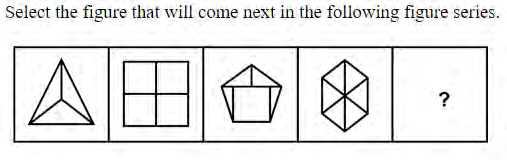
- (a)

- (b)

- (c)

- (d)

Show answer
Answer: (b)
- (a)
3. The scores of seven batsman B1, B2, B3, B4, B5, B6 and B7 are compared. The score of B1 is greater than B7 and B3. The score of B6 is neither more nor less than the score of B4 but more than B1. B5 scored less than only one batsman. The score of B7 is not the least score. How many batsman scored more than B4?
- (a) 3
- (b) 1
- (c) 2
- (d) 4
Show answer
Answer: (c)
4. Read the given statements and conclusions carefully. Assuming that the information given in the statements is true, even if it appears to be at variance with commonly known facts, decide which of the given conclusions logically follow(s) from the statements. Statements: I. All M are Q. II. No L is Q. Conclusions: I. No M is L. II. Some L are not M.
- (a) Neither conclusion I nor II follows
- (b) Both conclusions I and II follow
- (c) Only conclusion II follows
- (d) Only conclusion I follows
Show answer
Answer: (b)
5.
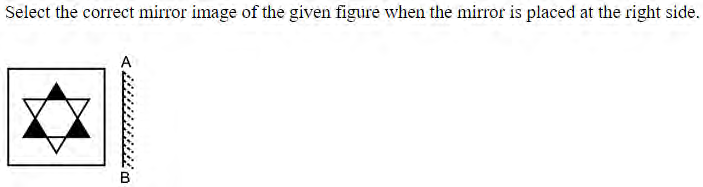
- (a)

- (b)

- (c)

- (d)

Show answer
Answer: (c)
- (a)
6. Select the option that will replace the question mark (?) in the given series. 45, 35, 27, 21, 17, ?
- (a) 14
- (b) 13
- (c) 15
- (d) 16
Show answer
Answer: (c)
7. In a certain code language, ‘Ashok is big’ is written as ‘pr 6 8’, ‘Huge people are strong’ is written as ‘lm pt 7 @’ and ‘Is big are’ is written as ‘pr pt 8’. What can be the possible code for ‘Ashok people’ in that code language?
- (a) 6 pt
- (b) 8 7
- (c) 6 lm
- (d) lm @
Show answer
Answer: (c)
8. Select the option that is related to the fifth word in the same way as the second word is related to the first word and the fourth word is related to the third word. Cricket : Bat :: Hockey : Stick :: Rugby : ?
- (a) Ball
- (b) Goal
- (c) Field
- (d) Player
Show answer
Answer: (a)
9.
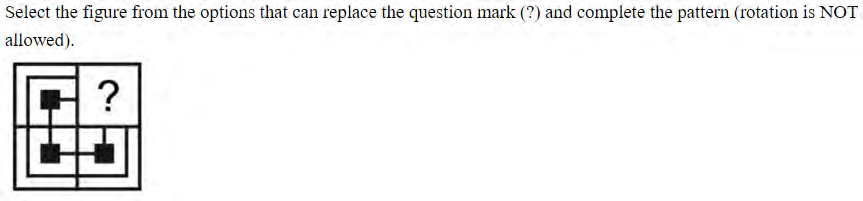
- (a)

- (b)

- (c)

- (d)

Show answer
Answer: (a)
- (a)
10. Select the option that is related to the fifth number in the same way as the second number is related to the first number and fourth number is related to third number. 7 : 2401 :: 3 : 441 :: 5 : ?
- (a) 685
- (b) 880
- (c) 1805
- (d) 1225
Show answer
Answer: (d)
11. In a certain code language, 'nu vu du' is written as 'Please ask Hamza', 'hu du ru' is written as 'Give water please', and 'tu vu ru' is written as 'Give Hamza Book'. What is the code for the word 'Book' in that language?
- (a) ru
- (b) vu
- (c) tu
- (d) nu
Show answer
Answer: (c)
12. Select the option that is related to the third letter-cluster in the same way as the second letter-cluster is related to the first letter-cluster. RBS : OXN :: OXA : ?
- (a) LTW
- (b) LUW
- (c) LTV
- (d) LUV
Show answer
Answer: (c)
13.
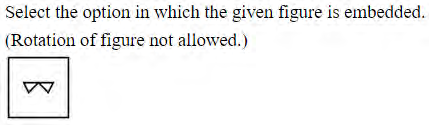
- (a)

- (b)

- (c)

- (d)

Show answer
Answer: (a)
- (a)
14. Select the option in which the numbers are related in the same way as are the numbers in the given set. (131, 142, 153)
- (a) (161, 172, 195)
- (b) (119, 130, 141)
- (c) (149, 160, 193)
- (d) (127, 149, 160)
Show answer
Answer: (b)
15. After interchanging the given two signs, what will be the value of the given expression? ÷ and × 5 + 10 ÷ 8 × 2 – 20
- (a) 25
- (b) 30
- (c) 20
- (d) 35
Show answer
Answer: (a)
16. Select the letter-cluster from among the given options that can replace the question mark (?) in the following series. ACL, DFO, GIR, JLU, MOX, ?
- (a) PRA
- (b) NPZ
- (c) OQZ
- (d) ARP
Show answer
Answer: (a)
17. In a certain code language, 'ADULT' is coded as '53' and 'LACK' is coded as '23'. How will 'HEAVEN' be coded in that language?
- (a) 58
- (b) 55
- (c) 49
- (d) 61
Show answer
Answer: (c)
18. Read the given statements and conclusions carefully. Assuming that the information given in the statements is true, even if it appears to be at variance with commonly known facts, decide which of the given conclusions logically follow(s) from the statements. Statements: All scales are pencils. Some pencils are erasers. Conclusions: I: Some scales are erasers. II: Some pencils are scales.
- (a) Both I and II follow
- (b) Only II follows
- (c) Only I follows
- (d) Neither I nor II follows
Show answer
Answer: (b)
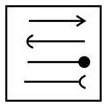
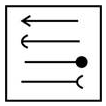
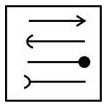
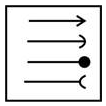
19.

- (a)
- (b)
- (c)
- (d)
Show answer
Answer: (c)
- (a)
20. Which two numbers should be interchanged to make the given equation correct? 81 + 31 ÷ 9 – 7 = 33
- (a) 9 and 7
- (b) 31 and 9
- (c) 31 and 81
- (d) 81 and 7
Show answer
Answer: (c)
21. Select the option that is related to the fifth term in the same way as the second term is related to the first term and the fourth term is related to the third term. SIDE22 : UKFG19 :: SETS15 : UGVU12 :: MINE11 : ?
- (a) NJOF12
- (b) OKPG8
- (c) NJOF9
- (d) OKPG14
Show answer
Answer: (b)
22. In a certain code language, ‘sand is hot’ is written as ‘6 8 9’ and ‘grains are white sand’ is written as ‘4 3 9 2’. What is the code for ‘hot’ in that code language?
- (a) 4
- (b) 6 or 8
- (c) 9
- (d) 3
Show answer
Answer: (b)
23. Seven girls V, K, L, P, A, C and N are sitting in a row facing the South (not necessarily in the same order). L is to the immediate left of P. K is at one of the ends. A is the immediate neighbour of K. Only N is between A and C. Only P is between L and C. Which of the following statements is/are correct? I. P is third to the left of A. II. N is to the immediate right of C.
- (a) Neither I nor II
- (b) Only I
- (c) Both I and II
- (d) Only II
Show answer
Answer: (c)
24. Select the number from the given options that can replace the question mark (?) in the following series. 482, 239, 158, 131, 122, ?
- (a) 121
- (b) 119
- (c) 117
- (d) 113
Show answer
Answer: (b)
25. Six friends Amit, Bhuvan, Chand, David, Emily and Fedrick are sitting around a circular table facing towards the centre (not necessarily in the same order). Amit sits third to the left of David. David sits to the immediate right of Bhuvan. Bhuvan sits second to the left of Emily. Chand sits second to the right of Fedrick. Who sits second to the right of Amit?
- (a) Chand
- (b) Bhuvan
- (c) Emily
- (d) Fedrick
Show answer
Answer: (b)
Numerical Aptitude
1.

- (a)

- (b)

- (c)

- (d)

Show answer
Answer: (c)
- (a)
2.

- (a)

- (b)

- (c)

- (d)

Show answer
Answer: (c)
- (a)
3.
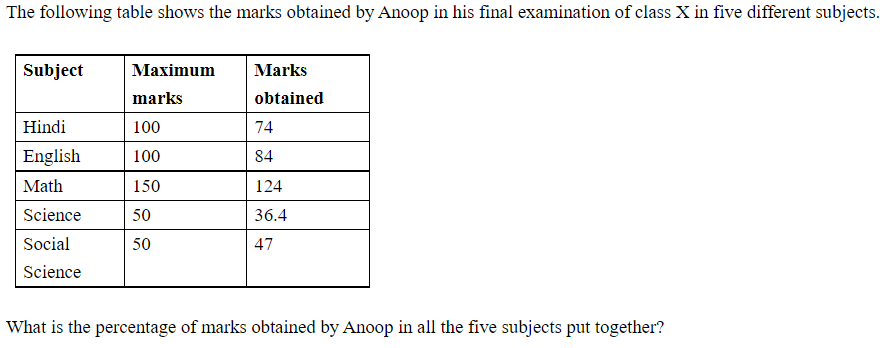
- (a)

- (b)

- (c)

- (d)

Show answer
Answer: (c)
- (a)
5.

- (a)

- (b)

- (c)

- (d)

Show answer
Answer: (d)
- (a)
6.

- (a)

- (b)

- (c)

- (d)

Show answer
Answer: (a)
- (a)
7.
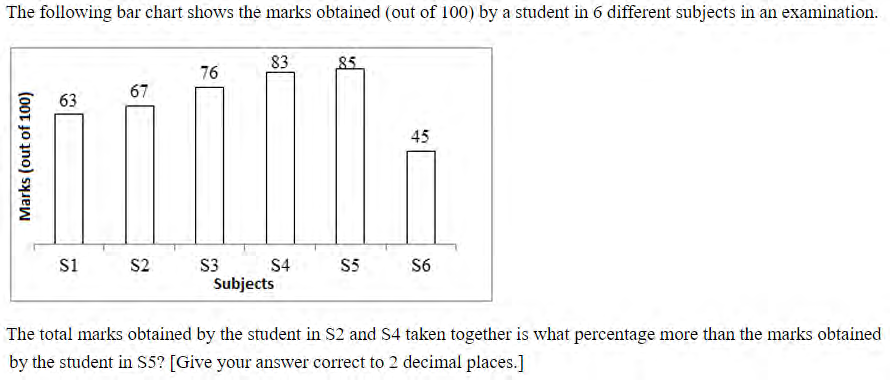
- (a)

- (b)

- (c)

- (d)

Show answer
Answer: (c)
- (a)
8.

- (a)

- (b)

- (c)

- (d)

Show answer
Answer: (c)
- (a)
10.

- (a)

- (b)

- (c)

- (d)

Show answer
Answer: (c)
- (a)
13.

- (a)

- (b)
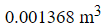
- (c)

- (d)

Show answer
Answer: (d)
- (a)
14.

- (a)

- (b)

- (c)

- (d)

Show answer
Answer: (a)
- (a)
15.

- (a)

- (b)

- (c)

- (d)

Show answer
Answer: (d)
- (a)
16.

- (a)

- (b)

- (c)

- (d)

Show answer
Answer: (c)
- (a)
17.
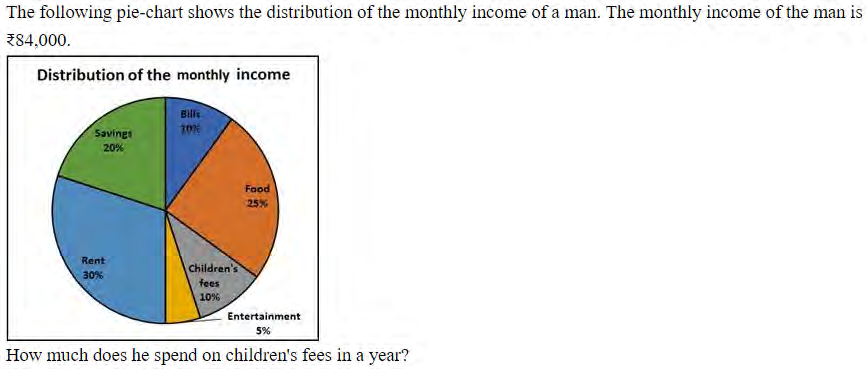
- (a)

- (b)

- (c)

- (d)

Show answer
Answer: (d)
- (a)
18.

- (a)

- (b)

- (c)

- (d)

Show answer
Answer: (d)
- (a)
19.

- (a)

- (b)

- (c)

- (d)

Show answer
Answer: (c)
- (a)
21.

- (a)

- (b)
- (c)

- (d)

Show answer
Answer: (d)
- (a)
22.

- (a)

- (b)

- (c)

- (d)

Show answer
Answer: (b)
- (a)
24.

- (a)

- (b)

- (c)

- (d)

Show answer
Answer: (c)
- (a)
25.

- (a)

- (b)

- (c)

- (d)

Show answer
Answer: (c)
- (a)
General Awareness
1. Which of the following is an example of Phylum Mammalia of Animal Kingdom?
- (a) Hen
- (b) Crocodile
- (c) Pigeon
- (d) Rat
Show answer
Answer: (d)
2. As per the 2011 Census, arrange the following languages in descending order of Speakers strength: Marathi, Hindi, Maithili.
- (a) Marathi, Hindi, Maithili
- (b) Marathi, Maithili, Hindi
- (c) Hindi, Maithili, Marathi
- (d) Hindi, Marathi, Maithili
Show answer
Answer: (d)
3. Which Indian actress was also one of the dancer to be honoured with the 'Padma Shri' award in 1968?
- (a) Hema Malini
- (b) Sridevi
- (c) Vyjayanthimala
- (d) Madhubala
Show answer
Answer: (c)
4. In the northern and north-western part of India, ______ is the main food crop.
- (a) Wheat
- (b) Rice
- (c) Maize
- (d) millet
Show answer
Answer: (a)
5. Lavani is the dance form of which state?
- (a) Gujarat
- (b) Maharashtra
- (c) Rajasthan
- (d) Karnataka
Show answer
Answer: (b)
6. Which team won the Indian Super League 2021-22?
- (a) Jamshedpur FC
- (b) ATK Mohun Bagan
- (c) Hyderabad FC
- (d) Kerala Blasters FC
Show answer
Answer: (c)
7. The terminology ‘direct free kick’ is associated with which sport?
- (a) Cricket
- (b) Badminton
- (c) Football
- (d) Hockey
Show answer
Answer: (c)
8. Who among the following was conferred the Dadasaheb Phalke Award at the 67th National Film Awards ceremony?
- (a) Sanjay Dutt
- (b) S Shankar
- (c) Rajinikanth
- (d) Amitabh Bachchan
Show answer
Answer: (c)
9. In which of the following states of India is Gangaur festival celebrated?
- (a) Manipur
- (b) Rajasthan
- (c) Karnataka
- (d) Kerala
Show answer
Answer: (b)
10. In November 2021, ‘the Duare Ration’ scheme was launched in ______.
- (a) Kerala
- (b) Gujarat
- (c) West Bengal
- (d) Uttarakhand
Show answer
Answer: (c)
11. The Mahabodhi Temple is an ancient Buddhist temple. It is situated in which state of India?
- (a) Rajasthan
- (b) Uttar Pradesh
- (c) Kerala
- (d) Bihar
Show answer
Answer: (d)
12. Genghis Khan died in which year?
- (a) 1227
- (b) 1234
- (c) 1222
- (d) 1220
Show answer
Answer: (a)
14. Who among the following freedom fighters was the first woman to become the Governor of Uttar Pradesh State?
- (a) Sarojini Naidu
- (b) Raikumari Amrit Kaur
- (c) Sheila Dikshit
- (d) Kasturba Gandhi
Show answer
Answer: (a)
15. The rhythmic rise and fall of ocean water twice in a day is called a ______.
- (a) fall
- (b) tide
- (c) wave
- (d) current
Show answer
Answer: (b)
16. What is the draft of legislative proposal that needs to be passed in both houses of Parliament of India to become an Act called?
- (a) Article
- (b) Amendment
- (c) Bill
- (d) Form
Show answer
Answer: (c)
17. ______ is the market value of all final goods and services produced within a domestic territory of a country measured in a year.
- (a) Gross margin
- (b) Gross Domestic Product (GDP)
- (c) Net National Product (NNP)
- (d) Gross National Product (GNP)
Show answer
Answer: (b)
18. Which of the following is a biotic component of ecology?
- (a) Sunlight
- (b) Carbonic substance
- (c) Humidity
- (d) Fungi
Show answer
Answer: (d)
19. With which of the following musical instruments was Ustad Alla Rakha primarily associated?
- (a) Sitar
- (b) Sarod
- (c) Tabla
- (d) Flute
Show answer
Answer: (c)
20. What is Brahmaputra River called in Arunachal Pradesh?
- (a) Tsangpo
- (b) Purab Ganga
- (c) Dihang
- (d) Mandakini
Show answer
Answer: (c)
21. Which feature of the Indian Constitution refers to the existence of more than one level of government in the country?
- (a) Radicalism
- (b) Federalism
- (c) Liberalism
- (d) Secularism
Show answer
Answer: (b)
22. Which of the following rulers did NOT belong to Maurya dynasty?
- (a) Bindusara
- (b) Ashoka
- (c) Chandragupta
- (d) Bimbisara
Show answer
Answer: (d)
23. Who among the following led of the famous Indigo Revolt in Bengal?
- (a) Mahatma Gandhi
- (b) Bishnu Charan Biswas and Digambar Biswas
- (c) Vasudev Balwant Phadke
- (d) Madari Pasi
Show answer
Answer: (b)
24. With respect to occupation, secondary activities include _______.
- (a) mining
- (b) administration
- (c) construction work
- (d) fishing
Show answer
Answer: (c)
25. Which of the following is an example of metalloid?
- (a) Indium
- (b) Gallium
- (c) Boron
- (d) Aluminium
Show answer
Answer: (c)
Show answers
Answer key
Answer key as marked in the Staff Selection Commission’s response sheet. “—” means the sheet did not show it clearly.
General English
- Q 1
- (b)
- Q 2
- (b)
- Q 3
- (a)
- Q 4
- (a)
- Q 5
- (b)
- Q 6
- (c)
- Q 7
- (a)
- Q 8
- (b)
- Q 9
- (d)
- Q 10
- (a)
- Q 11
- (c)
- Q 12
- (a)
- Q 13
- (c)
- Q 14
- (b)
- Q 15
- (a)
- Q 16
- (d)
- Q 17
- (c)
- Q 18
- (d)
- Q 19
- (a)
- Q 20
- (b)
- Q 21
- (c)
- Q 22
- (b)
- Q 23
- (c)
- Q 24
- (b)
- Q 25
- (a)
General Intelligence and Reasoning
- Q 1
- (d)
- Q 2
- (b)
- Q 3
- (c)
- Q 4
- (b)
- Q 5
- (c)
- Q 6
- (c)
- Q 7
- (c)
- Q 8
- (a)
- Q 9
- (a)
- Q 10
- (d)
- Q 11
- (c)
- Q 12
- (c)
- Q 13
- (a)
- Q 14
- (b)
- Q 15
- (a)
- Q 16
- (a)
- Q 17
- (c)
- Q 18
- (b)
- Q 19
- (c)
- Q 20
- (c)
- Q 21
- (b)
- Q 22
- (b)
- Q 23
- (c)
- Q 24
- (b)
- Q 25
- (b)
Numerical Aptitude
- Q 1
- (c)
- Q 2
- (c)
- Q 3
- (c)
- Q 5
- (d)
- Q 6
- (a)
- Q 7
- (c)
- Q 8
- (c)
- Q 10
- (c)
- Q 13
- (d)
- Q 14
- (a)
- Q 15
- (d)
- Q 16
- (c)
- Q 17
- (d)
- Q 18
- (d)
- Q 19
- (c)
- Q 21
- (d)
- Q 22
- (b)
- Q 24
- (c)
- Q 25
- (c)
General Awareness
- Q 1
- (d)
- Q 2
- (d)
- Q 3
- (c)
- Q 4
- (a)
- Q 5
- (b)
- Q 6
- (c)
- Q 7
- (c)
- Q 8
- (c)
- Q 9
- (b)
- Q 10
- (c)
- Q 11
- (d)
- Q 12
- (a)
- Q 14
- (a)
- Q 15
- (b)
- Q 16
- (c)
- Q 17
- (b)
- Q 18
- (d)
- Q 19
- (c)
- Q 20
- (c)
- Q 21
- (b)
- Q 22
- (d)
- Q 23
- (b)
- Q 24
- (c)
- Q 25
- (c)