ExamBharo · SSC MTS 2021 — 20 July 2022, Shift 1 · exambharo.com/ssc-mts/previous-year-papers/ssc-mts-2021-20-jul-shift-1/
Question paper · SSC MTS & Havaldar
SSC MTS 2021 — 20 July 2022, Shift 1
20 July 2022 · 9:00 AM–10:30 AM91 of the paper’s 100 questions1 per correct answer
Questions from the Staff Selection Commission’s paper of 20 July 2022, 9:00 AM–10:30 AM.
Preparing for SSC MTS & Havaldar? Get more, free
Daily previous-year questions as quizzes, and every SSC MTS & Havaldar notice the day it is out.
General English
1. Select the most appropriate ANTONYM of the underlined word. After a long and rigorous fast the Lord appeared before him.
- (a) Sweaty
- (b) Exhausting
- (c) Oppressive
- (d) Lenient
Show answer
Answer: (d)
2. Select the option that will improve the underlined part of the given sentence. In case no improvement is needed, select 'No improvement required'. Most workers resigns to join new jobs within the same industry.
- (a) resigned
- (b) was resigning
- (c) No improvement required
- (d) has resigned
Show answer
Answer: (a)
3. The following sentence has been split into four segments. Identify the segment that contains a grammatical error. A tiger’s skull / is similar / to / a lion.
- (a) is similar
- (b) A tiger’s skull
- (c) a lion
- (d) to
Show answer
Answer: (c)
4. Select the most appropriate option to fill in the blank. My friend, who is a photographer, is ________ a writer.
- (a) also
- (b) too
- (c) again
- (d) and
Show answer
Answer: (a)
5. Select the most appropriate option to fill in the blank. The bank was prepared to ______ chance and lend him 40% of the purchase price.
- (a) make a
- (b) spare a
- (c) take a
- (d) see a
Show answer
Answer: (c)
6. The following sentence has been split into four segments. Identify the segment that contains a grammatical error. People and / there demands / are ever-growing, but / the availability of land is limited.
- (a) People and
- (b) there demands
- (c) the availability of land is limited
- (d) are ever-growing, but
Show answer
Answer: (b)
7. Select the most appropriate option to fill in the blank. I'm frustrated with the ______ minded view of history this article presents.
- (a) small
- (b) wide
- (c) narrow
- (d) bigger
Show answer
Answer: (c)
8. Select the option that will improve the underlined part of the given sentence. In case no improvement is needed, select ‘No improvement required’. Caffeine is a diuretic that makes you urinate more often.
- (a) No improvement required
- (b) more much often
- (c) many often
- (d) oftenly more
Show answer
Answer: (a)
9. Select the most appropriate meaning of the underlined idiom in the given sentence. I always smell a rat when John says that he is going out for extra classes.
- (a) Suspect trickery or deception
- (b) Reveal a secret
- (c) Trust completely
- (d) Say something stupid
Show answer
Answer: (a)
10. Select the most appropriate option to fill in the blank. The Armenian language has many dialects, some of which cannot be ______ by speakers of other dialects.
- (a) understood
- (b) realised
- (c) memorised
- (d) completed
Show answer
Answer: (a)
11. Select the option that can be used as a one-word substitute for the given group of words. Someone who is silent or uncommunicative in speech.
- (a) Garrulous
- (b) Reserved
- (c) Voluble
- (d) Imperceptible
Show answer
Answer: (b)
12. Select the idiom that can substitute the underlined segment in the given sentence. Roy's customers think that the council has become irrational.
- (a) Too much on their plates
- (b) A piece of cake
- (c) Browned off
- (d) Gone bananas
Show answer
Answer: (d)
13. Select the most appropriate ANTONYM of the given word. Ebullient
- (a) Carefree
- (b) Dejected
- (c) Buoyant
- (d) Roguish
Show answer
Answer: (b)
14. Select the option that will improve the underlined part of the given sentence. In case no improvement is needed, select 'No improvement required'. The family can none long stay in their big house.
- (a) not stay longest
- (b) No improvement required
- (c) stay no long
- (d) no longer stay
Show answer
Answer: (d)
15. Select the most appropriate synonym of the given word. Enraged
- (a) Peaceful
- (b) Fortunate
- (c) Furious
- (d) Elated
Show answer
Answer: (c)
16. Select the INCORRECTLY spelt word.
- (a) Foriegn
- (b) Secondary
- (c) Evince
- (d) Portfolio
Show answer
Answer: (a)
17. Select the most appropriate synonym of the given word. Flagrant
- (a) Favourable
- (b) Wonderful
- (c) Magnificent
- (d) Atrocious
Show answer
Answer: (d)
18. Select the most appropriate option to substitute the underlined segment in the given sentence. If there is no need to substitute it, select ‘No substitution required.’ Many people believe that women make better nurses because they are patient and gentle.
- (a) because she is
- (b) as they would
- (c) because they were
- (d) No substitution required
Show answer
Answer: (d)
19. Select the correctly spelt word.
- (a) Eqiupment
- (b) Strengthen
- (c) Instrumentle
- (d) Reversel
Show answer
Answer: (b)
20. The following sentence has been divided into parts. One of them may contain an error. Select the part that contains the error from the given options. If you don’t find any error, mark ‘No error’ as your answer. Many countries are not acting / fast enough to controlled / climate change.
- (a) climate change
- (b) Many countries are not acting
- (c) No error
- (d) fast enough to controlled
Show answer
Answer: (d)
PassageFor questions 21–25
In the following passage, some words have been deleted. Read the passage carefully and select the most appropriate option to fill in each blank.
Elephant Island's name is attributed to (1) ______ its elephant head-like appearance and the sighting of elephant seals (2) ______ Captain George Powell in 1821, one of the (3) ______ sightings. (4) ______, in Russia it is still known under the name (5) ______ by its discoverers in 1821 – Mordvinova Island.
21. Select the most appropriate option to fill in blank number 1.
- (a) either
- (b) also
- (c) both
- (d) neither
Show answer
Answer: (c)
22. Select the most appropriate option to fill in blank number 2.
- (a) through
- (b) from
- (c) among
- (d) by
Show answer
Answer: (d)
23. Select the most appropriate option to fill in blank number 3.
- (a) earlier
- (b) early
- (c) most early
- (d) earliest
Show answer
Answer: (d)
24. Select the most appropriate option to fill in blank number 4.
- (a) Thus
- (b) However
- (c) Thereby
- (d) Therefore
Show answer
Answer: (b)
25. Select the most appropriate option to fill in blank number 5.
- (a) released
- (b) sorted
- (c) given
- (d) looked
Show answer
Answer: (c)
General Intelligence and Reasoning
1.

- (a)

- (b)

- (c)

- (d)

Show answer
Answer: (a)
- (a)
2.
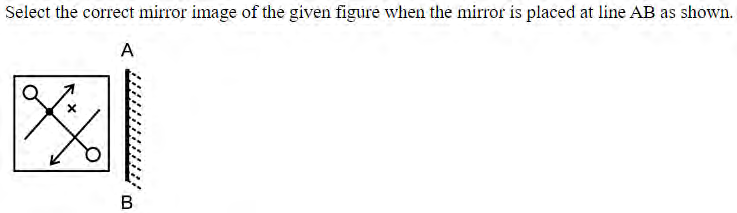
- (a)
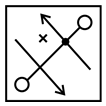
- (b)
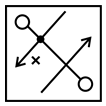
- (c)
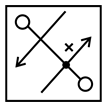
- (d)
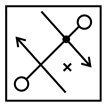
Show answer
Answer: (a)
- (a)
3. Three boys T, R and M are sitting in a row facing towards the north (not necessarily in the same order), and three girls F, G and K are sitting in a row facing towards the face of these boys (not necessarily in the same order). F and R are diagonally opposite to each other. K is not at any of the ends. Which of the following pairs of persons facing towards each other is/are definitely correct? I. GR II. KT
- (a) Only I
- (b) Only II
- (c) Both I and II
- (d) Neither I nor II
Show answer
Answer: (a)
4. Select the option that is related to the third letter-cluster in the same way as the second letter-cluster is related to the first letter-cluster. KSZ : PHC :: TNK : ?
- (a) MGN
- (b) GNO
- (c) GMO
- (d) GMN
Show answer
Answer: (d)
5. Eight girls A, B, C, D, E, F, G and H are sitting around a circular table facing opposite to the centre (not necessarily in the same order). B is second to the left of D. F is third to the left of B. A is second to the left of F. C is second to the left of A. G is third to the left of E. Three out of the following four options are similar by a certain logic and form a group. Which of the following does NOT belong to that group?
- (a) A, C, E
- (b) D, B, H
- (c) D, H, G
- (d) C, E, F
Show answer
Answer: (c)
6.

- (a)

- (b)

- (c)

- (d)

Show answer
Answer: (b)
- (a)
7. In a certain code language, 'GAME' is coded as '78', and 'PNAD' is coded as '105'. How will 'HORN' be coded in that language?
- (a) 135
- (b) 165
- (c) 145
- (d) 170
Show answer
Answer: (b)
8. Read the given statements and conclusions carefully. Assuming that the information given in the statements is true, even if it appears to be at variance with commonly known facts, decide which of the given conclusions logically follow(s) from the statements. Statements: I. All cars are red. II. No blue is red. Conclusions: I. No car is blue. II. Some red are cars.
- (a) Both conclusions I and II follow
- (b) Only conclusion II follows
- (c) All conclusions follow
- (d) None of the conclusions follow
Show answer
Answer: (c)
9. In a certain code language, 'HALMST' is written as 'IZMLTS' and 'GEASTR' is written as 'HDBRUQ'. How will 'TRAILS' be written in that language?
- (a) UOBHMR
- (b) UQBHNR
- (c) UQBIMR
- (d) UQBHMR
Show answer
Answer: (d)
10.

- (a)

- (b)

- (c)

- (d)

Show answer
Answer: (b)
- (a)
11. Select the option that is related to the fifth number in the same way as the second number is related to the first number and fourth number is related to third number. 23 : 25 :: 17 : 64 :: 29 : ?
- (a) 119
- (b) 144
- (c) 121
- (d) 169
Show answer
Answer: (c)
12. Select the number from among the given options that can replace the question mark (?) in the following series. 64, 51, 38, ?, 12, –1
- (a) 25
- (b) 22
- (c) 27
- (d) 24
Show answer
Answer: (a)
13. Read the given statements and conclusions carefully. Assuming that the information given in the statements is true, even if it appears to be at variance with commonly known facts, decide which of the given conclusions logically follow(s) from the statements. Statements: I. Some games are lands. II. Some toys are games. Conclusions: I. Some toys are not lands. II. Some lands are games.
- (a) Only conclusion I follows
- (b) Neither conclusion I nor II follows
- (c) Only conclusion II follows
- (d) Both conclusions I and II follow
Show answer
Answer: (c)
14. In a certain code language, 'WORD' is written as 'CUXJ' and 'MOKE' is written as ‘SUQK’. How will 'IDEA' be written in that language?
- (a) OJKG
- (b) OJLG
- (c) OJLH
- (d) OJMG
Show answer
Answer: (a)
15. Select the number from among the given options that can replace the question mark (?) in the following series. 13, 51, 205, 819, 3277, ?
- (a) 13109
- (b) 13107
- (c) 13108
- (d) 13106
Show answer
Answer: (b)
16. Select the option in which the two numbers are related in the same way as are the numbers in the given number-pair. 64 : 10 :: ?
- (a) 84 : 12
- (b) 54 : 12
- (c) 32 : 1
- (d) 42 : 8
Show answer
Answer: (a)
17. In a basket there are seven different fruits M, N, O, P, Q, R and S, each having a different weight. P is the heaviest. The weight of S is more than Q but less than O. The weight of M is the third lowest. R has the least weight. The weight of N is less than Q. How many fruits have more weight than S?
- (a) 2
- (b) 3
- (c) 0
- (d) 1
Show answer
Answer: (d)
18. Select the letter-cluster from among the given options that can replace the question mark (?) in the following series. GROW, FSNX, ETMY, ?, CVKA
- (a) DULX
- (b) DVLA
- (c) DVLZ
- (d) DULZ
Show answer
Answer: (d)
19. After interchanging which two numbers will the value of the given expression be ‘173’? 52 – 36 + 141 × 63 ÷ 47
- (a) 141 and 52
- (b) 47 and 63
- (c) 52 and 36
- (d) 63 and 141
Show answer
Answer: (c)
20.

- (a)

- (b)

- (c)

- (d)

Show answer
Answer: (b)
- (a)
21. Select the option that is related to the fifth letter-cluster in the same way as the second letter-cluster is related to the first letter-cluster and the fourth letter-cluster is related to the third letter-cluster. FNNC: CKKZ:: ADRS: XAOP:: BNNL: ?
- (a) ZKKI
- (b) ZKKJ
- (c) YKKI
- (d) YKKJ
Show answer
Answer: (c)
22. Select the option that is related to the third letter-cluster in the same way as the second letter-cluster is related to the first letter-cluster. PRO : NOL :: HEL : ?
- (a) FIB
- (b) FCJ
- (c) FJC
- (d) FBI
Show answer
Answer: (d)
23.
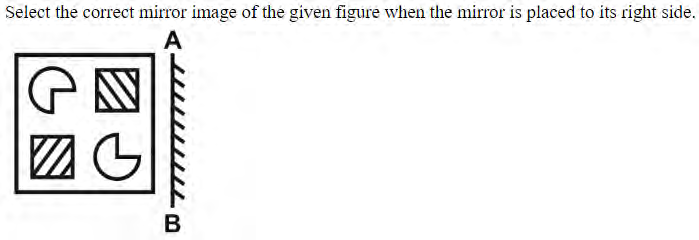
- (a)

- (b)

- (c)

- (d)

Show answer
Answer: (c)
- (a)
24. In a certain code language, 'BASEBALL' is written as '45' and 'FEEDBACK' is written as '73'. How will 'PRACTICE' be written in that language?
- (a) 27
- (b) 37
- (c) 57
- (d) 47
Show answer
Answer: (c)
25. After interchanging the given two signs and two numbers, what will be the value of the given expression? 15 and 3; + and ÷ 6 ÷ 3 + 5 × 15 – 9 = ?
- (a) 6
- (b) 15
- (c) 12
- (d) 8
Show answer
Answer: (a)
Numerical Aptitude
1.

- (a)

- (b)

- (c)

- (d)

Show answer
Answer: (b)
- (a)
3.
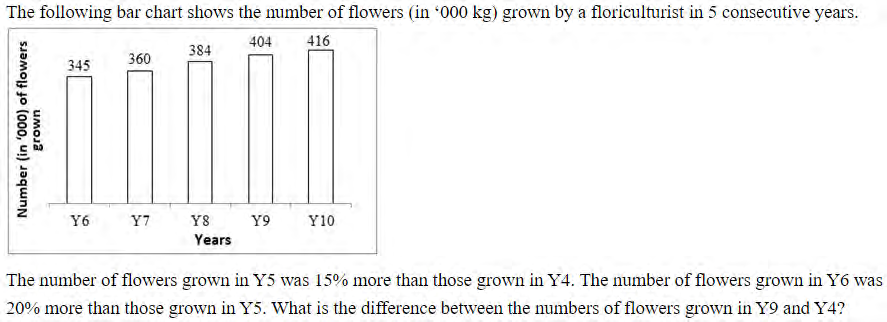
- (a)

- (b)

- (c)

- (d)

Show answer
Answer: (c)
- (a)
5.

- (a)

- (b)

- (c)

- (d)

Show answer
Answer: (b)
- (a)
6.

- (a)

- (b)

- (c)

- (d)

Show answer
Answer: (a)
- (a)
7.

- (a)

- (b)

- (c)

- (d)

Show answer
Answer: (a)
- (a)
9.

- (a)

- (b)

- (c)

- (d)

Show answer
Answer: (b)
- (a)
11.

- (a)

- (b)

- (c)

- (d)

Show answer
Answer: (c)
- (a)
12.

- (a)

- (b)

- (c)

- (d)

Show answer
Answer: (c)
- (a)
13.

- (a)

- (b)

- (c)

- (d)

Show answer
Answer: (c)
- (a)
14.

- (a)

- (b)

- (c)

- (d)

Show answer
Answer: (c)
- (a)
17.

- (a)

- (b)

- (c)

- (d)

Show answer
Answer: (a)
- (a)
20.

- (a)

- (b)

- (c)

- (d)

Show answer
Answer: (b)
- (a)
21.

- (a)

- (b)

- (c)

- (d)

Show answer
Answer: (c)
- (a)
23.
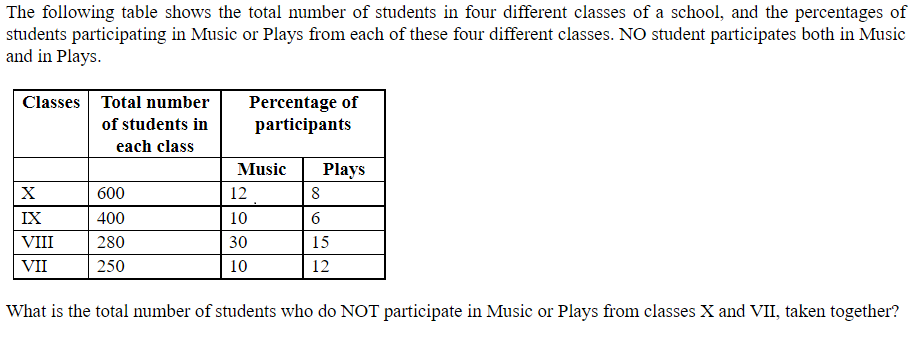
- (a)

- (b)

- (c)

- (d)

Show answer
Answer: (d)
- (a)
24.

- (a)

- (b)

- (c)

- (d)

Show answer
Answer: (a)
- (a)
25.

- (a)

- (b)

- (c)

- (d)

Show answer
Answer: (a)
- (a)
General Awareness
1. Netaji Subhash Chandra Bose International airport is situated in _____.
- (a) Kolkata
- (b) Mumbai
- (c) Delhi
- (d) Chennai
Show answer
Answer: (a)
2. The President of India can nominate maximum ______ members of the Anglo-Indian community to the House of the People, if in his opinion it is not adequately represented.
- (a) six
- (b) three
- (c) four
- (d) two
Show answer
Answer: (d)
3. ‘An Unsuitable Boy’ is the autobiography of _____.
- (a) Karan Johar
- (b) Akshay Kumar
- (c) Anurag Kashyap
- (d) Salman Khan
Show answer
Answer: (a)
4. Minati Mishra was associated with which classical dance of India?
- (a) Kathak
- (b) Kuchipudi
- (c) Odissi
- (d) Manipuri
Show answer
Answer: (c)
5. Which of the following terms is NOT associated with Tennis?
- (a) Service break
- (b) Goal
- (c) Set
- (d) Volley
Show answer
Answer: (b)
6. Which water body is present to the south of India?
- (a) Pacific Ocean
- (b) Arabian Sea
- (c) Bay of Bengal
- (d) Indian Ocean
Show answer
Answer: (d)
7. On the basis of age, the population of a nation is generally grouped into ______ broad categories.
- (a) Four
- (b) Five
- (c) Three
- (d) Two
Show answer
Answer: (c)
8. Bihu is the folk dance form of which Indian state?
- (a) Maharashtra
- (b) Assam
- (c) Karnataka
- (d) Bihar
Show answer
Answer: (b)
9. Who among the following founded Arya Samaj in 1875?
- (a) Swami Dayanand Saraswati
- (b) Ishwar Chandra Vidyasagar
- (c) Raja Ram Mohan Roy
- (d) Swami Vivekanand
Show answer
Answer: (a)
10. Which Indian wrestler won a silver medal in Tokyo Olympics 2020?
- (a) Virat Kohli
- (b) Vijender Singh
- (c) Ravi Dahiya
- (d) Yogeshwar Dutt
Show answer
Answer: (c)
11. The aviation sector was inaugurated in India in the year _____ with the establishment of Tata Airlines.
- (a) 1925
- (b) 1932
- (c) 1929
- (d) 1935
Show answer
Answer: (b)
12. Which of the following statements is correct? I. Gautama Buddha belonged to a small gana known as the Sakya gana and was a Kshatriya. II. Gautama Buddha passed away at Kusinara.
- (a) Only I
- (b) Neither I nor II
- (c) Only II
- (d) Both I and II
Show answer
Answer: (d)
13. The core of the Great Himalayas is composed of ______.
- (a) Slate
- (b) Granite
- (c) Sandstone
- (d) Limestone
Show answer
Answer: (b)
14. Which ministry launched the Krishi Udan 2.0 scheme to facilitate the movement of agricultural produce?
- (a) Ministry of Civil Aviation
- (b) Ministry of Rural Development
- (c) Ministry of Minority Affairs
- (d) Ministry of Labour and Employment
Show answer
Answer: (a)
15. Who has been reappointed as the Governor of the Reserve Bank of India (RBI) in October 2021?
- (a) T V Somanthan
- (b) Urjit Patel
- (c) Shaktikanta Das
- (d) D Subbarao
Show answer
Answer: (c)
16. Who among the following won the award for Best Music Direction in Feature Films (Songs) at the 67th National Film Awards?
- (a) D Immam
- (b) Pritam
- (c) AR Rahman
- (d) Ilaiyaraaja
Show answer
Answer: (a)
17. Bhagwati Committee (1973) presented a report on ____________.
- (a) unemployment
- (b) poverty
- (c) population growth
- (d) commerce
Show answer
Answer: (a)
18. Richard Wellesley was the Governor – General of India from ______.
- (a) 1806 – 1810
- (b) 1811 – 1816
- (c) 1817 – 1822
- (d) 1798 – 1805
Show answer
Answer: (d)
19. The feature of Directive Principles of State Policy in the Indian Constitution is borrowed from the Constitution of ______.
- (a) France
- (b) Canada
- (c) Australia
- (d) Ireland
Show answer
Answer: (d)
20. Aqua regia is a freshly prepared mixture of concentrated hydrochloric acid and concentrated nitric acid in the ratio of ______ by volume.
- (a) 3 : 1
- (b) 2 : 1
- (c) 6 : 1
- (d) 4 : 1
Show answer
Answer: (a)
21. Qutbuddin Aybak ruled over Delhi from ______.
- (a) 1266 to 1287
- (b) 1236 to 1240
- (c) 1206 to 1210
- (d) 1210 to 1236
Show answer
Answer: (c)
22. Madan Mohan temple is a centrally protected monument. It is situated in which state of India?
- (a) Himachal Pradesh
- (b) Uttarakhand
- (c) Uttar Pradesh
- (d) Karnataka
Show answer
Answer: (c)
23. Typhoid fever is caused by ______.
- (a) viruses
- (b) protozoa
- (c) bacteria
- (d) fungi
Show answer
Answer: (c)
24. Tooth decay starts when the pH of the mouth is lower than ______.
- (a) 5.5
- (b) 7.5
- (c) 9.5
- (d) 10.5
Show answer
Answer: (a)
25. ‘Maru Mahotsav’ also known as desert festival is celebrated in ______.
- (a) Jaipur
- (b) Leh
- (c) Jaisalmer
- (d) Srinagar
Show answer
Answer: (c)
Show answers
Answer key
Answer key as marked in the Staff Selection Commission’s response sheet. “—” means the sheet did not show it clearly.
General English
- Q 1
- (d)
- Q 2
- (a)
- Q 3
- (c)
- Q 4
- (a)
- Q 5
- (c)
- Q 6
- (b)
- Q 7
- (c)
- Q 8
- (a)
- Q 9
- (a)
- Q 10
- (a)
- Q 11
- (b)
- Q 12
- (d)
- Q 13
- (b)
- Q 14
- (d)
- Q 15
- (c)
- Q 16
- (a)
- Q 17
- (d)
- Q 18
- (d)
- Q 19
- (b)
- Q 20
- (d)
- Q 21
- (c)
- Q 22
- (d)
- Q 23
- (d)
- Q 24
- (b)
- Q 25
- (c)
General Intelligence and Reasoning
- Q 1
- (a)
- Q 2
- (a)
- Q 3
- (a)
- Q 4
- (d)
- Q 5
- (c)
- Q 6
- (b)
- Q 7
- (b)
- Q 8
- (c)
- Q 9
- (d)
- Q 10
- (b)
- Q 11
- (c)
- Q 12
- (a)
- Q 13
- (c)
- Q 14
- (a)
- Q 15
- (b)
- Q 16
- (a)
- Q 17
- (d)
- Q 18
- (d)
- Q 19
- (c)
- Q 20
- (b)
- Q 21
- (c)
- Q 22
- (d)
- Q 23
- (c)
- Q 24
- (c)
- Q 25
- (a)
Numerical Aptitude
- Q 1
- (b)
- Q 3
- (c)
- Q 5
- (b)
- Q 6
- (a)
- Q 7
- (a)
- Q 9
- (b)
- Q 11
- (c)
- Q 12
- (c)
- Q 13
- (c)
- Q 14
- (c)
- Q 17
- (a)
- Q 20
- (b)
- Q 21
- (c)
- Q 23
- (d)
- Q 24
- (a)
- Q 25
- (a)
General Awareness
- Q 1
- (a)
- Q 2
- (d)
- Q 3
- (a)
- Q 4
- (c)
- Q 5
- (b)
- Q 6
- (d)
- Q 7
- (c)
- Q 8
- (b)
- Q 9
- (a)
- Q 10
- (c)
- Q 11
- (b)
- Q 12
- (d)
- Q 13
- (b)
- Q 14
- (a)
- Q 15
- (c)
- Q 16
- (a)
- Q 17
- (a)
- Q 18
- (d)
- Q 19
- (d)
- Q 20
- (a)
- Q 21
- (c)
- Q 22
- (c)
- Q 23
- (c)
- Q 24
- (a)
- Q 25
- (c)