ExamBharo · SSC MTS 2021 — 15 July 2022, Shift 3 · exambharo.com/ssc-mts/previous-year-papers/ssc-mts-2021-15-jul-shift-3/
Question paper · SSC MTS & Havaldar
SSC MTS 2021 — 15 July 2022, Shift 3
15 July 2022 · 5:00 PM–6:30 PM88 of the paper’s 100 questions1 per correct answer
Questions from the Staff Selection Commission’s paper of 15 July 2022, 5:00 PM–6:30 PM.
Preparing for SSC MTS & Havaldar? Get more, free
Daily previous-year questions as quizzes, and every SSC MTS & Havaldar notice the day it is out.
General English
1. Select the most appropriate ANTONYM of the given word. Flared
- (a) Darkened
- (b) Radiated
- (c) Flamed
- (d) Glared
Show answer
Answer: (a)
2. Select the most appropriate ANTONYM of the given word. Impolite
- (a) Courteous
- (b) Superior
- (c) Uncivil
- (d) Blunt
Show answer
Answer: (a)
3. Select the option that can be used as a one-word substitute for the given group of words. Of or relating to the moon
- (a) Solar
- (b) Platonic
- (c) Fatal
- (d) Lunar
Show answer
Answer: (d)
4. Select the option that will improve the underlined part of the given sentence. In case no improvement is needed, select 'No improvement required'. A clinical thermometer consists of a long, narrow, uniform glass tube.
- (a) consisting of a
- (b) No improvement required
- (c) consist of a
- (d) consisted in a
Show answer
Answer: (b)
5. Select the most appropriate meaning of the given idiom. Move the goalposts
- (a) Unfairly alter the conditions or rules of a procedure during its course
- (b) To do your research and understand clearly what your goals are
- (c) To put a lot of effort into something
- (d) To move the goalpost after an attempt has been made to score a goal
Show answer
Answer: (a)
6. Parts of the given sentence have been given as options. One of them may contain an error. Select the part that contains the error from the given options. If you don’t find any error, mark ‘No error’ as your answer. I have watched a lot of students excel in online courses, taking fully advantage of the convenience.
- (a) excel in online courses, taking fully
- (b) advantage of the convenience
- (c) I have watched a lot of students
- (d) No error
Show answer
Answer: (a)
7. Select the most appropriate meaning of the underlined idiom in the given sentence. Stop crying for the moon and start coming up with some sensible demands.
- (a) To understand the hidden meaning
- (b) To make money unfairly
- (c) To make an impractical or unreasonable request
- (d) To praise one’s efforts
Show answer
Answer: (c)
8. Select the most appropriate synonym of the given word. Artful
- (a) Prudent
- (b) Benign
- (c) Ignorant
- (d) Crafty
Show answer
Answer: (d)
9. Parts of the following sentence have been given as options. One of them may contain an error. Select the part that contains the error from the given options. If you don’t find any error, mark ‘No error’ as your answer. Age doesn’t seeming to diminish our capacity to speak, write and learn new things.
- (a) Age doesn’t seeming to
- (b) No error
- (c) write and learn new things
- (d) diminish our capacity to speak
Show answer
Answer: (a)
10. Select the most appropriate option to fill in the blank. Fasting ______ some festivals increases the consumption of fruits.
- (a) during
- (b) while
- (c) when
- (d) about
Show answer
Answer: (a)
11. Select the most appropriate option to fill in the blank. Da Vinci's paintings reveal an obsessive fascination with ______ rituals, like those of the Freemasons.
- (a) Magnetic
- (b) Pathetic
- (c) Static
- (d) Enigmatic
Show answer
Answer: (d)
12. Parts of the following sentence have been given as options. One of them may contain an error. Select the part that contains the error from the given options. If you don’t find any error, mark ‘No error’ as your answer. Sometimes we interact to people who are closed-minded and not willing to listen.
- (a) to people who are closed-minded
- (b) and not willing to listen
- (c) Sometimes we interact
- (d) No error
Show answer
Answer: (a)
13. Select the option that can be used as a one-word substitute for the given group of words. A system of government by the wealthy class
- (a) Theocracy
- (b) Plutocracy
- (c) Autocracy
- (d) Democracy
Show answer
Answer: (b)
14. Select the option that corrects the misspelt words in the given sentence. My freind is blessed with perfect gines.
- (a) My friend is blessed with perfct gines.
- (b) My freind is bllessed with perfct gines.
- (c) My freind is blesed with perfect genes.
- (d) My friend is blessed with perfect genes.
Show answer
Answer: (d)
15. Select the correctly spelt word.
- (a) Telivision
- (b) Televison
- (c) Televisoin
- (d) Television
Show answer
Answer: (d)
16. Select the option that will improve the underlined part of the sentence. In case no improvement is needed, select ‘No improvement required’. Antibiotics are one off the most commonly prescribed drugs in the world.
- (a) No improvement required
- (b) are one of a
- (c) are one of the
- (d) is one of the
Show answer
Answer: (c)
17. Select the most appropriate option to fill in the blank. She refused to back ______, so she was fired from the company.
- (a) down
- (b) over
- (c) upon
- (d) into
Show answer
Answer: (a)
18. Select the option that will improve the underlined part of the given sentence. In case no improvement is needed, select 'No improvement required'. You is not allowed to sit here without permission.
- (a) has not allowed
- (b) are not allowed
- (c) is no allowing
- (d) No improvement required
Show answer
Answer: (b)
19. Select the most appropriate synonym of the given word. Tenderness
- (a) Ruthlessness
- (b) Severity
- (c) Kindness
- (d) Spitefulness
Show answer
Answer: (c)
20. Select the most appropriate option to fill in the blank. The Intergovernmental Panel on Climate Change (IPCC) ______ the idea of ‘tipping points’ two decades ago.
- (a) introduced
- (b) shortened
- (c) wounded
- (d) withdrawn
Show answer
Answer: (a)
PassageFor questions 21–25
In the following passage, some words have been deleted. Read the passage carefully and select the most appropriate option to fill in each blank.
Delhi’s meteorology (1) ______ the quantity of chaff burnt play a greater role in (2) ______ air quality than the time chosen by farmers in Punjab to start crop burning, a study argues. Crop burning, a traditional practice in Punjab and Haryana of (3) ______ fields off rice chaff to prepare for winter sowing, begins around October and (4) ______ in November, coinciding with the (5) ______ of southwest monsoon.
21. Select the most appropriate option to fill in blank number 1.
- (a) among
- (b) and
- (c) yet
- (d) but
Show answer
Answer: (b)
22. Select the most appropriate option to fill in blank number 2.
- (a) worsening
- (b) worsens
- (c) worsen
- (d) worse
Show answer
Answer: (a)
23. Select the most appropriate option to fill in blank number 3.
- (a) racing
- (b) raising
- (c) rising
- (d) razing
Show answer
Answer: (d)
24. Select the most appropriate option to fill in blank number 4.
- (a) leaks
- (b) creaks
- (c) falls
- (d) peaks
Show answer
Answer: (d)
25. Select the most appropriate option to fill in blank number 5.
- (a) availing
- (b) managing
- (c) running
- (d) withdrawal
Show answer
Answer: (d)
General Intelligence and Reasoning
1. In a certain code language, 'O' is coded as '15' and 'ADD' is coded as '9'. How will 'PURE' be coded in that language?
- (a) 60
- (b) 58
- (c) 57
- (d) 59
Show answer
Answer: (a)
2. P, Q, R, S, T, U and V are seven friends who scored different marks in a test. Scores of only two people lies between the scores of S and P with score of P greater than S. . R scored the highest marks. T scored more than Q. U and V scored second least and the least marks respectively. Who scored the fourth highest marks?
- (a) P
- (b) Q
- (c) R
- (d) S
Show answer
Answer: (b)
3. Select the option that is related to the third number in the same way as the second number is related to the first number. 2041 : 346 :: 5310 : ?
- (a) 664
- (b) 732
- (c) 516
- (d) 956
Show answer
Answer: (b)
4. Select the letter-cluster from among the given options that can replace the question mark (?) in the following series. WUE, XXG, YAI, ?
- (a) ZDK
- (b) ZOK
- (c) ZBH
- (d) ZAJ
Show answer
Answer: (a)
5. Select the number that will come next in the following series. 2, 4, 7, 11, 16, ?
- (a) 22
- (b) 21
- (c) 20
- (d) 23
Show answer
Answer: (a)
6. Select the option in which the words share the same relationship as that shared by the given pair of words. Money : Wallet
- (a) Books : Cardboard
- (b) Bag : Box
- (c) Safety: Locker
- (d) Letter : Envelop
Show answer
Answer: (d)
7. Read the given statements and conclusions carefully. Assuming that the information given in the statements is true, even if it appears to be at variance with commonly known facts, decide which of the given conclusions logically follow(s) from the statements. Statements: All bottles are jugs. All jugs are cups. Conclusions: I. All bottles are cups. II. All cups are bottles.
- (a) Neither conclusion I nor II follows
- (b) Both conclusions I and II follow
- (c) Only conclusion I follows
- (d) Only conclusion II follows
Show answer
Answer: (c)
8. Which of the number (not digits) should be interchanged in the given equation to make it mathematically correct? 12 ÷ 3 − 2 + 5 × 4 = 23
- (a) 3 and 4
- (b) 3 and 2
- (c) 3 and 5
- (d) 4 and 5
Show answer
Answer: (b)
9. Read the given statements and conclusions carefully. Assuming that the information given in the statements is true, even if it appears to be at variance with commonly known facts, decide which of the given conclusions logically follow(s) from the statements. Statements: Some belts are leathers. All leathers are skins. Some skins are white. Conclusions: I. Some belts are skins. II. Some belts are white.
- (a) Either conclusion I or II follows
- (b) Neither conclusion I nor II follows
- (c) Only conclusion II follows
- (d) Only conclusion I follows
Show answer
Answer: (d)
10.
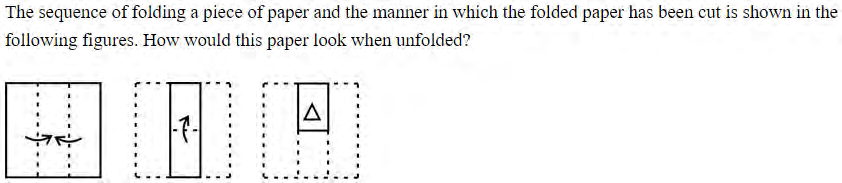
- (a)

- (b)
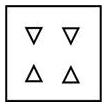
- (c)
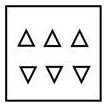
- (d)
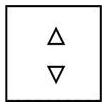
Show answer
Answer: (c)
- (a)
11. Select the option that is related to the fifth number in the same way as the second number is related to the first number and the fourth number is related to the third number. (NOTE: Operations should be performed on the whole numbers, without breaking down the numbers into its constituent digits. E.g. 13 – Operations on 13 such as adding /deleting /multiplying etc. to 13 can be performed. Breaking down 13 into 1 and 3 and then performing mathematical operations on 1 and 3 is not allowed) 2 : 16 :: 3 : 81 :: 6 : ?
- (a) 1326
- (b) 1296
- (c) 1666
- (d) 1524
Show answer
Answer: (b)
12. In a certain code language, 'ABKN' is coded as '84', and 'PNCL' is coded as '135'. How will 'HONT' be coded in that language?
- (a) 181
- (b) 171
- (c) 169
- (d) 147
Show answer
Answer: (b)
13.

- (a)

- (b)

- (c)

- (d)

Show answer
Answer: (a)
- (a)
14.

- (a)

- (b)

- (c)

- (d)

Show answer
Answer: (a)
- (a)
15. Six girls are sitting in two straight rows, facing the North. Their names are Farah, Urvashi, Yukti, Kritika, Neha and Mudita. Farah and Mudita are sitting diagonally opposite. Urvashi is in the top row and to the immediate right of Farah. Kritika is second to the left of Mudita while Yukti and Kritika are not in the same row. Who is sitting diagonally opposite to Yukti?
- (a) Urvashi
- (b) Kritika
- (c) Mudita
- (d) Neha
Show answer
Answer: (b)
16.
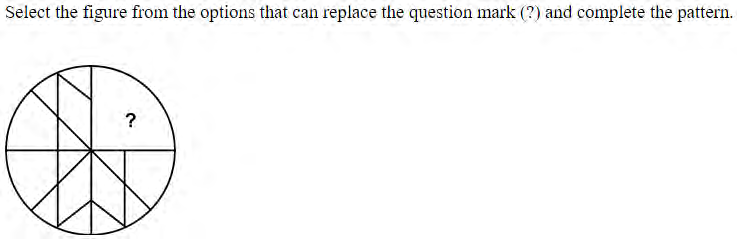
- (a)

- (b)

- (c)

- (d)

Show answer
Answer: (c)
- (a)
17. Select the option that is related to the fifth term in the same way as the second term is related to the first term and the fourth term is related to the third term. SACRIFY : ARFYICS :: NUMERAL : UEALRMN :: SHALLOW : ?
- (a) HLLWOAS
- (b) HLOWLAS
- (c) HLOLAWS
- (d) HLWLASO
Show answer
Answer: (b)
18. What will come in the place of ‘?’ in the following equation, if ‘×’ and ‘–‘ are interchanged and also ‘+’ and ‘÷’ are interchanged? 60 + 2 − 3 × 4 ÷ 2 = ?
- (a) 90
- (b) 88
- (c) 45
- (d) 27
Show answer
Answer: (b)
19. Six friends are sitting around a circular table facing the centre. Dilip is immediate neighbour of both Priya and Payal. Priti is immediate neighbour of both Mukesh and Leela. Payal is sitting to the immediate right of Mukesh. Who is sitting to the immediate right of Priya?
- (a) Dilip
- (b) Payal
- (c) Leela
- (d) Mukesh
Show answer
Answer: (c)
20. In a certain code language, '456' is written as 'sky is high', '678' is written as 'sky has dark', and '147' is written as 'star is dark'. What is the code for the word 'star' in that language?
- (a) 4
- (b) 1
- (c) 7
- (d) 5
Show answer
Answer: (b)
21. Select the option that is related to the fifth letter-cluster in the same way as the second letter-cluster is related to the first letter-cluster and the fourth letter-cluster is related to the third letter-cluster. CAM : EES :: OAT : QEZ :: TOI : ?
- (a) USO
- (b) VTO
- (c) VSO
- (d) VSP
Show answer
Answer: (c)
22.

- (a)

- (b)

- (c)

- (d)

Show answer
Answer: (b)
- (a)
23. If ORDER = $*5@* and MATTER = 2&33@*, then ROAD = ?
- (a) $*5&
- (b) $$5&
- (c) *$&5
- (d) #*5$
Show answer
Answer: (c)
24.
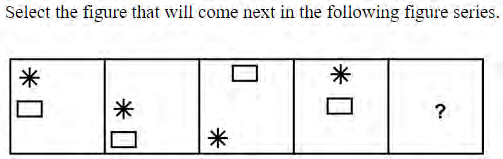
- (a)
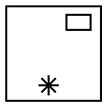
- (b)

- (c)

- (d)

Show answer
Answer: (c)
- (a)
25. Select the option that will replace the question mark (?) in the given series. 78, 89, 82, 87, 84, ?
- (a) 88
- (b) 86
- (c) 80
- (d) 78
Show answer
Answer: (b)
Numerical Aptitude
3.

- (a)

- (b)

- (c)

- (d)

Show answer
Answer: (c)
- (a)
5.

- (a)

- (b)

- (c)

- (d)

Show answer
Answer: (a)
- (a)
6.

- (a)

- (b)

- (c)

- (d)

Show answer
Answer: (c)
- (a)
9.

- (a)

- (b)

- (c)

- (d)

Show answer
Answer: (d)
- (a)
10.

- (a)

- (b)

- (c)

- (d)

Show answer
Answer: (d)
- (a)
11.

- (a)

- (b)

- (c)

- (d)

Show answer
Answer: (b)
- (a)
12.

- (a)

- (b)

- (c)

- (d)

Show answer
Answer: (c)
- (a)
13.

- (a)

- (b)

- (c)

- (d)

Show answer
Answer: (b)
- (a)
16.
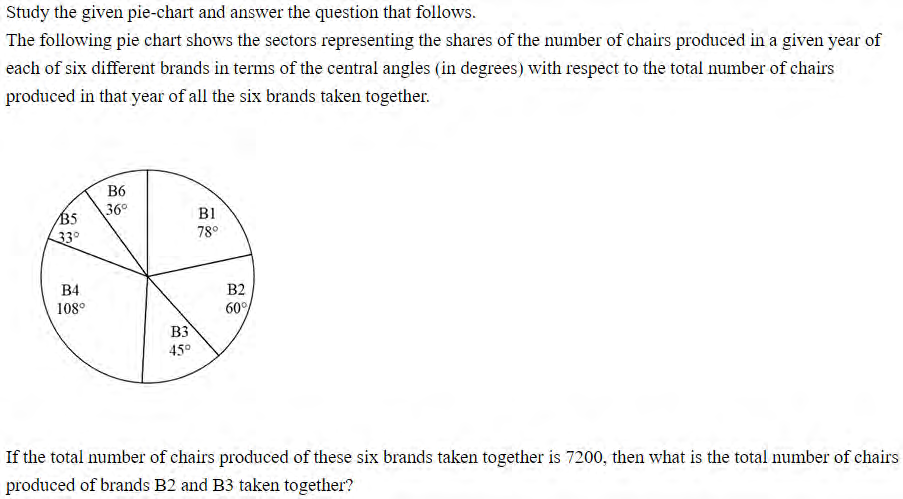
- (a)

- (b)

- (c)

- (d)

Show answer
Answer: (c)
- (a)
17.

- (a)

- (b)

- (c)

- (d)

Show answer
Answer: (d)
- (a)
20.

- (a)

- (b)

- (c)

- (d)

Show answer
Answer: (b)
- (a)
21.

- (a)

- (b)

- (c)

- (d)

Show answer
Answer: (d)
- (a)
24.

- (a)

- (b)

- (c)

- (d)

Show answer
Answer: (d)
- (a)
General Awareness
1. Who will be India’s next Foreign Secretary as announced in April 2022?
- (a) Harsh Vardhan Shringla
- (b) Dr S Jaishankar
- (c) Sushma Swaraj
- (d) Vinay Mohan Kwatra
Show answer
Answer: (d)
2. Which of the following is the least literate state in India according to Census 2021?
- (a) Gujarat
- (b) Bihar
- (c) Assam
- (d) Odisha
Show answer
Answer: (b)
3. ‘Gangaur’ is an Indian festival majorly celebrated in ________.
- (a) Rajasthan
- (b) Himachal Pradesh
- (c) Tripura
- (d) Arunachal Pradesh
Show answer
Answer: (a)
4. Which of the following is categorised under slow mass movement in geomorphic processes?
- (a) Creep
- (b) Earthflow
- (c) Mudflow
- (d) Landslide
Show answer
Answer: (a)
5. Prarthana Samaj or ‘Prayer Society’, a religious and social reform, was found in 1863 at _________.
- (a) Pune
- (b) Delhi
- (c) Surat
- (d) Bombay (now Mumbai)
Show answer
Answer: (d)
6. National Sports Day of India is celebrated on _____________.
- (a) 15 August
- (b) 26 January
- (c) 30 January
- (d) 29 August
Show answer
Answer: (d)
7. Who among the following was a Shaka ruler in India (130-150 AD)?
- (a) Ashoka
- (b) Rudradaman
- (c) Menander
- (d) Bindusara
Show answer
Answer: (b)
8. Which part of the Indian Constitution has been drawn from the British Constitution?
- (a) Fundamental Rights and the Directive Principles of State Policy
- (b) Principle of Cabinet Government and the relations between the executive and the legislature
- (c) Appointment of state governors by the centre
- (d) Federation with a strong centre
Show answer
Answer: (b)
9. According to the Census 2011, which of the following is the third-lowest state in terms of literacy rate?
- (a) Bihar
- (b) Madhya Pradesh
- (c) Rajasthan
- (d) Sikkim
Show answer
Answer: (c)
10. _______ is a disease which is transmitted by the Aedes mosquito which lays eggs in water-logged places and multiply over time.
- (a) Diarrhoea
- (b) Elephantiasis
- (c) Dengue
- (d) Malaria
Show answer
Answer: (c)
11. Which type of forest receives more than 200 cm of annual rainfall?
- (a) Temperate mixed forests
- (b) Taiga
- (c) Tropical evergreen rain forests
- (d) Tundra forests
Show answer
Answer: (c)
12. What was the shape of the Great Bath of Mohenjo Daro?
- (a) Rectangular
- (b) Square
- (c) Elliptical
- (d) Circular
Show answer
Answer: (a)
13. BR Ambedkar wrote a 20-page autobiography about his experiences with untouchability which is known as ____________.
- (a) All from Memory
- (b) My Experiments with Silence
- (c) Waiting for a Visa
- (d) Courage and Conviction
Show answer
Answer: (c)
14. Kelucharan Mohapatra is associated with _________ dance form of India.
- (a) Kathak
- (b) Hiphop
- (c) Odissi
- (d) Salsa
Show answer
Answer: (c)
15. Who was the founder of the reform movement, Arya Samaj?
- (a) Swami Dayananda Saraswati
- (b) Raja Ram Mohan Roy
- (c) Anand Mohan Bose
- (d) MG Ranade
Show answer
Answer: (a)
16. What does F stand for in the FRBM Act, 2003 of the Indian economy?
- (a) Financial
- (b) Fiscal
- (c) Functional
- (d) Freedom
Show answer
Answer: (b)
17. Which of the following laws is applicable to the force of attraction or repulsion between two point charges?
- (a) Kirchhoff's Law
- (b) Newton's Law of Universal Gravitation
- (c) Coulomb's Law
- (d) Newton's Laws of Motion
Show answer
Answer: (c)
18. Which of the following is an example of Phylum Annelida of Animal Kingdom?
- (a) Honey bee
- (b) Earthworm
- (c) Squid
- (d) Kangaroo
Show answer
Answer: (b)
19. Which state government launched the Udaan Project in collaboration with IPE Global which attempts to keep girls in schools through their enrolment at the secondary level while ensuring that the eligible ones among them get their scholarships?
- (a) Maharashtra
- (b) Assam
- (c) Rajasthan
- (d) Punjab
Show answer
Answer: (c)
20. The World Health Organisation defines adolescents as individuals in the age-group of ______.
- (a) 10 to 19 years
- (b) 8 to 15 years
- (c) 12 to 16 years
- (d) 6 to 14 years
Show answer
Answer: (a)
21. Pandit Shiv Kumar Sharma is associated with __________ musical instrument.
- (a) piano
- (b) sarod
- (c) harmonica
- (d) santoor
Show answer
Answer: (d)
22. Who is the first Law officer of India?
- (a) President
- (b) Governor
- (c) Prime Minister
- (d) Attorney-General
Show answer
Answer: (d)
23. Who among the following rulers was chronicled by Minhaj-i Siraj?
- (a) Akbar
- (b) Razia Sultan
- (c) Babur
- (d) Ghiyasuddin Tughluq
Show answer
Answer: (b)
24. For which dance form did Aparna Satheesan win the Prestigious National Nritya Shiromani Award 2022?
- (a) Kuchipudi
- (b) Mohiniyattam
- (c) Kathakali
- (d) Odissi
Show answer
Answer: (a)
25. In basketball, what can be the maximum number of points that can be scored in a shot?
- (a) 1
- (b) 3
- (c) 4
- (d) 2
Show answer
Answer: (c)
Show answers
Answer key
Answer key as marked in the Staff Selection Commission’s response sheet. “—” means the sheet did not show it clearly.
General English
- Q 1
- (a)
- Q 2
- (a)
- Q 3
- (d)
- Q 4
- (b)
- Q 5
- (a)
- Q 6
- (a)
- Q 7
- (c)
- Q 8
- (d)
- Q 9
- (a)
- Q 10
- (a)
- Q 11
- (d)
- Q 12
- (a)
- Q 13
- (b)
- Q 14
- (d)
- Q 15
- (d)
- Q 16
- (c)
- Q 17
- (a)
- Q 18
- (b)
- Q 19
- (c)
- Q 20
- (a)
- Q 21
- (b)
- Q 22
- (a)
- Q 23
- (d)
- Q 24
- (d)
- Q 25
- (d)
General Intelligence and Reasoning
- Q 1
- (a)
- Q 2
- (b)
- Q 3
- (b)
- Q 4
- (a)
- Q 5
- (a)
- Q 6
- (d)
- Q 7
- (c)
- Q 8
- (b)
- Q 9
- (d)
- Q 10
- (c)
- Q 11
- (b)
- Q 12
- (b)
- Q 13
- (a)
- Q 14
- (a)
- Q 15
- (b)
- Q 16
- (c)
- Q 17
- (b)
- Q 18
- (b)
- Q 19
- (c)
- Q 20
- (b)
- Q 21
- (c)
- Q 22
- (b)
- Q 23
- (c)
- Q 24
- (c)
- Q 25
- (b)
Numerical Aptitude
- Q 3
- (c)
- Q 5
- (a)
- Q 6
- (c)
- Q 9
- (d)
- Q 10
- (d)
- Q 11
- (b)
- Q 12
- (c)
- Q 13
- (b)
- Q 16
- (c)
- Q 17
- (d)
- Q 20
- (b)
- Q 21
- (d)
- Q 24
- (d)
General Awareness
- Q 1
- (d)
- Q 2
- (b)
- Q 3
- (a)
- Q 4
- (a)
- Q 5
- (d)
- Q 6
- (d)
- Q 7
- (b)
- Q 8
- (b)
- Q 9
- (c)
- Q 10
- (c)
- Q 11
- (c)
- Q 12
- (a)
- Q 13
- (c)
- Q 14
- (c)
- Q 15
- (a)
- Q 16
- (b)
- Q 17
- (c)
- Q 18
- (b)
- Q 19
- (c)
- Q 20
- (a)
- Q 21
- (d)
- Q 22
- (d)
- Q 23
- (b)
- Q 24
- (a)
- Q 25
- (c)