ExamBharo · SSC MTS 2021 — 13 July 2022, Shift 1 · exambharo.com/ssc-mts/previous-year-papers/ssc-mts-2021-13-jul-shift-1/
Question paper · SSC MTS & Havaldar
SSC MTS 2021 — 13 July 2022, Shift 1
13 July 2022 · 9:00 AM–10:30 AM88 of the paper’s 100 questions1 per correct answer
Questions from the Staff Selection Commission’s paper of 13 July 2022, 9:00 AM–10:30 AM.
Preparing for SSC MTS & Havaldar? Get more, free
Daily previous-year questions as quizzes, and every SSC MTS & Havaldar notice the day it is out.
General English
1. The following sentence has been divided into parts. One of them may contain an error. Select the part that contains the error from the given options. If you don’t find any error, mark ‘No error’ as your answer. The mountain lion is / one of the slyest and more / elusive animals in the woods.
- (a) one of the slyest and more
- (b) No error
- (c) The mountain lion is
- (d) elusive animals in the woods.
Show answer
Answer: (a)
2. Select the correctly spelt word.
- (a) Envisaige
- (b) Psychologist
- (c) Emergense
- (d) Trancition
Show answer
Answer: (b)
3. Select the most appropriate ANTONYM of the given word. Overrun
- (a) Surrender
- (b) Inundate
- (c) Storm
- (d) Invade
Show answer
Answer: (a)
4. Select the most appropriate option to fill in the blank. Many people may not find the rewards ______ with the time and effort required.
- (a) insignificant
- (b) gleeful
- (c) cautious
- (d) commensurate
Show answer
Answer: (d)
5. Select the most appropriate option to fill in the blank. If we don't reverse course now, will anyone take anything we say about justice and ___________ with any seriousness for decades to come?
- (a) righteousness
- (b) mediation
- (c) wickedness
- (d) dishonesty
Show answer
Answer: (a)
6. Select the most appropriate meaning of the underlined idiom in the given sentence. He is foaming at the mouth about the committee's decision.
- (a) To be enraged and show it
- (b) to cause damage to someone
- (c) to not recognize something good
- (d) to be upset about something that happened in the past
Show answer
Answer: (a)
7. Select the correctly spelt word.
- (a) Disstract
- (b) Destarct
- (c) Distract
- (d) Distarct
Show answer
Answer: (c)
8. Select the most appropriate synonym of the given word. Probe
- (a) Search
- (b) Motivate
- (c) Invite
- (d) Push
Show answer
Answer: (a)
9. Select the option that will improve the underlined part of the sentence. In case no improvement is needed, select ‘No improvement required’. You are looking so pretty on these black outfit.
- (a) pretty in this
- (b) No improvement required
- (c) prettier in these
- (d) prettiest with those
Show answer
Answer: (a)
10. Select the most appropriate option to fill in the blank. He is the patient ______ called you in the morning.
- (a) which
- (b) whom
- (c) who
- (d) that
Show answer
Answer: (c)
11. The following sentence has been divided into parts. One of them may contain an error. Select the part that contains the error from the given options. If you don’t find any error, mark ‘No error’ as your answer. They finally did what / we advice them to do / before the final match.
- (a) we advice them to do
- (b) before the final match
- (c) They finally did what
- (d) No error
Show answer
Answer: (a)
12. Select the option that can be used as a one-word substitute for the given group of words. Made in imitation so as to be passed off fraudulently as genuine
- (a) Counterfeit
- (b) Staunch
- (c) Authentic
- (d) Deliberate
Show answer
Answer: (a)
13. Select the most appropriate option to fill in the blank. Many people like playing cricket, but _____________ my opinion, it is too chaotic.
- (a) in
- (b) from
- (c) for
- (d) with
Show answer
Answer: (a)
14. Select the most appropriate ANTONYM of the given word. Impure
- (a) Contaminated
- (b) Segregated
- (c) Sterile
- (d) Concentrated
Show answer
Answer: (c)
15. The following sentence has been split into four segments. Identify the segment that contains a grammatical error. If you plant a seed, / you will be noticed / that it takes some / time to grow.
- (a) that it takes some
- (b) If you plant a seed
- (c) you will be noticed
- (d) time to grow
Show answer
Answer: (c)
16. Select the most appropriate meaning of the given idiom. Back on one’s feet
- (a) To support the losing side
- (b) Relive previous moments
- (c) Well or successful again
- (d) Forced to begin something again
Show answer
Answer: (c)
17. Select the most appropriate option to fill in the blank. This cruise ship ______ in November and December.
- (a) sails
- (b) sells
- (c) sales
- (d) seals
Show answer
Answer: (a)
18. Select the most appropriate option to fill in the blank. If you want to save your money, start living an ______ life.
- (a) improper
- (b) economical
- (c) extravagant
- (d) indulgent
Show answer
Answer: (b)
19. Select the most appropriate synonym of the given word. Clandestine
- (a) Blatant
- (b) Ornate
- (c) Open
- (d) Undercover
Show answer
Answer: (d)
20. Select the option that will improve the underlined part of the given sentence. In case no improvement is needed, select 'No improvement required'. In India, processed foods becomes popular in the 20th century.
- (a) became popular in
- (b) become popularity in
- (c) No improvement required
- (d) become popular at
Show answer
Answer: (a)
PassageFor questions 21–25
In the following passage, some words have been deleted. Read the passage carefully and select the most appropriate option to fill in each blank.
The Ministry of Defence has (1) ______ the formal Government Sanction Letter (2) ______ grant of permanent commission (PC) to women officers in the Army. “In anticipation, the Army Headquarters had (3) ______ in motion a series of preparatory actions for conduct of the Permanent Commission Selection Board for affected women officers. The Selection Board will be scheduled as (4) ______ as all affected Short Service Commissioned (SSC) women officers exercise their option and complete (5) ______ documentation,” the Army said in a statement.
21. Select the most appropriate option to fill in blank number 1.
- (a) imbibed
- (b) accused
- (c) extracted
- (d) issued
Show answer
Answer: (d)
22. Select the most appropriate option to fill in blank number 2.
- (a) since
- (b) from
- (c) for
- (d) to
Show answer
Answer: (c)
23. Select the most appropriate option to fill in blank number 3.
- (a) deposited
- (b) set
- (c) located
- (d) situated
Show answer
Answer: (b)
24. Select the most appropriate option to fill in blank number 4.
- (a) soon
- (b) late
- (c) long
- (d) blind
Show answer
Answer: (a)
25. Select the most appropriate option to fill in blank number 5.
- (a) unnecessary
- (b) optional
- (c) gratuitous
- (d) requisite
Show answer
Answer: (d)
General Intelligence and Reasoning
1. Identify the number that does NOT belong to the following series. 30, 15, 15, 22.5, 46, 112.5
- (a) 46
- (b) 112.5
- (c) 22.5
- (d) 30
Show answer
Answer: (a)
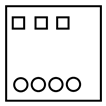
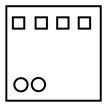
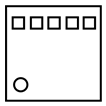
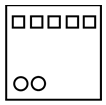
2.

- (a)
- (b)
- (c)
- (d)
Show answer
Answer: (c)
- (a)
3. Select the option that is related to the fifth letter-cluster in the same way as the second letter-cluster is related to the first letter-cluster and the fourth letter-cluster is related to the third letter-cluster. VOCAL : CVJHS :: TROOF : AYVVM :: RTAGE : ?
- (a) YAHNM
- (b) YAHML
- (c) YAHNN
- (d) YAHNL
Show answer
Answer: (d)
4.

- (a)

- (b)

- (c)

- (d)

Show answer
Answer: (a)
- (a)
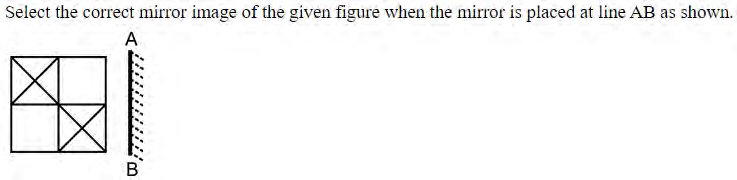
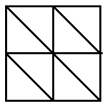
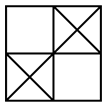
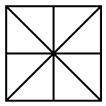
5.
- (a)
- (b)
- (c)
- (d)
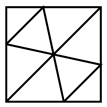
Show answer
Answer: (b)
- (a)
6. If ‘White’ is called ‘Blue’, ‘Blue’ is called ‘Red’, ‘Red’ is called ‘Yellow’, Yellow' is called ‘Green’, ‘Green’ is called ‘Black’, ‘Black’ is called ‘Violet’, and ‘Violet’ is called ‘Orange’, then what would be the colour of human blood?
- (a) Yellow
- (b) Violet
- (c) Red
- (d) Green
Show answer
Answer: (a)
7. Select the number from among the given options that can replace the question mark (?) in the following series. 632, 637, 644, 653, 664, ?
- (a) 677
- (b) 687
- (c) 679
- (d) 681
Show answer
Answer: (a)
8. Read the given statements and conclusions carefully. Assuming that the information given in the statements is true, even if it appears to be at variance with commonly known facts, decide which of the given conclusions logically follow(s) from the statements. Statements: Some mocks are exams. Some exams are banks. No bank is a local. Conclusions: I. Some mocks are local. II. No mock is a local.
- (a) Neither conclusion I nor II follows
- (b) Only conclusion I follows
- (c) Only conclusion II follows
- (d) Either conclusion I or II follows
Show answer
Answer: (d)
9. Four boys R, S, T and U are sitting in a row, facing towards the south (but not necessarily in the same order). Four girls A, B, C and D are sitting in a row, facing towards the face of these boys (but not necessarily in the same order). C and R are diagonally opposite to each other. A and S are diagonally opposite to each other. T is the immediate neighbour of R. D is the immediate neighbour of C. Who is facing D?
- (a) S
- (b) T
- (c) U
- (d) R
Show answer
Answer: (c)
10.

- (a)

- (b)

- (c)

- (d)

Show answer
Answer: (d)
- (a)
11. Which two numbers (not digits) need to be interchanged to make the given equation correct? 83 + 711 – 95 ÷ 9 × 2 = 20
- (a) 9 and 2
- (b) 711 and 95
- (c) 95 and 83
- (d) 2 and 83
Show answer
Answer: (b)
12. Select the option that is related to the fifth term in the same way as the second term is related to the first term and the fourth term is related to the third term. THROW : XPSIU :: QUICK : LDJVR :: LIGHT : ?
- (a) UIHLM
- (b) UIHJM
- (c) UIHKM
- (d) UIHJN
Show answer
Answer: (b)
13. Select the option that is related to the third number in the same way as the second number is related to the first number and sixth number is related to the fifth number. 6 : 232 :: 8 : ? : : 10 : 1016
- (a) 520
- (b) 535
- (c) 540
- (d) 528
Show answer
Answer: (d)
14. The speeds of seven cars C1, C2, C3, C4, C5, C6 and C7 are compared. All cars have different speeds. The speed of C1 is more than only two cars. The speed of C6 is more than C4 and less than C5. The speeds of C2 and C3 are the highest and the lowest, respectively. The speed of C4 is more than C1. The speed of how many cars is less than C7?
- (a) 5
- (b) 2
- (c) 4
- (d) 1
Show answer
Answer: (d)
15. Select the option that is related to the fifth number in the same way as the second number is related to the first number and the fourth number is related to the third number. 123 : 616 :: 147 : 736 :: 211 : ?
- (a) 1056
- (b) 1046
- (c) 996
- (d) 1036
Show answer
Answer: (a)
16. Select the letter-cluster that can replace the question mark (?) in the following series. GOAL, IMCJ, KKEH, MIGF, ?
- (a) OHID
- (b) OGJD
- (c) OGIC
- (d) OGID
Show answer
Answer: (d)
17. In a certain code language, '321' means 'cold filtered coffee', '653' means 'very cold day' and '985' means 'day and night'. What is the code for 'very' in the same language?
- (a) 5
- (b) 3
- (c) 9
- (d) 6
Show answer
Answer: (d)
18. In a certain code language, ‘grapes are multi red’ is coded as ‘8 6 4 3’, ‘red people eat mango’ is coded as ‘7 4 5 2’ and ‘mango multi apple’ is coded as ‘3 5 0’. How will ‘red apple’ be coded in that language?
- (a) 8 5
- (b) 4 0
- (c) 5 0
- (d) 8 6
Show answer
Answer: (b)
19.
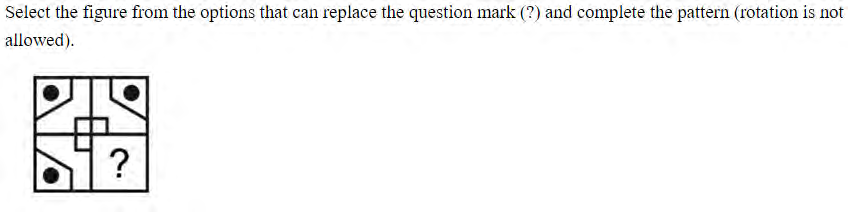
- (a)

- (b)

- (c)

- (d)

Show answer
Answer: (a)
- (a)
20. After interchanging the given two signs and two numbers, what will be the value of the following expression? ÷ and +; 7 and 15 5 ÷ 35 + 15 × 6 – 7 = ?
- (a) 40
- (b) 30
- (c) 20
- (d) 10
Show answer
Answer: (c)
21. Select the option that is related to the third word in the same way as the second word is related to the first word. Canberra : Australia :: Doha : ?
- (a) Qatar
- (b) Iran
- (c) Yemen
- (d) Kuwait
Show answer
Answer: (a)
22. Read the given statements and conclusions carefully. Assuming that the information given in the statements is true, even if it appears to be at variance with commonly known facts, decide which of the given conclusions logically follow(s) from the statements. Statements: No 90s are 80s. Some 90s are 40s. All 80s are 70s. Conclusions: I. All 80s being 40s is a possibility. II. Some 70s are not 90s.
- (a) Only conclusion II follows.
- (b) Only conclusion I follows.
- (c) Both conclusions I and II follow.
- (d) Neither conclusion I nor II follow.
Show answer
Answer: (c)
23. In a certain code language, 'DETAIL' is written as 'FCVYKJ' and 'HEALTH' is written as ‘JCCJVF’. How will 'MOTION' be written in that language?
- (a) OMVGPL
- (b) OMVGQM
- (c) OMVGQL
- (d) OMVGRL
Show answer
Answer: (c)
24.
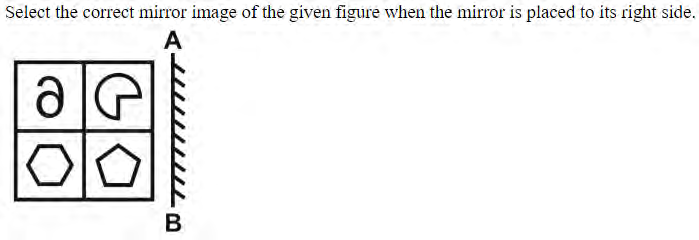
- (a)
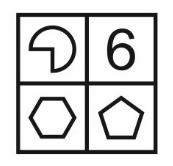
- (b)
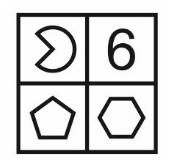
- (c)
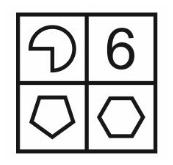
- (d)
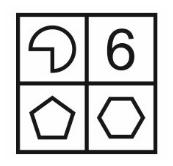
Show answer
Answer: (d)
- (a)
25. Seven girls A, B, C, D, E, F and G are sitting around a circular table facing opposite the centre (not necessarily in the same order). E is second to the right of A. C is the immediate neighbour of E. D is third to the right of C. B is the immediate neighbour of E and A. F is fourth to the right of A. Which of the following statements is correct? I. D is next to the right of G. II. A is third to the left of B.
- (a) Only II
- (b) Both I and II
- (c) Only I
- (d) Neither I nor II
Show answer
Answer: (c)
Numerical Aptitude
2.

- (a)

- (b)

- (c)

- (d)

Show answer
Answer: (c)
- (a)
3.

- (a)

- (b)

- (c)

- (d)

Show answer
Answer: (d)
- (a)
4.

- (a)

- (b)

- (c)

- (d)

Show answer
Answer: (b)
- (a)
5.

- (a)

- (b)

- (c)

- (d)

Show answer
Answer: (d)
- (a)
6.

- (a)

- (b)

- (c)

- (d)

Show answer
Answer: (b)
- (a)
7.

- (a)

- (b)

- (c)

- (d)

Show answer
Answer: (d)
- (a)
8.

- (a)

- (b)

- (c)

- (d)

Show answer
Answer: (c)
- (a)
9.
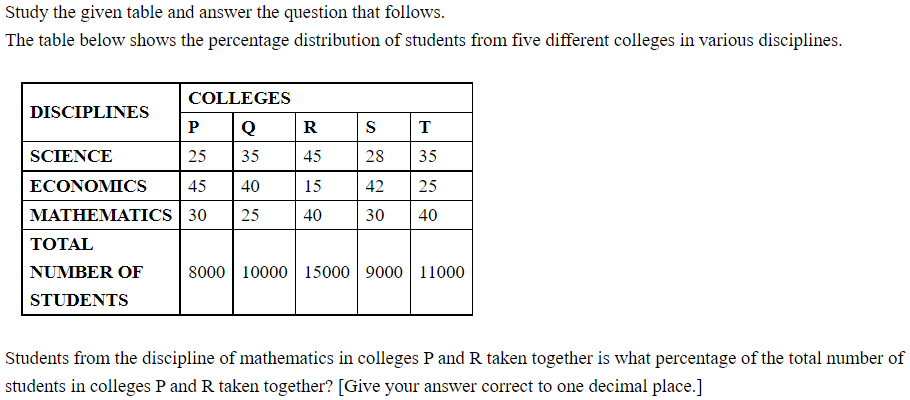
- (a)

- (b)

- (c)

- (d)

Show answer
Answer: (b)
- (a)
10.

- (a)

- (b)

- (c)

- (d)

Show answer
Answer: (c)
- (a)
11.

- (a)

- (b)

- (c)

- (d)

Show answer
Answer: (a)
- (a)
12.

- (a)

- (b)

- (c)

- (d)

Show answer
Answer: (b)
- (a)
13.

- (a)

- (b)

- (c)

- (d)

Show answer
Answer: (b)
- (a)
14.

- (a)

- (b)

- (c)

- (d)

Show answer
Answer: (d)
- (a)
17.

- (a)

- (b)

- (c)

- (d)

Show answer
Answer: (d)
- (a)
19.

- (a)

- (b)

- (c)

- (d)

Show answer
Answer: (c)
- (a)
20.

- (a)
- (b)

- (c)

- (d)

Show answer
Answer: (c)
- (a)
23.

- (a)

- (b)

- (c)

- (d)

Show answer
Answer: (a)
- (a)
25.

- (a)

- (b)

- (c)

- (d)

Show answer
Answer: (c)
- (a)
General Awareness
1. ‘The Kiss of Life’ is the autobiography of who among the following persons?
- (a) Sanjay Suri
- (b) John Abraham
- (c) Dino Morea
- (d) Emraan Hashmi
Show answer
Answer: (d)
2. In which state of India is Bhogali Bihu festival celebrated?
- (a) Assam
- (b) Andhra Pradesh
- (c) Rajasthan
- (d) Tamil Nadu
Show answer
Answer: (a)
3. Paika is a martial folk dance popular in which of the following states?
- (a) Kerala
- (b) Andhra Pradesh
- (c) Gujarat
- (d) Odisha
Show answer
Answer: (d)
6. Which of the following teams won the Ranji trophy for the year 2019-20?
- (a) Mumbai
- (b) Bengal
- (c) Baroda
- (d) Saurashtra
Show answer
Answer: (d)
8. In which of the following years was the Preamble of the Indian Constitution first amended?
- (a) 1968
- (b) 1955
- (c) 1976
- (d) 1988
Show answer
Answer: (c)
10. Which of the following rivers is also known as 'Bhagirathi' at the place of its origin?
- (a) Brahmaputra
- (b) Yamuna
- (c) Indus
- (d) Ganga
Show answer
Answer: (d)
11. Which of the following railway zones has recently completed 100% electrification of its entire route?
- (a) South Central Railway
- (b) Konkan Railway
- (c) Harbour Railway
- (d) North Eastern Railway
Show answer
Answer: (b)
12. Who of the following founded the Atmiya Samaj?
- (a) Swami Vivekananda
- (b) Bhimrao Ramji Ambedkar
- (c) Raja Ram Mohan Roy
- (d) Dayananda Saraswati
Show answer
Answer: (c)
13. Aparna Satheesan, who won the prestigious National Nritya Shiromani Award 2022, is associated with which of the following dance forms?
- (a) Sattriya
- (b) Kuchipudi
- (c) Mohiniattam
- (d) Kathak
Show answer
Answer: (b)
14. _____________ is a motion moved by a member to cut short the debate on a matter before the House.
- (a) Closure
- (b) No-Confidence
- (c) Privilege
- (d) Censure
Show answer
Answer: (a)
15. The Battle of Khanwa was fought between:
- (a) Babur and Ibrahim Lodi
- (b) Babur and Rana Sangha
- (c) Sher Shah Suri and Rana Sangha
- (d) Babur and Sher Shah Suri
Show answer
Answer: (b)
16. Which of the following is the oldest Veda?
- (a) Rigveda
- (b) Atharvaveda
- (c) Samaveda
- (d) Yajurveda
Show answer
Answer: (a)
18. Who became the first Governor–General of India in 1773?
- (a) Robert Clive
- (b) Warren Hastings
- (c) Thomas Munro
- (d) Charles Cornwallis
Show answer
Answer: (b)
19. Which of the following is NOT an institutional factor for agriculture?
- (a) Land reforms
- (b) Electricity
- (c) Size of fields
- (d) Land tenure
Show answer
Answer: (b)
20. As per the 2011 census, which of the following states of India has the least population?
- (a) Sikkim
- (b) Bihar
- (c) Kerala
- (d) Chhattisgarh
Show answer
Answer: (a)
21. Pandit Ram Narayan was associated with which musical instrument?
- (a) Flute
- (b) Sarod
- (c) Sarangi
- (d) Guitar
Show answer
Answer: (c)
22. Which of the following is an example of emulsion?
- (a) Milk
- (b) Mist
- (c) Gemstone
- (d) Clouds
Show answer
Answer: (a)
23. India won the bronze medal (the only one won by India) in which team sports at the Tokyo Olympics 2020?
- (a) Basketball
- (b) Field hockey
- (c) Badminton
- (d) Table tennis
Show answer
Answer: (b)
24. _____________ won the women’s singles title at the Swiss Open Super 300 badminton tournament 2022.
- (a) PV Sindhu
- (b) Kirsty Gilmour
- (c) Ashmita Chaliha
- (d) Busanan Ongbamrungphan
Show answer
Answer: (a)
25. According to the census 2011, the second highest populated metro in India is:
- (a) Bengaluru
- (b) Chennai
- (c) Delhi
- (d) Mumbai
Show answer
Answer: (c)
Show answers
Answer key
Answer key as marked in the Staff Selection Commission’s response sheet. “—” means the sheet did not show it clearly.
General English
- Q 1
- (a)
- Q 2
- (b)
- Q 3
- (a)
- Q 4
- (d)
- Q 5
- (a)
- Q 6
- (a)
- Q 7
- (c)
- Q 8
- (a)
- Q 9
- (a)
- Q 10
- (c)
- Q 11
- (a)
- Q 12
- (a)
- Q 13
- (a)
- Q 14
- (c)
- Q 15
- (c)
- Q 16
- (c)
- Q 17
- (a)
- Q 18
- (b)
- Q 19
- (d)
- Q 20
- (a)
- Q 21
- (d)
- Q 22
- (c)
- Q 23
- (b)
- Q 24
- (a)
- Q 25
- (d)
General Intelligence and Reasoning
- Q 1
- (a)
- Q 2
- (c)
- Q 3
- (d)
- Q 4
- (a)
- Q 5
- (b)
- Q 6
- (a)
- Q 7
- (a)
- Q 8
- (d)
- Q 9
- (c)
- Q 10
- (d)
- Q 11
- (b)
- Q 12
- (b)
- Q 13
- (d)
- Q 14
- (d)
- Q 15
- (a)
- Q 16
- (d)
- Q 17
- (d)
- Q 18
- (b)
- Q 19
- (a)
- Q 20
- (c)
- Q 21
- (a)
- Q 22
- (c)
- Q 23
- (c)
- Q 24
- (d)
- Q 25
- (c)
Numerical Aptitude
- Q 2
- (c)
- Q 3
- (d)
- Q 4
- (b)
- Q 5
- (d)
- Q 6
- (b)
- Q 7
- (d)
- Q 8
- (c)
- Q 9
- (b)
- Q 10
- (c)
- Q 11
- (a)
- Q 12
- (b)
- Q 13
- (b)
- Q 14
- (d)
- Q 17
- (d)
- Q 19
- (c)
- Q 20
- (c)
- Q 23
- (a)
- Q 25
- (c)
General Awareness
- Q 1
- (d)
- Q 2
- (a)
- Q 3
- (d)
- Q 6
- (d)
- Q 8
- (c)
- Q 10
- (d)
- Q 11
- (b)
- Q 12
- (c)
- Q 13
- (b)
- Q 14
- (a)
- Q 15
- (b)
- Q 16
- (a)
- Q 18
- (b)
- Q 19
- (b)
- Q 20
- (a)
- Q 21
- (c)
- Q 22
- (a)
- Q 23
- (b)
- Q 24
- (a)
- Q 25
- (c)