ExamBharo · SSC MTS 2021 — 12 July 2022, Shift 2 · exambharo.com/ssc-mts/previous-year-papers/ssc-mts-2021-12-jul-shift-2/
Question paper · SSC MTS & Havaldar
SSC MTS 2021 — 12 July 2022, Shift 2
12 July 2022 · 1:00 PM–2:30 PM94 of the paper’s 100 questions1 per correct answer
Questions from the Staff Selection Commission’s paper of 12 July 2022, 1:00 PM–2:30 PM.
Preparing for SSC MTS & Havaldar? Get more, free
Daily previous-year questions as quizzes, and every SSC MTS & Havaldar notice the day it is out.
General English
1. Select the option that can be used as a one-word substitute for the given group of words. A keeper or custodian of a museum
- (a) Creator
- (b) Developer
- (c) Master
- (d) Curator
Show answer
Answer: (d)
2. Select the most appropriate ANTONYM of the underlined word in the given sentence. The list included many mundane, routine tasks.
- (a) standard
- (b) temporal
- (c) customary
- (d) exceptional
Show answer
Answer: (d)
3. Select the option that will improve the underlined part of the sentence. In case no improvement is needed, select ‘No improvement required’. The smell of this flower make me felt dizzy.
- (a) making I feel
- (b) makes me feel
- (c) make me feeling
- (d) No improvement required
Show answer
Answer: (b)
4. Select the most appropriate synonym of the given word. Hurdle
- (a) Progress
- (b) Impediment
- (c) Accessory
- (d) Aid
Show answer
Answer: (b)
5. Parts of the following sentence have been given as options. One of them may contain an error. Select the part that contains the error from the given options. If you don’t find any error, mark ‘No error’ as your answer. Apart from Germany, they also visited Italy and Austria during its business trip.
- (a) also visited Italy and Austria
- (b) during its business trip
- (c) Apart from Germany, they
- (d) No error.
Show answer
Answer: (b)
6. Select the option that will improve the underlined part of the given sentence. In case no improvement is needed, select 'No improvement required'. Suspend all the employees which has been coming late.
- (a) who have been coming
- (b) who had came
- (c) that was been coming
- (d) No improvement required
Show answer
Answer: (a)
7. Select the option that can be used as a one-word substitute for the given group of words. Any award, honour or laudatory notice
- (a) Complement
- (b) Deal
- (c) Statute
- (d) Accolade
Show answer
Answer: (d)
8. Select the most appropriate option to fill in the blank. Thinking of talent as innate makes our world more manageable and more comfortable as it relieves a person of the _______ of expectation.
- (a) blessing
- (b) assistance
- (c) burden
- (d) compensation
Show answer
Answer: (c)
9. Select the most appropriate ANTONYM of the given word. Agitate
- (a) Blame
- (b) Strike
- (c) Distress
- (d) Soothe
Show answer
Answer: (d)
10. The following sentence has been split into four segments. Identify the segment that contains a grammatical error. But this immortality / will have purchased / at the price of / his immortal part.
- (a) will have purchased
- (b) at the price of
- (c) his immortal part
- (d) But this immortality
Show answer
Answer: (a)
11. Select the correctly spelt word.
- (a) Tendency
- (b) Tendensy
- (c) Tendincy
- (d) Tendancy
Show answer
Answer: (a)
12. Select the most appropriate option to fill in the blank. As he went through the street on an ______ that morning, he saw a woman with a cat under her arm.
- (a) Objection
- (b) encasement
- (c) Errand
- (d) Amendment
Show answer
Answer: (c)
13. Select the option that can be used as a one-word substitute for the given group of words. Something happening in three years
- (a) Annual
- (b) Triennial
- (c) Biennial
- (d) millennial
Show answer
Answer: (b)
14. Select the correctly spelt word.
- (a) Imprudense
- (b) Imprudence
- (c) Imprudance
- (d) Imprudanse
Show answer
Answer: (b)
15. Select the most appropriate option to fill in the blank. We are selling a single orange ______ ₹10 but nobody is ready to buy it.
- (a) on
- (b) to
- (c) with
- (d) for
Show answer
Answer: (d)
16. Select the most appropriate meaning of the underlined idiom in the given sentence. I had never seen him lose his temper, and he governed our company with an iron hand.
- (a) In anxiety
- (b) At the service
- (c) To any degree
- (d) strict and harsh control
Show answer
Answer: (d)
17. The following sentence has been divided into parts. One of them may contain an error. Select the part that contains the error from the given options. If you don’t find any error, mark ‘No error’ as your answer. Residents should keep an / eye out for strangers / acting suspecting in their areas
- (a) eye out for strangers
- (b) No error
- (c) Residents should keep an
- (d) acting suspecting in their areas
Show answer
Answer: (d)
18. Select the option that will improve the underlined part of the given sentence. In case no improvement is needed, select 'No improvement required'. When a plastic comb is rubbed on dry hair, they acquired a static charge.
- (a) it acquired a
- (b) it acquires a
- (c) they acquire an
- (d) No improvement required
Show answer
Answer: (b)
19. Select the most appropriate meaning of the underlined idiom in the given sentence. Come rain or shine, I will go to Paris tomorrow.
- (a) At the last moment
- (b) Whatever happens
- (c) To decide later
- (d) To come before the decided time
Show answer
Answer: (b)
20. Select the most appropriate synonym of the given word. Laborious
- (a) Unsophisticated
- (b) Profane
- (c) Assiduous
- (d) Pompous
Show answer
Answer: (c)
PassageFor questions 21–25
In the following passage, some words have been deleted. Read the passage carefully and select the most appropriate option to fill in each blank.
Coca-Cola is to become the new sponsor of the London Eye after (1) ______ a deal to replace France's EDF Energy. The capital's giant Ferris Wheel has been a (2) ______ tourist attraction since it was introduced in 2000, when it was (3) ______ as the Millennium Wheel. It was previously (4) ______ by British Airways before becoming the EDF Energy London Eye in 2011. Coca-Cola will take over in January after (5) ______ a two-year deal with the wheel's owner, Merlin Entertainments, for an undisclosed sum.
21. Select the most appropriate option to fill in blank number 1.
- (a) Assorting
- (b) Enclosing
- (c) Clearing
- (d) Signing
Show answer
Answer: (d)
22. Select the most appropriate option to fill in blank number 2.
- (a) Leading
- (b) Susceptible
- (c) Supportive
- (d) Mandatory
Show answer
Answer: (a)
23. Select the most appropriate option to fill in blank number 3.
- (a) Based
- (b) Inscribed
- (c) Published
- (d) Known
Show answer
Answer: (d)
24. Select the most appropriate option to fill in blank number 4.
- (a) Sponsored
- (b) Refused
- (c) kept
- (d) Authenticated
Show answer
Answer: (a)
25. Select the most appropriate option to fill in blank number 5.
- (a) Striking
- (b) Discovering
- (c) Forging
- (d) Hedging
Show answer
Answer: (a)
General Intelligence and Reasoning
1. Select the letter-cluster from among the given options that can replace the question mark (?) in the following series. TOM, UMP, VKS, ?, XGY
- (a) WHU
- (b) WIV
- (c) WIU
- (d) WHV
Show answer
Answer: (b)
2. Select the number from among the given options that can replace the question mark (?) in the following series. 121, 144, 169, ?, 225, 256
- (a) 196
- (b) 192
- (c) 188
- (d) 194
Show answer
Answer: (a)
3. Select the option in which the two numbers are related in the same way as are the numbers in the given number-pair. (NOTE: Operations should be performed on the whole numbers, without breaking down the numbers into its constituent digits. E.g. 13 – Operations on 13 such as adding /deleting /multiplying etc. to 13 can be performed. Breaking down 13 into 1 and 3 and then performing mathematical operations on 1 and 3 is not allowed) 17 : 19
- (a) 23 : 27
- (b) 43 : 53
- (c) 29 : 31
- (d) 31 : 41
Show answer
Answer: (c)
4. In a certain code language, 'GANT' is coded as '126', and 'PROM' is coded as '186'. How will 'GAIL' be coded in that language?
- (a) 63
- (b) 79
- (c) 58
- (d) 87
Show answer
Answer: (d)
5. Read the given statements and conclusions carefully. Assuming that the information given in the statements is true, even if it appears to be at variance with commonly known facts, decide which of the given conclusions logically follow(s) from the statements. Statements: I. All X are B. II. All N are X. Conclusions: I. All N are B. II. Some B are X.
- (a) Neither conclusion I nor II follows
- (b) Only conclusion II follows
- (c) Both conclusions I and II follow
- (d) Only conclusion I follows
Show answer
Answer: (c)
6.

- (a)

- (b)

- (c)

- (d)

Show answer
Answer: (c)
- (a)
7. Select the option that is related to the third letter-cluster in the same way as the second letter-cluster is related to the first letter-cluster. RL : VJ :: AN : ?
- (a) FL
- (b) EL
- (c) FM
- (d) EM
Show answer
Answer: (b)
8.
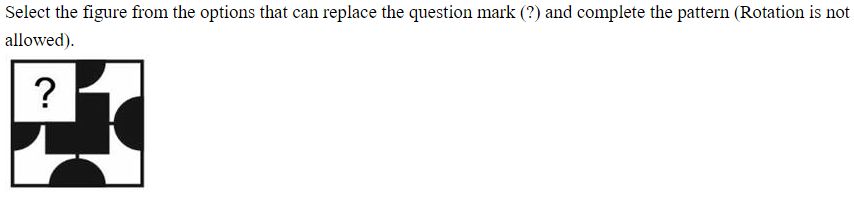
- (a)

- (b)

- (c)

- (d)

Show answer
Answer: (b)
- (a)
9.
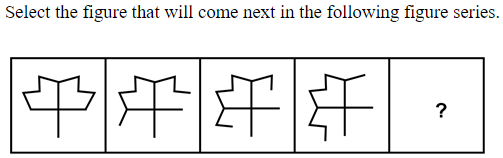
- (a)
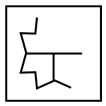
- (b)

- (c)

- (d)
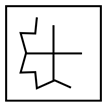
Show answer
Answer: (c)
- (a)
10. What will come in the place of ‘?’ in the following equation, if ‘+’ and ‘× ‘ are interchanged and also ‘5’ and ‘9’ are interchanged? 3 + 9 – 6 × 5 ÷ 3 = ?
- (a) 10
- (b) 16
- (c) 12
- (d) 14
Show answer
Answer: (c)
11. Select the option that is related to the fifth letter-cluster in the same way as the second letter-cluster is related to the first letter-cluster and the fourth letter-cluster is related to the third letter-cluster. GAP : EYN :: MAD : KYB :: FILE : ?
- (a) EJGC
- (b) DGJC
- (c) EHKD
- (d) DKHE
Show answer
Answer: (b)
12. By interchanging the given two signs, which of the following equations will NOT be correct? × and – I. 17 – 21 + 86 ÷ 2 × 13 = 387 II. 10 + 63 – 12 × 259 ÷ 7 = 739
- (a) Equation I
- (b) Equation II
- (c) Neither I nor II
- (d) Both I and II
Show answer
Answer: (b)
13. Read the given statements and conclusions carefully. Assuming that the information given in the statements is true, even if it appears to be at variance with commonly known facts, decide which of the given conclusions logically follow(s) from the statements. Statements: Some mangoes are radish and no radish is an apple. All apples are tomatoes. Conclusions: I: All radish being tomatoes is a possibility. II: Some radishes are tomatoes.
- (a) Neither I nor II follows
- (b) Only I follows
- (c) Only II follows
- (d) Both I and II follow
Show answer
Answer: (b)
14. Seven boys B1, B2, B3, B4, B5, B6 and B7 are sitting around a circular table, facing towards the centre (not necessarily in the same order). B3 is second to the left of B6. B1 is third to the left of B3. B7 is third to the left of B6. B4 is not the immediate neighbour of B6. B2 is not the immediate neighbour of B1, B5 is the immediate neighbour of B1 and B6.. Three out of the following four options are similar by a certain logic and form a group. Which of the following does NOT belong to that group?
- (a) B3, B6, B1
- (b) B6, B1, B7
- (c) B2, B5, B4
- (d) B7, B4, B1
Show answer
Answer: (d)
15. In a certain code language, 'SLID' is written as 'TMHC', and 'LIST' is written as 'MJRS'. How will 'PILE' be written in that code language?
- (a) QIKC
- (b) OHMF
- (c) OMHF
- (d) QJKD
Show answer
Answer: (d)
16. 6 persons A, B, C, D, E and F are sitting around a rectangular table (not necessarily in the same order) facing towards the centre. 4 persons are sitting at each corner, and one person is sitting at the middle of each shorter side of the table. B is an immediate neighbour of D and C. F is an immediate neighbour of A and D. E is an immediate neighbour of A and C. F is not sitting at any of the corners. Which of the following pairs represents the persons who are sitting exactly opposite to each other?
- (a) CD
- (b) FC
- (c) AD
- (d) BE
Show answer
Answer: (b)
17. Seven friends A, B, C, D, E, F and G have a different number of bikes. D has more bikes than F, but less bikes than G. F has less bikes than A, and A does not have the highest number of bikes. Four persons have more bikes than C. E has the least and D has the third highest number of bikes. B has less bikes than G. Who has the highest number of bikes?
- (a) B
- (b) G
- (c) D
- (d) A
Show answer
Answer: (b)
18. Select the option that is related to the fifth number in the same way as the second number is related to the first number and the fourth number is related to the third number. 8 : 32 :: 12 : 72 :: 18 : ?
- (a) 180
- (b) 234
- (c) 208
- (d) 162
Show answer
Answer: (d)
19. Select the number from among the given options that can replace the question mark (?) in the following series. 16, 32, 14, 19, 37, 21, 22, 42, ?, 25, 47, 35
- (a) 34
- (b) 26
- (c) 32
- (d) 28
Show answer
Answer: (d)
20.
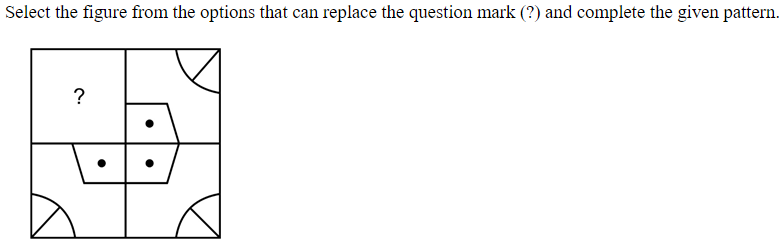
- (a)

- (b)

- (c)

- (d)

Show answer
Answer: (c)
- (a)
21. In a certain code language, '693' means 'Neha likes cakes', '135' means 'cakes are sweet', '254' means 'we are girls', then what is the code for 'sweet' in the same code language?
- (a) 3
- (b) 5
- (c) 2
- (d) 1
Show answer
Answer: (d)
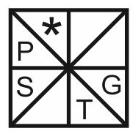
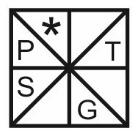
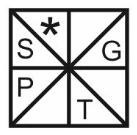
22.

- (a)
- (b)
- (c)
- (d)
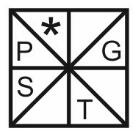
Show answer
Answer: (d)
- (a)
23. In a certain code language, 'GRAY' is coded as ‘718125', 'FOMK' is coded as ‘6151311'. How will 'CBHL' be coded in that code language?
- (a) 23812
- (b) 32812
- (c) 38212
- (d) 32821
Show answer
Answer: (b)
24.
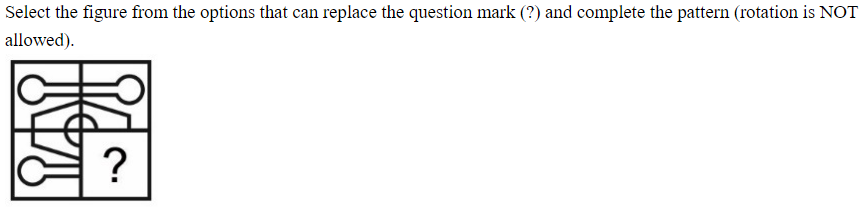
- (a)

- (b)

- (c)

- (d)

Show answer
Answer: (b)
- (a)
25. Select the option that is related to the fifth word in the same way as the second word is related to the first word and the fourth word is related to the third word. Water : Thirst :: Food : Hunger :: Rest : ?
- (a) Thought
- (b) Wine
- (c) Exhaustion
- (d) Intoxication
Show answer
Answer: (c)
Numerical Aptitude
2.
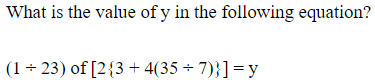
- (a)

- (b)

- (c)

- (d)

Show answer
Answer: (c)
- (a)
3.

- (a)

- (b)

- (c)

- (d)

Show answer
Answer: (b)
- (a)
4.

- (a)

- (b)

- (c)

- (d)

Show answer
Answer: (d)
- (a)
6.

- (a)

- (b)

- (c)

- (d)

Show answer
Answer: (d)
- (a)
7.
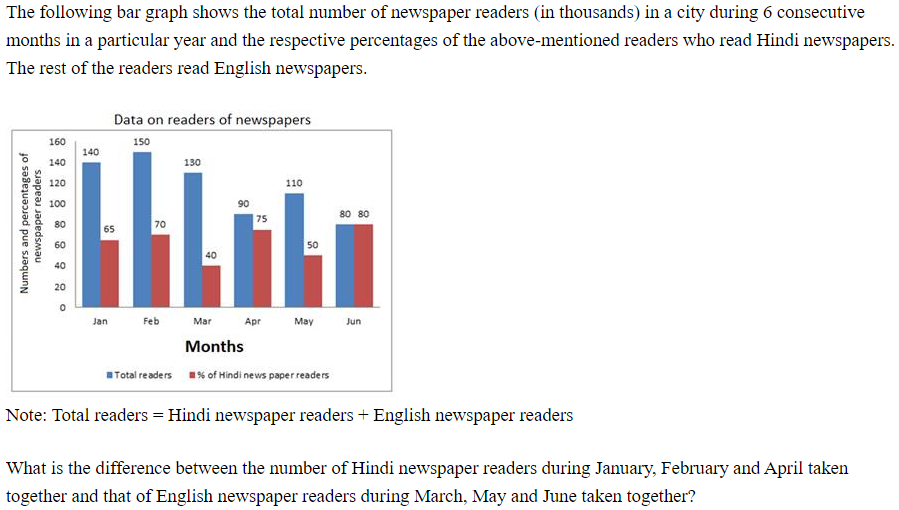
- (a)

- (b)

- (c)

- (d)

Show answer
Answer: (b)
- (a)
8.

- (a)

- (b)

- (c)

- (d)

Show answer
Answer: (d)
- (a)
9.

- (a)

- (b)
- (c)

- (d)

Show answer
Answer: (b)
- (a)
11.

- (a)

- (b)

- (c)

- (d)

Show answer
Answer: (a)
- (a)
12.
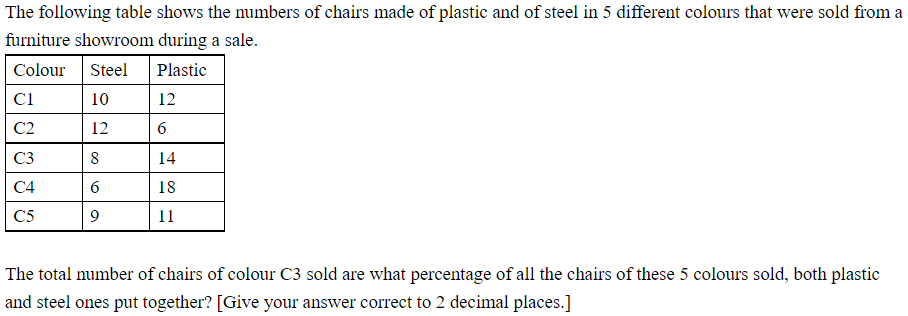
- (a)

- (b)

- (c)

- (d)

Show answer
Answer: (b)
- (a)
13.

- (a)

- (b)

- (c)

- (d)

Show answer
Answer: (d)
- (a)
14.

- (a)

- (b)

- (c)

- (d)

Show answer
Answer: (c)
- (a)
15.

- (a)

- (b)

- (c)

- (d)

Show answer
Answer: (a)
- (a)
16.

- (a)

- (b)
- (c)
- (d)
Show answer
Answer: (d)
- (a)
17.

- (a)

- (b)

- (c)

- (d)

Show answer
Answer: (b)
- (a)
18.

- (a)

- (b)

- (c)

- (d)

Show answer
Answer: (a)
- (a)
20.

- (a)

- (b)

- (c)

- (d)

Show answer
Answer: (d)
- (a)
21.

- (a)

- (b)

- (c)

- (d)

Show answer
Answer: (d)
- (a)
23.

- (a)

- (b)

- (c)

- (d)

Show answer
Answer: (c)
- (a)
24.

- (a)

- (b)

- (c)

- (d)

Show answer
Answer: (c)
- (a)
General Awareness
1. Which of the following dances is popularly known as the Gotipua Dance?
- (a) Garba
- (b) Bandha Nritya
- (c) Bhangra
- (d) Lavani
Show answer
Answer: (b)
2. Which Article of the Indian Constitution states that ‘The State shall endeavour to secure for the citizens a uniform civil code throughout the territory of India’?
- (a) Article 40
- (b) Article 42
- (c) Article 46
- (d) Article 44
Show answer
Answer: (d)
3. What is the total stock of money in circulation among the public at a particular point of time called?
- (a) Money order
- (b) Money supply
- (c) Short money
- (d) Money laundering
Show answer
Answer: (b)
4. Who is the first Indian woman to win the Grammy Award?
- (a) Sunidhi Chauhan
- (b) Lata Mangeshkar
- (c) Asha Bhosle
- (d) Tanvi Shah
Show answer
Answer: (d)
5. How many General Elections to the Lok Sabha have been held till April 2022?
- (a) 24
- (b) 13
- (c) 17
- (d) 10
Show answer
Answer: (c)
6. Sri Lanka is separated from India by the ______.
- (a) Strait of Malacca
- (b) Strait of Gibraltar
- (c) Palk Strait
- (d) Bering Strait
Show answer
Answer: (c)
7. In which state does the Tapi river originate?
- (a) Maharashtra
- (b) Andhra Pradesh
- (c) Madhya Pradesh
- (d) Karnataka
Show answer
Answer: (c)
8. The Government of India initiated the comprehensive Family Planning Programme in ______.
- (a) 1954
- (b) 1958
- (c) 1952
- (d) 1955
Show answer
Answer: (c)
9. Under whose captainship did India win all three major ICC trophies in white-ball cricket till 2021?
- (a) Kapil Dev
- (b) Virat Kohli
- (c) Mahendra Singh Dhoni
- (d) Sourav Ganguly
Show answer
Answer: (c)
10. Gautamiputra Shri Satakarni was a ruler of which dynasty?
- (a) Rashtrakuta
- (b) Satavahana
- (c) Chola
- (d) Chera
Show answer
Answer: (b)
11. Who among the following was a leader of the Khilafat Movement?
- (a) Bhagat Singh
- (b) Kasturba Gandhi
- (c) Maulana Abul Kalam Azad
- (d) Jyotiba Phule
Show answer
Answer: (c)
12. Which of the following teams won the first edition of ISL (Indian Super League)?
- (a) Bengaluru FC
- (b) Chennaiyin FC
- (c) Atletico de Kolkata
- (d) Kerala Blasters FC
Show answer
Answer: (c)
13. In which state of India is the Nongkrem dance festival celebrated?
- (a) Bihar
- (b) Madhya Pradesh
- (c) Kerala
- (d) Meghalaya
Show answer
Answer: (d)
14. In which year, did Sher Khan defeat Humayun at Kanauj?
- (a) 1541
- (b) 1543
- (c) 1540
- (d) 1542
Show answer
Answer: (c)
15. Which of the following diseases is caused by insulin deficiency or insulin resistance?
- (a) Diabetes
- (b) Flu
- (c) Cough
- (d) Beri Beri
Show answer
Answer: (a)
16. Who became the first woman Chairperson of the Securities and Exchange Board of India (SEBI) in 2022?
- (a) Madhabi Puri Buch
- (b) Rekha Sharma
- (c) Chanda Kochhar
- (d) Gita Gopinath
Show answer
Answer: (a)
17. Mahatma Gandhi National Rural Employment Guarantee Act (MGNREGA) 2005 provides _________ days of assured employment every year to every rural household.
- (a) 100
- (b) 120
- (c) 150
- (d) 200
Show answer
Answer: (a)
18. Union Finance Minister Nirmala Sitharaman, while presenting Union Budget for 2022-23 announced a programme called ‘Parvatmala’. This programme was announced to develop _______.
- (a) smart houses in hilly areas
- (b) ropeways in hilly areas
- (c) hospitality culture in hilly areas
- (d) roads in hilly areas
Show answer
Answer: (b)
19. ‘The Race of My Life : An Autobiography’ is the autobiography of which of the following persons?
- (a) Dutee Chand
- (b) Tintu Luka
- (c) PT Usha
- (d) Milkha Singh
Show answer
Answer: (d)
20. The splitting of white light into its component colours is called ______.
- (a) refraction
- (b) reflection
- (c) scattering
- (d) dispersion
Show answer
Answer: (d)
21. After the Revolt of 1857 was put down by Britishers, which Mughal ruler was forced to leave the country?
- (a) Bahadur Shah Zafar
- (b) Farrukhsiyar
- (c) Ahmad Shah Bahadur
- (d) Muhammad Shah
Show answer
Answer: (a)
22. Which of the following is known as artificial silk?
- (a) Acrylic
- (b) Nylon
- (c) Polyester
- (d) Rayon
Show answer
Answer: (d)
23. Which of the following is a warm current?
- (a) Labrador current
- (b) Falkland current
- (c) Canary current
- (d) Gulf stream
Show answer
Answer: (d)
24. Which Bharatanatyam dancer became the second youngest dancer to be honoured with the 'Padma Shri' award in 1991?
- (a) Hema Malini
- (b) Narthaki Nataraj
- (c) Saroj Khan
- (d) Alarmel Valli
Show answer
Answer: (d)
25. Mukteshwara Temple is a 10th-century Hindu temple dedicated to Shiva, located in __________.
- (a) Assam
- (b) Odisha
- (c) Maharashtra
- (d) Gujarat
Show answer
Answer: (b)
Show answers
Answer key
Answer key as marked in the Staff Selection Commission’s response sheet. “—” means the sheet did not show it clearly.
General English
- Q 1
- (d)
- Q 2
- (d)
- Q 3
- (b)
- Q 4
- (b)
- Q 5
- (b)
- Q 6
- (a)
- Q 7
- (d)
- Q 8
- (c)
- Q 9
- (d)
- Q 10
- (a)
- Q 11
- (a)
- Q 12
- (c)
- Q 13
- (b)
- Q 14
- (b)
- Q 15
- (d)
- Q 16
- (d)
- Q 17
- (d)
- Q 18
- (b)
- Q 19
- (b)
- Q 20
- (c)
- Q 21
- (d)
- Q 22
- (a)
- Q 23
- (d)
- Q 24
- (a)
- Q 25
- (a)
General Intelligence and Reasoning
- Q 1
- (b)
- Q 2
- (a)
- Q 3
- (c)
- Q 4
- (d)
- Q 5
- (c)
- Q 6
- (c)
- Q 7
- (b)
- Q 8
- (b)
- Q 9
- (c)
- Q 10
- (c)
- Q 11
- (b)
- Q 12
- (b)
- Q 13
- (b)
- Q 14
- (d)
- Q 15
- (d)
- Q 16
- (b)
- Q 17
- (b)
- Q 18
- (d)
- Q 19
- (d)
- Q 20
- (c)
- Q 21
- (d)
- Q 22
- (d)
- Q 23
- (b)
- Q 24
- (b)
- Q 25
- (c)
Numerical Aptitude
- Q 2
- (c)
- Q 3
- (b)
- Q 4
- (d)
- Q 6
- (d)
- Q 7
- (b)
- Q 8
- (d)
- Q 9
- (b)
- Q 11
- (a)
- Q 12
- (b)
- Q 13
- (d)
- Q 14
- (c)
- Q 15
- (a)
- Q 16
- (d)
- Q 17
- (b)
- Q 18
- (a)
- Q 20
- (d)
- Q 21
- (d)
- Q 23
- (c)
- Q 24
- (c)
General Awareness
- Q 1
- (b)
- Q 2
- (d)
- Q 3
- (b)
- Q 4
- (d)
- Q 5
- (c)
- Q 6
- (c)
- Q 7
- (c)
- Q 8
- (c)
- Q 9
- (c)
- Q 10
- (b)
- Q 11
- (c)
- Q 12
- (c)
- Q 13
- (d)
- Q 14
- (c)
- Q 15
- (a)
- Q 16
- (a)
- Q 17
- (a)
- Q 18
- (b)
- Q 19
- (d)
- Q 20
- (d)
- Q 21
- (a)
- Q 22
- (d)
- Q 23
- (d)
- Q 24
- (d)
- Q 25
- (b)