ExamBharo · SSC MTS 2021 — 12 July 2022, Shift 1 · exambharo.com/ssc-mts/previous-year-papers/ssc-mts-2021-12-jul-shift-1/
Question paper · SSC MTS & Havaldar
SSC MTS 2021 — 12 July 2022, Shift 1
12 July 2022 · 9:00 AM–10:30 AM93 of the paper’s 100 questions1 per correct answer
Questions from the Staff Selection Commission’s paper of 12 July 2022, 9:00 AM–10:30 AM.
Preparing for SSC MTS & Havaldar? Get more, free
Daily previous-year questions as quizzes, and every SSC MTS & Havaldar notice the day it is out.
General English
3. Parts of the following sentence have been given as options. One of them may contain an error. Select the part that contains the error from the given options. If you don’t find any error, mark ‘No error’ as your answer. The thing about anger is that it can either been a helpful emotion or a discouraging one.
- (a) a helpful emotion or a discouraging one
- (b) The thing about anger
- (c) No error
- (d) is that it can either been
Show answer
Answer: (d)
4. Select the option that can be used as a one-word substitute for the given group of words. A person exhibiting excessive worry about one’s health
- (a) Intellectual
- (b) Hypochondriac
- (c) Megalomaniac
- (d) Expert
Show answer
Answer: (b)
5. Select the option that will improve the underlined part of the given sentence. In case no improvement is needed, select 'No improvement required'. I work hardly too earn bread and butter for my family.
- (a) work hardest too
- (b) work hard to
- (c) No improvement required
- (d) works hardly to
Show answer
Answer: (b)
6. The following sentence has been divided into parts. One of them may contain an error. Select the part that contains the error from the given options. If you don’t find any error, mark ‘No error’ as your answer. I was at a party / with some off my / friends in Mumbai.
- (a) friends in Mumbai
- (b) with some off my
- (c) No error
- (d) I was at a party
Show answer
Answer: (b)
7. Select the most appropriate meaning of the given idiom. Crocodile tears
- (a) Hopeless situation
- (b) Totally different
- (c) False tears
- (d) Of less worth
Show answer
Answer: (c)
8. Select the option that corrects the misspelt words in the given sentence. A baloon may liave the earth with a charg.
- (a) A balloon may leave the earth with a charge.
- (b) A ballon may leave the earth with a chargge.
- (c) A balloon may live the earth with a charrge.
- (d) A ballun may leave the earth with a charge.
Show answer
Answer: (a)
9. Select the most appropriate ANTONYM of the given word. Moil
- (a) Cultivate
- (b) Grow
- (c) Discourage
- (d) Work
Show answer
Answer: (c)
10. Select the correctly spelt word.
- (a) Innability
- (b) Inabilty
- (c) Inability
- (d) Inablity
Show answer
Answer: (c)
11. Select the most appropriate ANTONYM of the given word. Obedient
- (a) Compliant
- (b) Submissive
- (c) Cheery
- (d) Resistant
Show answer
Answer: (d)
12. Select the most appropriate synonym of the given word. Intricate
- (a) Basic
- (b) Complicated
- (c) Painted
- (d) Developed
Show answer
Answer: (b)
13. Select the most appropriate option to substitute the underlined segment in the given sentence. If there is no need to substitute it, select ‘No substitution required’. A better plan is to going and has a lavish dinner at a fine restaurant.
- (a) is to go and have
- (b) No substitution required
- (c) is to gone and have
- (d) was to going and have
Show answer
Answer: (a)
14. Select the option that can be used as a one-word substitute for the given group of words. One who feeds on human flesh
- (a) Cannibal
- (b) Hedonist
- (c) Stoic
- (d) Samaritan
Show answer
Answer: (a)
15. Select the most appropriate synonym of the underlined word. All branded shoes are priced extravagantly.
- (a) Modestly
- (b) Economically
- (c) Expensively
- (d) Meagerly
Show answer
Answer: (c)
16. Select the most appropriate option to fill in the blank. It’s ______ too late to start your own business.
- (a) never
- (b) no
- (c) neither
- (d) nor
Show answer
Answer: (a)
17. Select the most appropriate option to fill in the blank. It was impossible ______ guess what he was doing.
- (a) to
- (b) at
- (c) on
- (d) of
Show answer
Answer: (a)
18. Select the most appropriate ANTONYM of the given word. Evident
- (a) Obvious
- (b) Indistinct
- (c) Stubborn
- (d) Irritable
Show answer
Answer: (b)
19. Select the option that can be used as a one-word substitute for the given group of words. A person who believes in or tries to bring about a state of lawlessness
- (a) Ephemeral
- (b) Deluge
- (c) Gazette
- (d) Anarchist
Show answer
Answer: (d)
20. Select the most appropriate option to fill in the blank. The sudden death of our uncle was ______________ for all of us.
- (a) tragic
- (b) fragile
- (c) gentle
- (d) dissuasive
Show answer
Answer: (a)
PassageFor questions 21–25
In the following passage, some words have been deleted. Read the passage carefully and select the most appropriate option to fill in each blank.
Nitrogen is essential to life (1)______ Earth. It is a component of all proteins, and it can be (2)______ in all living systems. Nitrogen compounds are (3)______ in organic materials, foods, fertilisers, explosives and poisons. Nitrogen is crucial to life, (4)______ in excess it can also be (5)______ to the environment.
21. Select the most appropriate option to fill in blank number 1.
- (a) at
- (b) into
- (c) on
- (d) in
Show answer
Answer: (c)
22. Select the most appropriate option to fill in blank number 2.
- (a) founder
- (b) find
- (c) founded
- (d) found
Show answer
Answer: (d)
23. Select the most appropriate option to fill in blank number 3.
- (a) function
- (b) instant
- (c) immediate
- (d) present
Show answer
Answer: (d)
24. Select the most appropriate option to fill in blank number 4.
- (a) such
- (b) because
- (c) but
- (d) if
Show answer
Answer: (c)
25. Select the most appropriate option to fill in blank number 5.
- (a) harmful
- (b) pliable
- (c) optimistic
- (d) rational
Show answer
Answer: (a)
General Intelligence and Reasoning
1. Select the option that is related to the fifth number in the same way as the second number is related to the first number and the fourth number is related to the third number. (NOTE: Operations should be performed on the whole numbers, without breaking down the numbers into its constituent digits. E.g. 13 – Operations on 13 such as adding /deleting /multiplying etc. to 13 can be performed. Breaking down 13 into 1 and 3 and then performing mathematical operations on 1 and 3 is not allowed) 2 : 6 :: 4 : 60 :: 7 : ?
- (a) 600
- (b) 105
- (c) 201
- (d) 336
Show answer
Answer: (d)
2. Six girls, Pooja, Qimat, Reeti, Shweta, Tejaswini and Vineeta, are sitting around a circular table. All of them are facing towards the centre of the table (but not necessarily in the same order). Tejaswini is the immediate neighbour of Vineeta and Reeti. Pooja is to the immediate left of Vineeta. Qimat is fourth to the right of Pooja. Shweta is to the immediate left of Pooja.Who is sitting to the immediate left of Shweta?.
- (a) Tejaswini
- (b) Pooja
- (c) Qimat
- (d) Reeti
Show answer
Answer: (c)
4.
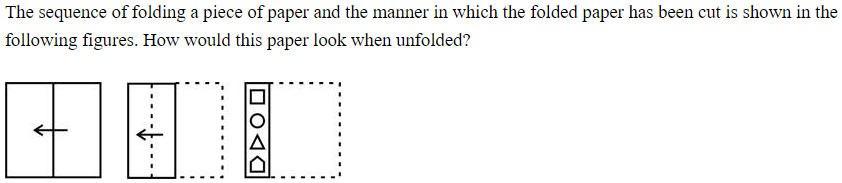
- (a)
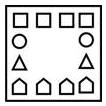
- (b)
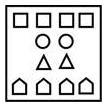
- (c)
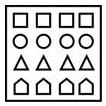
- (d)
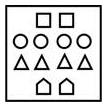
Show answer
Answer: (c)
- (a)
5.
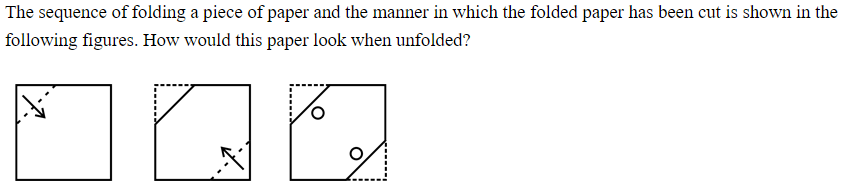
- (a)
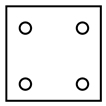
- (b)
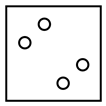
- (c)
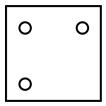
- (d)
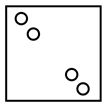
Show answer
Answer: (d)
- (a)
6. Six persons are sitting in two straight rows, facing north. Their names are Farhan, Utkarsh, Yugal, Krishna, Chaman and Manish. Farhan and Manish are sitting at diagonally opposite ends. Utkarsh is in the top row and to the immediate right of Farhan. Krishna is second to the left of Manish while Yugal and Krishna are not in the same row. Who is sitting at the diagonally opposite end to Yugal?
- (a) Manish
- (b) Krishna
- (c) Utkarsh
- (d) Chaman
Show answer
Answer: (b)
7. After interchanging which two signs will the value of the given expression be ‘356’? 133 + 49 – 16 ÷ 2 × 34
- (a) + and –
- (b) – and ÷
- (c) × and +
- (d) ÷ and ×
Show answer
Answer: (a)
8. Select the option that is related to the third letter-cluster in the same way as the second letter-cluster is related to the first letter-cluster. PAN : SCP :: HOP : ?
- (a) KQR
- (b) KRQ
- (c) KSQ
- (d) KQS
Show answer
Answer: (a)
9. Select the letter-cluster from among the given options that can replace the question mark (?) in the following series. ROM, URJ, XUG, AXD, ?
- (a) DAA
- (b) DAD
- (c) DAB
- (d) DBA
Show answer
Answer: (a)
10. Select the option that is related to the fifth term in the same way as the second term is related to the first term and the fourth term is related to the third term. TREE : RTEE :: KEEP : EKPE :: SOLO : ?
- (a) OOSL
- (b) OLSO
- (c) OSOL
- (d) LOSO
Show answer
Answer: (c)
11. Select the set in which the numbers are related in the same way as are the numbers of the following sets. (NOTE : Operations should be performed on the whole numbers, without breaking down the numbers into its constituent digits. E.g. 13 – Operations on 13 such as adding /deleting /multiplying etc. to 13 can be performed. Breaking down 13 into 1 and 3 and then performing mathematical operations on 1 and 3 is not allowed.) (3, 6, 18) (5, 7, 35)
- (a) (8, 13, 94)
- (b) (7, 12, 74)
- (c) (8, 12, 86)
- (d) (6, 14, 84)
Show answer
Answer: (d)
12. In a certain code language, ‘Here we go west’ is written as ‘8 6 4 9’, ‘West and east best’ is written as ‘4 @ # pr’ and ‘East direction sun’ is written as ‘# jt qm’. Which one of the following is the possible code for ‘direction east’ in that code language?
- (a) @ jt
- (b) qm it
- (c) 4 qm
- (d) # qm
Show answer
Answer: (d)
13. Read the given statements and conclusions carefully. Assuming that the information given in the statements is true, even if it appears to be at variance with commonly known facts, decide which of the given conclusions logically follow(s) from the statements. Statements: Some pets are birds. All birds are mats. Conclusions: I. All mats are birds. II. Some mats are pets.
- (a) Only conclusion II follows.
- (b) Neither conclusion I nor II follows.
- (c) Both conclusions I and II follow.
- (d) Only conclusion I follows.
Show answer
Answer: (a)
14.
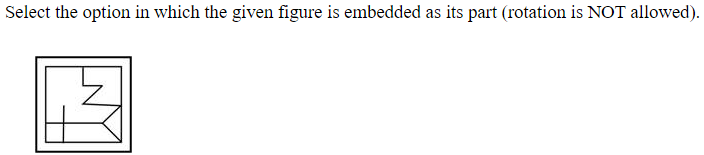
- (a)
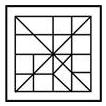
- (b)
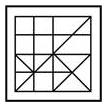
- (c)
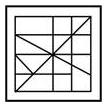
- (d)
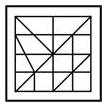
Show answer
Answer: (b)
- (a)
15.

- (a)

- (b)
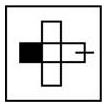
- (c)
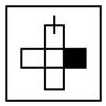
- (d)
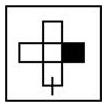
Show answer
Answer: (d)
- (a)
16.
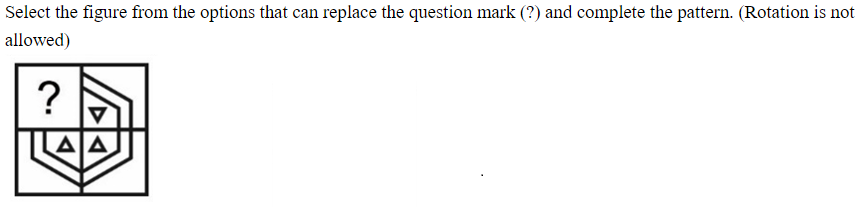
- (a)

- (b)

- (c)

- (d)

Show answer
Answer: (a)
- (a)
17. In a certain code language, 'IFSP' is written as 'JHTR' and 'MPWF' is written as ‘NRXH’. How will 'TOAD' be written in that language?
- (a) UQCE
- (b) UQBF
- (c) UQCF
- (d) UPBF
Show answer
Answer: (b)
18. Read the given statements and conclusions carefully. Assuming that the information given in the statements is true, even if it appears to be at variance with commonly known facts, decide which of the given conclusions logically follow(s) from the statements. Statements: No plate is a spoon. Some plates are forks. All forks are knives. Conclusions: I. Some plates are knives is a possibility. II. No spoon is a fork.
- (a) Only conclusion I follows
- (b) Neither conclusion I nor II follows
- (c) Both conclusions I and II follow
- (d) Only conclusion II follows
Show answer
Answer: (a)
20. Which two signs need to be interchanged to make the following equation correct? 9 + 3 − 4 ÷ 5 × 2 = 9
- (a) − and ×
- (b) + and x
- (c) + and ÷
- (d) − and +
Show answer
Answer: (c)
21. Select the number from among the given options that can replace the question mark (?) in the following series. 728, 717, 695, 662, 618, ?
- (a) 564
- (b) 561
- (c) 563
- (d) 562
Show answer
Answer: (c)
22. In a certain code language, 'ANAEMIA' is written as 'AOAENIA', 'AQUEOUS' is written as 'ARUEOUT', and 'LIVELY' is written as 'MIWEMZ'. How will 'EUGENIA' be written in that language?
- (a) EUHEOJA
- (b) FVGFNJB
- (c) EUHEOIA
- (d) FUGFNJB
Show answer
Answer: (c)
23. In a certain code language, ‘POR’ is coded as ‘52’ and ‘AND’ is coded as ‘22’. How will ‘VXB’ be coded in that language?
- (a) 51
- (b) 49
- (c) 48
- (d) 52
Show answer
Answer: (a)
24. Select the option that is related to the fifth number in the same way as the second number is related to the first number and the fourth number is related to the third number. (NOTE: Operations should be performed on the whole numbers, without breaking down the numbers into its constituent digits. E.g. 13 – Operations on 13 such as adding /deleting /multiplying etc. to 13 can be performed. Breaking down 13 into 1 and 3 and then performing mathematical operations on 1 and 3 is not allowed) 12 : 20 :: 8 : 12 :: 34 : ?
- (a) 52
- (b) 64
- (c) 48
- (d) 56
Show answer
Answer: (b)
25.

- (a)
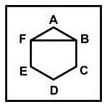
- (b)
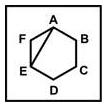
- (c)
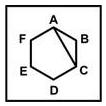
- (d)
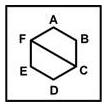
Show answer
Answer: (a)
- (a)
Numerical Aptitude
2.

- (a)

- (b)

- (c)

- (d)

Show answer
Answer: (b)
- (a)
3.

- (a)

- (b)

- (c)

- (d)

Show answer
Answer: (d)
- (a)
4.

- (a)

- (b)

- (c)

- (d)

Show answer
Answer: (c)
- (a)
5.

- (a)

- (b)

- (c)

- (d)

Show answer
Answer: (c)
- (a)
6.

- (a)

- (b)

- (c)

- (d)

Show answer
Answer: (d)
- (a)
7.

- (a)

- (b)

- (c)

- (d)

Show answer
Answer: (a)
- (a)
8.

- (a)

- (b)

- (c)

- (d)

Show answer
Answer: (b)
- (a)
9.

- (a)

- (b)

- (c)

- (d)

Show answer
Answer: (a)
- (a)
10.

- (a)

- (b)

- (c)

- (d)

Show answer
Answer: (c)
- (a)
12.
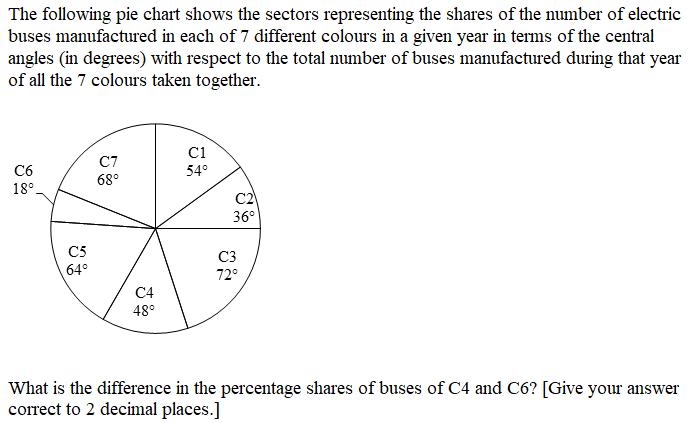
- (a)

- (b)

- (c)

- (d)

Show answer
Answer: (b)
- (a)
13.

- (a)

- (b)

- (c)

- (d)

Show answer
Answer: (a)
- (a)
14.
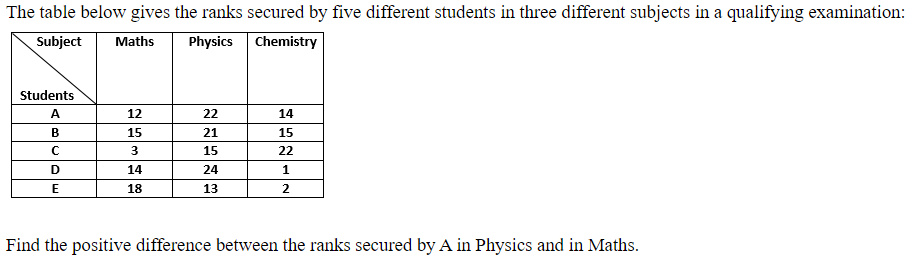
- (a)

- (b)

- (c)

- (d)

Show answer
Answer: (b)
- (a)
16.

- (a)

- (b)

- (c)

- (d)

Show answer
Answer: (d)
- (a)
17.

- (a)

- (b)

- (c)

- (d)

Show answer
Answer: (a)
- (a)
18.

- (a)

- (b)

- (c)

- (d)

Show answer
Answer: (c)
- (a)
19.

- (a)
- (b)

- (c)

- (d)
Show answer
Answer: (c)
- (a)
20.

- (a)

- (b)

- (c)

- (d)

Show answer
Answer: (b)
- (a)
21.

- (a)

- (b)

- (c)

- (d)
Show answer
Answer: (d)
- (a)
22.

- (a)

- (b)

- (c)

- (d)

Show answer
Answer: (d)
- (a)
23.

- (a)

- (b)

- (c)

- (d)

Show answer
Answer: (c)
- (a)
24.

- (a)

- (b)

- (c)

- (d)

Show answer
Answer: (a)
- (a)
25.

- (a)

- (b)

- (c)

- (d)

Show answer
Answer: (d)
- (a)
General Awareness
1. Tanjore Balasaraswati was known for which classical dance form?
- (a) Bihu
- (b) Bharatanatyam
- (c) Manipuri
- (d) Odissi
Show answer
Answer: (b)
2. Which of the following persons won the ‘Best Female Debut’ Award at the 2021 Paralympic Sports Awards 2021?
- (a) Deepa Malik
- (b) Bhavinaben Patel
- (c) Avani Lekhara
- (d) Mirabai Chanu
Show answer
Answer: (c)
3. Which of the following rivers forms the largest river system of Rajasthan?
- (a) Krishna
- (b) Narmada
- (c) Tapi
- (d) Luni
Show answer
Answer: (d)
4. In human beings, the small intestine is coiled and is about ______ metres long.
- (a) 1 to 1.5
- (b) 3 to 3.5
- (c) 2 to 2.5
- (d) 7 to 7.5
Show answer
Answer: (d)
5. Who among the following was the first athlete to represent India in fencing at the Tokyo Olympics 2020?
- (a) Aditi Ashok
- (b) PT Usha
- (c) Bhavani Devi
- (d) PV Sindhu
Show answer
Answer: (c)
6. A form of financial service which provides small loans and other financial services to poor and low-income households is called ______.
- (a) microfinance
- (b) commercial mortgage
- (c) invoice financing
- (d) personal finance
Show answer
Answer: (a)
7. Which of the following are also called the amphibians of the plant kingdom?
- (a) Pteridophytes
- (b) Thallophytes
- (c) Angiosperms
- (d) Bryophytes
Show answer
Answer: (d)
8. Buddha attained enlightenment at ______.
- (a) Varanasi
- (b) Bodh Gaya
- (c) Kusinara
- (d) Pataliputra
Show answer
Answer: (b)
9. ‘Unfinished: A Memoir’ is the autobiography of ______.
- (a) Priyanka Chopra Jonas
- (b) Deepika Padukone
- (c) Kareena Kapoor
- (d) Alia Bhatt
Show answer
Answer: (a)
10. Which of the following festivals is celebrated when the annual harvest takes place in Assam?
- (a) Lohri
- (b) Pongal
- (c) Magh Bihu
- (d) Makaravilakku
Show answer
Answer: (c)
11. Which of the following is considered to be the fifth state of matter?
- (a) Bose-Einstein condensate
- (b) Plasma
- (c) Solid
- (d) Gas
Show answer
Answer: (a)
12. Which of the following peninsular rivers has the largest drainage basin?
- (a) Godavari
- (b) Mahanadi
- (c) Narmada
- (d) Krishna
Show answer
Answer: (a)
13. A type of unemployment in rural areas when people are not able to find jobs during some months of the year is called ______.
- (a) educated unemployment
- (b) disguised unemployment
- (c) frictional unemployment
- (d) seasonal unemployment
Show answer
Answer: (d)
14. Vasco da Gama, a Portuguese explorer came to India in ______.
- (a) 1496
- (b) 1498
- (c) 1495
- (d) 1497
Show answer
Answer: (b)
15. Who among the following addressed the Indian National congress as its President in 1887?
- (a) Balgangadhar Tilak
- (b) Badruddin Tyabji
- (c) WC Bannerji
- (d) Dadabhai Naoroji
Show answer
Answer: (b)
16. Which team lost to Dabang Delhi KC in the finals of the Pro Kabbadi League season 8?
- (a) Puneri Paltan
- (b) Patna Pirates
- (c) Gujarat Giants
- (d) UP Yoddha
Show answer
Answer: (b)
17. Soilless agriculture is called _______.
- (a) hydroponics
- (b) shifting agriculture
- (c) dry farming
- (d) pastoral farming
Show answer
Answer: (a)
18. Which Article of the Indian Constitution enshrines the Right against Exploitation?
- (a) Article 23
- (b) Article 21
- (c) Article 25
- (d) Article 22
Show answer
Answer: (a)
19. What does ‘Chaitya’ in Buddhist architecture refer to?
- (a) Buddha relic
- (b) Prayer hall
- (c) Residence
- (d) Monastery
Show answer
Answer: (b)
20. As per Census 2011, what is the Total Fertility Rate (an approximate range) in India?
- (a) 3.1 - 3.9
- (b) 2.1 - 2.9
- (c) 5.1 - 5.9
- (d) 4.1 - 4.9
Show answer
Answer: (b)
21. Who among the following is a famous Sitar player?
- (a) Ustad Rehman Khan
- (b) Kishan Maharaj
- (c) Ali Ahmad Hussain
- (d) Anoushka Shankar
Show answer
Answer: (d)
22. As per the Constitution of India, the President of India shall hold office for a term of ______ from the date on which he enters upon his office.
- (a) four years
- (b) six years
- (c) three years
- (d) five years
Show answer
Answer: (d)
23. Mohiniyattam is a classical dance form of which Indian state?
- (a) Andhra Pradesh
- (b) Kerala
- (c) Tamil Nadu
- (d) Assam
Show answer
Answer: (b)
24. Which Chola ruler built the Brihadeshwara Temple at Tanjore?
- (a) Rajaraja I
- (b) Rajendra I
- (c) Vijayalaya
- (d) Rajendra III
Show answer
Answer: (a)
25. Which state of India has set up District Investment Promotion Agencies (DIPA)?
- (a) Karnataka
- (b) Haryana
- (c) Odisha
- (d) West Bengal
Show answer
Answer: (c)
Show answers
Answer key
Answer key as marked in the Staff Selection Commission’s response sheet. “—” means the sheet did not show it clearly.
General English
- Q 3
- (d)
- Q 4
- (b)
- Q 5
- (b)
- Q 6
- (b)
- Q 7
- (c)
- Q 8
- (a)
- Q 9
- (c)
- Q 10
- (c)
- Q 11
- (d)
- Q 12
- (b)
- Q 13
- (a)
- Q 14
- (a)
- Q 15
- (c)
- Q 16
- (a)
- Q 17
- (a)
- Q 18
- (b)
- Q 19
- (d)
- Q 20
- (a)
- Q 21
- (c)
- Q 22
- (d)
- Q 23
- (d)
- Q 24
- (c)
- Q 25
- (a)
General Intelligence and Reasoning
- Q 1
- (d)
- Q 2
- (c)
- Q 4
- (c)
- Q 5
- (d)
- Q 6
- (b)
- Q 7
- (a)
- Q 8
- (a)
- Q 9
- (a)
- Q 10
- (c)
- Q 11
- (d)
- Q 12
- (d)
- Q 13
- (a)
- Q 14
- (b)
- Q 15
- (d)
- Q 16
- (a)
- Q 17
- (b)
- Q 18
- (a)
- Q 20
- (c)
- Q 21
- (c)
- Q 22
- (c)
- Q 23
- (a)
- Q 24
- (b)
- Q 25
- (a)
Numerical Aptitude
- Q 2
- (b)
- Q 3
- (d)
- Q 4
- (c)
- Q 5
- (c)
- Q 6
- (d)
- Q 7
- (a)
- Q 8
- (b)
- Q 9
- (a)
- Q 10
- (c)
- Q 12
- (b)
- Q 13
- (a)
- Q 14
- (b)
- Q 16
- (d)
- Q 17
- (a)
- Q 18
- (c)
- Q 19
- (c)
- Q 20
- (b)
- Q 21
- (d)
- Q 22
- (d)
- Q 23
- (c)
- Q 24
- (a)
- Q 25
- (d)
General Awareness
- Q 1
- (b)
- Q 2
- (c)
- Q 3
- (d)
- Q 4
- (d)
- Q 5
- (c)
- Q 6
- (a)
- Q 7
- (d)
- Q 8
- (b)
- Q 9
- (a)
- Q 10
- (c)
- Q 11
- (a)
- Q 12
- (a)
- Q 13
- (d)
- Q 14
- (b)
- Q 15
- (b)
- Q 16
- (b)
- Q 17
- (a)
- Q 18
- (a)
- Q 19
- (b)
- Q 20
- (b)
- Q 21
- (d)
- Q 22
- (d)
- Q 23
- (b)
- Q 24
- (a)
- Q 25
- (c)