ExamBharo · SSC CGL 2022 Tier II — Paper I — 3 March 2023 · exambharo.com/previous-year-papers/ssc-cgl-2022-tier-2-paper-1-3-mar/
Question paper · SSC CGL
SSC CGL 2022 Tier II — Paper I — 3 March 2023
3 March 2023 · 9:00 AM–12:00 PM132 of the paper’s 150 questions1 per correct answer
18 questions of the original paper are not included: those that need a figure or formatting we cannot show, that have no answer in the response sheet, or that we could not check against a second copy of the paper.
Questions from the Staff Selection Commission’s paper of 3 March 2023, 9:00 AM–12:00 PM. Each question’s answer is under it, hidden until you open it, and the full answer key is at the end. Take the paper as a timed practice test to be scored.
Mathematical Abilities
1. A boat covers 35 km downstream in 2 h and covers the same distance upstream in 7 h. Find the speed (in km/h) of the boat in still water.
- (a) 11.25
- (b) 28.75
- (c) 18.25
- (d) 10.55
Show answer
Answer: (a)
2. What is the compound interest on a sum of ₹25,000 after three years at a rate of 12 per cent per annum interest compounded yearly?
- (a) ₹10,123.20
- (b) ₹9,824.00
- (c) ₹10,520.00
- (d) ₹9,956.86
Show answer
Answer: (a)
3. The LCM of x2 − 8x + 15 and x2 − 5x + 6 is:
- (a) (x - 2) (x - 3) (x − 5)
- (b) (x − 6)2 (x + 1) (x − 3)
- (c) (x − 6) (x + 1) (x − 3)
- (d) (x + 6) (x + 1) (x − 3)
Show answer
Answer: (a)
4. The cost of 3 kg of rice is ₹180. The cost of 8 kg of rice is equal to that of 5 kg of pulse. The cost of 15 kg of pulses is equal to that of 2 kg of tea. The cost of 3 kg of tea is equal to that of 6 kg of walnuts. What is the cost (in ₹) of 10 kg of walnuts?
- (a) 2400
- (b) 3200
- (c) 2800
- (d) 3600
Show answer
Answer: (d)
5. What is the ratio of the simple interest earned on a certain amount at the rate of 21% per annum for 8 years to that earned on the same sum at the same rate for 21 years?
- (a) 8:21
- (b) 21:5
- (c) 5:21
- (d) 21:8
Show answer
Answer: (a)
6. Select the INCORRECT formula from the following options.
- (a)

- (b)

- (c)

- (d)

Show answer
Answer: (c)
- (a)
7. Find the standard deviation of the following data (rounded off to two decimal places). 5, 3, 4, 7
- (a) 1.48
- (b) 3.21
- (c) 4.12
- (d) 2.45
Show answer
Answer: (a)
8. Suresh, Dinesh and Ramesh became partners in a business by investing money in the ratio of 3 : 6 : 8. If their investments is increased by 5%, 15% and 20%, respectively, then what will be the ratio of their profits for one year?
- (a) 7∶46∶64
- (b) 19∶46∶64
- (c) 21∶46∶64
- (d) 35∶46∶64
Show answer
Answer: (c)
9. The ratio of marks obtained by Rajesh, Rakesh and Ramesh in an exam is 2 : 4 : 9. What are the marks obtained by Rakesh and Ramesh, if Rajesh scored 30 marks in the exam?
- (a) Rakesh = 40, Ramesh = 90
- (b) Rakesh = 60, Ramesh = 135
- (c) Rakesh = 120, Ramesh = 180
- (d) Rakesh = 90, Ramesh = 40
Show answer
Answer: (b)
10. The average of 20 numbers is 32. If two numbers are 29 and 31, then what is the average of the remaining numbers (correct up to two decimals)?
- (a) 31.24
- (b) 30.22
- (c) 34.44
- (d) 32.22
Show answer
Answer: (d)
11. The angle of elevation of the top of a building at a distance of 70 m from its foot on a horizontal plane is found to be 60°. Find the height of the building.
- (a)

- (b)

- (c)

- (d)

Show answer
Answer: (a)
- (a)
12.

- (a) 41⁰
- (b) 38⁰
- (c) 40⁰
- (d) 39⁰
Show answer
Answer: (d)
13. Find the value of the given expression.
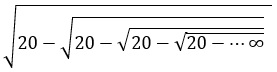
- (a) 4
- (b) 6
- (c) 5
- (d) 2
Show answer
Answer: (a)
14. Find the single equivalent discount for successive discounts of 12%, 18% and 25% on the marked price of a car.
- (a) 35.28%
- (b) 42.65%
- (c) 40.25%
- (d) 45.88%
Show answer
Answer: (d)
15. Rewa has some hens and some goats. If the total number of animal heads is 100 and the total number of animal feet is 348, then what is the total number of goats with Rewa?
- (a) 76
- (b) 74
- (c) 55
- (d) 80
Show answer
Answer: (b)
16. If the external angle of a regular polygon is 18°, then the number of diagonals in this polygon is:
- (a) 180
- (b) 150
- (c) 170
- (d) 140
Show answer
Answer: (c)
17. The number 2918245 is divisible by which of the following numbers?
- (a) 3
- (b) 11
- (c) 12
- (d) 9
Show answer
Answer: (b)
18. The average weight of three men is increased by 4 kg when one of them, whose weight is 100 kg, is replaced by another man. What is the weight of the new man?
- (a) 107 kg
- (b) 103 kg
- (c) 104 kg
- (d) 112 kg
Show answer
Answer: (d)
19. The median of the following data will be _________. 32, 25,33,27, 35, 29 and 30
- (a) 32
- (b) 27
- (c) 30
- (d) 29
Show answer
Answer: (c)
20. A hemispherical bowl of internal radius 18 cm is full of liquid. This liquid is to be filled in cylindrical bottles each of radius 3 cm and height 6 cm. How many bottles are required to empty the bowl?
- (a) 72
- (b) 70
- (c) 68
- (d) 66
Show answer
Answer: (a)
21. Find the value of given expression. [76 – {90 ÷ 5 ⨯ (24 – 36 ÷ 3) ÷ 3}]
- (a) 71.5
- (b) 75.5
- (c) 4
- (d) 77.5
Show answer
Answer: (c)
22. Products pass successively through the hands of three traders and each of them sells his goods at a profit of 30% of his cost price. If the last trader sold the products for Rs.300, then how much did the first trader pay for them?
- (a) Rs.330.55 (approx)
- (b) Rs.136.55 (approx)
- (c) Rs.240.55 (approx)
- (d) Rs.137.55 (approx)
Show answer
Answer: (b)
23. What is the total surface area of a pyramid whose base is a square with side 8 cm and height of the pyramid is 3 cm?
- (a) 169 cm2
- (b) 121 cm2
- (c) 144 cm2
- (d) 184 cm2
Show answer
Answer: (c)
24. The breadth ‘b’ of a room is twice its height and half of its length. Find the length of the longest diagonal of the room.
- (a)

- (b)

- (c)

- (d)

Show answer
Answer: (c)
- (a)
25.

- (a)

- (b)

- (c)

- (d)

Show answer
Answer: (c)
- (a)
26. If the areas of two similar triangles are in the ratio 196 : 625,what would be the ratio of the corresponding sides?
- (a) 14:25
- (b) 13:20
- (c) 14:20
- (d) 13:25
Show answer
Answer: (a)
27. A speaks the truth 5 out of 7 times and B speaks truth 8 out of 9 times. What is the probability that they contradict each other in stating the same fact?
- (a)

- (b)

- (c)

- (d)

Show answer
Answer: (d)
- (a)
28. There are two inlets A and B connected to a tank. A and B can fill the tank in 32 h and 28 h, respectively. If both the pipes are opened alternately for 1 h, starting with A, then in how much time (in hours, to nearest integer) will the tank be filled?
- (a) 22
- (b) 30
- (c) 36
- (d) 24
Show answer
Answer: (b)
29. Two candidates contested an election.One of them got 64% of the votes and won by 434 votes.What was the total number of votes polled?
- (a) 1550
- (b) 1345
- (c) 1680
- (d) 1684
Show answer
Answer: (a)
30. From the top of an upright pole 17.75 m high, the angle of elevation of the top of an upright tower was 60⁰. If the tower was 57.75 m tall, how far away (in m) from the foot of the pole was the foot of the tower?
- (a)

- (b)

- (c)

- (d)

Show answer
Answer: (d)
- (a)
Reasoning and General Intelligence
1. Select the correct combination of mathematical signs to sequentially replace the * signs and balance the given equation. 33 * 4 * 15 * 3 * 61 = 188
- (a) + × ÷ −
- (b) × − ÷ +
- (c) + − ÷ ×
- (d) ÷ × − +
Show answer
Answer: (b)
2. Select the option in which the following figure is embedded. (Rotation is NOT allowed)
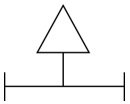
- (a)
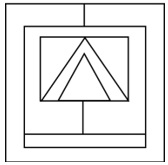
- (b)
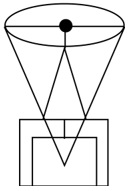
- (c)
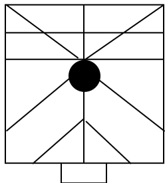
- (d)
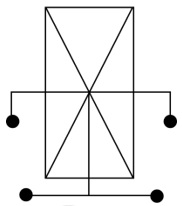
Show answer
Answer: (a)
- (a)
3.

- (a)

- (b)

- (c)

- (d)

Show answer
Answer: (c)
- (a)
4. A number has been denoted to each of the given letters. Select the option from the following four possible arrangements of these numbers that forms a meaningful word. E = 1, N = 2, T = 3, S = 4, T = 5, D = 6, U = 7
- (a) 4,3,7,6,1,2,5
- (b) 2,1,4,3,6,7,5
- (c) 4,3,7,1,6,5,2
- (d) 2,1,4,6,3,5,7
Show answer
Answer: (a)
5. In this question, the statement is followed by two conclusions. Which of the two conclusion(s) is/are true? Statement: A = B ≥ C ≤ D > G < E < F Conclusions: I. B > F II. C < A
- (a) Only conclusion I is true.
- (b) Only conclusion II is true.
- (c) Neither conclusion I nor II is true.
- (d) Both conclusions I and II are true.
Show answer
Answer: (c)
6. In this question, a statement is followed by two courses of action, numbered I and II. You must assume everything in the statement to be true and on the basis of the information given in the statement, decide which course of action/s logically follows for pursuing. Statement: There is a large increase in migration of villagers to urban areas as repeated crop failure has put them into financial problems. Course of action: I. The villagers should be provided with an alternate source of income in their villages which will make them stay there only. II. To ensure their survival, the migrated villagers should be given access to all housing options in urban areas.
- (a) Only II follows
- (b) Both I and II follow
- (c) Neither I nor II follows
- (d) Only I follows
Show answer
Answer: (d)
7. A question is given, followed by two statements numbered (I) and (II). You have to decide whether the data provided in the statements is sufficient to answer the question. Read both the statements and select the appropriate answer. Question: A, B, C and D are sitting around a circular table facing the centre. Who sits to the immediate right of A? Statements: (I) C sits to the immediate left of A; only one person sits between C and D. (II) Only one person sits between A and B; C sits to the immediate right of B.
- (a) Data in statement I alone is sufficient to answer the question while data in statement II is not
- (b) Data in either statement I alone or statement II alone is sufficient to answer the question
- (c) Data in statements I and II together is sufficient to answer the question
- (d) Data in statement II alone is sufficient to answer the question while data in statement I is not
Show answer
Answer: (b)
8.
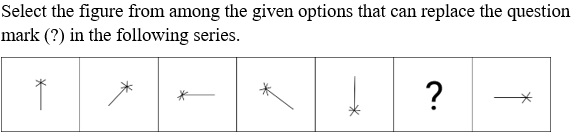
- (a)

- (b)

- (c)

- (d)

Show answer
Answer: (a)
- (a)
9. Six friends J, K, L, M, N and O are sitting around a circular table facing the centre. N is not an immediate neighbour of M. M is sitting to the immediate left of J. J is sitting opposite to L, who is sitting to the immediate right of K. Who is sitting second to the left of L?
- (a) M
- (b) O
- (c) K
- (d) N
Show answer
Answer: (d)
10. Three of the following words are alike in some manner and hence form a group. Which word does NOT belong to that group? (The words must be considered as meaningful English words and must not be grouped based on the number of letters/number of consonants/vowels in the word)
- (a) Clarinet
- (b) Flute
- (c) Piano
- (d) Piccolo
Show answer
Answer: (c)
11. In a certain code, the word COMPAQ is written as DQNRBS and SONY is written as TQOA. In the same code, how is MOTOROLA written?
- (a) NPUPSPMB
- (b) INUNSNMB
- (c) NQUQSQMC
- (d) OPUPUPIB
Show answer
Answer: (c)
12.

- (a)
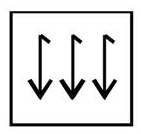
- (b)
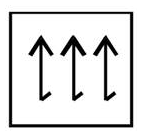
- (c)
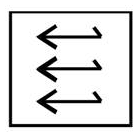
- (d)

Show answer
Answer: (a)
- (a)
13. In a certain code language, ‘CROSS’ is written as ‘66’ and ‘CHART’ is written as ‘90’. How will ‘SYMBOL’ be written in that language?
- (a) 82
- (b) 93
- (c) 76
- (d) 88
Show answer
Answer: (a)
14.

- (a)
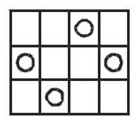
- (b)
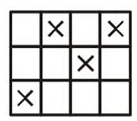
- (c)
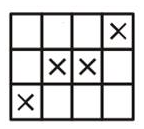
- (d)
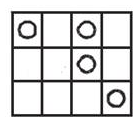
Show answer
Answer: (d)
- (a)
15. Which of the following letter-clusters should replace # and % so that the pattern and relationship followed between the letter-cluster pair on the left side of :: is the same as that on the right side of ::? # : CLQ:: NDK: %
- (a) # = AJS, % = MAM
- (b) # = AOO, % = PAM
- (c) # = EIT, % = QBN
- (d) # = DIS, % = PBN
Show answer
Answer: (b)
16. In a row of people all facing north, Prince is 5th from the right end. Amit is 15th from the right end. Amit is exactly between Prince and Aditya. If Aditya is sixth from the left end of the line, how many people are there in the row?
- (a) 29
- (b) 31
- (c) 30
- (d) 32
Show answer
Answer: (c)
17. If + means −, − means ×, × means ÷, and ÷ means +, what will be the value of the following expression? 45 × 9 ÷ 12 – 5 + 3
- (a) 34
- (b) 27
- (c) 36
- (d) 62
Show answer
Answer: (d)
18. The second number in the given number-pairs is obtained by performing certain mathematical operation(s) on the first number. The same operation(s) is/are followed in all the number-pairs except one. Find that odd number-pair.
- (a) 10 : 33
- (b) 2 : 9
- (c) 8 : 29
- (d) 6 : 21
Show answer
Answer: (c)
19. Select the number from among the given options that can replace the question mark (?) in the following series. 189, 532, 316, ?, 377
- (a) 384
- (b) 291
- (c) 441
- (d) 405
Show answer
Answer: (c)
20. Three Statements are given followed by two conclusions numbered I and II. Assuming the statements to be true, even if they seem to be at variance with commonly known facts, decide which of the conclusions logically follow(s) from the statements. Statements: Some poems are horses. All horses are toys. All toys are ships. Conclusions: I. All toys being poems is a possibility. II. Some horses are ships.
- (a) Both conclusions I and II follow.
- (b) Either conclusion I or II follows.
- (c) Only conclusion I follows.
- (d) Neither conclusion I nor II follows.
Show answer
Answer: (a)
21. ‘A # B’ means ‘A is the brother of B’. ‘A @ B’ means ‘A is the daughter of B’. ‘A & B’ means ‘A is the husband of B’. ‘A % B’ means ‘A is the wife of B’. If S % D # F @ G & H @ J, then how is F related to H?
- (a) Daughter
- (b) Mother
- (c) Daughter’s daughter
- (d) Son’s wife
Show answer
Answer: (a)
22.
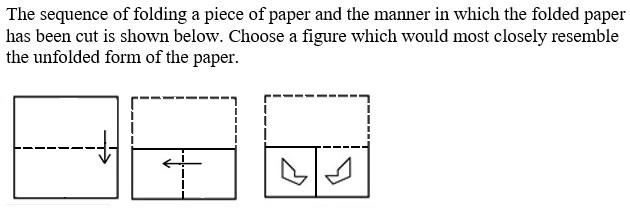
- (a)
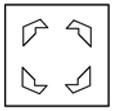
- (b)
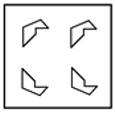
- (c)
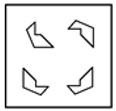
- (d)

Show answer
Answer: (a)
- (a)
23. Select the option that represents the letters that, when placed from left to right in the following blanks, will complete the letter-series. _ V J R W B _ _ R W B V L _ _ B V _ _ W
- (a) B V K R W M R
- (b) A V K R W M R
- (c) A W K R X N R
- (d) B W K R W M R
Show answer
Answer: (a)
25. In this question, two statements I and II have been given. These statements may be independent causes or effects of independent causes or a common cause. One of the statements may be the effect of the other statement. Read both statements and select the correct answer. I. Country X reduced their crude oil import by 6% in the last 5 years. II. The automobile industry in Country X has witnessed a sharp decline of 13% in its growth margin this year.
- (a) Both I and II are effects of independent causes.
- (b) I is the cause and II is its possible effect.
- (c) II is the cause and I is its possible effect.
- (d) Both I and II are independent causes.
Show answer
Answer: (a)
26. ‘A # B’ means ‘A is the brother of B’. ‘A @ B’ means ‘A is the daughter of B’. ‘A & B’ means ‘A is the husband of B’. ‘A % B’ means ‘A is the wife of B’. If D @ N @ H & Y @ F % V, then how is V related to H?
- (a) Father’s father
- (b) Father
- (c) Son-in-law
- (d) Wife’s father
Show answer
Answer: (d)
27. Select the set in which the numbers are related in the same way as are the numbers of the following set. (NOTE : Operations should be performed on the whole numbers, without breaking down the numbers into its constituent digits. E.g. 13 – Operations on 13 such as adding /deleting /multiplying etc. to 13 can be performed. Breaking down 13 into 1 and 3 and then performing mathematical operations on 1 and 3 is NOT allowed) (7, 3, 43) (5, 2, 21)
- (a) (11,5,111)
- (b) (15,6,34)
- (c) (13,23,131)
- (d) (12,3,43)
Show answer
Answer: (a)
29. Given below is a question followed by two statements I and II. Read both statements carefully to decide which one of them is sufficient to answer the question. Six people - A, B, C, D, E and F are sitting in a straight line facing north. Who sits to the immediate left of D? (I) A sits second from one of the extreme ends of the line. Only two people sit between A and B. E sits to the immediate right of C. (II) C sits third from the left end of the line. Only one person sits between C and F. E sits third to the right of F.
- (a) Data in statement II alone is sufficient to answer the question while data in statement I is not.
- (b) Data in statement I alone is sufficient to answer the question while data in statement II is not.
- (c) Data in statements I and II together are not sufficient to answer the question.
- (d) Data in statements I and II together are sufficient to answer the question.
Show answer
Answer: (c)
30. Figure A is related to B in a certain pattern. Following the same pattern, figure C is related to D. Study the pattern and select the figure which should be placed in place of D.
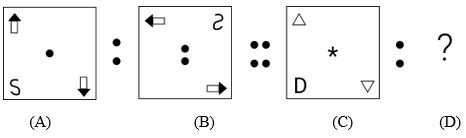
- (a)

- (b)
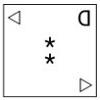
- (c)
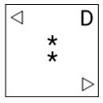
- (d)
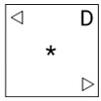
Show answer
Answer: (b)
- (a)
English Language and Comprehension
1. The following sentence has been split into four segments. Identify the segment that contains a grammatical error. We should sorted out / the problem ourselves / rather than depending / on the third party.
- (a) rather than depending
- (b) the problem ourselves
- (c) We should sorted out
- (d) on the third party
Show answer
Answer: (c)
3. Sentences of a paragraph are given below in jumbled order. Arrange the sentences in the correct order to form a meaningful and coherent paragraph. A. On the afternoon of that eventful day, I stood on the porch, dumb, expectant and guessed vaguely from my mother's signs and from the hurrying to and fro in the house that something unusual was about to happen, so I went to the door and waited on the steps. B. I did not know what the future held of marvel or surprise for me and anger and bitterness had preyed upon me continually for weeks and a deep languor had succeeded this passionate struggle. C. The most important day I remember in all my life is the one on which my teacher, Anne Mansfield Sullivan, came to me and I am filled with wonder when I consider the immeasurable contrasts between the two lives which it connects and it was the third of March, 1887, three months before I was seven years old. D. The afternoon sun penetrated the mass of honeysuckle that covered the porch, and fell on my upturned face and my fingers lingered almost unconsciously on the familiar leaves and blossoms which had just come forth to greet the sweet southern spring.
- (a) DABC
- (b) CBAD
- (c) CADB
- (d) CDAB
Show answer
Answer: (c)
5. Given below are four jumbled sentences. Select the option that gives their correct logical sequence. A. When faced with uncertainty, humans look out for the action of others and become a victim of ineffective rational thinking during compelling, confusing situations. B. According to him, in an emergency, we tend to forget that everybody else observing the event is also likely to be looking out for social evidence. C. Robert B. Cialdini explains this reaction with a psychological phenomenon called 'pluralistic ignorance'. D. Since we all prefer to appear poised and unflustered among others, we are likely to search for answers placidly, with brief, camouflaged glances at those around us.
- (a) ACBD
- (b) BCDA
- (c) ABCD
- (d) ABDC
Show answer
Answer: (a)
8. Select the most appropriate option to fill in the blank. Many students do not _____________ attention in botany class.
- (a) exhibit
- (b) drive
- (c) pay
- (d) trace
Show answer
Answer: (c)
9. Identify the option that arranges the given parts in the correct order to form a meaningful paragraph. A. Then a nurse and a doctor came B. After the terrible accident C. A car took Raman to the hospital D. The two men carried him to a bed and put him in it carefully
- (a) DCBA
- (b) ABCD
- (c) BCDA
- (d) ACDB
Show answer
Answer: (c)
10. Select the option that expresses the given sentence in passive voice. Marvel Comics created Superman.
- (a) Superman was created by Marvel Comics.
- (b) Superman was created.
- (c) Superman is created by Marvel Comics.
- (d) Marvel Comics is creating Superman.
Show answer
Answer: (a)
11. Select the most appropriate option to fill in the blank. Tia wanted a dog that was __________ than Larry’s dog.
- (a) smarty and strong
- (b) smartest and strongest
- (c) smarter and stronger
- (d) smart and strong
Show answer
Answer: (c)
12. Select the most appropriate ANTONYM of the underlined word. The reputed officer was removed from his post as he was having a clandestine affair.
- (a) Surreptitious
- (b) Overt
- (c) Amorous
- (d) Casual
Show answer
Answer: (b)
14. Select the sentence that contains no spelling errors.
- (a) The granduor of the ancient Roman Empire is visible in many monuments in Italy and Greece.
- (b) The grandour of the ancient Roman Empire is visible in many monumants in Italy and Greece.
- (c) The grandeur of the ancient Roman Empire is visible in many monuments in Italy and Greece.
- (d) The granduer of the ancient Roman Empire is visible in many monuments in Italy and Greece.
Show answer
Answer: (c)
15. Select the most appropriate synonym of the word given in brackets to fill in the blank. The doctor has __________ (advised) medicine for the treatment of the disease.
- (a) prevented
- (b) proscribed
- (c) presented
- (d) prescribed
Show answer
Answer: (d)
16. Sentences of a paragraph are given below in jumbled order. Arrange the sentences in the correct order to form a meaningful and coherent paragraph. A.The temperature of the world has increased, resulting in global warming. B.The melting of the ice caps will increase the sea level, thereby drowning many islands and coastal regions. C.The increased amount of carbon emission is considered as the reason behind global warming. D.The increase in the global temperature is melting the polar ice caps.
- (a) ABCD
- (b) ACBD
- (c) ACDB
- (d) BADC
Show answer
Answer: (c)
17. Select the most appropriate ANTONYM of the underlined word. The placid conversation between the two cricketers on a TV show aroused much controversy.
- (a) Sardonic
- (b) Inappropriate
- (c) Informal
- (d) Angry
Show answer
Answer: (d)
18. Sentences of a paragraph are given below in jumbled order. Arrange the sentences in the correct order to form a meaningful and coherent paragraph. A.Road accidents have become very common in India. B.Condition of roads in India is pathetic. C.Increasing number of vehicles leave little space on roads. D.Roads are narrow and remain congested most of the time.
- (a) ACBD
- (b) BDCA
- (c) BCDA
- (d) CDBA
Show answer
Answer: (b)
19. Select the INCORRECTLY spelt word.
- (a) Greave
- (b) Groan
- (c) Guarentee
- (d) Gravely
Show answer
Answer: (c)
21. Identify the pair of synonyms from the underlined words in the given sentence. It was a fairly foul day , as omens could be seen in abundance from the threshold of his border town ever since the dawn struck.
- (a) fairly, abundance
- (b) foul, omens
- (c) day, border
- (d) threshold, dawn
Show answer
Answer: (d)
22. The following sentence has been divided into parts. One of them may contain an error. Select the part that contains the error from the given options. If you don’t find any error, mark ‘No error’ as your answer. Dan needed help / to get the / tight coat of him.
- (a) No error
- (b) Dan needed help
- (c) to get the
- (d) tight coat of him
Show answer
Answer: (d)
23. Select the most appropriate option to fill in the blank. The management wants to ______________ restrictions at the workplace.
- (a) break
- (b) impose
- (c) settle
- (d) encourage
Show answer
Answer: (b)
24. Select the most appropriate option to replace the underlined word in the given sentence. Hritik is slow than Heer.
- (a) slowliest
- (b) much slow
- (c) slower
- (d) slowest
Show answer
Answer: (c)
26. Select the correct homonym from the given options to fill in the blank. The wind________ so powerfully that the door closed.
- (a) blow
- (b) blew
- (c) blues
- (d) blue
Show answer
Answer: (b)
27. Select the option that can be used as a one-word substitute for the given group of words. Photographers who follow celebrities to get their pictures to sell them
- (a) Paparazzi
- (b) Reporter
- (c) Editor
- (d) Interviewer
Show answer
Answer: (a)
28. Select the option that can be used as a one-word substitute for the given group of words. Someone who is reserved and shy.
- (a) Introvert
- (b) Extrovert
- (c) Chauffeur
- (d) Talkative
Show answer
Answer: (a)
PassageFor questions 30–33
In the following passage, some words have been deleted. Read the passage carefully and select the most appropriate option to fill in each blank. The effects of plastic bags on the environment are really (1)______ devastating because there is no disposal method that will really help eliminate the problem. The biggest problem with them is that once they have been (2)______, they end up In the trash, which then ends up in the landfill or is burned. The indefinite period of time that it takes for the average plastic bag to break (3)______ can be literally hundreds of years. Throughout the world, plastic bags are responsible for suffocation and deaths of woodland animals as well as (4)______ soil nutrients. The land litter that is made up of plastic bags has the potential to kill over and over again. It has been estimated that one bag has the potential to inadvertently kill one animal per every three months due to unintentional digestion or inhalation. There are always alternatives to plastic bags and the search for more alternatives continues.
30. Select the most appropriate option to fill in blank number 1.
- (a) vaguely
- (b) randomly
- (c) quite
- (d) seldom
Show answer
Answer: (c)
31. Select the most appropriate option to fill in blank number 2.
- (a) disinfected
- (b) soiled
- (c) moulded
- (d) recycled
Show answer
Answer: (b)
32. Select the most appropriate option to fill in blank number 3.
- (a) through
- (b) out
- (c) down
- (d) even
Show answer
Answer: (c)
33. Select the most appropriate option to fill in blank number 4.
- (a) accumulating
- (b) inhibiting
- (c) demanding
- (d) converting
Show answer
Answer: (b)
PassageFor questions 35–37
Read the following passage and answer the questions given after it. Amidst a maze of rocks tucked in the Aravalli mountain ranges of Haryana, a team of archaeologists discovered cave paintings they believe belong to the Upper Palaeolithic age. The cave paintings have been discovered just outside the national capital and a stone’s throw away from a holy grove called Mangar Bani- the region’s only surviving patch of primary forest. While the residents of the villages have been familiar with the paintings for ages, the Haryana government’s museum and archaeology department took note of them just recently. A fact-finding team was sent to the area in the last week of June. The team came across cave paintings comprising images of human figurines, animals, foliage, and geometric drawings. While some have paled over time, others are still very visible. They also discovered rock art and open-air ceremonial sites. Banani Bhattacharyya, deputy director of the department of archaeology and museums informed, “So far, cave paintings in Delhi-NCR have only been found here. The paintings are yet to be dated but at least some of them belong to the Upper Palaeolithic period in all likelihood. We are viewing the paintings in continuation with the Soanian culture which has been found in Shivalik hills, Narmada and Aravallis.” Most of the cave paintings found were in ochre colour, but some were in white. As per experts, cave paintings in white are usually from a later stage (early contemporary era), while Stone Age paintings are more often than not in ochre. “Stone age paintings generally use red and ochre colours. Stones of these colour used to be available locally and inhabitants crushed the stones for preparing the colour for paintings,” added Bhattacharyya. The Upper Paleolithic Age began around 40,000 years ago and lasted till around 10,000 years ago. While yet to be established through archaeological dating, Bhattacharyya says the Mangar cave art is 20,000-40,000 years old. Bhattacharyya claimed that the discovery is extremely significant. “Starting from the Lower Palaeolithic to Middle Palaeolithic then Upper Palaeolithic, we see the evolution here. We have found significant remains from Lower Palaeolithic till Middle and Upper Palaeolithic period too,” she explained. “Though tools from the Palaeolithic Age have been identified earlier in parts of the Aravallis, it is for the first time that cave paintings and rock art of a large magnitude have been found in Haryana,” she added.
35. Most of the cave paintings found in Mangar forest area in Haryana are in which colour?
- (a) black
- (b) white
- (c) red
- (d) ochre
Show answer
Answer: (d)
36. Which of the following statement is NOT correct according to the passage?
- (a) The cave men crushed the locally available stones for preparing the colour for paintings.
- (b) The paintings comprise images of human figurines, animals, foliage, and geometric drawings.
- (c) The Mangar cave art is 20,000-40,000 years old.
- (d) The paintings in red belong to early contemporary era.
Show answer
Answer: (d)
37. The archaeological findings in the Mangar Forest consist of all the following except
- (a) tools
- (b) ceremonial sites
- (c) cave paintings
- (d) rock art
Show answer
Answer: (a)
PassageFor questions 38–41
Read the following passage and answer the questions given after it. Total area sown under Rabi crops has increased by 3.25% from 697.98 lakh hectares in 2021-22 to 720.68 lakh hectares in 2022-23. This is 22.71 lakh hectares more this year compared to corresponding period of 2021-22. Comparing with normal sown area(average of the last five years), the increase is to the tune of 13.71% from 633.80 to 720.68 lakh hectares. The increase in area is across all crops, - highest being in rice. Out of 22.71 lakh hectares increase in all Rabi crops, increase in rice area is 11.20 lakh hectares from 35.05 lakh hectares in 2021-22 to 46.25 lakh hectares in 2022-23. However, this is lower than normal sown area of 47.71 lakh hectares. Maximum increase in area under rice is in states of Telangana and West Bengal. Area under oilseeds increased by 7.31% from 102.36 lakh hectares during 2021-22 to 109.84 lakh hectares this year. The increase in area under oilseeds at the rate of 7.31% is more than double the rate of increase of 3.25% in all crops together. Rajasthan, Madhya Pradesh and Chhattisgarh accounted for major expansion in area of oilseeds. Rapeseed & Mustard contributed maximum in increasing oilseeds area during this Rabi season. Mustard area increased by 6.77 lakh hectares from 91.25 lakh hectares in 2021-22 to 98.02 lakh hectares in 2022-23. Thus, out of 7.49 lakh hectares increase in area under oilseeds, rapeseed & mustard alone accounted for 6.44 lakh hectares. Pulse production is being focused to make country self-sufficient in these commodities. Area under pulses increased by 0.56 lakh hectares from 167.31 to 167.86 lakh hectares. Mung bean and lentil accounted for increase in area under pulses. The United Nations General Assembly has declared the year 2023 as the International Year of Millets and India is at the forefront in celebrating the event in a big way. In order to create awareness about the benefits of millets as superfood and to meet its growing demand around the world, the Government is promoting millet production through the NFSM-Nutri Cereals component of National Food Security Mission programme in 212 districts of 14 states. Coarse cum Nutri-cereals saw an increase of 2.08 lakh hectares in area under cultivation from 51.42 lakh hectares in 2021-22 to 53.49 lakh hectares in 2022-23.
38. Match the following crops with the area. Crop area in 2022-23 a. millets 1. 98.02 lakh hectares b. pulses 2. 53.49 lakh hectares c. mustard 3. 167.86 lakh hectares
- (a) a-1, b- 3, c-2
- (b) a -3, b -1, c-2
- (c) a-2, b-1, c-3
- (d) a-2, b-3, c-1
Show answer
Answer: (d)
39. On which of the following crops, is the Indian Government specially focussing this year?
- (a) rice
- (b) oilseeds
- (c) pulses
- (d) millets
Show answer
Answer: (d)
41. Which state recorded the maximum increase in sown area of the rice crop?
- (a) Chhattisgarh
- (b) Telangana
- (c) Rajasthan
- (d) Madhya Pradesh
Show answer
Answer: (b)
PassageFor questions 42–45
Read the given passage and answer the questions that follow. My grandmother, like everybody’s grandmother, was an old woman. She had been old and wrinkled for the twenty years that I had known her. People said that she once had been young and pretty and had even had a husband, but that was hard to believe. My grandfather’s portrait hung above the mantelpiece in the drawing room. He wore a big turban and loose fitting clothes. His long, white beard covered the best part of his chest and he looked at least a hundred years old. He did not look the sort of person who would have a wife or children. He looked as if he could only have lots and lots of grandchildren. As my grandmother being young and pretty, the thought was almost revolting. She often told us of the games she used to play as a child. That seemed quite absurd and undignified on her part and we treated it like the fables of the Prophets she used to tell us.
42. Select the most appropriate fact from the given options.
- (a) The author and grandma lived for twenty years.
- (b) Grandma was twenty years old.
- (c) The author was twenty when grandma died.
- (d) The author was twenty years old when he wrote the story.
Show answer
Answer: (c)
43. Select an appropriate title for the given passage.
- (a) The Grandchildren
- (b) My Grandfather
- (c) Grandmothers
- (d) My Grandmother
Show answer
Answer: (d)
44. Select the most appropriate ANTONYM of the given word. Revolting
- (a) Attractive
- (b) Unpleasant
- (c) Rebel
- (d) Peace
Show answer
Answer: (a)
45. Select the most appropriate inference drawn from the passage.
- (a) The author looked upon his grandmother as an old woman like every grandmother.
- (b) People said that the grandmother was pretty.
- (c) Grandmother had a husband.
- (d) Grandmother loved to talk of her childhood.
Show answer
Answer: (a)
General Awareness
1. Which of the following statements is/are correct regarding the changes made to small savings schemes by the Government of India in December 2022? A. The interest rate of five year National Saving Certificate has been increased to 7 per cent from 6.8 per cent. B. The interest rate on senior citizen saving schemes increased to 8 per cent from 7.6 per cent. C. The interest rate on Public Provident Fund, Sukanya Samriddhi Account and Saving Deposit have been changed 9% from 7.5%.
- (a) B and C only
- (b) A, B and C
- (c) A and C only
- (d) A and B only
Show answer
Answer: (d)
2. Which of the following states has the highest fertility rate in India according to the 2011 census?
- (a) Kerala
- (b) Punjab
- (c) Maharashtra
- (d) Bihar
Show answer
Answer: (d)
3. With the 2022 amendments to the Indian Constitution, which of the following communities have been granted the Scheduled Tribes status by the Government of India? A. Narikoravan community B. Hattee community C. Kadu Kuruba community D. Kapu community
- (a) A, B and C only
- (b) B, C and D only
- (c) A and D only
- (d) A, B, C and D
Show answer
Answer: (a)
4. In 1962, who published 'The History of Ocean Basins', which outlined the theory of how tectonic plates could move, later called 'sea floor spreading'?
- (a) George Edward Backus
- (b) Alfred Wegener
- (c) Louis Bauer
- (d) Harry Hammond Hess
Show answer
Answer: (d)
5. Identify a class of compounds that has a functional group –OH.
- (a) Alcohol
- (b) Ethane
- (c) Ketone
- (d) Aldehyde
Show answer
Answer: (a)
6.
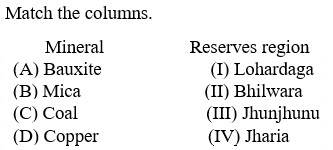
- (a) A-IV, B-III, C-I, D-II
- (b) A-I, B-II, C-IV, D-III
- (c) A-II, B-III, C-IV, D-I
- (d) A-II, B-I, C-III, D-IV
Show answer
Answer: (b)
7. What was the distance (around in km) covered by the first-ever train between Bombay and Thane in 1853?
- (a) 38
- (b) 25
- (c) 34
- (d) 51
Show answer
Answer: (c)
8.
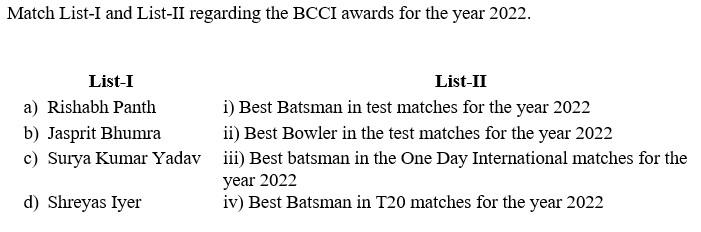
- (a) a-ii, b-i, c-iv, d-iii
- (b) a-ii, b-i, c-iii, d-iv
- (c) a-i, b-ii, c-iv, d-iii
- (d) a-i, b-ii, c-iii, d-iv
Show answer
Answer: (c)
9. Which of the following books was written by the Roman writer Pliny the elder?
- (a) Indica
- (b) Natural History
- (c) Geographica
- (d) Periplus of the Erythraean Sea
Show answer
Answer: (b)
10. Which law was studied in the year 1787, in which it was said that the volume of a gas increases with its absolute temperature and if its absolute temperature decreases, then its volume will decrease?
- (a) Boyle’s law
- (b) Dalton’s law
- (c) Avogadro’s law
- (d) Charles's law
Show answer
Answer: (d)
11. In India, which of the following bills CANNOT be introduced in the Rajya Sabha?
- (a) Both constitutional amendment and ordinary bills
- (b) The constitutional amendment bill
- (c) The money bill
- (d) The ordinary bill
Show answer
Answer: (c)
12. Which Article of the Constitution of India empowers a high court to issue a writ?
- (a) Article 132
- (b) Article 226
- (c) Article 143
- (d) Article 32
Show answer
Answer: (b)
13. In which year was the Doppler effect discovered by Austrian scientist Christian Doppler, that describes the change in frequency of any kind of sound or light wave produced by a moving source with respect to an observer?
- (a) 1846
- (b) 1844
- (c) 1842
- (d) 1840
Show answer
Answer: (c)
14. Which Article of the Constitution of India lays down that an Indian citizen has the right to use any restaurant, road or public place?
- (a) Article 17 (1)
- (b) Article 15 (2)
- (c) Article 14 (2)
- (d) Article 16 (1)
Show answer
Answer: (b)
15. Which of the following is an indirect tax?
- (a) Capital gains tax
- (b) Goods and services tax
- (c) Wealth tax
- (d) Gift tax
Show answer
Answer: (b)
16. Below are few statements given about afforestation. A. Afforestation could prevent flooding. B. Afforestation can balance our ecosystem. Which of above statements is/are correct?
- (a) Both A & B are incorrect
- (b) Only B
- (c) Both A & B
- (d) Only A
Show answer
Answer: (c)
18. What is the name of the scheme launched in 2021 for students to attain foundational literacy and numeracy up to class 3?
- (a) NIPUN Bharat
- (b) NISHTHA 2.0
- (c) SUGAM
- (d) SAFAL
Show answer
Answer: (a)
20. Zafar khan was a famous General of which of the following rulers of the Delhi Sultanate?
- (a) Alauddin Khilji
- (b) Iltutmish
- (c) Muhammad bin Tughluq
- (d) Balban
Show answer
Answer: (a)
21. Which of the following statements is/are correct about the neighbouring countries of India? (A) India supported Maldives in 2022 with a grant of nearly $4 billion to support the dwindling economy. (B) India has the highest GDP in dollar terms as compared to Sri Lanka, Bhutan and Bangladesh.
- (a) Only B
- (b) Neither A nor B
- (c) Only A
- (d) Both A and B
Show answer
Answer: (a)
22. Which of the following is essential to form haemoglobin in blood?
- (a) Fats
- (b) Iron
- (c) Calcium
- (d) Protein
Show answer
Answer: (b)
23. Which of the following can degrade detritus into simpler inorganic substances?
- (a) Algae
- (b) Phytoplankton
- (c) Fungal enzymes
- (d) Lichens
Show answer
Answer: (c)
24. What is the correct order of radiations in descending order of frequencies?
- (a) Infrared > Microwaves > Radio waves > X-rays
- (b) Radio waves > X-rays > Microwaves > Infrared
- (c) X-rays > Infrared > Microwaves > Radio waves
- (d) Infrared > Microwaves > X-rays > Radio waves
Show answer
Answer: (c)
25. Which group of animals are named because of their spiny skin and have a peculiar water-driven tube system that they use for moving around?
- (a) Hemichordata
- (b) Aschelminthes
- (c) Echinodermata
- (d) Mollusca
Show answer
Answer: (c)
Computer Knowledge Module
1.

- (a)

- (b)

- (c)

- (d)

Show answer
Answer: (b)
- (a)
2.

- (a)

- (b)

- (c)

- (d)

Show answer
Answer: (d)
- (a)
4.

- (a)

- (b)

- (c)

- (d)

Show answer
Answer: (a)
- (a)
5.

- (a)

- (b)

- (c)
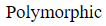
- (d)

Show answer
Answer: (b)
- (a)
7.

- (a)

- (b)

- (c)

- (d)

Show answer
Answer: (d)
- (a)
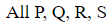
8.

- (a)
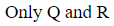
- (b)
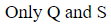
- (c)
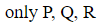
- (d)
Show answer
Answer: (b)
- (a)
9.

- (a)

- (b)

- (c)

- (d)

Show answer
Answer: (b)
- (a)
10.

- (a)
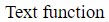
- (b)

- (c)

- (d)

Show answer
Answer: (b)
- (a)
11.

- (a)

- (b)

- (c)

- (d)

Show answer
Answer: (b)
- (a)
12.

- (a)

- (b)

- (c)

- (d)

Show answer
Answer: (c)
- (a)
13.

- (a)

- (b)

- (c)

- (d)

Show answer
Answer: (d)
- (a)
14.

- (a)

- (b)

- (c)

- (d)

Show answer
Answer: (d)
- (a)
16.

- (a)

- (b)

- (c)

- (d)

Show answer
Answer: (d)
- (a)
17.

- (a)

- (b)

- (c)

- (d)

Show answer
Answer: (d)
- (a)
19.

- (a)

- (b)

- (c)

- (d)

Show answer
Answer: (c)
- (a)
20.

- (a)

- (b)

- (c)

- (d)

Show answer
Answer: (d)
- (a)
Show answers
Answer key
Answer key as marked in the Staff Selection Commission’s response sheet. “—” means the sheet did not show it clearly.
Mathematical Abilities
- Q 1
- (a)
- Q 2
- (a)
- Q 3
- (a)
- Q 4
- (d)
- Q 5
- (a)
- Q 6
- (c)
- Q 7
- (a)
- Q 8
- (c)
- Q 9
- (b)
- Q 10
- (d)
- Q 11
- (a)
- Q 12
- (d)
- Q 13
- (a)
- Q 14
- (d)
- Q 15
- (b)
- Q 16
- (c)
- Q 17
- (b)
- Q 18
- (d)
- Q 19
- (c)
- Q 20
- (a)
- Q 21
- (c)
- Q 22
- (b)
- Q 23
- (c)
- Q 24
- (c)
- Q 25
- (c)
- Q 26
- (a)
- Q 27
- (d)
- Q 28
- (b)
- Q 29
- (a)
- Q 30
- (d)
Reasoning and General Intelligence
- Q 1
- (b)
- Q 2
- (a)
- Q 3
- (c)
- Q 4
- (a)
- Q 5
- (c)
- Q 6
- (d)
- Q 7
- (b)
- Q 8
- (a)
- Q 9
- (d)
- Q 10
- (c)
- Q 11
- (c)
- Q 12
- (a)
- Q 13
- (a)
- Q 14
- (d)
- Q 15
- (b)
- Q 16
- (c)
- Q 17
- (d)
- Q 18
- (c)
- Q 19
- (c)
- Q 20
- (a)
- Q 21
- (a)
- Q 22
- (a)
- Q 23
- (a)
- Q 25
- (a)
- Q 26
- (d)
- Q 27
- (a)
- Q 29
- (c)
- Q 30
- (b)
English Language and Comprehension
- Q 1
- (c)
- Q 3
- (c)
- Q 5
- (a)
- Q 8
- (c)
- Q 9
- (c)
- Q 10
- (a)
- Q 11
- (c)
- Q 12
- (b)
- Q 14
- (c)
- Q 15
- (d)
- Q 16
- (c)
- Q 17
- (d)
- Q 18
- (b)
- Q 19
- (c)
- Q 21
- (d)
- Q 22
- (d)
- Q 23
- (b)
- Q 24
- (c)
- Q 26
- (b)
- Q 27
- (a)
- Q 28
- (a)
- Q 30
- (c)
- Q 31
- (b)
- Q 32
- (c)
- Q 33
- (b)
- Q 35
- (d)
- Q 36
- (d)
- Q 37
- (a)
- Q 38
- (d)
- Q 39
- (d)
- Q 41
- (b)
- Q 42
- (c)
- Q 43
- (d)
- Q 44
- (a)
- Q 45
- (a)
General Awareness
- Q 1
- (d)
- Q 2
- (d)
- Q 3
- (a)
- Q 4
- (d)
- Q 5
- (a)
- Q 6
- (b)
- Q 7
- (c)
- Q 8
- (c)
- Q 9
- (b)
- Q 10
- (d)
- Q 11
- (c)
- Q 12
- (b)
- Q 13
- (c)
- Q 14
- (b)
- Q 15
- (b)
- Q 16
- (c)
- Q 18
- (a)
- Q 20
- (a)
- Q 21
- (a)
- Q 22
- (b)
- Q 23
- (c)
- Q 24
- (c)
- Q 25
- (c)
Computer Knowledge Module
- Q 1
- (b)
- Q 2
- (d)
- Q 4
- (a)
- Q 5
- (b)
- Q 7
- (d)
- Q 8
- (b)
- Q 9
- (b)
- Q 10
- (b)
- Q 11
- (b)
- Q 12
- (c)
- Q 13
- (d)
- Q 14
- (d)
- Q 16
- (d)
- Q 17
- (d)
- Q 19
- (c)
- Q 20
- (d)