ExamBharo · SSC CGL 2022 Tier I — 8 December 2022, Shift 4 · exambharo.com/previous-year-papers/ssc-cgl-2022-tier-1-8-dec-shift-4/
Question paper · SSC CGL
SSC CGL 2022 Tier I — 8 December 2022, Shift 4
8 December 2022 · 5:15 PM–6:15 PM97 of the paper’s 100 questions+2 for a correct answer, −0.5 for a wrong one
3 questions of the original paper are not included: those that need a figure or formatting we cannot show, that have no answer in the response sheet, or that we could not check against a second copy of the paper.
Questions from the Staff Selection Commission’s paper of 8 December 2022, 5:15 PM–6:15 PM. Each question’s answer is under it, hidden until you open it, and the full answer key is at the end. Take the paper as a timed practice test to be scored.
General Intelligence and Reasoning
1. Select the odd group of numbers. (NOTE: Operations should be performed on the whole numbers, without breaking down the numbers into its constituent digits. E.g.13 – Operations on 13 such as adding /subtracting /multiplying etc. to 13 can be performed. Breaking down 13 into 1 and 3 and then performing mathematical operations on 1 and 3 is not allowed)
- (a) (400 – 40 – 4)
- (b) (300 – 30 – 7)
- (c) (1000 – 100 – 10)
- (d) (500 – 50 – 5)
Show answer
Answer: (b)
2. Which two signs should be interchanged to make the given equation correct? 108 ÷ 2 * 10 + 70 – 10 = 480
- (a) + and –
- (b) ÷ and *
- (c) + and *
- (d) ÷ and –
Show answer
Answer: (a)
3. In the following question below are given some statements followed by some conclusions based on those statements. Taking the given statements to be true even if they seem to be at variance from commonly known facts. Read all the conclusions and then decide which of the given conclusion logically follows the given statements. Statements: I. All N are K. II. All K are P. Conclusion: I. Some P are not K. II. No P is N.
- (a) Only conclusion II follows
- (b) Both conclusions I and II follows
- (c) Only conclusion I follows
- (d) Neither conclusion follows
Show answer
Answer: (d)
4. A @ B means ‘A is the sister of B’. A & B means ‘A is the brother of B’. A # B means ‘A is the wife of B’. A ^ B means ‘A is the mother of B’. A + B means ‘A is the father of B’. If H @ V @ U # W & E ^ X # Z & R ^ S, then which of the following statements is NOT correct?
- (a) Z is the maternal grandfather of S.
- (b) W is the husband of U.
- (c) E is the mother-in-law of Z.
- (d) U is the sister of H.
Show answer
Answer: (a)
5. If A – B means that A is the brother of B, A + B means that A is the sister of B, A ÷ B means that A is the father of B then which of the following expression shows that P is the paternal uncle of R?
- (a) P + Q ÷ R
- (b) P ÷ Q – R
- (c) P – Q ÷ R
- (d) P – Q + R
Show answer
Answer: (c)
6. Which two signs and two numbers should be interchanged in the following equation to make it correct? 189 ÷ 2 × 30 + 18 – 5 = 159
- (a) 189 , 30 and + , ÷
- (b) 18 , 30 and ÷ , −
- (c) 2 , 30 and ÷ , ×
- (d) 30 , 18 and − , ×
Show answer
Answer: (b)
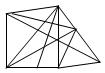
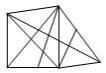
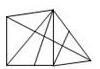
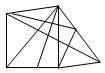
7.

- (a)
- (b)
- (c)
- (d)
Show answer
Answer: (b)
- (a)
8.
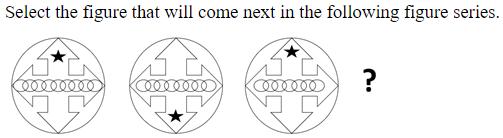
- (a)

- (b)

- (c)

- (d)
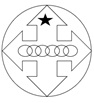
Show answer
Answer: (c)
- (a)
9. Which letter cluster will replace the question mark (?) to complete the given series? LAFI, MCGL, ?, OGIR, PIJU
- (a) NFHO
- (b) NFIO
- (c) NEHO
- (d) NEIO
Show answer
Answer: (c)
10.

- (a)
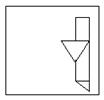
- (b)
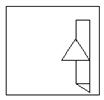
- (c)
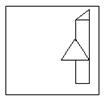
- (d)
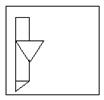
Show answer
Answer: (c)
- (a)
11. Select the option that is related to the third word in the same way as the second word is related to the first word. (The words must be considered as meaningful English words and must not be related to each other based on the number of letters/number of consonants/vowels in the word.) Birds : Nest :: Rabbits : ?
- (a) Garden
- (b) Burrow
- (c) Den
- (d) Cage
Show answer
Answer: (b)
12. Select the set in which the numbers are related in the same way as are the numbers of the following sets. (NOTE : Operations should be performed on the whole numbers, without breaking down the numbers into its constituent digits. E.g. 13 – Operations on 13 such as adding / subtracting / multiplying etc. to 13 can be performed. Breaking down 13 into 1 and 3 and then performing mathematical operations on 1 and 3 is NOT allowed) (4, 9, 16) (25, 36, 49)
- (a) (49, 64, 81)
- (b) (1, 16, 49)
- (c) (36, 81, 49)
- (d) (49, 36, 81)
Show answer
Answer: (a)
13.
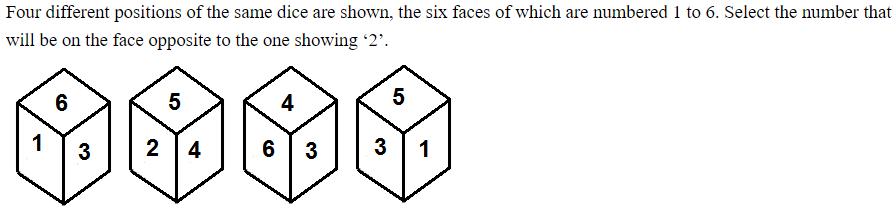
- (a) 5
- (b) 3
- (c) 4
- (d) 6
Show answer
Answer: (b)
14. Three statements are given followed by three conclusions numbered I, II and III. Assuming the statements to be true, even if they seem to be at variance with commonly known facts, decide which of the conclusions logically follow(s) from the statements. Statements: All gorillas are bears. All pigs are bears. All bears are tigers. Conclusions: I. All pigs are tigers. II. All tigers are gorillas. III. Some tigers are pigs.
- (a) Only conclusions I and II follow
- (b) Only conclusions I and III follow
- (c) All conclusions follow
- (d) Only conclusions II and III follow
Show answer
Answer: (b)
15. Based on the position in the English alphabetical order, three of the following letterclusters are alike in some manner and one is different. Select the odd letter-cluster.
- (a) OIGE
- (b) QKJH
- (c) SMLJ
- (d) WQPN
Show answer
Answer: (a)
16. Select the set in which the numbers are related in the same way as are the numbers of the following set. (NOTE: Operations should be performed on the whole numbers, without breaking down the numbers into its constituent digits.) (12, 51, 5) (8, 30, 2)
- (a) (14, 120, 16)
- (b) (13, 10, 7)
- (c) (19, 44, 3)
- (d) (11, 51, 6)
Show answer
Answer: (d)
17. In a certain code language, 'LUNGS' is written as ‘OXQJV’ and ‘POWER’ is written as ‘SRZHU’, how will 'ELOQUENT' be written in that language?
- (a) HORTXHQW
- (b) HOQSXHQW
- (c) FMPPRHQW
- (d) FMPRVFOU
Show answer
Answer: (a)
18. By Interchanging the given two numbers which of the following equation will be correct? 7 and 3
- (a) 3 ÷ 1 – 7 × 2 + 4 = 8
- (b) 3 × 2 + 7 – 6 ÷ 3 = 18
- (c) 3 + 7 × 4 – 6 ÷ 2 = 20
- (d) 7 + 3 × 2 – 4 ÷ 1 = 13
Show answer
Answer: (d)
19. Select the option that is related to the fifth letter-cluster in the same way as the second letter-cluster is related to the first letter-cluster and the fourth letter-cluster is related to the third letter-cluster. BASE : EASB :: MINE : EINM :: CALM : ?
- (a) AMLC
- (b) MACL
- (c) AMCL
- (d) MALC
Show answer
Answer: (d)
20. A series is given with one term missing. Select the correct alternative from the given ones that will complete the series. ABNC, HGWN, OLFY, VQOJ, ?
- (a) TDMR
- (b) CMRQ
- (c) CVXU
- (d) CNTD
Show answer
Answer: (c)
22. Select the set in which the numbers are related in the same way as are the numbers of the following set. (NOTE: Operations should be performed on the whole numbers, without breaking down the numbers into its constituent digits. E.g., 13 – Operations on 13 such as adding /subtracting /multiplying etc. to 13 can be performed. Breaking down 13 into 1 and 3 and then performing mathematical operations on 1 and 3 is NOT allowed). (52, 10, 41) (46, 18, 50)
- (a) (68, 26, 73)
- (b) (19, 33, 69)
- (c) (41, 17, 36)
- (d) (23, 18, 40)
Show answer
Answer: (a)
23. In the following question, select the missing number from the given series. 98, 70, 42, 14, ?, – 42
- (a) –10
- (b) –14
- (c) 0
- (d) –15
Show answer
Answer: (b)
24.

- (a)
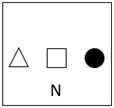
- (b)
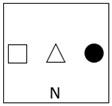
- (c)
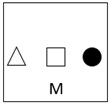
- (d)
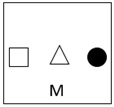
Show answer
Answer: (d)
- (a)
25. In a certain code language, ‘TRIGONOMETRY’ is written as ‘YRTEMOTRIGON’, ‘ACCELERATION’ is written as ‘NOITARACCELE’. How will ‘APPRECIATION’ be written in that language?
- (a) NOITAIAPPREC
- (b) NOITIAAPPREC
- (c) NOITAIAPRPEC
- (d) NOITAIPAPREC
Show answer
Answer: (a)
General Awareness
1. The Harappan brought Gold from present-day _______ in India.
- (a) Telangana
- (b) Tamil Nadu
- (c) Karnataka
- (d) Kerala
Show answer
Answer: (c)
2. Which of the following is NOT the component of the capital expenditure of the Government?
- (a) Expenditure on the acquisition of machinery
- (b) Expenditure on the acquisition of land
- (c) Expenditure on the acquisition of building
- (d) Interest payments
Show answer
Answer: (d)
3. Which of the following has become the first state in the country to get the L-root server?
- (a) Karnataka
- (b) Maharashtra
- (c) Rajasthan
- (d) Andhra Pradesh
Show answer
Answer: (c)
4. Which minorities are mentioned in article 30 of the Indian Contituiton?
- (a) Linguistic and religious
- (b) Religious, cultural and linguistic
- (c) Cultural and linguistic
- (d) Religious and cultural
Show answer
Answer: (a)
5. Which of the following climate type is found under the cold climates?
- (a) Humid subtropical
- (b) Highland
- (c) Humid continental
- (d) Tundra
Show answer
Answer: (d)
6. The Hindu College was established in Banaras in ______.
- (a) 1771
- (b) 1801
- (c) 1781
- (d) 1791
Show answer
Answer: (d)
7. The mass number of potassium is:
- (a) 39
- (b) 40
- (c) 38
- (d) 37
Show answer
Answer: (a)
8. As of April 2022, who among the following musicians is NOT a recipient of the Bharat Ratna?
- (a) Zakir Hussain
- (b) Ravi Shankar
- (c) Bismillah Khan
- (d) Lata Mangeshkar
Show answer
Answer: (a)
9. What do you call the rate of formation of new organic matter by consumers?
- (a) Tertiary productivity
- (b) Primary productivity
- (c) Net productivity
- (d) Secondary productivity
Show answer
Answer: (d)
10. Quwwat al-Islam mosque and minaret, built during the last decade of the ______ century.
- (a) eleventh
- (b) thirteenth
- (c) fourteenth
- (d) twelth
Show answer
Answer: (d)
11. What is the structure of the Indian judiciary?
- (a) Four-tier
- (b) Two-tier
- (c) Three-tier
- (d) Five-tier
Show answer
Answer: (a)
12. Who took charge as the chairman of The Insurance Regulatory and Development Authority of India in March 2022?
- (a) Debasish Panda
- (b) Ajay Bhushan Pandey
- (c) Sanjeev Sanyal
- (d) Ashwin Yardi
Show answer
Answer: (a)
13. ______ is a city located on the confluence of river Yamuna and Ganga.
- (a) Allahabad
- (b) Agra
- (c) Kanpur
- (d) Lucknow
Show answer
Answer: (a)
14. Where was the FIH Women’s Indoor Hockey World Cup 2015 held?
- (a) Vienna, Austria
- (b) Poznan, Poland
- (c) Leipzig, Germany
- (d) Berlin, Germany
Show answer
Answer: (c)
15. Which enzyme in the pancreatic juice helps in breaking down fats?
- (a) Protease
- (b) Pepsin
- (c) Lipase
- (d) Amylase
Show answer
Answer: (c)
16. Who was the recipient of the National Devdasi Award in 2016?
- (a) Geeta Kapoor
- (b) R Muthukannammal
- (c) Prerana Deshpande
- (d) Dr Sohini Ray
Show answer
Answer: (c)
17. Name the two states in which land reform were successful?
- (a) Uttar Pradesh and Bihar
- (b) West Bengal and Kerala
- (c) Maharashtra and Tamil Nadu
- (d) Karnataka and West Bengal
Show answer
Answer: (b)
18. In which game/sport is the area of bout called a ring?
- (a) Taekwondo
- (b) Judo
- (c) Karate
- (d) Boxing
Show answer
Answer: (d)
19. According to census 2011, which state has lowest literacy rate in India?
- (a) Uttar Pradesh
- (b) Lakshadweep
- (c) Mizoram
- (d) Bihar
Show answer
Answer: (d)
20. Ekaharya is the solo artist in which Indian classical dance form?
- (a) Kathak
- (b) Bharatanatyam
- (c) Kuchipudi
- (d) Mohiniyattam
Show answer
Answer: (b)
21. Who has taken over as President of Financial Action Task Force in July 2022?
- (a) T Raja Kumar
- (b) Sanjiv Kapoor
- (c) Ashwani Bhatia
- (d) Mahesh Verma
Show answer
Answer: (a)
22. Salamander belongs to which of the following classes?
- (a) Pieces
- (b) Reptiles
- (c) Aves
- (d) Amphibian
Show answer
Answer: (d)
23. Which festival is celebrated on the last day of the holy month of Ramadan?
- (a) Milad-un-Nabi
- (b) Eid-ul-Fitr
- (c) Shab-e-Barat
- (d) Eid-ul-zuha
Show answer
Answer: (b)
24. The craftspersons of Bidar were so famed for their inlay work in ______.
- (a) Gold and Bronze
- (b) Bronze and Silver
- (c) Gold and Copper
- (d) Copper and Silver
Show answer
Answer: (d)
25. The group of islands which form part of India and lie to the southeast of Indian mainland in Bay of Bengal is ______.
- (a) Lakshadweep islands
- (b) Andaman and Nicobar islands
- (c) Mannar island
- (d) Maldive islands
Show answer
Answer: (b)
Quantitative Aptitude
1.

- (a) 0
- (b) 3
- (c) 1
- (d) 2
Show answer
Answer: (c)
2. If a : b = 4 : 5 and b : c = 3 : 10, then a : c is:
- (a) 4 : 10
- (b) 5 : 3
- (c) 25 : 6
- (d) 6 : 25
Show answer
Answer: (d)
3. While finding the average marks of a class, Vikas’s marks were wrongly entered as 98 in place of 89. Due to this error, the average marks of the class were 0.25 more than the actual average. What is the number of students in the class?
- (a) 32
- (b) 38
- (c) 34
- (d) 36
Show answer
Answer: (d)
4. A certain sum of money is given at a certain rate for 3 years. Had it been given at 5% higher rate, it would have fetched ₹600 more. Find the sum.
- (a)

- (b)

- (c)

- (d)

Show answer
Answer: (d)
- (a)
5.
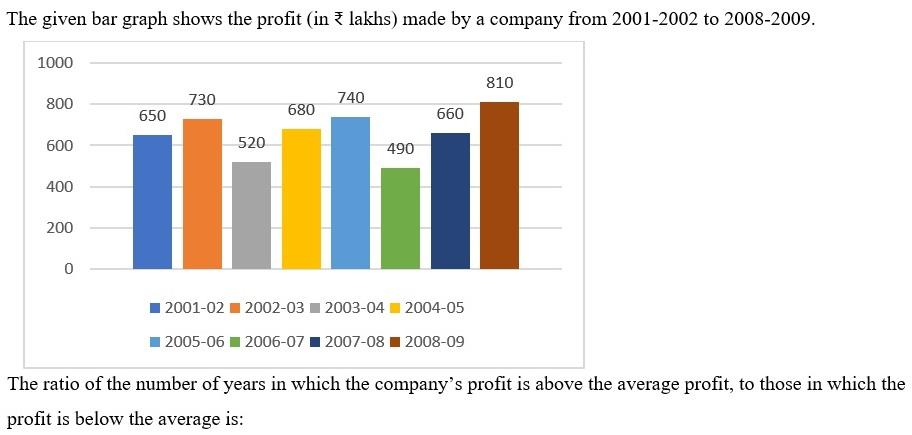
- (a) 5 : 3
- (b) 4 : 3
- (c) 3 : 5
- (d) 3 : 4
Show answer
Answer: (b)
6. A thief stole jewellery from a shop at 8:15 p.m. and left on a bike at a speed of 60 km/h. The police were informed at 8:30 p.m. If the police want to arrest the thief at 9:00 p.m., what should be the minimum speed of the police jeep?
- (a) 60 km/h
- (b) 75 km/h
- (c) 80 km/h
- (d) 90 km/h
Show answer
Answer: (d)
7. The table given below shows the number of officers working in six companies.
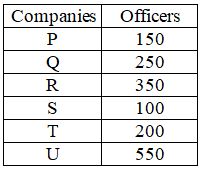 What is the ratio of number of officers working in Q to the number of officers working in R?
- (a) 7 : 5
- (b) 6 : 7
- (c) 7 : 4
- (d) 5 : 7
Show answer
Answer: (d)
8. If
 , then what is the value of
  ?
?- (a) 9
- (b) 6
- (c) 7
- (d) 5
Show answer
Answer: (c)
9.

- (a) 22
- (b) 32
- (c) 49
- (d) 35
Show answer
Answer: (d)
10. If α is an acute angle, tan (4α − 50°) = cot (50° − α), then find the value of α (in degrees).
- (a) 60°
- (b) 45°
- (c) 30°
- (d) 90°
Show answer
Answer: (c)
11.
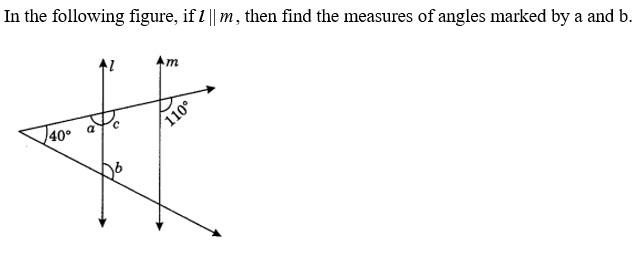
- (a)
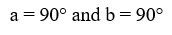
- (b)

- (c)

- (d)
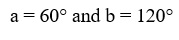
Show answer
Answer: (c)
- (a)
12. The radius of a circle with centre at O is 6 cm and the central angle of a sector is 40°. Find the area of the sector.
- (a)

- (b)

- (c)

- (d)

Show answer
Answer: (c)
- (a)
13. A and B can complete a piece of work in 13 and 17 days respectively. A begins to do the work, and they work alternatively one at a time for one day each. The whole work will be completed in:
- (a)

- (b)

- (c)

- (d)

Show answer
Answer: (c)
- (a)
14. Nihit starts a business with Rs.700. After 5 months Amit and Patel joined him with Rs.300 and Rs.400 respectively. At the end of the year, the business gave a profit of Rs.627. Find the share of Patel in the profit.
- (a) Rs.127
- (b) Rs.145
- (c) Rs.132
- (d) Rs.156
Show answer
Answer: (c)
15. There are two circles which touch each other externally. The radius of the first circle with centre O is 17 cm and radius of the second circle with centre A is 7 cm. BC is a direct common tangent to these two circles, where B and C are points on the circles with centres O and A, respectively. The length of BC is:
- (a)

- (b)

- (c)

- (d)

Show answer
Answer: (b)
- (a)
16. In a ΔPRQ, AB is drawn parallel to QR, cutting sides at A and B where length of PQ = 6cm, length of QR = 8cm and length of QA = 3cm. What is the length of AB?
- (a) 4.0 cm
- (b) 4.2 cm
- (c) 5.0 cm
- (d) 2.4 cm
Show answer
Answer: (a)
17. The pie chart given below shows the number of boys in 8 schools. The total number of boys in all these 8 school is 10,000. Number of boys in a particular school is shown as a percent of total number of boys in all these 8 schools.
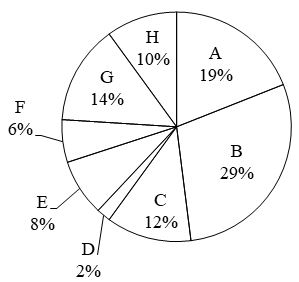 What is the ratio of total central angle formed by sector C, D and F to the total central angle formed by sector A, G and H?
- (a) 20 : 43
- (b) 44 : 21
- (c) 17 : 39
- (d) 19 : 44
Show answer
Answer: (a)
18.

- (a) 82
- (b) 76
- (c) 86
- (d) 78
Show answer
Answer: (b)
19. If 7-digit number 678p37q is divisible by 75 and p is not a composite, then the values of p and q are:
- (a) p = 5, q = 5
- (b) p = 3, q = 0
- (c) p = 3, q = 5
- (d) p = 2, q = 5
Show answer
Answer: (c)
21. If the cost of 20 books is equal to the selling price of 18 books, then the gain percentage is:
- (a)

- (b)

- (c)

- (d)

Show answer
Answer: (a)
- (a)
22. A cuboid of sides 12 cm, 18 cm and 27 cm is melted to form a cube. What is the ratio of the total surface area of the cuboid to that of the cube?
- (a) 18 : 17
- (b) 17 : 19
- (c) 19 : 18
- (d) 17 : 23
Show answer
Answer: (c)
23. A dealer offers 45% discount on a packet. She offers a further discount of 25% on the reduced price on cash payment. What does a customer has to pay for the packet of ₹2,800, in cash, to avail both discounts?
- (a) ₹1,480
- (b) ₹1,350
- (c) ₹1,155
- (d) ₹1,230
Show answer
Answer: (c)
24.

- (a)

- (b)

- (c)

- (d)

Show answer
Answer: (a)
- (a)
25.
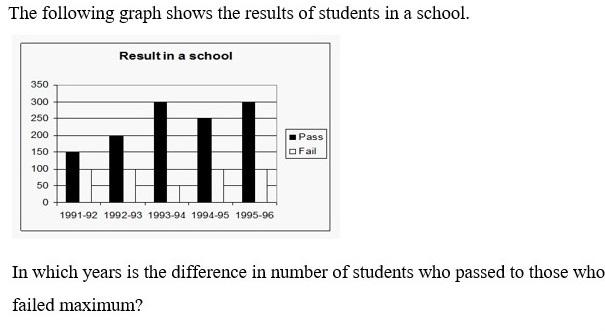
- (a) 1991 - 92
- (b) 1993 - 94
- (c) 1992 - 93
- (d) 1994 - 95
Show answer
Answer: (b)
English Comprehension
1. Select the option that expresses the given sentence in passive voice. One should keep one’s promise.
- (a) Promises should be kept.
- (b) One should keep their promise.
- (c) One’s promise should be kept by one.
- (d) Promises should be kept by one.
Show answer
Answer: (a)
2. Select the most appropriate option that can substitute the underlined segment in the given sentence. If there is no need to substitute it, select ‘No substitution’. It was an horrible day at the office for Roy, but he didn’t allow it to spoil his evening plans.
- (a) was a horrible day at the office
- (b) were a horrible day at office
- (c) No substitution
- (d) horrible day at the office
Show answer
Answer: (a)
3. Identify the most appropriate ANTONYM of the underlined word in the given sentence. A balloon contracts when air is blown into it.
- (a) Controls
- (b) Repulses
- (c) Shrinks
- (d) Expands
Show answer
Answer: (d)
4. Select the most appropriate synonym of the given word. Empty
- (a) Priceless
- (b) Vacant
- (c) Packed
- (d) Filled
Show answer
Answer: (b)
5. Select the most appropriate synonym of the given word. Wavering
- (a) Sickly
- (b) Drenching
- (c) Fluctuating
- (d) Unconvincing
Show answer
Answer: (c)
6. Select the most appropriate collocation to substitute the underlined word in the given sentence. The MNC is about to be bankrupt, according to reliable sources.
- (a) take bankrupt
- (b) go bankrupt
- (c) come bankrupt
- (d) give bankrupt
Show answer
Answer: (b)
7. In the given sentence, one word may have been incorrectly spelt. Select the correctly spelt word from the given alternatives. If there is no error, select ‘No error’ as your answer. The staff members were attempting to manoeuvre the board of directors for the abolition of pay disparity
- (a) manouever
- (b) manoeuver
- (c) manouvre
- (d) No error
Show answer
Answer: (d)
8. Select the correct active form of the given sentence. Her wooden almirah has been destroyed by the termites.
- (a) The termites destroyed her wooden almirah.
- (b) The termites could destroy her wooden almirah.
- (c) The termites had destroyed her wooden almirah.
- (d) The termites have destroyed her wooden almirah.
Show answer
Answer: (d)
9. Choose the correct meaning of the given idiom. Down the tubes
- (a) Minting money
- (b) Failing completely
- (c) Being informal
- (d) Going to swim
Show answer
Answer: (b)
10. Rearrange the parts of the sentence in correct order. The researchers P. decision centers called the orbitofrontal Q. analyzed the electrical activity recorded R. cortex and dorsal anterior cingulate cortex S. from neurons in two of the brain's
- (a) QSPR
- (b) RSPQ
- (c) RPQS
- (d) PQSR
Show answer
Answer: (a)
11. Select the appropriate adverb for the underlined word in the sentence. We considered in brief the long term solution to the problem.
- (a) briefly
- (b) briefless
- (c) brief
- (d) briefness
Show answer
Answer: (a)
12. Select the most appropriate option that can substitute the underlined segment in the given sentence. My uncle is a colonel who gets extremely angry over petty issues every now and then.
- (a) furious
- (b) fierce
- (c) heated
- (d) violent
Show answer
Answer: (a)
14. Select the INCORRECTLY spelt word in the following sentence. In the coming millenium, some noticeable technological advancements will be accomplished.
- (a) noticeable
- (b) technological
- (c) advancements
- (d) millenium
Show answer
Answer: (d)
15. Select the most appropriate option to fill in the blank. APJ Abdul Kalam’s house, located on Mosque Street was within the reach of the famous temple of Rameswaram. It was just________from it.
- (a) a stone’s throw away
- (b) at one’s fingertip
- (c) at arm’s length
- (d) from pillar to post
Show answer
Answer: (a)
16. Sentences of a paragraph are given below in jumbled order. Arrange the sentences in the correct order to form a meaningful and coherent paragraph. A.On my way to school, I met my uncle who had returned from England. B.Then I invited him to my place. C.He was very pleased to see me and asked about my parents. D.On he asking me about my parents, I told him my father recalls him frequently.
- (a) CABD
- (b) ABCD
- (c) ACDB
- (d) BACD
Show answer
Answer: (c)
17. Select the most appropriate ANTONYM of the given word. part
- (a) Fragment
- (b) Joint
- (c) Bit
- (d) Whole
Show answer
Answer: (d)
18. The following sentence has been split into four segments. Identify the segment that contains a grammatical error. The scooter that / I am using / these days is belonging / to my brother.
- (a) to my brother
- (b) I am using
- (c) The scooter that
- (d) these days is belonging
Show answer
Answer: (d)
19. Select the option that can be used as a one-word substitute for the given group of words. To keep postponing doing a task later because you’re lazy
- (a) Procrastinate
- (b) Multi-task
- (c) Leave
- (d) Diligent
Show answer
Answer: (a)
20. Select the most appropriate collocating word to fill in the blank. There is________traffic every morning.
- (a) long
- (b) heavy
- (c) big
- (d) lengthy
Show answer
Answer: (b)
PassageFor questions 21–25
In the following passage, some words have been deleted. Read the passage carefully and select the most appropriate option to fill in each blank.
Deforestation, wildfires and pollution cause animals (1) _________lose their homes. Animals may be (2) _________ by their surroundings. Most individuals are (3) __________ that they are taking down an animal's home when they cut down trees for wood. Animal (4) ___________ is also lost as a result of wildfires. The main causes of an animal becoming (5)_________ are poaching and smuggling. Pollution is extremely harmful to animals and their environments. Animals are interested and try to eat the pollution-causing things. Furthermore, some rivers and natural resources are becoming polluted, forcing animals to relocate.
21. Select the most appropriate option to fill in blank number 1.
- (a) to
- (b) from
- (c) through
- (d) of
Show answer
Answer: (a)
22. Select the most appropriate option to fill in blank number 2.
- (a) effected
- (b) obsoleted
- (c) intensified
- (d) affected
Show answer
Answer: (d)
23. Select the most appropriate option to fill in blank number 3.
- (a) apprehensive
- (b) unaware
- (c) bad
- (d) conscious
Show answer
Answer: (b)
24. Select the most appropriate option to fill in blank number 4.
- (a) environment
- (b) habitat
- (c) husbandry
- (d) domain
Show answer
Answer: (b)
25. Select the most appropriate option to fill in blank number 5.
- (a) wild
- (b) endangered
- (c) infused
- (d) destructive
Show answer
Answer: (b)
Show answers
Answer key
Answer key as marked in the Staff Selection Commission’s response sheet. “—” means the sheet did not show it clearly.
General Intelligence and Reasoning
- Q 1
- (b)
- Q 2
- (a)
- Q 3
- (d)
- Q 4
- (a)
- Q 5
- (c)
- Q 6
- (b)
- Q 7
- (b)
- Q 8
- (c)
- Q 9
- (c)
- Q 10
- (c)
- Q 11
- (b)
- Q 12
- (a)
- Q 13
- (b)
- Q 14
- (b)
- Q 15
- (a)
- Q 16
- (d)
- Q 17
- (a)
- Q 18
- (d)
- Q 19
- (d)
- Q 20
- (c)
- Q 22
- (a)
- Q 23
- (b)
- Q 24
- (d)
- Q 25
- (a)
General Awareness
- Q 1
- (c)
- Q 2
- (d)
- Q 3
- (c)
- Q 4
- (a)
- Q 5
- (d)
- Q 6
- (d)
- Q 7
- (a)
- Q 8
- (a)
- Q 9
- (d)
- Q 10
- (d)
- Q 11
- (a)
- Q 12
- (a)
- Q 13
- (a)
- Q 14
- (c)
- Q 15
- (c)
- Q 16
- (c)
- Q 17
- (b)
- Q 18
- (d)
- Q 19
- (d)
- Q 20
- (b)
- Q 21
- (a)
- Q 22
- (d)
- Q 23
- (b)
- Q 24
- (d)
- Q 25
- (b)
Quantitative Aptitude
- Q 1
- (c)
- Q 2
- (d)
- Q 3
- (d)
- Q 4
- (d)
- Q 5
- (b)
- Q 6
- (d)
- Q 7
- (d)
- Q 8
- (c)
- Q 9
- (d)
- Q 10
- (c)
- Q 11
- (c)
- Q 12
- (c)
- Q 13
- (c)
- Q 14
- (c)
- Q 15
- (b)
- Q 16
- (a)
- Q 17
- (a)
- Q 18
- (b)
- Q 19
- (c)
- Q 21
- (a)
- Q 22
- (c)
- Q 23
- (c)
- Q 24
- (a)
- Q 25
- (b)
English Comprehension
- Q 1
- (a)
- Q 2
- (a)
- Q 3
- (d)
- Q 4
- (b)
- Q 5
- (c)
- Q 6
- (b)
- Q 7
- (d)
- Q 8
- (d)
- Q 9
- (b)
- Q 10
- (a)
- Q 11
- (a)
- Q 12
- (a)
- Q 14
- (d)
- Q 15
- (a)
- Q 16
- (c)
- Q 17
- (d)
- Q 18
- (d)
- Q 19
- (a)
- Q 20
- (b)
- Q 21
- (a)
- Q 22
- (d)
- Q 23
- (b)
- Q 24
- (b)
- Q 25
- (b)