ExamBharo · SSC CGL 2022 Tier I — 6 December 2022, Shift 4 · exambharo.com/previous-year-papers/ssc-cgl-2022-tier-1-6-dec-shift-4/
Question paper · SSC CGL
SSC CGL 2022 Tier I — 6 December 2022, Shift 4
6 December 2022 · 5:15 PM–6:15 PM93 of the paper’s 100 questions+2 for a correct answer, −0.5 for a wrong one
7 questions of the original paper are not included: those that need a figure or formatting we cannot show, that have no answer in the response sheet, or that we could not check against a second copy of the paper.
Questions from the Staff Selection Commission’s paper of 6 December 2022, 5:15 PM–6:15 PM. Each question’s answer is under it, hidden until you open it, and the full answer key is at the end. Take the paper as a timed practice test to be scored.
General Intelligence and Reasoning
1.

- (a)
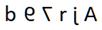
- (b)
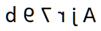
- (c)
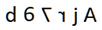
- (d)
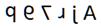
Show answer
Answer: (b)
- (a)
2. Select the correct combination of mathematical signs to sequentially replace the * signs and to balance the given equation. 25 * 2 * 220 * 11 * 43
- (a) +, −, ×, =
- (b) +, −, ÷, =
- (c) +, +, ÷, =
- (d) −, +, ÷, =
Show answer
Answer: (d)
3. Select the option that is related to the fifth number in the same way as the second number is related to the first number and the fourth number is related to the third number. 7 : 13 :: 16 : 31 :: 46 : ?
- (a) 81
- (b) 83
- (c) 91
- (d) 97
Show answer
Answer: (c)
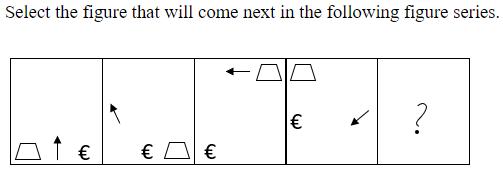
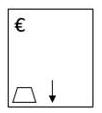
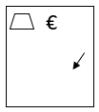
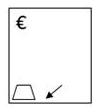
4.
- (a)
- (b)
- (c)
- (d)
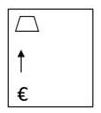
Show answer
Answer: (a)
- (a)
5. Select the correct combination of mathematical signs to sequentially replace the # signs and to balance the given equation. [{(44 # 38) # (2 # 5)} # (4 # 2)] # 5 # 10
- (a) ×, ÷, ×, ×, −, +, =
- (b) ×, ̶ , +, ×, ÷, ×, =
- (c) ̶ , +, ×, ×, ÷, ×, =
- (d) ̶ , +, ×, ÷, ×, ×, =
Show answer
Answer: (d)
6. If L × M means that L is the mother of M, L + M means that L is the father of M, L ÷ M means that L is the sister of M, then which of the following expression shows that P is the father of R?
- (a) P + Q ÷ R
- (b) P ÷ R + Q
- (c) Q + P ÷ R
- (d) P + Q × R
Show answer
Answer: (a)
7. A – B means ‘A is the mother of B’ A * B means ‘A is the sister of B’ A % B means ‘A is the husband of B’ A $ B means ‘A is the son of B’ If P – Q – R * S $ T, then how is P related to T?
- (a) Mother
- (b) Mother-in-law
- (c) Sister
- (d) Sister-in-law
Show answer
Answer: (b)
8.
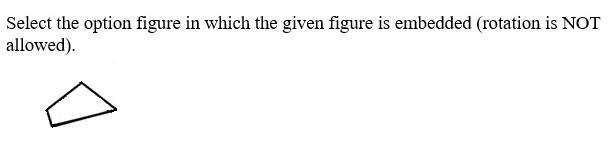
- (a)
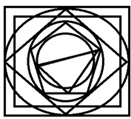
- (b)

- (c)
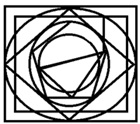
- (d)
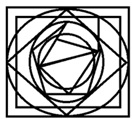
Show answer
Answer: (a)
- (a)
9. Select the option that is related to the third word in the same way as the second word is related to the first word. (The words must be considered as meaningful English words and must not be related to each other based on the number of letters/number of consonants/vowels in the word) Plants : Botanist :: Animals : ?
- (a) Chemists
- (b) Geologists
- (c) Archaeologists
- (d) Zoologists
Show answer
Answer: (d)
10. Select the set in which the numbers are related in the same way as are the numbers of the following sets. (NOTE : Operations should be performed on the whole numbers, without breaking down the numbers into its constituent digits. E.g. 13 – Operations on 13 such as adding / subtracting / multiplying etc. to 13 can be performed. Breaking down 13 into 1 and 3 and then performing mathematical operations on 1 and 3 is NOT allowed) (7, 4, 56) (8, 3, 48)
- (a) (90, 3, 400)
- (b) (87, 4, 128)
- (c) (96, 42, 12)
- (d) (9, 10, 180)
Show answer
Answer: (d)
11. Which letter cluster will replace the question mark (?) to complete the given series? ACFD, CFHG, ?, GLLM, IONP
- (a) EIJK
- (b) EIJJ
- (c) FIJJ
- (d) EJJK
Show answer
Answer: (b)
13.
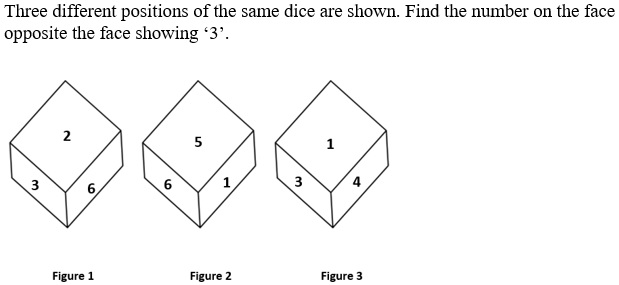
- (a) 1
- (b) 2
- (c) 5
- (d) 4
Show answer
Answer: (c)
14. In the following question, select the missing number from the given series. 5103, 1701, 567, ?, 63, 21
- (a) 265
- (b) 169
- (c) 189
- (d) 170
Show answer
Answer: (c)
15.
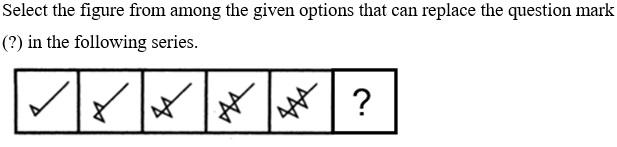
- (a)

- (b)

- (c)

- (d)

Show answer
Answer: (b)
- (a)
16. Select the odd group of numbers. (NOTE: Operations should be performed on the whole numbers, without breaking down the numbers into its constituent digits. E.g.13 – Operations on 13 such as adding /subtracting /multiplying etc. to 13 can be performed. Breaking down 13 into 1 and 3 and then performing mathematical operations on 1 and 3 is not allowed)
- (a) 14 – 193
- (b) 15 – 220
- (c) 16 – 251
- (d) 17 – 284
Show answer
Answer: (a)
17. Select the option that is related to the third word in the same way as the second word is related to the first word. (The words must be considered as meaningful English words and must not be related to each other based on the number of letters/number of consonants/vowels in the word.) School : Students :: Hospital : ?
- (a) Doctors
- (b) Nurses
- (c) Patients
- (d) Diseases
Show answer
Answer: (c)
18. In the following question below are given some statements followed by some conclusions based on those statements. Taking the given statements to be true even if they seem to be at variance from commonly known facts. Read all the conclusions and then decide which of the given conclusion logically follows the given statements. Statements: I. All R are P. II. All R are Q. Conclusion: I. No P is Q. II. No R is P.
- (a) Neither conclusion follows
- (b) Only conclusion II follows
- (c) Both conclusions I and II follows
- (d) Only conclusion I follows
Show answer
Answer: (a)
19. In a certain code language, ‘TECHNOLOGY’ is written as ‘NHCETOLOGY’, ‘GENERATION’ is written as ‘RENEGATION’. How will ‘APOCALYPSE’ be written in that language?
- (a) AOCPALYPSE
- (b) ACPOALYPSE
- (c) ACOAPLYPSE
- (d) ACOPALYPSE
Show answer
Answer: (d)
20. By interchanging the given two signs and numbers which of the following equation will be correct? + and –, 7 and 6
- (a) 4 × 7 + 6 – 3 ÷ 1 = 20
- (b) 8 × 7 + 5 ÷ 1 – 6 = 17
- (c) 7 – 6 × 3 + 4 ÷ 1 = 8
- (d) 7 × 2 – 6 + 4 ÷ 2 = 13
Show answer
Answer: (a)
21. A series is given with one term missing. Select the correct alternative from the given ones that will complete the series. ABCD, FVJV, KPQN, PJXF, ?
- (a) UDQE
- (b) RQTS
- (c) UDEX
- (d) EQRT
Show answer
Answer: (c)
22. In a certain code language, 'ABROAD' is written as 'DFORDH' and ‘ACCESS’ is written as ‘DGECVW’. How will 'AGENCY' be written in that language?
- (a) DKNEFC
- (b) EKNEFC
- (c) DJNEFB
- (d) DKNEGC
Show answer
Answer: (a)
23. Select the set in which the numbers are related in the same way as are the numbers of the following sets. (NOTE : Operations should be performed on the whole numbers, without breaking down the numbers into its constituent digits. E.g. 13 – Operations on 13 such as adding /subtracting /multiplying etc. to 13 can be performed. Breaking down 13 into 1 and 3 and then performing mathematical operations on 1 and 3 is not allowed) (9, 16, 5) (7, 9, 4)
- (a) (14, 64, 7)
- (b) (14, 100, 5)
- (c) (11, 36, 5)
- (d) (12, 66, 4)
Show answer
Answer: (c)
24. Three Statements are given followed by three conclusions numbered I, II and III. Assuming the statements to be true, even if they seem to be at variance with commonly known facts, decide which of the conclusions logically follow(s) from the statements. Statements: Some bottles are towels. No towel is a pillow. All bottle sare coats. Conclusions: I. Some coats are towels. II. No coat is a towel. III. Some bottles are pillows.
- (a) Only conclusion II follows.
- (b) Both conclusions I and III follows.
- (c) Only either conclusion I or II follows.
- (d) Only conclusion I follows.
Show answer
Answer: (d)
25. Three of the following letter-clusters are alike in some manner and hence form a group. Which letter-cluster does not belong to that group?
- (a) PRKI
- (b) JFOQ
- (c) UWFD
- (d) XZCA
Show answer
Answer: (b)
General Awareness
1. The Constitution of India is a sovereign socialist secular democratic republic with a ______________ system of government.
- (a) unitary
- (b) parliamentary
- (c) monarchical
- (d) presidential
Show answer
Answer: (b)
2. Ahmadnagar was finally annexed by the Mughals in _____.
- (a) 1627
- (b) 1632
- (c) 1630
- (d) 1635
Show answer
Answer: (b)
3. Which of the following major Indian crops requires high temperature (above 25°C) and high humidity?
- (a) Gram
- (b) Peas
- (c) Rice
- (d) Wheat
Show answer
Answer: (c)
4. ______ - time graph shows speed of an object.
- (a) Velocity
- (b) Distance
- (c) Displacement
- (d) Acceleration
Show answer
Answer: (b)
5. Which nutrient is chlorella rich in?
- (a) Roughage
- (b) Carbohydrates
- (c) Fats
- (d) Protein
Show answer
Answer: (d)
6. Who has become the first woman director general of the Council of Scientific and Industrial Research?
- (a) Sanjay Verma
- (b) Vinod Aggarwal
- (c) Nallathamby Kalaiselvi
- (d) Prakash Chand
Show answer
Answer: (c)
7. McMahon line is a line which separates china and which Indian state?
- (a) Sikkim
- (b) Uttarakhand
- (c) Arunachal Pradesh
- (d) Jammu and Kashmir
Show answer
Answer: (c)
8. The Paris Indian Society was an Indian nationalist organisation founded in ______.
- (a) 1907
- (b) 1905
- (c) 1909
- (d) 1900
Show answer
Answer: (b)
9. Droupadi Murmu was elected the _______ President of India.
- (a) 18th
- (b) 17th
- (c) 15th
- (d) 16th
Show answer
Answer: (c)
10. What is the commercial unit of electric energy?
- (a) Watt-hour
- (b) Watt per hour
- (c) Kilowatt hour
- (d) Kilowatt per hour
Show answer
Answer: (c)
11. In early 1610, who discovered with his newly invented telescope that Jupiter has four moons?
- (a) Simon Marius
- (b) Tycho Brahe
- (c) Galileo Galilei
- (d) Johannes Kepler
Show answer
Answer: (c)
12. By which name is the birthday of Lord Krishna famous?
- (a) Mahashtami
- (b) Mahanavmi
- (c) Janmashtami
- (d) Akshaya Tritiya
Show answer
Answer: (c)
13. Which of the following is NOT a goal for the Green Revolution?
- (a) Rise in crop productivity
- (b) Use of fertilisers
- (c) Rise in production of food grains
- (d) Expansion of irrigation
Show answer
Answer: (d)
14. Which of the following metals was used to make weapons and tools in Harappan cities?
- (a) Silver
- (b) Gold
- (c) Copper
- (d) Iron
Show answer
Answer: (c)
15. The executive power of the Union is vested in the:
- (a) Council of Ministers headed by the Prime Minister
- (b) Prime Minister
- (c) Chief Justice of the Supreme Court
- (d) President
Show answer
Answer: (d)
16. Vempati Chinna Satyam was awarded the Padma Bhushan in 1998. He was a _______ dancer.
- (a) Kuchipudi
- (b) Kathak
- (c) Manipuri
- (d) Kathakali
Show answer
Answer: (a)
17. ‘Do or die’ slogan is given by which of the following freedom fighter?
- (a) Bal Gangadhar Tilak
- (b) Sardar vallabh bhai patel
- (c) Mahatma Gandhi
- (d) Motilal Nehru
Show answer
Answer: (c)
18. In June 2022, NIPUN scheme was launched for skill training of _________.
- (a) farmers
- (b) medical practitioners
- (c) government teachers
- (d) construction workers
Show answer
Answer: (d)
19. Which of the following folk dance forms is NOT associated with the state of Gujarat?
- (a) Hojagiri
- (b) Dandiya
- (c) Bhavai
- (d) Garba
Show answer
Answer: (a)
20. Who was the first to accurately describe the rings of Saturn as a disc around the planet in 1655?
- (a) Hideki Yukawa
- (b) Galileo Galilei
- (c) Christiaan Huygens
- (d) Giovanni Cassini
Show answer
Answer: (c)
21. October and November months in India comes under which among the following seasons?
- (a) Winter
- (b) Summer
- (c) Rainy
- (d) Autumn
Show answer
Answer: (d)
22. Which of the following countries hosted the first edition of the Summer Youth Olympic Games in 2010?
- (a) China
- (b) Singapore
- (c) Argentina
- (d) Senegal
Show answer
Answer: (b)
23. The height of stumps in cricket is ____.
- (a) 28 inches
- (b) 20 inches
- (c) 25 inches
- (d) 22 inches
Show answer
Answer: (a)
25. Rukmani Devi Arundale was a famous dancer of which Indian classical dance form?
- (a) Bharatanatyam
- (b) Kathak
- (c) Mohiniyattam
- (d) Kathakali
Show answer
Answer: (a)
Quantitative Aptitude
1.

- (a) 6
- (b) 8
- (c) 5
- (d) 4
Show answer
Answer: (d)
2. The sum of two numbers is 18 and their HCF and LCM are 3 and 54 respectively. What will be the sum of their reciprocals?
- (a)

- (b)

- (c)

- (d)

Show answer
Answer: (d)
- (a)
3. Rohan scored twice as many marks in English as he did in Science. His total marks in English, Science and Mathematics are 126. If the ratio of his marks in English and Mathematics is 2 : 3, his marks in English are:
- (a) 63
- (b) 20
- (c) 21
- (d) 42
Show answer
Answer: (d)
4. The diagonal of the square is 8√2 cm. Find the diagonal of another square whose area is triple that of the first square.
- (a)

- (b)

- (c)

- (d)

Show answer
Answer: (d)
- (a)
6. Find the value of tan 3θ if sec 3θ = cosec (4θ - 15˚).
- (a)

- (b)

- (c)

- (d)

Show answer
Answer: (d)
- (a)
7. Three-fourth of a consignment was sold at a profit of 8% and the rest at a loss of 4%. If there was an overall profit of Rs.600, then find the value of the consignment.
- (a) Rs.15,000
- (b) Rs.6,000
- (c) Rs.18,000
- (d) Rs.12,000
Show answer
Answer: (d)
8. The number of parallel tangents of a circle with a given tangent is:
- (a) 1
- (b) 2
- (c) 3
- (d) 4
Show answer
Answer: (a)
9. A man loses 20% of his money and after spending 85% of the remainder, he is left with Rs.120. How much did he have at first?
- (a) Rs.1,200
- (b) Rs.1,000
- (c) Rs.800
- (d) Rs.500
Show answer
Answer: (b)
10.

- (a)

- (b)

- (c)

- (d)

Show answer
Answer: (d)
- (a)
11. What should be subtracted from 246837 to make it divisible by 13?
- (a) 4
- (b) 5
- (c) 3
- (d) 6
Show answer
Answer: (d)
12. ΔPQR is an isosceles triangle and PQ = PR = 2a unit, QR = a unit. Draw PX ⊥ QR, and find the length of PX.
- (a)

- (b)

- (c)

- (d)

Show answer
Answer: (d)
- (a)
13.
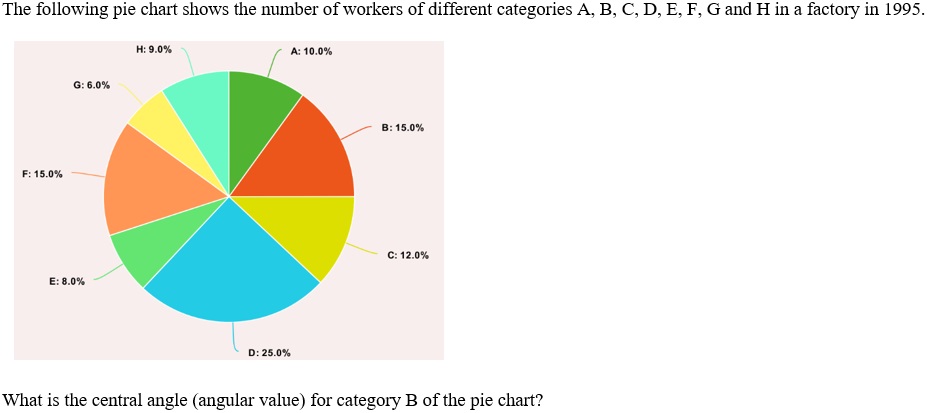
- (a)

- (b)

- (c)

- (d)

Show answer
Answer: (b)
- (a)
14.

- (a)

- (b)

- (c)

- (d)

Show answer
Answer: (d)
- (a)
15. A person lent Rs. 23000 to B for 3 years and Rs. 19000 to C for 4 years on simple interest at the same rate of interest and received Rs. 3625 in all from both of them as interest. What is the annual rate of interest?
- (a) 1.5 percent
- (b) 3 percent
- (c) 2.5 percent
- (d) 4 percent
Show answer
Answer: (c)
16. The radius of a hemisphere is 6.3 cm. What will be its volume?
- (a) 572.80 cm3
- (b) 643.50 cm3
- (c) 523.90 cm3
- (d) 353.38 cm3
Show answer
Answer: (c)
17. ∆ABC ~ ∆DEF such that AB = 9.1 cm and DE = 6.5 cm. If the perimeter of ∆DEF = 25 cm, then the perimeter of ∆ABC is:
- (a) 40 cm
- (b) 30 cm
- (c) 35 cm
- (d) 45 cm
Show answer
Answer: (c)
18.

- (a) 20
- (b) 16
- (c) 14
- (d) 18
Show answer
Answer: (a)
19. The table given below shows the number of calculator sold by five shopkeepers.
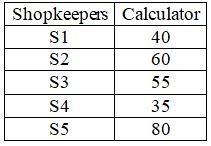 Number of calculator sold by S5 is what percent of the number of calculator sold by S1?
- (a) 100 percent
- (b) 150 percent
- (c) 200 percent
- (d) 50 percent
Show answer
Answer: (c)
20. What is the value of cos2 15°?
- (a)

- (b)

- (c)

- (d)

Show answer
Answer: (b)
- (a)
21. From point H, at 6 : 30 pm, a train starts moving towards point K at the speed of 90 km/hr. Another train starts moving from point K at 7:30 p.m. towards point H at the speed of 72 km/hr. Both the train meet at 11:30 p.m. at point J. What is the ratio of the distance HJ and KJ?
- (a) 25 : 16
- (b) 5 : 16
- (c) 36 : 25
- (d) 31 : 19
Show answer
Answer: (a)
22. In a race, there are 4 members in a team. Each member has to cover 5 km one after another. If the total time taken is 30 minutes, then what would have been the average speed?
- (a)

- (b)

- (c)

- (d)

Show answer
Answer: (b)
- (a)
23.
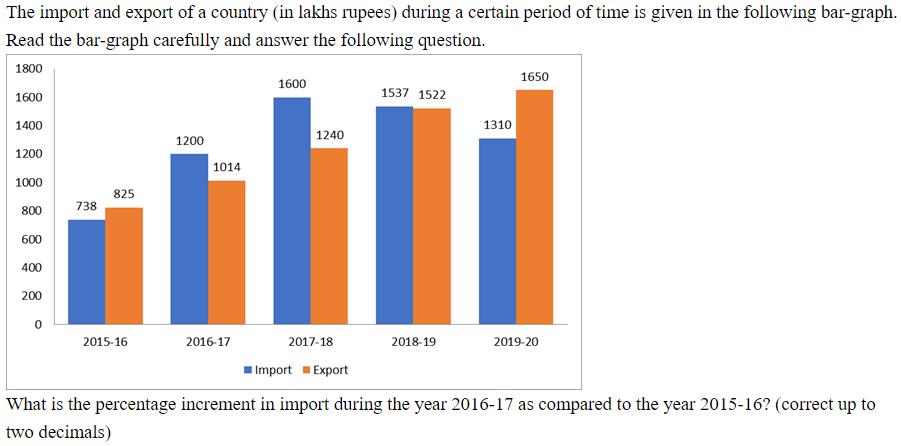
- (a) 60.62%
- (b) 62.60%
- (c) 38.50%
- (d) 65.32%
Show answer
Answer: (b)
24. Rohan sold goods to Ankith worth Rs.55,000 at 15% trade discount. How much money did Ankith pay to Rohan?
- (a) Rs.8,250
- (b) Rs.12,550
- (c) Rs.22,550
- (d) Rs.46,750
Show answer
Answer: (d)
25. The table given below shows the marked price and value of discount of 7 articles.
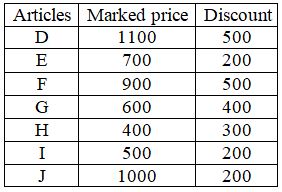 What is the average marked price of all the articles?
- (a) 824.12
- (b) 814.12
- (c) 742.85
- (d) 704.15
Show answer
Answer: (c)
English Comprehension
1. Parts of the following sentence have been given as options. Select the option that contains a grammatical error. If you don’t find any error, mark ‘No error’ as your answer. I am having trouble / deciding in / a gift for them. / no error
- (a) a gift for them.
- (b) No error
- (c) I am having trouble
- (d) deciding in
Show answer
Answer: (d)
2. Select the option that can be used as a one-word substitute for the given group of words. A small island
- (a) Islet
- (b) Lagoon
- (c) Closet
- (d) Isthmus
Show answer
Answer: (a)
4. Select the most appropriate meaning of the underlined idiom that can be substituted in the following sentence. The young boy was born with a silver spoon in his mouth.
- (a) born with a spoon stuck in his mouth
- (b) born to riches and luxury
- (c) born with a spoon that was not of gold
- (d) born to not so rich parents
Show answer
Answer: (b)
5. Select the most appropriate option to fill in the blank and complete the collocation. Always be in ______ with your near and dear ones as life is uncertain and fragile.
- (a) touch
- (b) relation
- (c) communication
- (d) connection
Show answer
Answer: (a)
7. Select the most appropriate synonym of the given word. Fatigue
- (a) Tiredness
- (b) Feebleness
- (c) Loaf
- (d) Effort
Show answer
Answer: (a)
8. Select the most appropriate option that can substitute the underlined segment in the given sentence. If there is no need to substitute it, select ‘No substitution’. I am working hard in order to earn a decent living.
- (a) buying a decent living
- (b) earning a better living
- (c) purchase a reputed life
- (d) No substitution
Show answer
Answer: (d)
10. Select the most appropriate ANTONYM of the word leisure from the given sentence: After my working hours, I use my leisure time to take care of my flower garden, dig my restricted land, sow seeds and water the plants for proper growth and development.
- (a) growth
- (b) working
- (c) restricted
- (d) development
Show answer
Answer: (b)
11. Select the INCORRECTLY spelt word in the following sentence. Rather than being aggressive, you should be accomodative, magnanimous and benevolent in nature.
- (a) accomodative
- (b) magnanimous
- (c) aggressive
- (d) benevolent
Show answer
Answer: (a)
12. Select the option that can be used as a one-word substitute for the given group of words. A group of stars having a particular shape
- (a) Constellation
- (b) Planet
- (c) Orbit
- (d) Galaxy
Show answer
Answer: (a)
13. Select the option that can be used as a one-word substitute for the given group of words. A huge building with a spacious area to house aircrafts.
- (a) Airport
- (b) Hanger
- (c) Hangar
- (d) House
Show answer
Answer: (c)
14. Select the option that expresses the given sentence in passive voice. Did Rani call you?
- (a) Did you called by Rani?
- (b) Was you called by Rani?
- (c) Were you called by Rani?
- (d) Are you called by Rani?
Show answer
Answer: (c)
15. Rearrange the parts of the sentence in correct order. The decision not P. to include any kind of wealth or Q. crisis, has proven controversial R. income tax, which would be the fairer option S. for solving the social care funding
- (a) SQPR
- (b) PRSQ
- (c) RSPQ
- (d) QPRS
Show answer
Answer: (b)
16. Select the most appropriate synonym of the given word. Belief
- (a) Faith
- (b) Promise
- (c) System
- (d) Religion
Show answer
Answer: (a)
18. Select the most appropriate collocation to substitute the underlined word in the given sentence. We congratulated him at his new job. He was delighted.
- (a) congratulate him up
- (b) congratulated him on
- (c) congratulate him with
- (d) congratulate him along
Show answer
Answer: (b)
19. Select the most appropriate synonym of the given word. Inherent
- (a) Increase
- (b) Superficial
- (c) Inborn
- (d) Conclusion
Show answer
Answer: (c)
20. The following sentence has been split into four segments. Identify the segment that contains a grammatical error. Both Reeta and Ronika / has won / the dance competition / this year.
- (a) the dance competition
- (b) this year.
- (c) Both Reeta and Ronika
- (d) has won
Show answer
Answer: (d)
PassageFor questions 21–25
In the following passage, some words have been deleted. Read the passage carefully and select the most appropriate option to fill in each blank.
Human migration may be traced all the way back to the (1)________ of time, and humans have been on the move ever since. Climate change, war and displacement, economic considerations, living conditions, family and clan (2)________, and, more recently, educational possibilities are all reasons for migration. Because there are several reasons for migration, migration patterns are (3)_________. Potential migrants will not only (4)_________ whether or not to migrate, but also where they will go. Individuals with (5) ________ observed and unobserved features will make diverse decisions and self-select into specific areas.
21. Select the most appropriate option to fill in blank number 1.
- (a) glimpse
- (b) ahead
- (c) dawn
- (d) break
Show answer
Answer: (c)
22. Select the most appropriate option to fill in blank number 2.
- (a) joins
- (b) ties
- (c) chains
- (d) fights
Show answer
Answer: (b)
23. Select the most appropriate option to fill in blank number 3.
- (a) assorted
- (b) uniform
- (c) diverse
- (d) constant
Show answer
Answer: (c)
24. Select the most appropriate option to fill in blank number 4.
- (a) settle
- (b) determine
- (c) certify
- (d) induce
Show answer
Answer: (b)
25. Select the most appropriate option to fill in blank number 5.
- (a) considering
- (b) varying
- (c) convincing
- (d) experiencing
Show answer
Answer: (b)
Show answers
Answer key
Answer key as marked in the Staff Selection Commission’s response sheet. “—” means the sheet did not show it clearly.
General Intelligence and Reasoning
- Q 1
- (b)
- Q 2
- (d)
- Q 3
- (c)
- Q 4
- (a)
- Q 5
- (d)
- Q 6
- (a)
- Q 7
- (b)
- Q 8
- (a)
- Q 9
- (d)
- Q 10
- (d)
- Q 11
- (b)
- Q 13
- (c)
- Q 14
- (c)
- Q 15
- (b)
- Q 16
- (a)
- Q 17
- (c)
- Q 18
- (a)
- Q 19
- (d)
- Q 20
- (a)
- Q 21
- (c)
- Q 22
- (a)
- Q 23
- (c)
- Q 24
- (d)
- Q 25
- (b)
General Awareness
- Q 1
- (b)
- Q 2
- (b)
- Q 3
- (c)
- Q 4
- (b)
- Q 5
- (d)
- Q 6
- (c)
- Q 7
- (c)
- Q 8
- (b)
- Q 9
- (c)
- Q 10
- (c)
- Q 11
- (c)
- Q 12
- (c)
- Q 13
- (d)
- Q 14
- (c)
- Q 15
- (d)
- Q 16
- (a)
- Q 17
- (c)
- Q 18
- (d)
- Q 19
- (a)
- Q 20
- (c)
- Q 21
- (d)
- Q 22
- (b)
- Q 23
- (a)
- Q 25
- (a)
Quantitative Aptitude
- Q 1
- (d)
- Q 2
- (d)
- Q 3
- (d)
- Q 4
- (d)
- Q 6
- (d)
- Q 7
- (d)
- Q 8
- (a)
- Q 9
- (b)
- Q 10
- (d)
- Q 11
- (d)
- Q 12
- (d)
- Q 13
- (b)
- Q 14
- (d)
- Q 15
- (c)
- Q 16
- (c)
- Q 17
- (c)
- Q 18
- (a)
- Q 19
- (c)
- Q 20
- (b)
- Q 21
- (a)
- Q 22
- (b)
- Q 23
- (b)
- Q 24
- (d)
- Q 25
- (c)
English Comprehension
- Q 1
- (d)
- Q 2
- (a)
- Q 4
- (b)
- Q 5
- (a)
- Q 7
- (a)
- Q 8
- (d)
- Q 10
- (b)
- Q 11
- (a)
- Q 12
- (a)
- Q 13
- (c)
- Q 14
- (c)
- Q 15
- (b)
- Q 16
- (a)
- Q 18
- (b)
- Q 19
- (c)
- Q 20
- (d)
- Q 21
- (c)
- Q 22
- (b)
- Q 23
- (c)
- Q 24
- (b)
- Q 25
- (b)