ExamBharo · SSC CGL 2022 Tier I — 3 December 2022, Shift 3 · exambharo.com/previous-year-papers/ssc-cgl-2022-tier-1-3-dec-shift-3/
Question paper · SSC CGL
SSC CGL 2022 Tier I — 3 December 2022, Shift 3
3 December 2022 · 2:30 PM–3:30 PM86 of the paper’s 100 questions+2 for a correct answer, −0.5 for a wrong one
14 questions of the original paper are not included: those that need a figure or formatting we cannot show, that have no answer in the response sheet, or that we could not check against a second copy of the paper.
Questions from the Staff Selection Commission’s paper of 3 December 2022, 2:30 PM–3:30 PM. Each question’s answer is under it, hidden until you open it, and the full answer key is at the end. Take the paper as a timed practice test to be scored.
General Intelligence and Reasoning
1. Which of the following interchange of mathematical signs would make the given equation correct? 20 ÷ 4 × 8 + 16 − 15 = 11
- (a) −, ÷
- (b) +, −
- (c) ×, ÷
- (d) +, ×
Show answer
Answer: (c)
3.

- (a)

- (b)

- (c)

- (d)

Show answer
Answer: (a)
- (a)
4. Select the option that is related to the third term in the same way as the second term is related to the first term and the sixth term is related to the fifth term. 25 : 264 :: 31 : ? :: 49 : 456
- (a) 312
- (b) 314
- (c) 297
- (d) 961
Show answer
Answer: (a)
5. In a certain code language, ‘ESCAPE’ is written as ‘49’ and ‘PRISON’ is written as ‘91’. How will ‘FREEDOM’ be written in that language?
- (a) 66
- (b) 59
- (c) 64
- (d) 55
Show answer
Answer: (a)
6. What should come in place of the question mark (?) to complete the following letter series? F, E, I, G, L, I, O, ?
- (a) I
- (b) J
- (c) L
- (d) K
Show answer
Answer: (d)
7. Select the option that represents the correct order of the given words as they would appear in an English dictionary. 1- Pardoner 2- Parenthetical 3- Parental 4- Pardon 5- Parenthesis
- (a) 1, 4, 3, 2, 5
- (b) 4, 1, 3, 2, 5
- (c) 4, 1, 3, 5, 2
- (d) 1, 4, 3, 5, 2
Show answer
Answer: (c)
8. Select the option that is related to the third term in the same way as the second term is related to the first term and the sixth term is related to the fifth term. 11 : 94 :: 23 : ? :: 18 : 150
- (a) 190
- (b) 199
- (c) 129
- (d) 109
Show answer
Answer: (a)
9. Based on the position in the English alphabetical order, three of the following letterclusters are alike in some manner and one is different. Select the odd letter-cluster.
- (a) IGMJ
- (b) SPVT
- (c) DBHE
- (d) NLRO
Show answer
Answer: (b)
10. Select the correct combination of mathematical signs to sequentially replace the * signs and to balance the given equation. 25 * 4 * 6 * 2 * 17
- (a) −, +, ×, =
- (b) +, −, =, +
- (c) +, −, ÷, =
- (d) +, −, ×, =
Show answer
Answer: (d)
11. Select the set in which the numbers are related in the same way as are the numbers of the following set. (NOTE: Operations should be performed on the whole numbers, without breaking down the numbers into its constituent digits. E.g., 13 – Operations on 13 such as adding /subtracting /multiplying etc. to 13 can be performed. Breaking down 13 into 1 and 3 and then performing mathematical operations on 1 and 3 is NOT allowed). (0.20, 5, 25) (0.083, 12, 144)
- (a) (0.240, 4, 16)
- (b) (0.143, 6, 36)
- (c) (0.056, 18, 289)
- (d) (0.063, 16, 256)
Show answer
Answer: (d)
12. Read the given statements and conclusions carefully. Assuming that the information given in the statements is true, even if it appears to be at variance with commonly known facts, decide which of the given conclusions logically follow(s) from the statements. Statements: Some pens are books. All books are compasses. Some compasses are pins. Conclusions: I. Some compasses are pens. II. All compasses are pens. III. Some pins are books. IV. Some compasses are books.
- (a) Only conclusions I and II follow
- (b) Only conclusions II and III follow
- (c) Only conclusions I and IV follow
- (d) Only conclusions III and IV follow
Show answer
Answer: (c)
13.
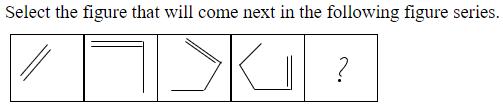
- (a)

- (b)

- (c)

- (d)

Show answer
Answer: (d)
- (a)
14.
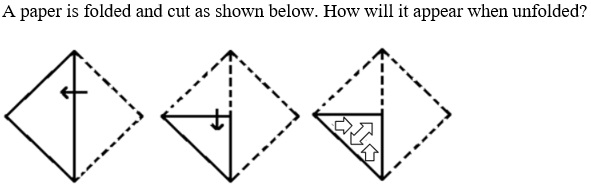
- (a)
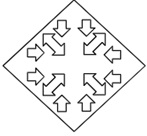
- (b)
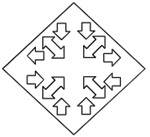
- (c)
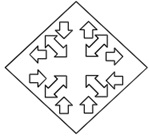
- (d)
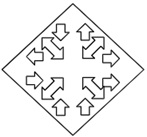
Show answer
Answer: (a)
- (a)
15. In the following question, four number pairs are given. In each pair the number on left side of (–) is related to the number of the right side of (–) with some Logic/Rule/Relation. Three pairs are similar on basis of same Logic/Rule/Relation. Select the odd one out from the given alternatives. (NOTE: Operations should be performed on the whole numbers, without breaking down the numbers into its constituent digits. E.g.13 – Operations on 13 such as adding /subtracting /multiplying etc. to 13 can be performed. Breaking down 13 into 1 and 3 and then performing mathematical operations on 1 and 3 is not allowed)
- (a) 6 – 60
- (b) 2 – 18
- (c) 4 – 40
- (d) 8 – 80
Show answer
Answer: (b)
16.
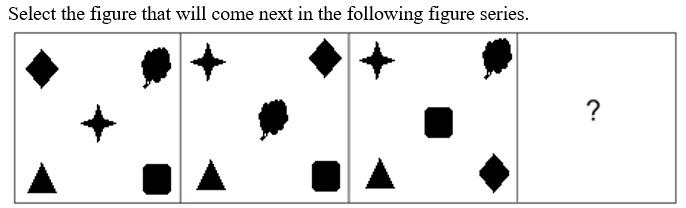
- (a)
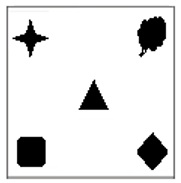
- (b)
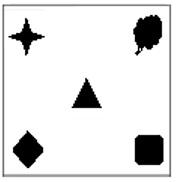
- (c)
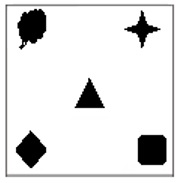
- (d)
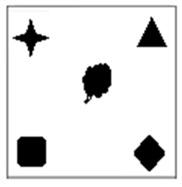
Show answer
Answer: (b)
- (a)
17.
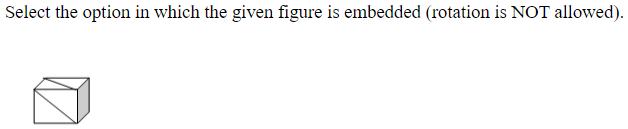
- (a)
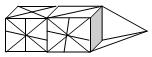
- (b)
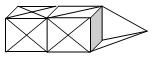
- (c)
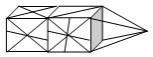
- (d)
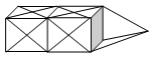
Show answer
Answer: (d)
- (a)
19. If P ÷ Q means that P is the mother of Q, P × Q means that P is the father of Q, P – Q means that P is the sister of Q, then which of the following expression shows that A is the father of C?
- (a) B × A – C
- (b) A × B – C
- (c) A × B ÷ C
- (d) A – B × C
Show answer
Answer: (b)
20. In the following question below are given some statements followed by some conclusions based on those statements. Taking the given statements to be true even if they seem to be at variance from commonly known facts. Read all the conclusions and then decide which of the given conclusion logically follows the given statements. Statements: I. Some S are C. II. Some C are D. Conclusions: I. All D are S. II. Some C are S. III. Some D are C.
- (a) Both conclusions I and II follows
- (b) Both conclusions II and III follows
- (c) Both conclusions I and III follows
- (d) All conclusion follows
Show answer
Answer: (b)
21. In a certain code language, 'DOVE’ is coded as '1122214' and 'CROW' is coded as '823311'. How will 'MYNA' be coded in that language?
- (a) 1121512
- (b) 1132512
- (c) 1132412
- (d) 1132522
Show answer
Answer: (b)
22. By interchanging the given two signs and numbers which of the following equation will be correct? – and +, 6 and 3
- (a) 7 – 3 × 2 ÷ 6 + 4 = 17
- (b) 8 × 3 – 6 + 4 ÷ 2 = 49
- (c) 7 + 6 ÷ 3 × 8 – 5 = 35
- (d) 9 – 6 × 4 + 3 × 7 = 8
Show answer
Answer: (b)
23. Select the word-pair that best represents a similar relationship to the one expressed in the given pair of words. (The words must be considered as meaningful English words and must not be related to each other based on the number of letters/number of consonants/vowels in the word) Hibiscus : Flower
- (a) Pumpkin : Fruit
- (b) Beans : Protein
- (c) Leaf : Green
- (d) Tree : Trunk
Show answer
Answer: (a)
24.

- (a) ZAB
- (b) SUB
- (c) ZUB
- (d) ZUC
Show answer
Answer: (c)
25. Select the option that is related to the fifth letter-cluster in the same way as the second letter-cluster is related to the first letter-cluster and the fourth letter-cluster is related to the third letter-cluster. COOK : DQPM :: DOWN : EQXP :: ONLY : ?
- (a) PPMA
- (b) PPMB
- (c) PQMA
- (d) PQMB
Show answer
Answer: (a)
General Awareness
3. Wangala festival is celebrated by which of the following tribes?
- (a) Bhil tribe
- (b) Garo tribe
- (c) Tharu tribe
- (d) Bhutia tribe
Show answer
Answer: (b)
4. Which Article deals with the ‘Power of Parliament to amend the Constitution and procedure therefor’?
- (a) Article 352
- (b) Article 249
- (c) Article 368
- (d) Article 356
Show answer
Answer: (c)
5. Name the first Odissi classical dancer from Odisha who was conferred the Padma Vibhushan Award.
- (a) Kelucharan Mohapatra
- (b) Bijayini Satpathy
- (c) Sonal Mansingh
- (d) Gangadhar Pradhan
Show answer
Answer: (a)
6. The official draw for FIFA U-17 Women’s World Cup India 2022 will be held in:
- (a) China PR
- (b) Brazil
- (c) India
- (d) Zurich
Show answer
Answer: (d)
7. ________ is a record of assets and liabilities of any firm.
- (a) Bill file
- (b) Balance of payment
- (c) Balance sheet
- (d) Bank bailout
Show answer
Answer: (c)
10. Who was considered as last powerful Mughal ruler of India?
- (a) Akbar
- (b) Aurangzeb
- (c) Akbar II
- (d) Shahjahan
Show answer
Answer: (b)
11. Which state government has launched the CHHATA scheme to improve groundwater table in September 2022?
- (a) Uttar Pradesh
- (b) Madhya Pradesh
- (c) Karnataka
- (d) Odisha
Show answer
Answer: (d)
12. The minimum period of time taken upto which the weather variations are considered to predict the climate of a place is _______ years.
- (a) 20
- (b) 25
- (c) 10
- (d) 30
Show answer
Answer: (d)
13. The length of a Beach Volleyball court is:
- (a) 12 m
- (b) 16 m
- (c) 20 m
- (d) 15 m
Show answer
Answer: (b)
15. _______ has been elected as the 36th President of the Board of Control for Cricket in India.
- (a) Ravi Kumar S
- (b) Roger Binny
- (c) Pradeep Singh Kharola
- (d) Bhushan Akshikar
Show answer
Answer: (b)
16. For pregnant women, a Special Health Care Abhiyan 'Anchal' has been launched in ________.
- (a) Gujarat
- (b) Rajasthan
- (c) Haryana
- (d) Punjab
Show answer
Answer: (b)
17. Which of the following are members of 15 naturally occurring metallic chemical elements whose atomic numbers are between 57 and 71?
- (a) Alkali Metals
- (b) Lanthanides
- (c) Halogens
- (d) Actinides
Show answer
Answer: (b)
18. In the beginning of the 19th century cotton mills in India were mostly located in which of the following states?
- (a) Assam
- (b) Punjab
- (c) Maharashtra
- (d) Haryana
Show answer
Answer: (c)
19. Dadabhai Naoroji offered a scathing criticism of the economic impact of British rule through his book entitled ‘__________’.
- (a) India Today
- (b) The Idea of India
- (c) Poverty and Un-British Rule in India
- (d) The History of British India
Show answer
Answer: (c)
20. In March 2022, Pramod Sawant became the ____________ Chief Minister of Goa.
- (a) 10th
- (b) 13th
- (c) 15th
- (d) 11th
Show answer
Answer: (b)
21. Identify an option that does NOT represent prokaryotic cells.
- (a) Mycoplasma
- (b) Blue-green alga
- (c) Sperm
- (d) Pleuropneumonia-like organism
Show answer
Answer: (c)
22. Which of the following is NOT an aid or auxiliary to trade?
- (a) Hoarding
- (b) Insurance
- (c) Warehousing
- (d) Transportation
Show answer
Answer: (a)
23. Who is known as the Father of Geology?
- (a) John Butler
- (b) Alfred Wegener
- (c) James Hutton
- (d) Art Smith
Show answer
Answer: (c)
24. Mirza Kamran was the brother of which Mughal emperor?
- (a) Humayun
- (b) Akbar
- (c) Jahangir
- (d) Shah Jahan
Show answer
Answer: (a)
25. Which of the following folk dances is primarily performed in the Indian state of Bihar?
- (a) Ghoomar
- (b) Kalbeliya
- (c) Bidesia
- (d) Kummatti
Show answer
Answer: (c)
Quantitative Aptitude
1. The radius of a right circular cylinder is thrice of its height. If the height of the cylinder is 2.1 cm, then what is the volume of cylinder?
- (a) 224.65 cm3
- (b) 194.72 cm3
- (c) 324.86 cm3
- (d) 261.95 cm3
Show answer
Answer: (d)
2. 5 men and 8 women can complete a work in 12 days working together, while 3 men and 7 women together can complete the same work in 15 days. In how many days will 11 women complete the same work?
- (a) 12
- (b) 8
- (c) 6
- (d) 16
Show answer
Answer: (a)
5. A man bought a watch for 12% discount. If he had bought it for 24% discount, he would have got the watch for ₹2400 less. The marked price of the watch is:
- (a)

- (b)

- (c)

- (d)

Show answer
Answer: (c)
- (a)
6. If the price of salt decreases by 20%, then by what percentage should consumption be increased to keep the expenditure same?
- (a) 26%
- (b) 27%
- (c) 25%
- (d) 24%
Show answer
Answer: (c)
7. A solid copper sphere of radius 9 cm is hammered and moulded into a wire of radius 2 cm. What is the length of this wire?
- (a) 224 cm
- (b) 183 cm
- (c) 198 cm
- (d) 243 cm
Show answer
Answer: (d)
8. Which smallest positive number should be subtracted from each of 9 and 13 so that 18 is the third proportion to them?
- (a) 2
- (b) 4
- (c) 3
- (d) 1
Show answer
Answer: (d)
9. A company employed 700 men and 300 women and the average wage was Rs.450 per day. If a man got Rs.50 more than a woman, then the daily wage of the woman is:
- (a) Rs.350
- (b) Rs.375
- (c) Rs.415
- (d) Rs.435
Show answer
Answer: (c)
10. A,B,C are three angles of a triangle. If A - B = 45° and B - C = 15° then ∠A = ?
- (a) 83°
- (b) 85°
- (c) 95°
- (d) 75°
Show answer
Answer: (c)
11. If 8a3 + 27b3 = 16 and 2a + 3b = 4,then find the value of 16a4 + 81b4.
- (a) 26
- (b) 30
- (c) 28
- (d) 32
Show answer
Answer: (d)
12.
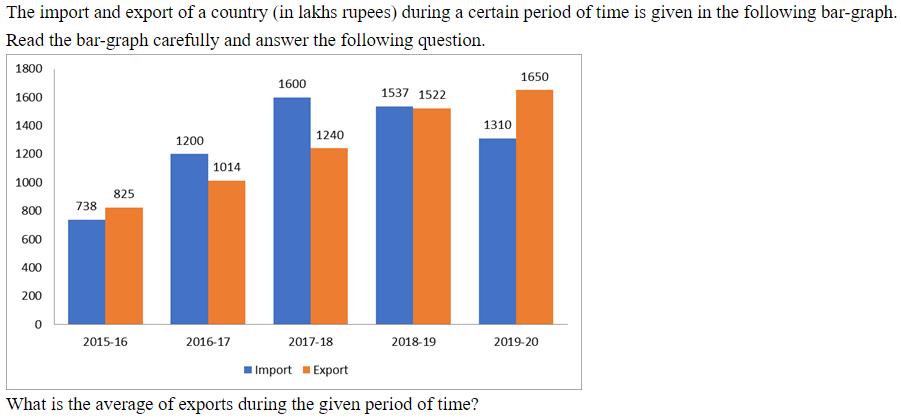
- (a) Rs.1,250.2 lakhs
- (b) Rs.1,240.0 lakhs
- (c) Rs.1,248.2 lakhs
- (d) Rs.1,115.4 lakhs
Show answer
Answer: (a)
13. If the cost price is 72% of the selling price, then what is the percentage of profit? (Correct to 2 decimal places)
- (a) 38.89%
- (b) 35.75%
- (c) 32.25%
- (d) 28.75%
Show answer
Answer: (a)
14. What would be the compound interest on Rs.15,750 at 20% per annum, in two years, if the interest is compounded half yearly?
- (a)

- (b)

- (c)
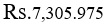
- (d)
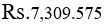
Show answer
Answer: (d)
- (a)
16. A number when divided by 7 leaves remainder of 4. If the square of the same number is divided by 7, then what is the remainder?
- (a) 3
- (b) 1
- (c) 4
- (d) 2
Show answer
Answer: (d)
17.
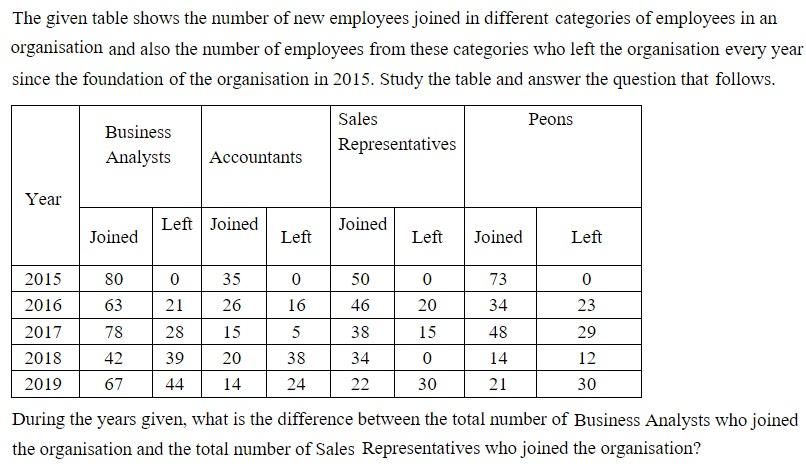
- (a) 141
- (b) 140
- (c) 142
- (d) 143
Show answer
Answer: (b)
18. If cot B = 9, then what will be the value of sec2 B?
- (a) 98/81
- (b) 92/81
- (c) 42/81
- (d) 82/81
Show answer
Answer: (d)
20. The value of 95 × 105 is:
- (a) 9981
- (b) 9935
- (c) 9965
- (d) 9975
Show answer
Answer: (d)
21. The LCM of two numbers is 120 and the numbers are in the ratio 3 : 8. The sum of the numbers will be:
- (a) 48
- (b) 55
- (c) 45
- (d) 60
Show answer
Answer: (b)
22.
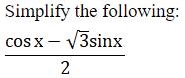
- (a)

- (b)

- (c)

- (d)

Show answer
Answer: (c)
- (a)
23.

- (a) 952
- (b) 1152
- (c) 1052
- (d) 852
Show answer
Answer: (b)
24. Suppose ΔABC be a right-angled triangle where ∠A = 90° and AD ⊥ BC. If area (ΔABC) = 80 cm2 and BC = 16 cm, then the length of AD is:
- (a) 10 cm
- (b) 24 cm
- (c) 18 cm
- (d) 12 cm
Show answer
Answer: (a)
25.
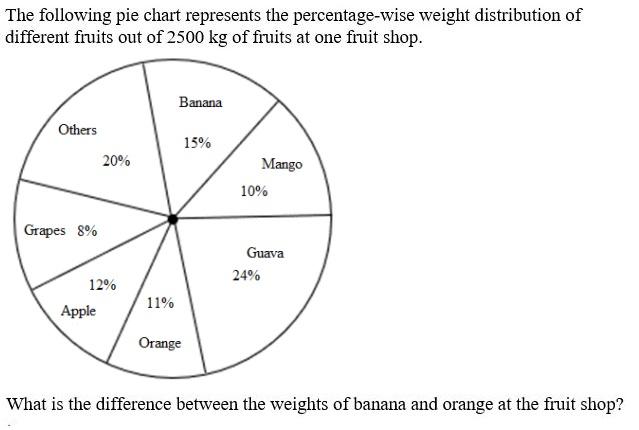
- (a) 125 kg
- (b) 100 kg
- (c) 50 kg
- (d) 75 kg
Show answer
Answer: (b)
English Comprehension
1. Sentences of a paragraph are given below in jumbled order. Arrange the sentences in the correct order to form a meaningful and coherent paragraph. A.Shalini was scrolling down the phone screen while waiting for her friend. B.Her friend brought a bouquet for Shalini from the market place. C.When her friend arrived, they went to the market place. D.The market place was thronging with people.
- (a) BACD
- (b) DACB
- (c) ABCD
- (d) ACDB
Show answer
Answer: (d)
2. Select the most appropriate meaning of the given idiom. Cut a poor figure
- (a) In a poor state
- (b) To put a good impression
- (c) To put a bad impression
- (d) Bad physical form
Show answer
Answer: (c)
3. Rearrange the parts of the sentence in correct order. A 2007–2009 study P. explored forward thinking techniques Q. to synchronise time on board deep R. space probes for accurate navigation, in S. particular looking into low-cost options
- (a) RSPQ
- (b) PSRQ
- (c) SPRQ
- (d) PQRS
Show answer
Answer: (d)
4. Select the correct passive form of the given sentence. The indentured labourers fix the roads.
- (a) The roads was fixed by indentured labourers.
- (b) The roads were fixed by indentured labourers.
- (c) The roads are fixed by indentured labourers.
- (d) The roads were being fixed by indentured labourers.
Show answer
Answer: (c)
6. Select the most appropriate meaning of the given idiom. Bear the palm
- (a) To bring joyful news
- (b) To lose a game
- (c) To advocate peace
- (d) To be a winner
Show answer
Answer: (d)
7. A sentence has been given with a blank to be filled with an appropriate word. Choose the correct alternative. Every person should know their own _______, what their skill set is and how unique they are.
- (a) calamities
- (b) punctualities
- (c) specialties
- (d) fecundities
Show answer
Answer: (c)
8. The following sentence has been split into four segments. Identify the segment that contains a grammatical error. The manager told her that / she should be a bit more / careful while executed the / orders of the company.
- (a) The manager told her that
- (b) she should be a bit more
- (c) orders of the company
- (d) careful while executed the
Show answer
Answer: (d)
9. Select the option that can be used as a one-word substitute for the given group of words. A loud appeal or demand
- (a) Protest
- (b) Entourage
- (c) Clamour
- (d) Gambit
Show answer
Answer: (c)
11. Select the option that expresses the given sentence in indirect speech. He said, ‘Let us wait for the award.’
- (a) He proposed that they should wait for the award.
- (b) He said that he should wait for the award.
- (c) He proposed that he should wait for the award.
- (d) He said that they should waited for the award.
Show answer
Answer: (a)
12. Select the most appropriate ANTONYM of the given word. Humble
- (a) Dishonour
- (b) Pleasantry
- (c) Modest
- (d) Arrogant
Show answer
Answer: (d)
13. Select the most appropriate option to substitute the underlined segment in the given sentence. During my Goa tour, I had visited beaches in Vasco, Baga and Vagator.
- (a) visited
- (b) have visited
- (c) was visited
- (d) had visited
Show answer
Answer: (a)
14. Select the most appropriate option to fill in the blank. The country’s rapid _________ has led to a rise in many people’s standard of living.
- (a) idea
- (b) life
- (c) confidence
- (d) growth
Show answer
Answer: (d)
15. Select the most appropriate ANTONYM of the word laborious from the given sentence: Although gardening is a laborious job, but it gives me boundless joy, strenuous happiness and immense satisfaction and I like this facile activity.
- (a) boundless
- (b) facile
- (c) strenuous
- (d) immense
Show answer
Answer: (b)
16. Select the INCORRECTLY spelt word.
- (a) Friwsk
- (b) Reply
- (c) Rusk
- (d) Foliage
Show answer
Answer: (a)
17. Select the most appropriate adverb to fill in the blank. They supplied the required human resource ____________.
- (a) faultlessly
- (b) heavy
- (c) clear
- (d) able
Show answer
Answer: (a)
18. Select the most appropriate synonym of the underlined word. The celebrity was inundated with birthday wishes from his admirers.
- (a) Annoyed
- (b) Preoccupied
- (c) Rewarded
- (d) Overwhelmed
Show answer
Answer: (d)
19. Select the most appropriate ANTONYM of the given word. Dispatch
- (a) Acquire
- (b) Transmit
- (c) Deliver
- (d) Bulletin
Show answer
Answer: (a)
PassageFor questions 21–25
In the following passage, some words have been deleted. Read the passage carefully and select the most appropriate option to fill in each blank. Education (1)_____ both the teaching and learning of knowledge, proper conduct, and technical competency. It thus (2)____ on the cultivation of skills, trades or professions, as well as mental, moral and aesthetic development. Formal education consists of systematic instruction, teaching and training by (3)____ teachers. This consists of the application of pedagogy and the development of curricula. The right to education is a (4)_____ human right. Educational systems are established to provide education and (5)_______, often for children and the young.
21. Select the most appropriate option to fill in blank number 1.
- (a) likes
- (b) releases
- (c) makes
- (d) encompasses
Show answer
Answer: (d)
22. Select the most appropriate option to fill in blank number 2.
- (a) changes
- (b) makes
- (c) focuses
- (d) regards
Show answer
Answer: (c)
23. Select the most appropriate option to fill in blank number 3.
- (a) general
- (b) professional
- (c) fresh
- (d) new
Show answer
Answer: (b)
24. Select the most appropriate option to fill in blank number 4.
- (a) fundamental
- (b) personal
- (c) beautiful
- (d) long standing
Show answer
Answer: (a)
25. Select the most appropriate option to fill in blank number 5.
- (a) dreams
- (b) challenges
- (c) training
- (d) upbringing
Show answer
Answer: (c)
Show answers
Answer key
Answer key as marked in the Staff Selection Commission’s response sheet. “—” means the sheet did not show it clearly.
General Intelligence and Reasoning
- Q 1
- (c)
- Q 3
- (a)
- Q 4
- (a)
- Q 5
- (a)
- Q 6
- (d)
- Q 7
- (c)
- Q 8
- (a)
- Q 9
- (b)
- Q 10
- (d)
- Q 11
- (d)
- Q 12
- (c)
- Q 13
- (d)
- Q 14
- (a)
- Q 15
- (b)
- Q 16
- (b)
- Q 17
- (d)
- Q 19
- (b)
- Q 20
- (b)
- Q 21
- (b)
- Q 22
- (b)
- Q 23
- (a)
- Q 24
- (c)
- Q 25
- (a)
General Awareness
- Q 3
- (b)
- Q 4
- (c)
- Q 5
- (a)
- Q 6
- (d)
- Q 7
- (c)
- Q 10
- (b)
- Q 11
- (d)
- Q 12
- (d)
- Q 13
- (b)
- Q 15
- (b)
- Q 16
- (b)
- Q 17
- (b)
- Q 18
- (c)
- Q 19
- (c)
- Q 20
- (b)
- Q 21
- (c)
- Q 22
- (a)
- Q 23
- (c)
- Q 24
- (a)
- Q 25
- (c)
Quantitative Aptitude
- Q 1
- (d)
- Q 2
- (a)
- Q 5
- (c)
- Q 6
- (c)
- Q 7
- (d)
- Q 8
- (d)
- Q 9
- (c)
- Q 10
- (c)
- Q 11
- (d)
- Q 12
- (a)
- Q 13
- (a)
- Q 14
- (d)
- Q 16
- (d)
- Q 17
- (b)
- Q 18
- (d)
- Q 20
- (d)
- Q 21
- (b)
- Q 22
- (c)
- Q 23
- (b)
- Q 24
- (a)
- Q 25
- (b)
English Comprehension
- Q 1
- (d)
- Q 2
- (c)
- Q 3
- (d)
- Q 4
- (c)
- Q 6
- (d)
- Q 7
- (c)
- Q 8
- (d)
- Q 9
- (c)
- Q 11
- (a)
- Q 12
- (d)
- Q 13
- (a)
- Q 14
- (d)
- Q 15
- (b)
- Q 16
- (a)
- Q 17
- (a)
- Q 18
- (d)
- Q 19
- (a)
- Q 21
- (d)
- Q 22
- (c)
- Q 23
- (b)
- Q 24
- (a)
- Q 25
- (c)