ExamBharo · SSC CGL 2020 Tier I — 16 August 2021, Shift 1 · exambharo.com/previous-year-papers/ssc-cgl-2020-tier-1-16-aug-shift-1/
Question paper · SSC CGL
SSC CGL 2020 Tier I — 16 August 2021, Shift 1
16 August 2021 · 9:00 AM–10:00 AM82 of the paper’s 100 questions+2 for a correct answer, −0.5 for a wrong one
18 questions of the original paper are not included: those that need a figure or formatting we cannot show, that have no answer in the response sheet, or that we could not check against a second copy of the paper.
Questions from the Staff Selection Commission’s paper of 16 August 2021, 9:00 AM–10:00 AM. Each question’s answer is under it, hidden until you open it, and the full answer key is at the end. Take the paper as a timed practice test to be scored.
General Intelligence and Reasoning
2. Four words have been given, out of which three are alike in some manner and one is different. Select the word that is different.
- (a) Envy
- (b) Hatred
- (c) Empathy
- (d) Jealousy
Show answer
Answer: (c)
3. Study the given pattern carefully and select the number that can replace the question mark (?) in it. 14 16 13 18 6 ? 12 21 17
- (a) 6
- (b) 8
- (c) 5
- (d) 7
Show answer
Answer: (c)
5. Four letter-clusters have been given, out of which three are alike in some manner and one is different. Select the letter-cluster that is different.
- (a) RTPO
- (b) LNJI
- (c) DFBA
- (d) FHDB
Show answer
Answer: (d)
6. Select the option that is related to the third number in the same way as the second number is related to the first number. 16 : 144 : : 28 : ?
- (a) 420
- (b) 364
- (c) 263
- (d) 544
Show answer
Answer: (a)
7.
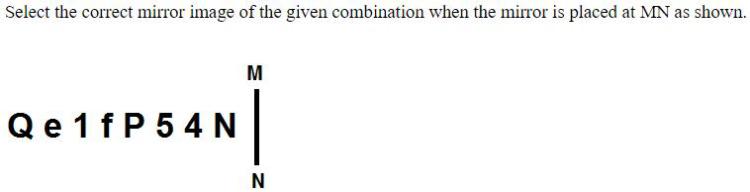
- (a)

- (b)

- (c)

- (d)

Show answer
Answer: (a)
- (a)
8.

- (a)
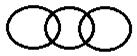
- (b)

- (c)
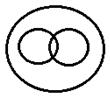
- (d)

Show answer
Answer: (d)
- (a)
10. In a certain code language, 'FRENCH' is coded as '114' and 'LOSS' is coded as '47'. How will 'COURSE' be coded in that language?
- (a) 87
- (b) 120
- (c) 81
- (d) 103
Show answer
Answer: (a)
13.

- (a)

- (b)

- (c)

- (d)

Show answer
Answer: (a)
- (a)
15. In a certain code language, 'PRINT' is written as 'YMNIU'. How will 'MAGIC' be written in that language?
- (a) HRLRZ
- (b) HLDRV
- (c) HRLZR
- (d) HDLVR
Show answer
Answer: (c)
16. Which two numbers should be interchanged to make the given equation correct? 36 × 81 ÷ 9 – (88 ÷ 4) + 14 + (22 + 7) = 169
- (a) 14 and 22
- (b) 9 and 36
- (c) 36 and 14
- (d) 81 and 36
Show answer
Answer: (c)
18. What was the day of the week on 17 April 2014?
- (a) Friday
- (b) Wednesday
- (c) Saturday
- (d) Thursday
Show answer
Answer: (d)
19. Select the letter-cluster from among the given options that can replace the question mark (?) in the following series. THME, WKJB, ZNGY, CQDV, ?
- (a) FUAS
- (b) FTAS
- (c) FTAR
- (d) FTBS
Show answer
Answer: (b)
20. ‘A # B’ means ‘A is the son of B’. ‘A @ B’ means ‘A is the mother of B’. ‘A & B’ means ‘A is the wife of B’. ‘A % B’ means ‘A is the sister of B’. If ‘M @ R % K # G # N & T’, then which of the following statements is NOT correct?
- (a) T is the paternal grandfather of M.
- (b) N is the paternal grandmother of K.
- (c) M is the mother of K.
- (d) R is the daughter of G.
Show answer
Answer: (a)
21. Select the combination of letters that when sequentially placed in the blanks of the given series will complete the series. U A _ B _ T U _ C B D _ _ A C B _ T U A C _ _ T
- (a) C, D, A, T, U, D, C, D
- (b) C, D, A, U, U, D, B, D
- (c) C, D, A, T, U, D, B, D
- (d) D, C, A, T, U, D, D, B
Show answer
Answer: (c)
22. Select the number from among the given options that can replace the question mark (?) in the following series. 10, 22, 35, 40, 72, 40, ?
- (a) 134
- (b) 143
- (c) 131
- (d) 133
Show answer
Answer: (d)
23. Read the given statements and conclusions carefully. Assuming that the information given in the statements is true, even if it appears to be at variance with commonly known facts, decide which of the given conclusions logically follow(s) from the statements. Statements: No bank is an office. All offices are stalls. Conclusions: I. No bank is a stall. II. No stall is a bank. III. Some stalls are offices. IV. All the stalls are offices.
- (a) Both conclusions I and II follow
- (b) Only conclusion I follows
- (c) Both conclusions I and IV follow
- (d) Only conclusion III follows
Show answer
Answer: (d)
24. Select the option in which the numbers are related in the same way as are the numbers of the following set. (6, 9, 45)
- (a) (7, 4, 48)
- (b) (2, 8, 46)
- (c) (8, 10, 36)
- (d) (6, 8, 60)
Show answer
Answer: (c)
25. Four number-pairs have been given, out of which three are alike in some manner and one is different. Select the number-pair that is different.
- (a) 21 : 139
- (b) 25 : 167
- (c) 15 : 197
- (d) 27 : 181
Show answer
Answer: (c)
General Awareness
1. Who among the following is credited with postulating three laws of planetary motion?
- (a) Galileo Galilei
- (b) Isaac Newton
- (c) Tycho Brahe
- (d) Johannes Kepler
Show answer
Answer: (d)
2. Who among the following was the first Indian to unfurl the tricolour on foreign land?
- (a) Begum Hazrat Mahal
- (b) Bhikaiji Cama
- (c) Annie Besant
- (d) Lakshmi Sehgal
Show answer
Answer: (b)
3. Which of the following states’ former Governor, Mata Prasad, died in January 2021?
- (a) Arunachal Pradesh
- (b) Goa
- (c) Uttar Pradesh
- (d) Uttarakhand
Show answer
Answer: (a)
4. ______ is created by the collision of convergent plate boundaries.
- (a) Mid-ocean ridge
- (b) Mountain building
- (c) Land erosion
- (d) Oceanic trench
Show answer
Answer: (b)
5. According to the Puranas, Lord Vishnu took the shape of ______ in order to rescue the earth, which had sunk into water.
- (a) a boar
- (b) a lion
- (c) a tiger
- (d) an elephant
Show answer
Answer: (a)
6. Which of the following is a water-soluble vitamin?
- (a) Vitamin K
- (b) Vitamin C
- (c) Vitamin A
- (d) Vitamin D
Show answer
Answer: (b)
7. Who among the following was the Nizam of Hyderabad in 1947?
- (a) Mir Mahbub Ali Khan
- (b) Akbar Ali Khan
- (c) Osman Ali
- (d) Nasir Jung
Show answer
Answer: (c)
8. Which of the following diseases is caused by a parasite?
- (a) Malaria
- (b) Goitre
- (c) Pneumonia
- (d) Plague
Show answer
Answer: (a)
9. With which of the following sports is the term ‘Chinaman’ associated?
- (a) Polo
- (b) Table tennis
- (c) Cricket
- (d) Swimming
Show answer
Answer: (c)
10. Which of the following Articles of the Constitution of India provides for the creation of a GST Council?
- (a) Article 246A
- (b) Article 279A
- (c) Article 269A
- (d) Article 323A
Show answer
Answer: (b)
11. Which of the following is the meaning of ‘Pishtaq’ in the context of medieval Indo-Islamic architecture?
- (a) True arch
- (b) Dome
- (c) Water tank
- (d) Tall gateway
Show answer
Answer: (d)
13. Which of the following is NOT a feature of food security?
- (a) Affordability
- (b) Acceptability
- (c) Availability
- (d) Accessibility
Show answer
Answer: (b)
14. Who among the following never became the Vice President of India?
- (a) Gulzarilal Nanda
- (b) VV Giri
- (c) Zakir Husain
- (d) BD Jatti
Show answer
Answer: (a)
15. Halogens have ______ electrons in their outermost shells.
- (a) five
- (b) six
- (c) eight
- (d) seven
Show answer
Answer: (d)
17. Which of the following locations has the highest altitude?
- (a) Kolkata
- (b) Moradabad
- (c) Patna
- (d) Ranikhet
Show answer
Answer: (d)
18. ‘Bolak-aat’ is a ______ from the state of Karnataka.
- (a) painting form
- (b) music form
- (c) sculpting form
- (d) dance form
Show answer
Answer: (d)
19. Which of the following is a work on statecraft written by Krishnadevaraya?
- (a) Amuktamalyada
- (b) Tolkappiyam
- (c) Karpuramanjari
- (d) Kadambari
Show answer
Answer: (a)
20. When is National Girl Child Day observed annually in India?
- (a) 5 June
- (b) 12 May
- (c) 24 January
- (d) 9 September
Show answer
Answer: (c)
21. Tapovan Vishnugad Hydroelectric Project is located in:
- (a) Himachal Pradesh
- (b) Ladakh
- (c) Uttarakhand
- (d) Jammu and Kashmir
Show answer
Answer: (c)
22. How many trains were flagged off by Prime Minister Narendra Modi in January 2021 connecting the location of the Statue of Unity to different parts of India?
- (a) Eight
- (b) Six
- (c) Seven
- (d) Five
Show answer
Answer: (a)
23. Which part of the body is associated with the rickets disorder?
- (a) Heart
- (b) Skin
- (c) Bones
- (d) Eyes
Show answer
Answer: (c)
24. India and ______ were declared joint winners of the 2020 Online FIDE Chess Olympiad.
- (a) Serbia
- (b) The US
- (c) Estonia
- (d) Russia
Show answer
Answer: (d)
25. Who among the following was appointed as the Chairman and Managing Director of Telecommunications Consultants India Limited in January 2021?
- (a) Rajeev Kumar
- (b) Sarabjit Singh Sandhu
- (c) Sanjeev Kumar
- (d) Jitendra Singh
Show answer
Answer: (c)
Quantitative Aptitude
1.

- (a)

- (b)

- (c)

- (d)

Show answer
Answer: (d)
- (a)
2.

- (a)

- (b)

- (c)

- (d)

Show answer
Answer: (c)
- (a)
3.

- (a)

- (b)

- (c)

- (d)

Show answer
Answer: (b)
- (a)
5.
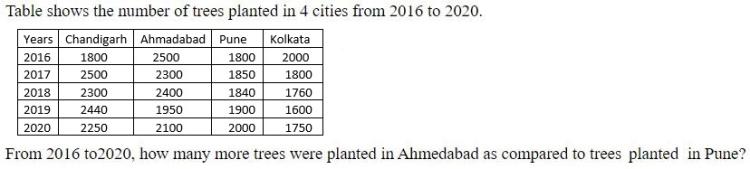
- (a)

- (b)

- (c)

- (d)

Show answer
Answer: (a)
- (a)
6.

- (a)

- (b)

- (c)

- (d)

Show answer
Answer: (c)
- (a)
9.

- (a)

- (b)

- (c)

- (d)

Show answer
Answer: (c)
- (a)
10.

- (a)

- (b)

- (c)

- (d)

Show answer
Answer: (c)
- (a)
11.
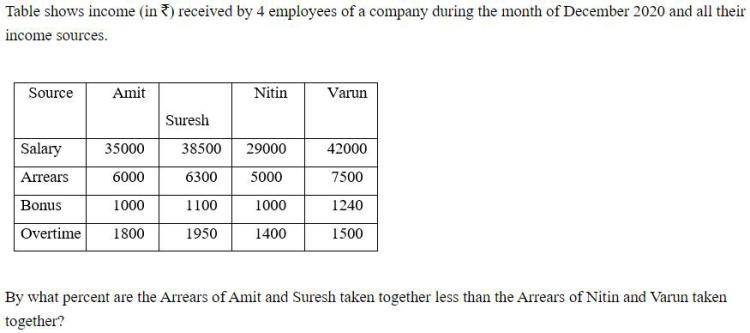
- (a)

- (b)

- (c)

- (d)

Show answer
Answer: (d)
- (a)
12.

- (a)

- (b)

- (c)

- (d)

Show answer
Answer: (d)
- (a)
13.
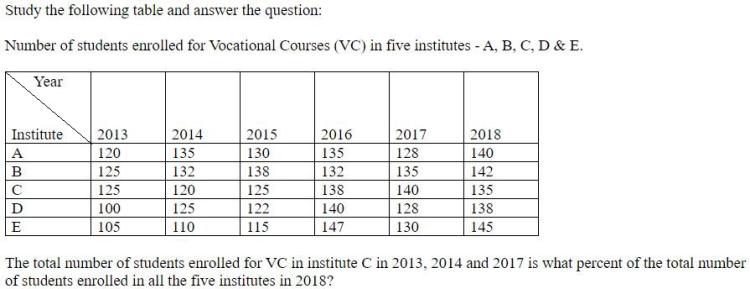
- (a)

- (b)

- (c)

- (d)

Show answer
Answer: (b)
- (a)
14.

- (a)

- (b)

- (c)

- (d)

Show answer
Answer: (c)
- (a)
16.

- (a)

- (b)

- (c)

- (d)

Show answer
Answer: (b)
- (a)
17.

- (a)

- (b)
- (c)

- (d)

Show answer
Answer: (c)
- (a)
18.

- (a)

- (b)

- (c)

- (d)

Show answer
Answer: (d)
- (a)
19.

- (a)

- (b)

- (c)

- (d)

Show answer
Answer: (b)
- (a)
21.

- (a)

- (b)

- (c)

- (d)

Show answer
Answer: (a)
- (a)
24.

- (a)

- (b)

- (c)

- (d)

Show answer
Answer: (b)
- (a)
English Comprehension
1. Select the most appropriate option to fill in the blank. A ______ souvenir will be released on the occasion of the World Meet.
- (a) considerable
- (b) voluminous
- (c) generous
- (d) bountiful
Show answer
Answer: (b)
2. Select the option that can be used as a one-word substitute for the given group of words. A large building with an extensive floor area, typically for housing aircraft
- (a) Shed
- (b) Airport
- (c) Hangar
- (d) Barn
Show answer
Answer: (c)
3. The following sentence has been divided into parts. One of them contains an error. Select the part that contains the error from the given options. The Principal requested / the teacher’s / to monitor / and take care of the small children.
- (a) the teacher’s
- (b) to monitor
- (c) The Principal requested
- (d) and take care of the small children
Show answer
Answer: (a)
4. Sentences of a paragraph are given below in jumbled order. Arrange the sentences in the right order to form a meaningful and coherent paragraph. A. This invention has helped us to heal wounds caused by bacteria. B. Penicillin is one of the most useful drugs man has invented. C. In the beginning however, very few people knew of this discovery and its use. D. Its use has saved the lives of hundreds of thousands of soldiers.
- (a) ABCD
- (b) DCBA
- (c) CABD
- (d) BADC
Show answer
Answer: (d)
5. Select the most appropriate option to fill in the blank. You need not ______ so much fuss about wearing a mask when you go out.
- (a) cause
- (b) generate
- (c) do
- (d) make
Show answer
Answer: (d)
6. Select the INCORRECTLY spelt word.
- (a) Cerebral
- (b) Arbitrary
- (c) Scrutinize
- (d) Withdrawl
Show answer
Answer: (d)
7. Select the INCORRECTLY spelt word.
- (a) Moisture
- (b) Vishious
- (c) Mimic
- (d) Anxious
Show answer
Answer: (b)
8. Select the most appropriate ANTONYM of the given word. Invade
- (a) Surrender
- (b) Attack
- (c) Seize
- (d) Assault
Show answer
Answer: (a)
9. Select the most appropriate option to substitute the underlined segment in the given sentence. If no substitution is required, select ‘No substitution’. The place is too much noisy.
- (a) No substitution
- (b) much too much noisy
- (c) much noisy
- (d) too noisy
Show answer
Answer: (d)
10. Select the most appropriate synonym of the given word. Transmit
- (a) Accept
- (b) Catch
- (c) Convey
- (d) Receive
Show answer
Answer: (c)
11. Select the most appropriate ANTONYM of the given word. Toxic
- (a) Healthy
- (b) Lethal
- (c) Harmful
- (d) Venomous
Show answer
Answer: (a)
12. Select the option that can be used as a one-word substitute for the given group of words. A person who listens to someone’s private conversation without them knowing
- (a) Infiltrator
- (b) Spy
- (c) Eavesdropper
- (d) Secret agent
Show answer
Answer: (c)
13. Select the most appropriate meaning of the given idiom. Full of beans
- (a) Full of cowardice
- (b) Full of energy
- (c) A dish made of French beans
- (d) A storeroom full of vegetables
Show answer
Answer: (b)
14. Select the most appropriate synonym of the given word. Numerous
- (a) Several
- (b) Totalled
- (c) Numbered
- (d) Few
Show answer
Answer: (a)
15. Select the most appropriate meaning of the given idiom. To cut a long story short
- (a) Like to tell long stories
- (b) Tell something briefly
- (c) Like to tell short stories
- (d) Tell something in a roundabout way
Show answer
Answer: (b)
17. Select the option that will improve the underlined part of the sentence. In case no improvement is needed, select 'No improvement required'. I wish I have come an hour sooner.
- (a) has
- (b) No improvement required
- (c) had
- (d) will
Show answer
Answer: (c)
18. Sentences of a paragraph are given below in jumbled order. Arrange the sentences in the right order to form a meaningful and coherent paragraph. A. Then I took him by the hand and led him across the street. B. I was going to the market when I saw a blind man trying to cross the street. C. He expressed his gratitude with folded hands. D. I walked across to the blind man.
- (a) ABCD
- (b) BDAC
- (c) CBDA
- (d) DABC
Show answer
Answer: (b)
19. Select the option that expresses the given sentence in passive voice. Someone stole his traveller's cheques when he was travelling in Europe.
- (a) His traveller's cheques was stole when he was travelling in Europe.
- (b) Someone had been stole his traveller's cheques when he was travelling in Europe.
- (c) His traveller's cheques were stolen when he was travelling in Europe.
- (d) His traveller's cheques are stole when he was travelling in Europe.
Show answer
Answer: (c)
20. The following sentence has been divided into parts. One of them contains an error. Select the part that contains the error from the given options. It have been only / through writing / that men have been able / to spread their ideas to mankind.
- (a) to spread their ideas to mankind
- (b) that men have been able
- (c) It have been only
- (d) through writing
Show answer
Answer: (c)
PassageFor questions 21–25
In the following passage, some words have been deleted. Fill in the blanks with the help of the alternatives given. Select the most appropriate option for each blank.
It is true that the more you study, the more you (1)______ your horizon and hence your point of view undergoes a (2)______. A person with higher education certainly has a better (3)______ and ideas to help in community and societal (4)______. Ideas that are gathered from such people provide a global (5)______ for the nation as a whole.
21. Select the most appropriate option to fill in blank number 1.
- (a) expand
- (b) exchange
- (c) narrow
- (d) convert
Show answer
Answer: (a)
22. Select the most appropriate option to fill in blank number 2.
- (a) backwardness
- (b) enlargement
- (c) succession
- (d) transformation
Show answer
Answer: (d)
23. Select the most appropriate option to fill in blank number 3.
- (a) scope
- (b) luck
- (c) outlook
- (d) routine
Show answer
Answer: (c)
24. Select the most appropriate option to fill in blank number 4.
- (a) maturity
- (b) elaboration
- (c) development
- (d) ripening
Show answer
Answer: (c)
25. Select the most appropriate option to fill in blank number 5.
- (a) posture
- (b) proportion
- (c) perspective
- (d) prejudice
Show answer
Answer: (c)
Show answers
Answer key
Answer key as marked in the Staff Selection Commission’s response sheet. “—” means the sheet did not show it clearly.
General Intelligence and Reasoning
- Q 2
- (c)
- Q 3
- (c)
- Q 5
- (d)
- Q 6
- (a)
- Q 7
- (a)
- Q 8
- (d)
- Q 10
- (a)
- Q 13
- (a)
- Q 15
- (c)
- Q 16
- (c)
- Q 18
- (d)
- Q 19
- (b)
- Q 20
- (a)
- Q 21
- (c)
- Q 22
- (d)
- Q 23
- (d)
- Q 24
- (c)
- Q 25
- (c)
General Awareness
- Q 1
- (d)
- Q 2
- (b)
- Q 3
- (a)
- Q 4
- (b)
- Q 5
- (a)
- Q 6
- (b)
- Q 7
- (c)
- Q 8
- (a)
- Q 9
- (c)
- Q 10
- (b)
- Q 11
- (d)
- Q 13
- (b)
- Q 14
- (a)
- Q 15
- (d)
- Q 17
- (d)
- Q 18
- (d)
- Q 19
- (a)
- Q 20
- (c)
- Q 21
- (c)
- Q 22
- (a)
- Q 23
- (c)
- Q 24
- (d)
- Q 25
- (c)
Quantitative Aptitude
- Q 1
- (d)
- Q 2
- (c)
- Q 3
- (b)
- Q 5
- (a)
- Q 6
- (c)
- Q 9
- (c)
- Q 10
- (c)
- Q 11
- (d)
- Q 12
- (d)
- Q 13
- (b)
- Q 14
- (c)
- Q 16
- (b)
- Q 17
- (c)
- Q 18
- (d)
- Q 19
- (b)
- Q 21
- (a)
- Q 24
- (b)
English Comprehension
- Q 1
- (b)
- Q 2
- (c)
- Q 3
- (a)
- Q 4
- (d)
- Q 5
- (d)
- Q 6
- (d)
- Q 7
- (b)
- Q 8
- (a)
- Q 9
- (d)
- Q 10
- (c)
- Q 11
- (a)
- Q 12
- (c)
- Q 13
- (b)
- Q 14
- (a)
- Q 15
- (b)
- Q 17
- (c)
- Q 18
- (b)
- Q 19
- (c)
- Q 20
- (c)
- Q 21
- (a)
- Q 22
- (d)
- Q 23
- (c)
- Q 24
- (c)
- Q 25
- (c)