ExamBharo · SSC CGL 2018 Tier I — 13 June 2019, Shift 2 · exambharo.com/previous-year-papers/ssc-cgl-2018-tier-1-13-jun-shift-2/
Question paper · SSC CGL
SSC CGL 2018 Tier I — 13 June 2019, Shift 2
13 June 2019 · 1:00 PM–2:00 PM77 of the paper’s 100 questions+2 for a correct answer, −0.5 for a wrong one
23 questions of the original paper are not included: those that need a figure or formatting we cannot show, that have no answer in the response sheet, or that we could not check against a second copy of the paper.
Questions from the Staff Selection Commission’s paper of 13 June 2019, 1:00 PM–2:00 PM. Each question’s answer is under it, hidden until you open it, and the full answer key is at the end. Take the paper as a timed practice test to be scored.
General Intelligence and Reasoning
1.
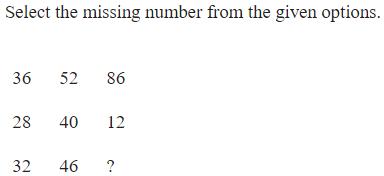
- (a)

- (b)

- (c)

- (d)

Show answer
Answer: (c)
- (a)
4.
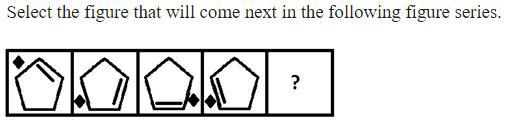
- (a)

- (b)

- (c)

- (d)

Show answer
Answer: (a)
- (a)
5.

- (a)

- (b)

- (c)

- (d)

Show answer
Answer: (c)
- (a)
7.

- (a)

- (b)

- (c)

- (d)

Show answer
Answer: (b)
- (a)
9.

- (a)

- (b)

- (c)

- (d)

Show answer
Answer: (a)
- (a)
10.
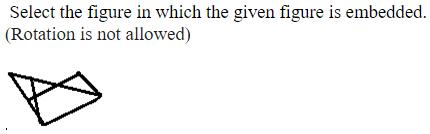
- (a)

- (b)

- (c)

- (d)

Show answer
Answer: (d)
- (a)
11.
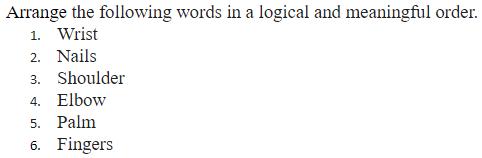
- (a)
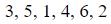
- (b)
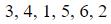
- (c)
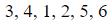
- (d)
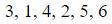
Show answer
Answer: (b)
- (a)
13.

- (a)

- (b)
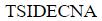
- (c)
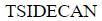
- (d)
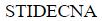
Show answer
Answer: (b)
- (a)
15.

- (a)

- (b)

- (c)

- (d)

Show answer
Answer: (b)
- (a)
20.

- (a)

- (b)

- (c)

- (d)

Show answer
Answer: (a)
- (a)
22.

- (a)

- (b)

- (c)

- (d)

Show answer
Answer: (a)
- (a)
23.

- (a)

- (b)

- (c)

- (d)

Show answer
Answer: (d)
- (a)
General Awareness
1. Identify the part of brain that controls the maintenance of posture, balance and equilibrium.
- (a) Diencephalon
- (b) Cerebrum
- (c) Brainstem
- (d) Cerebellum
Show answer
Answer: (d)
2. Which of the following is the largest container port of India?
- (a) Ennore Port
- (b) Jawaharlal Nehru Port
- (c) Paradip Port
- (d) Chhatrapati Shivaji Port
Show answer
Answer: (b)
3. In which medical condition is the eye's optic nerve damaged and the condition worsens over time?
- (a) Cataract
- (b) Glaucoma
- (c) Age-related Macular Degeneration (AMD)
- (d) Dry Eye
Show answer
Answer: (b)
4. Which theory in economics proposes that countries export what they can most efficiently and plentifully produce?
- (a) Heckscher-Ohlin Model
- (b) Cournot Competition
- (c) Solow-Swan Model
- (d) Input-Output Model
Show answer
Answer: (a)
6. Who among the following is/was the longest serving governor of an Indian state?
- (a) Padmaja Naidu
- (b) N D Tiwari
- (c) Lakshmi Kant Jha
- (d) Sarojini Naidu
Show answer
Answer: (a)
7. Which of the following is the national sport of Bangladesh?
- (a) Cricket
- (b) Kho Kho
- (c) Kabaddi
- (d) Boxing
Show answer
Answer: (c)
8. How many sessions of the Lok Sabha are normally held in a year?
- (a) 2
- (b) 5
- (c) 7
- (d) 3
Show answer
Answer: (d)
9. Name the comprehensive pension management system developed by the Department of Telecom in December 2018.
- (a) ACHARAN
- (b) SAMPANN
- (c) SAMADHAN
- (d) VIGYAN
Show answer
Answer: (b)
10. With which sport is the term bleeder associated?
- (a) Swimming
- (b) Cricket
- (c) Volleyball
- (d) Boxing
Show answer
Answer: (d)
11. Who among the following was the last Nawab of Awadh?
- (a) Wajid Ali Shah
- (b) Muhammad Mukim
- (c) Saadat Ali Khan
- (d) Amjad Ali Khan
Show answer
Answer: (a)
12. In December 2018, Havelock Island was renamed as ________.
- (a) Veer Savarkar Island
- (b) Netaji Subhash Bose Island
- (c) Swaheed Dweep
- (d) Swaraj Dweep
Show answer
Answer: (d)
13. Who was the first Russian prime minister to visit independent India?
- (a) Boris Yeltsin
- (b) Mikhail Gorbachev
- (c) Nikolai Bulganin
- (d) Vladimir Putin
Show answer
Answer: (c)
14. In which year was the Battle of Saragarhi fought?
- (a) 1867
- (b) 1878
- (c) 1854
- (d) 1897
Show answer
Answer: (d)
15. What was the theme of World AIDS Day 2018?
- (a) We Shall Overcome
- (b) Check Yourself
- (c) Save Yourself
- (d) Know your Status
Show answer
Answer: (d)
16. Byopa is a traditional headgear of tribes belonging to ______.
- (a) Kerala
- (b) Arunachal Pradesh
- (c) Jharkhand
- (d) Goa
Show answer
Answer: (b)
17. As of April 2019 who is longest serving chief minister of an Indian state?
- (a) Pawan Chamling
- (b) Jyoti Basu
- (c) Jayalalitha
- (d) Sheila Dixit
Show answer
Answer: (a)
18. Which was the wettest place in India in 2018 as per the India Meteorological Department (IMD)?
- (a) Mawsynram
- (b) Ooty
- (c) Mahabaleshwar
- (d) Cherrapunji
Show answer
Answer: (c)
19. In which part of the body is blood produced?
- (a) Lungs
- (b) Heart
- (c) Brain
- (d) Bone Marrow
Show answer
Answer: (d)
20. Chepu is a unique cultural symbol of ______.
- (a) Bhutan
- (b) Nepal
- (c) Myanmar (Burma)
- (d) China
Show answer
Answer: (b)
21. Which of the following is the highest peak in Sri Lanka?
- (a) Hakgala
- (b) Bible Rock
- (c) Mount Pedro
- (d) Kirigalpotta
Show answer
Answer: (c)
22. Which state of India was ruled by the Ahom Dynasty?
- (a) Odisha
- (b) Karnataka
- (c) Rajasthan
- (d) Assam
Show answer
Answer: (d)
23. Wind turbines convert ________ energy into mechanical power.
- (a) kinetic
- (b) chemical
- (c) nuclear
- (d) gravitational
Show answer
Answer: (a)
24. Which theory is used to make long-run predictions about exchange rates in a flexible exchange rate system?
- (a) Purchasing Power Parity Theory
- (b) Portfolio Balance Approach
- (c) Interest Rate Approach
- (d) Balance of Payment Theory
Show answer
Answer: (a)
25. The study of insects is called ______.
- (a) Geology
- (b) Anthropology
- (c) Ornithology
- (d) Entomology
Show answer
Answer: (d)
Quantitative Aptitude
3.

- (a)

- (b)

- (c)

- (d)

Show answer
Answer: (a)
- (a)
4.

- (a)

- (b)

- (c)

- (d)

Show answer
Answer: (d)
- (a)
6.

- (a)

- (b)

- (c)

- (d)

Show answer
Answer: (a)
- (a)
7.

- (a)

- (b)

- (c)

- (d)

Show answer
Answer: (c)
- (a)
8.

- (a)

- (b)

- (c)

- (d)

Show answer
Answer: (b)
- (a)
9.

- (a)

- (b)

- (c)

- (d)

Show answer
Answer: (d)
- (a)
10.

- (a)

- (b)

- (c)

- (d)

Show answer
Answer: (b)
- (a)
11.

- (a)

- (b)

- (c)

- (d)

Show answer
Answer: (d)
- (a)
12.
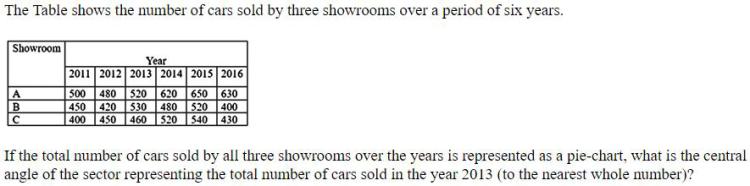
- (a)

- (b)

- (c)
- (d)

Show answer
Answer: (c)
- (a)
13.

- (a)

- (b)

- (c)

- (d)

Show answer
Answer: (a)
- (a)
14.
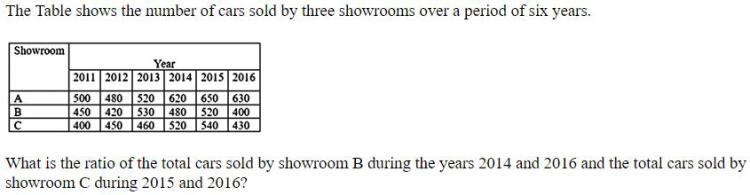
- (a)

- (b)

- (c)

- (d)

Show answer
Answer: (b)
- (a)
15.
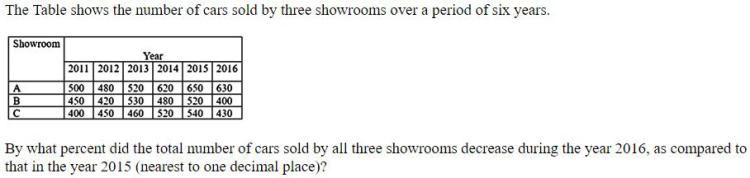
- (a)

- (b)

- (c)

- (d)

Show answer
Answer: (a)
- (a)
18.

- (a)

- (b)

- (c)

- (d)

Show answer
Answer: (d)
- (a)
21.

- (a)

- (b)
- (c)

- (d)

Show answer
Answer: (b)
- (a)
22.

- (a)

- (b)

- (c)

- (d)

Show answer
Answer: (b)
- (a)
24.

- (a)

- (b)

- (c)

- (d)

Show answer
Answer: (d)
- (a)
English Comprehension
1. Given below are four jumbled sentences. Select the option that gives their correct order. A. It is a popular tourist spot for watching the sunset and sunrise over the ocean. B. Kanyakumari is a coastal town in the State of Tamil Nadu on India's southern tip. C. It is also a noted pilgrimage site, thanks to its Bagvathi Amman Temple and Our Lady of Ransom Church, a centre of Indian Catholicism. D. Jutting out into the Laccadive sea, the town was known as Cape Comorin during the British rule.
- (a) BDAC
- (b) DCAB
- (c) ACDB
- (d) BCDA
Show answer
Answer: (a)
2. Select the most appropriate antonym of the given word. PROGRESSIVE
- (a) repeated
- (b) moving
- (c) conservative
- (d) aristocratic
Show answer
Answer: (c)
3. Select the most appropriate antonym of the given word. PUBLIC
- (a) common
- (b) resticted
- (c) private
- (d) ready
Show answer
Answer: (c)
4. Select the correctly spelt word.
- (a) mantion
- (b) mentoin
- (c) mention
- (d) mension
Show answer
Answer: (c)
5. Select the most appropriate meaning of the underlined idiom in the given sentence. The invigilator did not know that the two boys were exchanging notes under his nose.
- (a) rolled into small pellets
- (b) written in small letters
- (c) right in front of him
- (d) wrapped in handkerchiefs
Show answer
Answer: (c)
6. Select the correct active form of the given sentence. Rudra was laughed at by all his friends when he wore his socks inside- out.
- (a) All his friends laughed at Rudra when he wore his socks inside-out.
- (b) When Rudra wore his socks inside-out all his friends were laughing at him.
- (c) All his friends will be laughing at Rudra for wearing his socks inside-out.
- (d) If Rudra wears his socks inside-out all his friends will laugh at him.
Show answer
Answer: (a)
7. In the sentence identify the segment which contains the grammatical error. You may left the class when you have completed the test.
- (a) You may left
- (b) when you have
- (c) completed the test
- (d) the class
Show answer
Answer: (a)
8. Given below are four jumbled sentences. Select the option that gives their correct order. A. He would sit at the edge of her mother's bed and stare into her crib. B. Arvind bumbled down the interminable corridor, suddenly reminded of his daughter in the days after she was born. C. As a proportion to the fragment of life his daughter had seen, an hour was a vast sprawling space. D. Some days he would imagine the world through her eyes and he would feel in his heart how long an hour actually was.
- (a) DACB
- (b) BCDA
- (c) ABCD
- (d) BADC
Show answer
Answer: (d)
9. In the sentence identify the segment which contains the grammatical error. Although there are more than a hundred known elements, they rarely occur at a pure state.
- (a) more than a hundred
- (b) Although there are
- (c) at a pure state
- (d) they rarely occur
Show answer
Answer: (c)
10. Select the correct passive form of the given sentence. They will put away their woollens after the festival of Holi.
- (a) Their woollens are being put away after the festival of Holi.
- (b) Their woollens will be put away after the festival of Holi.
- (c) Their woollens have been put away after the festival of Holi.
- (d) Their woollens are put away after the festival of Holi.
Show answer
Answer: (b)
11. Select the most appropriate option to substitute the underlined segment in the given sentence. If no substitution is required, select No improvement. The female ostrich guards the nest at night and the male guard it in the day.
- (a) guards it during the day.
- (b) guard it during the day.
- (c) No improvement
- (d) guarding it during day.
Show answer
Answer: (a)
12. Select the correctly spelt word.
- (a) scissors
- (b) teribble
- (c) clettering
- (d) sweatter
Show answer
Answer: (a)
13. Select the most appropriate option to fill in the blank. Today, _______ society is literally poisoning the earth with acid rain.
- (a) industrialised
- (b) cosmopolitan
- (c) growing
- (d) developing
Show answer
Answer: (a)
14. Select the most appropriate synonym of the given word. INSULT
- (a) offer
- (b) apply
- (c) offend
- (d) remove
Show answer
Answer: (c)
15. Select the most appropriate meaning of the underlined idiom in the given sentence. Let us have all the regulations in black and white.
- (a) painted in colour
- (b) in writing
- (c) written on the black- board
- (d) printed in coloured ink
Show answer
Answer: (b)
16. Select the most appropriate option to fill in the blank. I am quite satisfied that I have not been ________ in doing whatever was needful for building up their character.
- (a) affectionate
- (b) caring
- (c) devoted
- (d) negligent
Show answer
Answer: (d)
17. Select the word which means the same as the group of words given. liable to break easily
- (a) brittle
- (b) soft
- (c) bent
- (d) thin
Show answer
Answer: (a)
18. Select the most appropriate synonym of the given word. HOSTILITY
- (a) enmity
- (b) sympathy
- (c) friendship
- (d) goodwill
Show answer
Answer: (a)
19. Select the word which means the same as the group of words given. impossible to satisfy
- (a) satisfiable
- (b) contented
- (c) insatiable
- (d) satisfactory
Show answer
Answer: (c)
20. Select the most appropriate option to substitute the underlined segment in the given sentence. If no substitution is required, select No improvement. How long you are living in this city?
- (a) No improvement
- (b) are you been living
- (c) have you lived
- (d) are you live
Show answer
Answer: (c)
PassageFor questions 21–25
In the following passage some words have been deleted. Fill in the blanks with the help of the alternatives given. Select the most appropriate option for each blank.
Marine Conservation Society is hosting the Anjarle Turtle festival 2019, aiming to make more people aware about Olive Ridley turtles. The sea (1) ______ get their names from their olivecoloured (2)______ They grow to about two feet in (3)______ and reportedly mate at around 1000 kilometers from the Anjarle (4)______ These turtles come to the beach to lay (5)______.
21. Select the most appropriate option to fill in blank No.(1)
- (a) snakes
- (b) turtles
- (c) animal
- (d) fish
Show answer
Answer: (b)
22. Select the most appropriate option to fill in blank No.(2)
- (a) feathers
- (b) wings
- (c) beaks
- (d) shells
Show answer
Answer: (d)
23. Select the most appropriate option to fill in blank No.(3)
- (a) weight
- (b) depth
- (c) length
- (d) growth
Show answer
Answer: (c)
24. Select the most appropriate option to fill in blank No.(4)
- (a) beach
- (b) festival
- (c) sand
- (d) sea
Show answer
Answer: (a)
25. Select the most appropriate option to fill in blank No.(5)
- (a) shells
- (b) young ones
- (c) eggs
- (d) pebbles
Show answer
Answer: (c)
Show answers
Answer key
Answer key as marked in the Staff Selection Commission’s response sheet. “—” means the sheet did not show it clearly.
General Intelligence and Reasoning
- Q 1
- (c)
- Q 4
- (a)
- Q 5
- (c)
- Q 7
- (b)
- Q 9
- (a)
- Q 10
- (d)
- Q 11
- (b)
- Q 13
- (b)
- Q 15
- (b)
- Q 20
- (a)
- Q 22
- (a)
- Q 23
- (d)
General Awareness
- Q 1
- (d)
- Q 2
- (b)
- Q 3
- (b)
- Q 4
- (a)
- Q 6
- (a)
- Q 7
- (c)
- Q 8
- (d)
- Q 9
- (b)
- Q 10
- (d)
- Q 11
- (a)
- Q 12
- (d)
- Q 13
- (c)
- Q 14
- (d)
- Q 15
- (d)
- Q 16
- (b)
- Q 17
- (a)
- Q 18
- (c)
- Q 19
- (d)
- Q 20
- (b)
- Q 21
- (c)
- Q 22
- (d)
- Q 23
- (a)
- Q 24
- (a)
- Q 25
- (d)
Quantitative Aptitude
- Q 3
- (a)
- Q 4
- (d)
- Q 6
- (a)
- Q 7
- (c)
- Q 8
- (b)
- Q 9
- (d)
- Q 10
- (b)
- Q 11
- (d)
- Q 12
- (c)
- Q 13
- (a)
- Q 14
- (b)
- Q 15
- (a)
- Q 18
- (d)
- Q 21
- (b)
- Q 22
- (b)
- Q 24
- (d)
English Comprehension
- Q 1
- (a)
- Q 2
- (c)
- Q 3
- (c)
- Q 4
- (c)
- Q 5
- (c)
- Q 6
- (a)
- Q 7
- (a)
- Q 8
- (d)
- Q 9
- (c)
- Q 10
- (b)
- Q 11
- (a)
- Q 12
- (a)
- Q 13
- (a)
- Q 14
- (c)
- Q 15
- (b)
- Q 16
- (d)
- Q 17
- (a)
- Q 18
- (a)
- Q 19
- (c)
- Q 20
- (c)
- Q 21
- (b)
- Q 22
- (d)
- Q 23
- (c)
- Q 24
- (a)
- Q 25
- (c)