ExamBharo · UP PGT 2016 — Chemistry (Series A) · exambharo.com/up-pgt/previous-year-papers/up-pgt-2016-chemistry-series-a/
Question paper · UP PGT
UP PGT 2016 — Chemistry (Series A)
1 or 2 February 2019125 questions+3.4 for a correct answer, −0 for a wrong one
Questions from the U.P. Secondary Education Services Selection Board’s paper of 1 or 2 February 2019. Each question’s answer is under it, hidden until you open it, and the full answer key is at the end. Take the paper as a timed practice test to be scored.
The official booklet is a scan with no text, so ExamBharo typed this paper from it by hand. A typing slip is possible; report one through the contact page.
The board deleted questions 9, 10, 18, 24 and 71 in its final answer key: shown here, with no answer, and not counted in the score.
Chemistry
1. The cation that initiates blood clotting and is also known to trigger muscle contraction is
- (a) Na⁺
- (b) K⁺
- (c) Ca²⁺
- (d) Fe²⁺
Show answer
Answer: (c)
2. Among the metal chlorides given below, this will give the lowest melting point as per Fajan’s rules
- (a) CaCl₂
- (b) BaCl₂
- (c) MgCl₂
- (d) SrCl₂
Show answer
Answer: (c)
3. Select the correct statement from the following.
- (a) Adsorption decreases surface energy.
- (b) Adsorption is an irreversible process
- (c) Adsorption increases with rise in temperature.
- (d) Adsorption is always monolayer.
Show answer
Answer: (a)
4. The molar conductance λₘ of 0.1 M HCl solution is 412.0 sm² mol⁻¹ and transport number of H⁺ is 0.825. Which of the following will be the molar ionic conductance (sm² mol⁻¹) of Cl⁻ ?
- (a) 69.3
- (b) 72.1
- (c) 73.4
- (d) 74.1
Show answer
Answer: (b)
5. Among the following both the members of which pair are paramagnetic ?
- (a) N₂⁺, B₂
- (b) N₂, O₂²⁻
- (c) N₂⁺, O₂²⁻
- (d) N₂, O₂⁻
Show answer
Answer: (a)
6. Identify A and B in the following reactions.
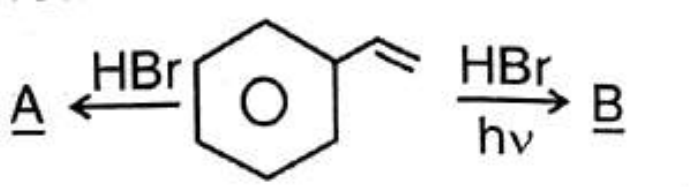
- (a) A and B both are
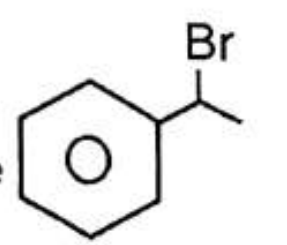
- (b) A and B both are
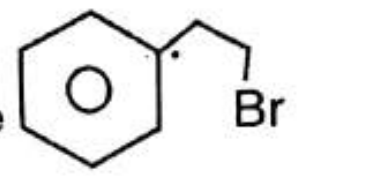
- (c) A is
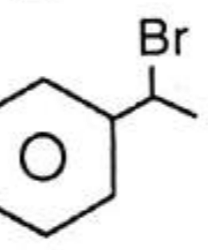 and B is
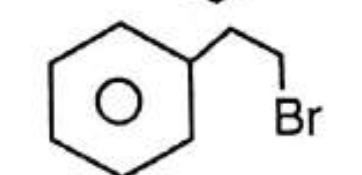
- (d) A is
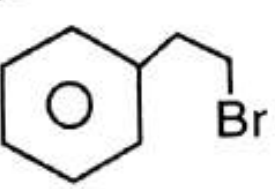 and B is
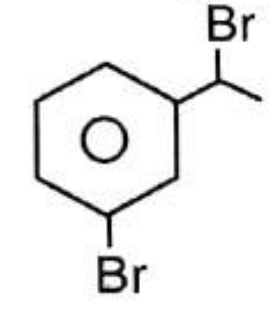
Show answer
Answer: (c)
- (a) A and B both are
7. Which one of the following has the highest coagulating power for As₂S₃ colloid ?
- (a) PO₄³⁻
- (b) Al³⁺
- (c) SO₄²⁻
- (d) Na⁺
Show answer
Answer: (b)
8. Identify the product A of the reaction. C₆H₅CHO + CH₂(COOH)₂ —(NH₃/C₂H₅OH, Δ)→ A
- (a) C₆H₅CH = CHCOOH
- (b) C₆H₅CH(OH)CH₂COOH
- (c) C₆H₅COCH₂COOH
- (d) C₆H₅ CH₂COOH
Show answer
Answer: (a)
9. The oxidation state of Fe in the complex Na[Fe (CO)₄H] is
- (a) + 2
- (b) − 2
- (c) + 3
- (d) + 4
Show answer
Answer: —
10. What is the product P in the reaction ? CH ≡ CH(g) + EtMgBr —(either)→ P
- (a) CH ≡ CMgBr
- (b) BrMge ≡ CMgBr
- (c) Brc ≡ C Br
- (d) CH ≡ C Br
Show answer
Answer: —
11. If the gold number for the colloidal solutions A, B and C are 0.1, 2.5 and 20 respectively, the order of protective powers of these colloids will be
- (a) C > B > A
- (b) A > B > C
- (c) A = B = C
- (d) B > A > C
Show answer
Answer: (b)
12. The vapour pressure of a pure liquid A is 40 mm Hg and a solution B prepared in A at the same temperature has vapour pressure of 20 mm Hg, then what will be the mole fraction of A in the solution ?
- (a) 0.5
- (b) 0.25
- (c) 0.125
- (d) 0.75
Show answer
Answer: (a)
13. Among the given statements regarding the structures of NH₃ and H₃O⁺, which one is incorrect ?
- (a) All N – H bonds in NH₃ are equal in length and strength
- (b) All O – H bonds in H₃O⁺ are equal in length and strength
- (c) N in NH₃ and O in H₃O⁺, both the atoms involve sp³ hybridization
- (d) Number of lone pairs of electrons on N atom (NH₃) is only one but two on O atom (H₃O⁺)
Show answer
Answer: (d)
14. Which of the following statements is true for cyclohexane ?
- (a) Both chair and boat conformations posses angle strain.
- (b) Only chair conformation is free from angle strain.
- (c) Only boat conformation is free from angle strain.
- (d) Both chair and boat conformations are free from angle strain.
Show answer
Answer: (d)
15. The values of van der Waals constant ‘a’ for gases N₂, O₂, NH₃ and CH₄ are 1.39, 1.36, 4.00 and 2.253 dm⁶ atm mol⁻² respectively. The gas which can be most easily liquified is
- (a) N₂
- (b) O₂
- (c) NH₃
- (d) CH₄
Show answer
Answer: (c)
16. Which of the following compound does not react with NaHCO₃ ?
- (a)
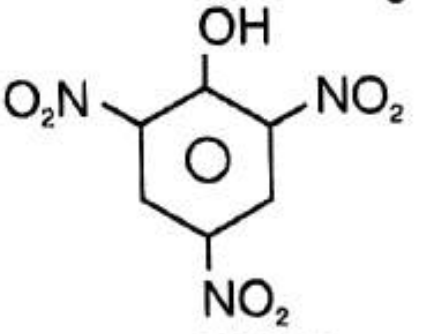
- (b)
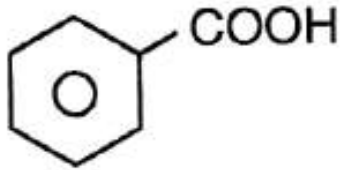
- (c)
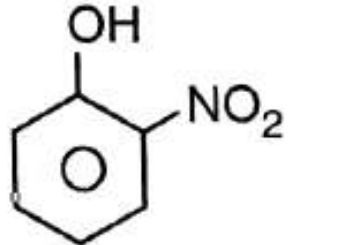
- (d)
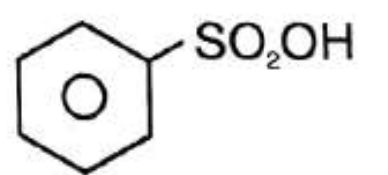
Show answer
Answer: (c)
- (a)
17. The ground state electronic configuration of the central metal atom in some octahedral complexes are given below. In which case the electronic transition is forbidden as per the spin selection rule ?
- (a) t₂g⁶ eg¹
- (b) t₂g³ eg⁰
- (c) t₂g⁶ eg²
- (d) t₂g⁶ eg³
Show answer
Answer: (a)
18. The isoelectronic pair among the following is
- (a) Cl₂O, ICl₂⁻
- (b) Cl₂O, ClO₂
- (c) I₃⁻, IF₂⁻
- (d) ClO₂⁻, ClF₂⁺
Show answer
Answer: —
19. What is alizarin in the following ?
- (a) 1, 3-dihydroxy anthraquinone
- (b) 1, 2-dihydroxy anthraquinone
- (c) 1, 4-dihydroxy anthraquinone
- (d) 1-hydroxy anthraquinone
Show answer
Answer: (b)
20. The ΔH for a reaction is independent of which of the following ?
- (a) T
- (b) The path followed
- (c) Initial and final states
- (d) ΔV
Show answer
Answer: (b)
21. What will be the pH of an aqueous solution of 1 × 10⁻⁸ M HCl ?
- (a) 5
- (b) slightly less than 7
- (c) slightly more than 7
- (d) 8
Show answer
Answer: (b)
22. The effective atomic number (EAN) of the central metal ion in [Ni(NH₃)₆]²⁺ is
- (a) 38
- (b) 36
- (c) 37
- (d) 40
Show answer
Answer: (a)
23. What is the approximate equilibrium concentration of the open-chain form of D-glucose in an aqueous solution ?
- (a) 2%
- (b) 20%
- (c) 90%
- (d) 0.02%
Show answer
Answer: (d)
24. On the basis of ionic sizes, which of the salts given below will have maximum solubility in water ? Given – ionic size (pm) Mg²⁺(65), Ba²⁺(135), OH⁻(140), CO₃²⁻ (185)
- (a) Mg (OH)₂
- (b) Ba (OH)₂
- (c) MgCO₃
- (d) BaCO₃
Show answer
Answer: —
25. The Van’t Hoff factor for a very dilute solution of HCN is 1.00002. What will be the percentage degree of dissociation in the following ?
- (a) 2 × 10⁻²
- (b) 2 × 10⁻³
- (c) 2 × 10⁻⁴
- (d) 2 × 10⁻⁶
Show answer
Answer: (b)
26. With respect to the position of elements in the periodic table, which one is the odd pair ?
- (a) Mg, Ga
- (b) Na, Ar
- (c) Ca, Br
- (d) In, Te
Show answer
Answer: (a)
27. Which of the following is an extensive property ?
- (a) Enthalpy
- (b) Viscosity
- (c) Concentration
- (d) Density
Show answer
Answer: (a)
28. The surface tension of a liquid vanishes roughly x°C above the critical temperature. The value of x is
- (a) 4°
- (b) 2°
- (c) 6°
- (d) 3°
Show answer
Answer: (c)
29. The correct order of decreasing lattice energy of alkali metal fluorides is
- (a) LiF > NaF > RbF > CsF > KF
- (b) LiF > KF > NaF > CsF > RbF
- (c) LiF > NaF > KF > RbF > CsF
- (d) CsF > RbF > KF > NaF > LiF
Show answer
Answer: (c)
30. In the following reaction sequence A and B are respectively :
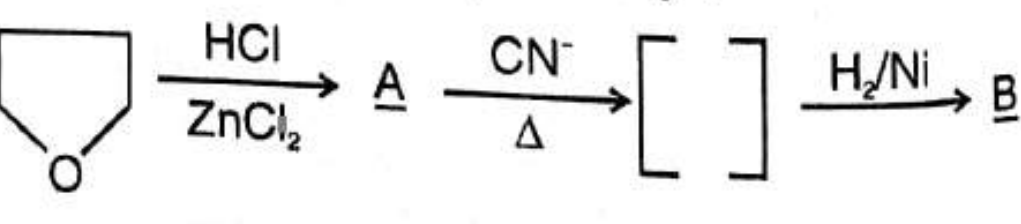
- (a) 1, 4-dichlorobutane, hexanoic acid
- (b) 1, 4-dichlorobutane, hexamethylenediamine
- (c) 2-chlorobutane, hexylamine
- (d) 2-chlorobutane, adiponitrile
Show answer
Answer: (b)
31. An acidic buffer solution can be prepared by mixing which of the following pair of solutions ?
- (a) (NH₄)₂ SO₄ and H₂SO₄
- (b) CH₃COONa and CH₃COOH
- (c) NH₄Cl and NH₄OH
- (d) NaCl and HCl
Show answer
Answer: (b)
32. ΔHf⁰ of SO₂ is – 297.5 kJmol⁻¹. The energy required for decomposition of 32g of SO₂ is
- (a) 148.75 kJ
- (b) – 148.75 kJ
- (c) – 297.5 kJ
- (d) 297.5 kJ
Show answer
Answer: (a)
33. On the basis of trans-directing capabilities of the ligands, in which of the following complexes do you expect the substitution of NH₃ in place of a Cl⁻ ligand will be fastest ?
- (a) [Pt (H₂O)Cl₃]⁻
- (b) [Pt (CN)Cl₃]²⁻
- (c) [Pt (I)Cl₃]²⁻
- (d) [Pt Cl₄]²⁻
Show answer
Answer: (b)
34. A catalyst increases the rate of a chemical reaction by
- (a) Increasing the activation energy
- (b) Decreasing the activation energy
- (c) Reacting with reactants
- (d) Reacting with products
Show answer
Answer: (b)
35. When a mixture of vapours of acetic acid and formic acid is heated over manganous oxide at 300°C
- (a) HCHO is formed
- (b) Both CH₃CHO and HCHO are formed
- (c) CH₃CHO is formed
- (d) CH₄ is formed
Show answer
Answer: (c)
36. As per molecular orbital theory of bonding for diatomic molecules, the smallest value of ionization energy is expected for
- (a) C₂
- (b) N₂
- (c) CO
- (d) NO
Show answer
Answer: (d)
37. Which of the following is a semi synthetic polymer ?
- (a) Silk
- (b) Wood
- (c) Rayon
- (d) Natural rubber
Show answer
Answer: (c)
38. Which of the following 0.1 M solutions will show the highest boiling point ?
- (a) Potassium sulphate
- (b) Potassium nitrate
- (c) Potassium chloride
- (d) Urea
Show answer
Answer: (a)
39. Both the members of which of the following pairs have almost the same size ?
- (a) Ti⁴⁺, Zr⁴⁺
- (b) Ti⁴⁺, Th⁴⁺
- (c) Zr⁴⁺, Hf⁴⁺
- (d) Zn²⁺, Zr⁴⁺
Show answer
Answer: (c)
40. The correct order of Lewis acid strength of the following boron halides is
- (a) BF₃ > BCl₃ > BBr₃
- (b) BF₃ > BBr₃ > BCl₃
- (c) BBr₃ > BCl₃ > BF₃
- (d) BCl₃ > BBr₃ > BF₃
Show answer
Answer: (c)
41. Which of the following reagents undergo Reimer-Tiemann reaction ?
- (a)
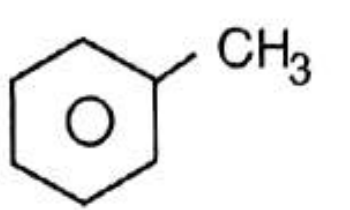
- (b)
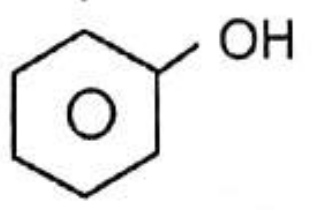
- (c)
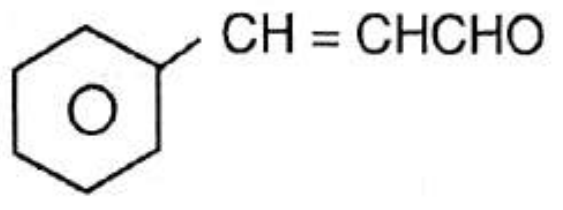
- (d)
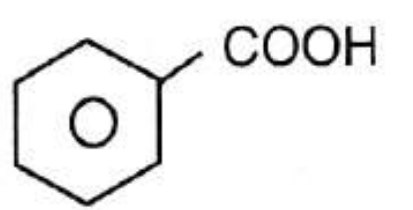
Show answer
Answer: (b)
- (a)
42. If the heat of vapourization of water at 100°C is 540calg⁻¹ then entropy change for evaporation of 1 mole of water will be
- (a) 5.40 cal K⁻¹g⁻¹
- (b) 5.40 cal K⁻¹mol⁻¹
- (c) 22.04 cal K⁻¹mol⁻¹
- (d) 26.06 cal K⁻¹mol⁻¹
Show answer
Answer: (d)
43. If 3.0 g urea is dissolved in 45 g of water, what will be the relative lowering of vapour pressure ?
- (a) 0.02
- (b) 0.01
- (c) 0.04
- (d) 0.05
Show answer
Answer: (a)
44. If a steam engine operates between 400 K and 300 K under high pressure, what will be the efficiency of the engine in the following ?
- (a) 0.50
- (b) 0.55
- (c) 0.25
- (d) 1.00
Show answer
Answer: (c)
45. Dacron is an example of which of the following ?
- (a) Polyamide
- (b) Polypropene
- (c) Polyacrylonitrile
- (d) Polyester
Show answer
Answer: (d)
46. Which among the following compounds when heated with K₂Cr₂O₇ and H₂SO₄ gives a reaction other than its oxidation ?
- (a) KCl
- (b) CH₃CH₂OH
- (c) H₂C₂O₄.2H₂O
- (d) (NH₄)₂ Fe(SO₄)₂.6H₂O
Show answer
Answer: (a)
47. What does the reaction ArN₂⊕ + CuCN → ArCN in the following is known as ?
- (a) Sandmeyer reaction
- (b) Gattermann reaction
- (c) Balzschiemann reaction
- (d) Heck reaction
Show answer
Answer: (a)
48. In which of the given pairs, both the molecular orbitals have ‘gerade’ symmetry ?
- (a) σ and σ*
- (b) π and π*
- (c) σ and π*
- (d) σ* and π*
Show answer
Answer: (c)
49. An atom of ²³⁵₉₂U after absorption of a slow neutron, undergoes nuclear fission to form two fragments ¹³⁹₅₄Xe and ⁹⁴₃₈Sr. The other released particle in this reaction in the following is
- (a) α – particle
- (b) β – particle
- (c) neutron
- (d) positron
Show answer
Answer: (c)
50. The correct increasing order of the stability of the tri halide ions is
- (a) I₃⁻ < IBr₂⁻ < ICl₂⁻ < Br₃⁻
- (b) Br₃⁻< ICl₂⁻< IBr₂⁻< I₃⁻
- (c) ICl₂⁻< IBr₂⁻ < Br₃⁻ < I₃⁻
- (d) Br₃⁻ < IBr₂⁻ < ICl₂⁻ < I₃⁻
Show answer
Answer: (b)
51. Schottky crystal defect is actually a
- (a) line defect
- (b) valence defect
- (c) vacancy defect
- (d) none of these
Show answer
Answer: (c)
52. Number of possible isomers for the complex [Co(en)₂Cl₂]⁺ is (en = ethylenediamine)
- (a) 2
- (b) 4
- (c) 3
- (d) 5
Show answer
Answer: (c)
53. Which of the following compounds in contact with water sets like cement within 30 minutes to a hard plaster ?
- (a) CaCO₃
- (b) CaSO₄
- (c) Ca₃(PO₄)₂
- (d) (CaSO₄)₂H₂O
Show answer
Answer: (d)
54. Which of the following dyes is used as spot test reagent for detecting sulphurous acid and cerium and also used as antiseptic ?
- (a) Malachite green
- (b) Alizarine
- (c) Crystal violet
- (d) Indigo
Show answer
Answer: (a)
55. In a galvanic cell the following reaction takes place at 298 K : Cr₂O₇²⁻ + 14H⁺ + 6Fe²⁺ → 2Cr³⁺ + 6Fe³⁺ + 7H₂O If E⁰ (Cr₂O₇²⁻, H⁺, Cr³⁺ | Pt) = 1.33 V and E⁰ (Fe³⁺, Fe²⁺ | Pt) = 0.77 V, then which of the following will be the standard e.m.f. of the cell ?
- (a) 2.10 V
- (b) 0.56 V
- (c) – 2.10 V
- (d) – 0.56 V
Show answer
Answer: (b)
56. Molar conductance at 25°C and infinite dilution of HCl, CH₃COONa and NaCl are 426.1, 91.0 and 126.5 sm²mol⁻¹ respectively. The molar conductance of CH₃COOH at infinite dilution and 25°C is
- (a) 208.6 sm²mol⁻¹
- (b) 390.6 sm²mol⁻¹
- (c) 441.6 sm²mol⁻¹
- (d) 217.6 sm²mol⁻¹
Show answer
Answer: (b)
57. In the reaction Aniline + glycerol —(PhNO₂ / H₂SO₄, >100°C)→ P the product P is
- (a) Anilinamide
- (b) Pyridine
- (c) Indole
- (d) Quinoline
Show answer
Answer: (d)
58. Which of the following metal hydroxides is the strongest base ?
- (a) Mg (OH)₂
- (b) Be (OH)₂
- (c) Ba (OH)₂
- (d) Ca (OH)₂
Show answer
Answer: (c)
59. Which of the following Vitamins plays a vital role in the coagulating property of blood ?
- (a) Vitamin A
- (b) Vitamin D
- (c) Vitamin E
- (d) Vitamin K
Show answer
Answer: (d)
60. Among the following which one of the following reacts with CO₂ to produce O₂ in closed systems such as submarines ?
- (a) K₂O
- (b) KOH
- (c) KO₂
- (d) K₂O₂
Show answer
Answer: (c)
61. In the following, which is the correct decreasing order of stability of the free radicals ?
- (a) CH₂ = CH – ĊH₂ > (C₆H₅) ĊH₂ > (C₆H₅)₂ ĊH > (C₆ H₅)₃ Ċ
- (b) (C₆H₅)₂ ĊH > (C₆H₅) ĊH₂ > (C₆H₅)₃ Ċ > CH₂ = CH – ĊH₂
- (c) (C₆H₅)₃ Ċ > (C₆H₅)₂ ĊH > (C₆H₅) ĊH₂ > CH₂ = CH – ĊH₂
- (d) CH₂ = CH – ĊH₂ > (C₆H₅)₃ Ċ > (C₆H₅)₂ ĊH > (C₆H₅) ĊH₂
Show answer
Answer: (c)
62. Which of the following materials is derived from an organometallic compound ?
- (a) Teflon
- (b) Silicones
- (c) Freons
- (d) Nylon
Show answer
Answer: (b)
63. Which among the following 3d- series elements does not show properties that are characteristic of transition metals ?
- (a) Ti
- (b) Mn
- (c) V
- (d) Zn
Show answer
Answer: (d)
64. Which of the following is not an electrophile ?
- (a) H⁺
- (b) Br⁺
- (c) NH₃
- (d) BF₃
Show answer
Answer: (c)
65. Heat change at constant volume (Δqᵥ) is equal to which of these ?
- (a) ΔU
- (b) ΔH
- (c) ΔG
- (d) ΔS
Show answer
Answer: (a)
66. Basicity of orthophosphoric acid is
- (a) 2
- (b) 3
- (c) 4
- (d) 1
Show answer
Answer: (b)
67. Which of the following is synthesised by sun-rays ?
- (a) Vitamin A
- (b) Vitamin K
- (c) Vitamin D
- (d) Vitamin C
Show answer
Answer: (c)
68. For a first order reaction the time (t₇₅ %) required to complete 75% is related to half life period (t½) by the expression
- (a) t₍₇₅%₎ = t½
- (b) t₍₇₅%₎ = 3/2 t½
- (c) t₍₇₅%₎ = 3t½
- (d) t₍₇₅%₎ = 2t½
Show answer
Answer: (d)
69. Elements of which of the following pairs do not belong to the same Periodic Block ?
- (a) Ti, Te
- (b) Si, S
- (c) Li, Ba
- (d) La, Lu
Show answer
Answer: (a)
70. Salicylic acid reacts with acetic anhydride to form which of the following ?
- (a) oil of winter green
- (b) aspirin
- (c) salol
- (d) mustard oil
Show answer
Answer: (b)
71. The most stable carbonium ion in the following is
- (a)
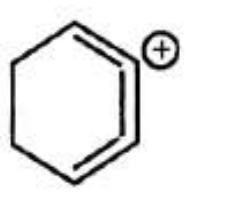
- (b)
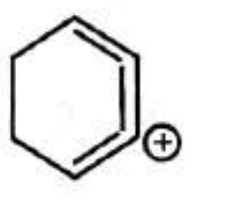
- (c)
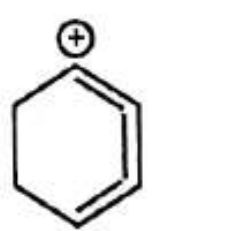
- (d)
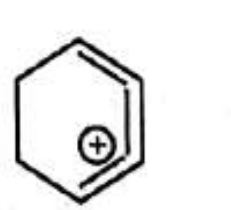
Show answer
Answer: —
- (a)
72. The anodic oxidation in the electrolysis of ice-cold H₂SO₄ (50%) between Pt electrodes at high current density, gives
- (a) H₂S₂O₇
- (b) H₂S₂O₆
- (c) H₂S₂O₈
- (d) H₂SO₅
Show answer
Answer: (c)
73. Which of the following is the IUPAC name of the compound
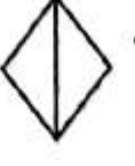 ?
- (a) Spiro [1. 1. 0] butane
- (b) Spiro [0. 1. 1] butane
- (c) Bicyclo [1. 0. 1] butane
- (d) Bicyclo [1. 1. 0] butane
Show answer
Answer: (d)
74. Which of the following has maximum dipole moment in gas phase ?
- (a) C₆H₅C(CH₃)₃
- (b) C₆H₅CH₃
- (c) C₆H₅CH(CH₃)₂
- (d) C₆H₅ CH₂CH₃
Show answer
Answer: (a)
75. Identify the powerful oxidizing agent used by Neil Bartlett to prepare the first true chemical compound of an inert gas element.
- (a) SbF₅
- (b) PtF₆
- (c) O₂F₂
- (d) K₂Cr₂O₇
Show answer
Answer: (b)
76. The correct order of C – H bond length is
- (a) Cₛₚ³ – H > Cₛₚ² – H < Cₛₚ – H
- (b) Cₛₚ – H > Cₛₚ² – H > Cₛₚ³ – H
- (c) Cₛₚ² – H > Cₛₚ³ – H > Cₛₚ – H
- (d) Cₛₚ – H < Cₛₚ² – H < Cₛₚ³ – H
Show answer
Answer: (d)
77. Which of the following facts about Nitric Oxide (NO) is incorrect ?
- (a) It is paramagnetic
- (b) It dimerises readily at room temperature
- (c) It is present in exhausts from cars
- (d) It loses an electron to form NO⁺ ion
Show answer
Answer: (b)
78. The number of degree of freedom of vibrational motion for CO₂ is which of the following ?
- (a) 3
- (b) 4
- (c) 6
- (d) 7
Show answer
Answer: (b)
79. The value of Kc for the reaction cis – C₂H₂Cl₂ ⇌ trans – C₂H₂Cl₂ is 0.608. What will be the value of Kc for the reaction ? trans – C₂H₂Cl₂ ⇌ cis – C₂H₂Cl₂
- (a) 0.608
- (b) 1.645
- (c) 1.00
- (d) 1.216
Show answer
Answer: (b)
80. The maximum number of electrons in an atom for which the sum of their principal and azimuthal quantum number equals to 3, can be
- (a) 8
- (b) 6
- (c) 4
- (d) 2
Show answer
Answer: (a)
81. Which is the correct decreasing order of stability for the following ?
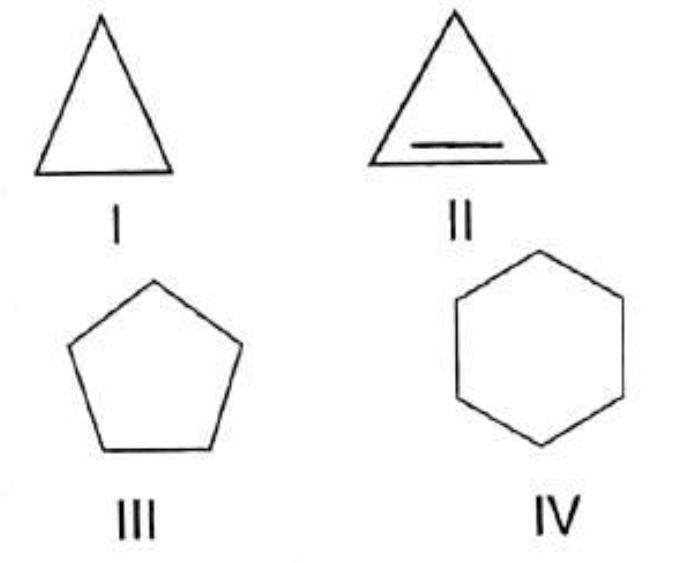
- (a) I > II > III > IV
- (b) II > I > III > IV
- (c) IV > III > I > II
- (d) III > IV > II > I
Show answer
Answer: (c)
82. Among the organometallic compounds given below, identify the one which differs from the rest three in bonding.
- (a) CH₃Li
- (b) (CH₃)₂Be
- (c) (CH₃)₃ Al
- (d) (CH₃)₄Sn
Show answer
Answer: (d)
83. How many stereochemical isomers of dimethylcyclohexane are possible ?
- (a) 5
- (b) 9
- (c) 11
- (d) 7
Show answer
Answer: (b)
84. In which of the following neutralization reactions, the value of heat of neutralization will be highest ?
- (a) NaOH + HCl
- (b) NaOH + CH₃COOH
- (c) NH₄OH + CH₃COOH
- (d) NH₄OH + HCl
Show answer
Answer: (a)
85. ²D represents the ground state spectroscopic term for the free ion
- (a) Cr³⁺
- (b) Mn²⁺
- (c) Ni²⁺
- (d) Cu²⁺
Show answer
Answer: (d)
86. Average life of a radioactive element is 216 days. What will be its half life period ?
- (a) 144 days
- (b) 150 days
- (c) 156 days
- (d) 162 days
Show answer
Answer: (b)
87. Which of the following has the strongest acid strength ?
- (a) HClO
- (b) HClO₂
- (c) HClO₃
- (d) HClO₄
Show answer
Answer: (d)
88. An alkene having the molecular formula C₉H₁₈ on ozonolysis gives 2, 2-dimethylpropanal and 2-butanone. This alkene is
- (a) 2, 2, 4-trimethyl-3-hexene
- (b) 2, 2, 3-trimethyl-4-hexene
- (c) 2, 3, 4-trimethyl-2-hexene
- (d) 2, 2, 4-trimethyl-2-hexene
Show answer
Answer: (a)
89. Which of the facts about oxy-acids of phosphorous given below is not true ?
- (a) At least one P = O linkage is present in all the oxy-acids
- (b) At least one P – H linkage is present in all the oxy-acids
- (c) At least one P – OH linkage is present in all the oxy-acids
- (d) P atom in all the oxy-acids is four coordinate
Show answer
Answer: (b)
90. Which of the following can be used to distinguish between acetophenone and benzophenone ?
- (a) Tollens’ reagent
- (b) Iodine + base
- (c) Fehling solution
- (d) Hydrazine
Show answer
Answer: (b)
91. What is the product P of the reaction ?
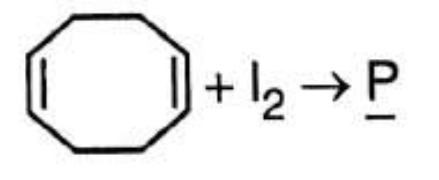
- (a)
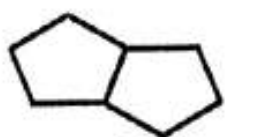
- (b)
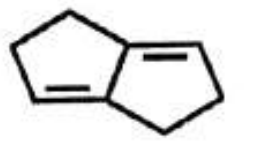
- (c)
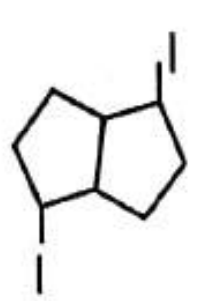
- (d) Both (A) and (B)
Show answer
Answer: (c)
- (a)
92. If Δ₀ represents the crystal field splitting parameter in an octahedral field, the crystal field stabilization energy for [Cr(H₂O)₆]³⁺ will be
- (a) 0.4 Δ₀
- (b) 0.6 Δ₀
- (c) 0.8 Δ₀
- (d) 1.2 Δ₀
Show answer
Answer: (d)
93. Using urotropine, which of the following compounds gives benzaldehyde ?
- (a) Toluene
- (b) Benzyl chloride
- (c) Benzal chloride
- (d) Chlorobenzene
Show answer
Answer: (b)
94. Which among the following inorganic polymeric materials find use in making cosmetic/medical implants ?
- (a) Sulphur nitride
- (b) Pyroxenes
- (c) Silicones
- (d) Phosphazenes
Show answer
Answer: (c)
95. For the half cell reaction O₂(g) + 2H₂O(l) + 4e⁻¹ → 4OH⁻(aq), what will be the value of −ΔG⁰/FE⁰ in the following ?
- (a) 1.0
- (b) 2.5
- (c) 3.2
- (d) 4.0
Show answer
Answer: (d)
96. When alumina is heated with carbon in nitrogen atmosphere the products are
- (a) Al + CO
- (b) Al + CO₂
- (c) AlN + CO
- (d) Al₂O₃ + CH₂N₂
Show answer
Answer: (c)
97. Which of the following compounds will give the iodoform test ?
- (a)
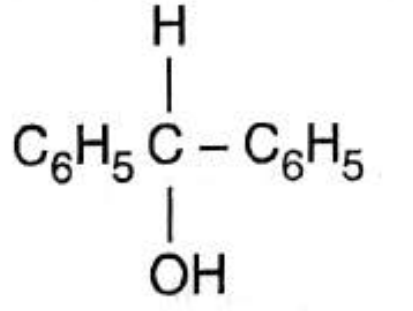
- (b)
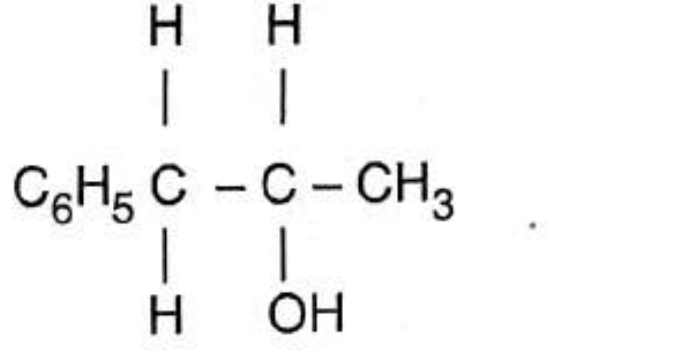
- (c) C₆H₅ CH₂ CH₂ CH₂OH
- (d)
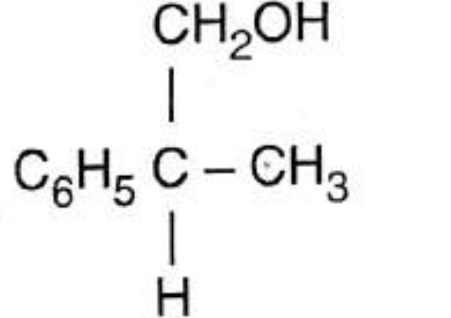
Show answer
Answer: (b)
- (a)
98. Colloidal particles of soap sal in water are
- (a) negatively charged
- (b) neutral
- (c) positively charged
- (d) amphoteric
Show answer
Answer: (a)
99. The value of the resonance energy of any resonance hybrid is
- (a) an absolute value
- (b) a relative value
- (c) unpredictable
- (d) always at lower side
Show answer
Answer: (b)
100. Which of the following names for the Zeise’s salt, K[Pt (C₂H₄)Cl₃] is correct as per the IUPAC system ?
- (a) Potassium ethylenetrichloroplatinum (O)
- (b) Potassium trichloroethyleneplatinum (II)
- (c) Potassium trichloroethyleneplatinate (II)
- (d) Potassium trichloroethyleneplatinate (IV)
Show answer
Answer: (c)
101. If for the homogeneous reaction : xA + yB → lY + mZ, the value of ΔH = – 30 kJ mol⁻¹ and ΔS = – 100 JK⁻¹mol⁻¹, then what will be the value of equilibrium temperature ?
- (a) 50°C
- (b) 100°C
- (c) 250°C
- (d) 27°C
Show answer
Answer: (d)
102. The reaction A(g) + B(s) ⇌ 2C(g) is carried out in a half litre vessel. The number of moles present at equilibrium are one mole of A, 2 moles of B and 3 moles of C. The value of Kc is
- (a) 4.5
- (b) 6.0
- (c) 9.0
- (d) 18.0
Show answer
Answer: (d)
103. Identify the product P in the following reaction. 3, 4, 5-tribromoaniline —((i) diazotization, (ii) H₃PO₂)→ P
- (a) 2, 4, 6 – tribromobenzene
- (b) 3, 4, 5 – tribromobenzene
- (c) 1, 2, 3 – tribromobenzene
- (d) 3 ,4, 5 – tribromonitrobenzene
Show answer
Answer: (c)
104. Which is the basic structural unit of orthosilicates ?
- (a) SiO²⁺
- (b) SiO₂
- (c) SiO₃²⁻
- (d) SiO₄⁴⁻
Show answer
Answer: (d)
105. Which of the following groups gives Wolff-Kishner reaction ?
- (a) nitro
- (b) C = C
- (c) cyano
- (d) carbonyl
Show answer
Answer: (d)
106. Which of the following relation holds true for the reaction ? CO(g) + ½ O₂(g) → CO₂(g)
- (a) ΔH = ΔE
- (b) ΔH = ΔE + RT
- (c) ΔH = ΔE + ½ RT
- (d) ΔH = ΔE – ½ RT
Show answer
Answer: (d)
107. Which of the following species can not exist ?
- (a) [SiCl₆]²⁻
- (b) [GeF₆]²⁻
- (c) [CCl₆]²⁻
- (d) [SnCl₆]²⁻
Show answer
Answer: (c)
108. Coramine is a
- (a) Pyridine derivative
- (b) Pyrrole derivative
- (c) Thiophene derivative
- (d) Piperidine derivative
Show answer
Answer: (a)
109. Which of the following gases will have the highest rate of diffusion ?
- (a) O₂
- (b) CO₂
- (c) NH₃
- (d) N₂
Show answer
Answer: (c)
110. Which of the following is formed by acetylene when it reacts with liquid bromine in absence of a solvent ?
- (a) acetylene tetrabromide
- (b) acetylene dibromide
- (c) acetylene monobromide
- (d) no reaction takes place
Show answer
Answer: (a)
111. Crystal field splitting strength is maximum for which of the following ligands ?
- (a) F⁻
- (b) OH⁻
- (c) NH₃
- (d) CN⁻
Show answer
Answer: (d)
112. In the following which molecule is IR inactive but Raman active ?
- (a) HCl
- (b) N₂
- (c) SO₂
- (d) Protein
Show answer
Answer: (b)
113. The aqueous solution of a salt of one of the given lanthanide ions is used as a volumetric standard in redox reactions. Identify the lanthanide ion.
- (a) Ce⁴⁺
- (b) Pr⁴⁺
- (c) Tb⁴⁺
- (d) Dy⁴⁺
Show answer
Answer: (a)
114. Compound A (C₅H₈O₂) is reduced to pentane. With NH₂OH A forms dioxime and also gives positive iodoform and tollen’s tests. Which of the following is the structure of A ?
- (a)
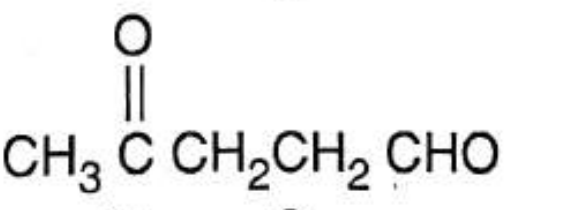
- (b)
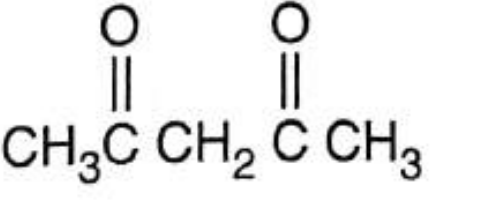
- (c) OHC CH₂CH₂ CH₂CHO
- (d)
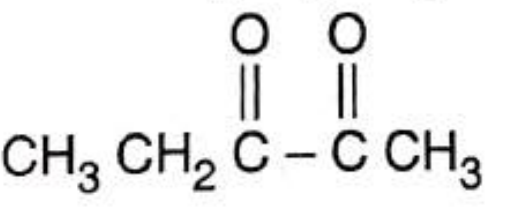
Show answer
Answer: (a)
- (a)
115. Which of the following is the conjugate acid of NH₃ ?
- (a) NH₂⁻
- (b) NH₂OH
- (c) NH₄⁺
- (d) N₂H₄
Show answer
Answer: (c)
116. Among the pairs of metallic oxides members of which pair dissolve both in HCl and NaOH ?
- (a) Li₂O, BeO
- (b) BeO, Al₂O₃
- (c) Li₂O, MgO
- (d) BaO, MgO
Show answer
Answer: (b)
117. Identify the product P of the following reaction.
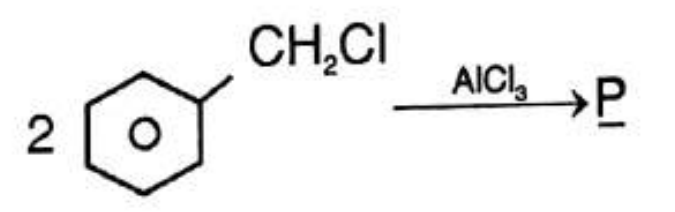
- (a) 1 – methylnaphthalene
- (b) Anthracene
- (c) Phenanthrene
- (d) 1,4 – Dimethylnaphthalene
Show answer
Answer: (b)
118. For the reaction NH₄HS(s) ⇌ NH₃(g) + H₂S(g) the equilibrium pressure is 6 atm. What will be the value of Kp for this reaction ?
- (a) 3 atm⁻²
- (b) 6 atm
- (c) 9 atm²
- (d) 24 atm²
Show answer
Answer: (c)
119. With which of the following Friedel-Crafts reaction does not go very well ?
- (a) pyrole
- (b) thiophene
- (c) pyridine
- (d) furan
Show answer
Answer: (c)
120. Which of the following pairs of solutions is isotonic pair at the same temperature ?
- (a) 0.1 M glucose and 0.1 M KCl
- (b) 0.1 M glucose and 0.1 M MgCl₂
- (c) 0.1 M KCl and 0.1 M K₂SO₄
- (d) 0.1 M K₂SO₄ and 0.1 M Cd (NO₃)₂
Show answer
Answer: (d)
121. Which of the following pairs is iso structural ?
- (a) XeF₄, [Ni(CN)₄]²⁻
- (b) XeF₄, [Ni(CO)₄]
- (c) XeO₃, ClF₃
- (d) BF₃, ClF₃
Show answer
Answer: (a)
122. In the context of yellow chromate ion and orange dichromate ion which of the following observation is correct ?
- (a)
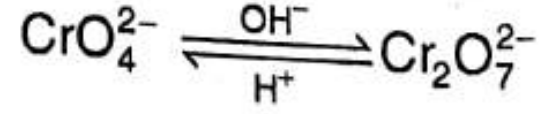
- (b)
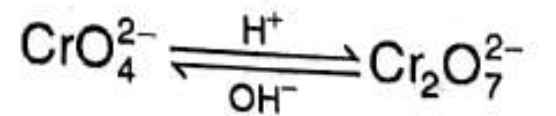
- (c)
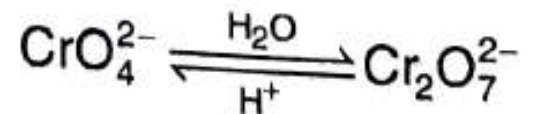
- (d)
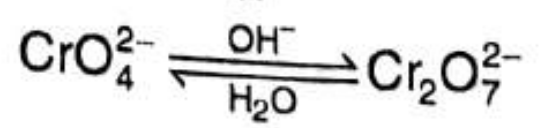
Show answer
Answer: (b)
- (a)
123. In the reaction
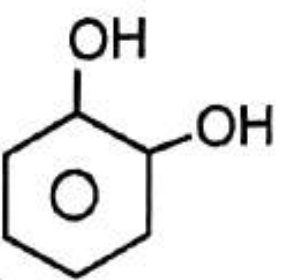
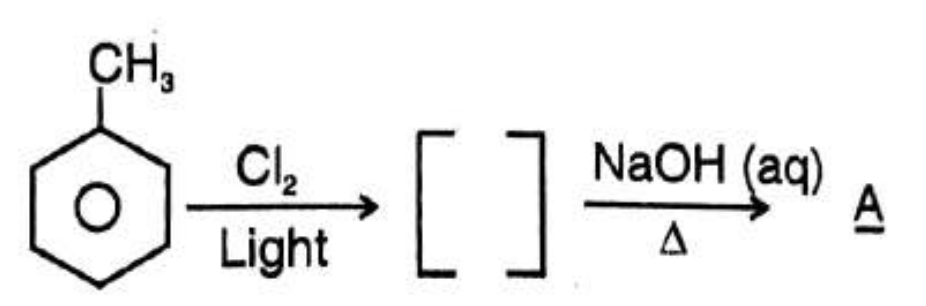 Which of the following is the product A ?
- (a)
- (b)
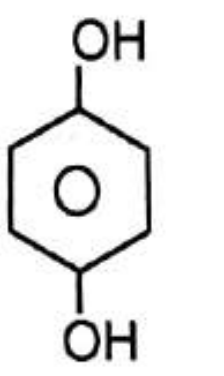
- (c)
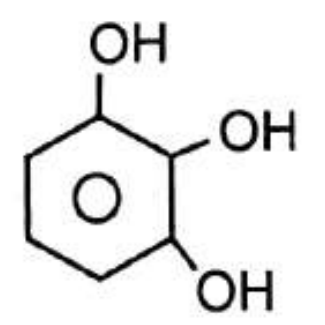
- (d)
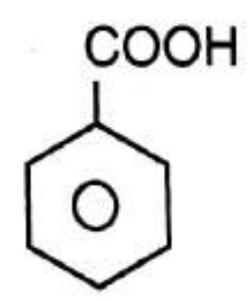
Show answer
Answer: (d)
- (a)
124. No Bragg-reflection of x-rays from a crystal will be observed if dₙₖₗ is smaller than
- (a) λ
- (b) λ/2
- (c) λ/3
- (d) λ/4
Show answer
Answer: (b)
125. Which one of the following is responsible for lesser pressure of a real gas in comparison to an ideal gas ?
- (a) Finite size of molecules
- (b) Enhancement of kinetic energy of molecules
- (c) Viscosity
- (d) Intermolecular forces
Show answer
Answer: (d)
Show answers
Answer key
Answer key from the U.P. Secondary Education Services Selection Board’s official answer key for this sitting. “—” means the key gave none: the question was deleted.
Chemistry
- Q 1
- (c)
- Q 2
- (c)
- Q 3
- (a)
- Q 4
- (b)
- Q 5
- (a)
- Q 6
- (c)
- Q 7
- (b)
- Q 8
- (a)
- Q 9
- —
- Q 10
- —
- Q 11
- (b)
- Q 12
- (a)
- Q 13
- (d)
- Q 14
- (d)
- Q 15
- (c)
- Q 16
- (c)
- Q 17
- (a)
- Q 18
- —
- Q 19
- (b)
- Q 20
- (b)
- Q 21
- (b)
- Q 22
- (a)
- Q 23
- (d)
- Q 24
- —
- Q 25
- (b)
- Q 26
- (a)
- Q 27
- (a)
- Q 28
- (c)
- Q 29
- (c)
- Q 30
- (b)
- Q 31
- (b)
- Q 32
- (a)
- Q 33
- (b)
- Q 34
- (b)
- Q 35
- (c)
- Q 36
- (d)
- Q 37
- (c)
- Q 38
- (a)
- Q 39
- (c)
- Q 40
- (c)
- Q 41
- (b)
- Q 42
- (d)
- Q 43
- (a)
- Q 44
- (c)
- Q 45
- (d)
- Q 46
- (a)
- Q 47
- (a)
- Q 48
- (c)
- Q 49
- (c)
- Q 50
- (b)
- Q 51
- (c)
- Q 52
- (c)
- Q 53
- (d)
- Q 54
- (a)
- Q 55
- (b)
- Q 56
- (b)
- Q 57
- (d)
- Q 58
- (c)
- Q 59
- (d)
- Q 60
- (c)
- Q 61
- (c)
- Q 62
- (b)
- Q 63
- (d)
- Q 64
- (c)
- Q 65
- (a)
- Q 66
- (b)
- Q 67
- (c)
- Q 68
- (d)
- Q 69
- (a)
- Q 70
- (b)
- Q 71
- —
- Q 72
- (c)
- Q 73
- (d)
- Q 74
- (a)
- Q 75
- (b)
- Q 76
- (d)
- Q 77
- (b)
- Q 78
- (b)
- Q 79
- (b)
- Q 80
- (a)
- Q 81
- (c)
- Q 82
- (d)
- Q 83
- (b)
- Q 84
- (a)
- Q 85
- (d)
- Q 86
- (b)
- Q 87
- (d)
- Q 88
- (a)
- Q 89
- (b)
- Q 90
- (b)
- Q 91
- (c)
- Q 92
- (d)
- Q 93
- (b)
- Q 94
- (c)
- Q 95
- (d)
- Q 96
- (c)
- Q 97
- (b)
- Q 98
- (a)
- Q 99
- (b)
- Q 100
- (c)
- Q 101
- (d)
- Q 102
- (d)
- Q 103
- (c)
- Q 104
- (d)
- Q 105
- (d)
- Q 106
- (d)
- Q 107
- (c)
- Q 108
- (a)
- Q 109
- (c)
- Q 110
- (a)
- Q 111
- (d)
- Q 112
- (b)
- Q 113
- (a)
- Q 114
- (a)
- Q 115
- (c)
- Q 116
- (b)
- Q 117
- (b)
- Q 118
- (c)
- Q 119
- (c)
- Q 120
- (d)
- Q 121
- (a)
- Q 122
- (b)
- Q 123
- (d)
- Q 124
- (b)
- Q 125
- (d)