ExamBharo · SSC MTS 2023 — 6 September 2023, Shift 2 · exambharo.com/ssc-mts/previous-year-papers/ssc-mts-2023-6-sep-shift-2/
Question paper · SSC MTS & Havaldar
SSC MTS 2023 — 6 September 2023, Shift 2
6 September 2023 · 12:30 PM–2:30 PM78 of the paper’s 90 questions1 per correct answer
Questions from the Staff Selection Commission’s paper of 6 September 2023, 12:30 PM–2:30 PM.
Preparing for SSC MTS & Havaldar? Get more, free
Daily previous-year questions as quizzes, and every SSC MTS & Havaldar notice the day it is out.
Numerical and Mathematical Ability
1.

- (a)

- (b)

- (c)

- (d)

Show answer
Answer: (d)
- (a)
4.

- (a)

- (b)

- (c)

- (d)

Show answer
Answer: (b)
- (a)
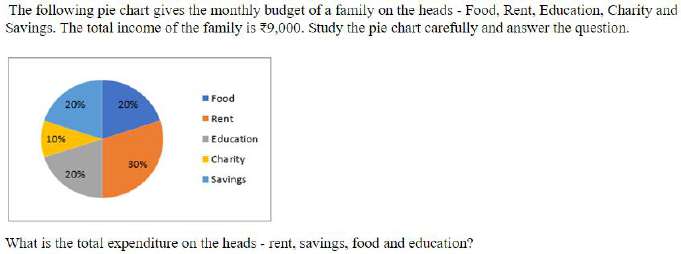
6.
- (a)

- (b)

- (c)

- (d)

Show answer
Answer: (b)
- (a)
7.

- (a)

- (b)

- (c)

- (d)

Show answer
Answer: (d)
- (a)
8.

- (a)

- (b)

- (c)

- (d)

Show answer
Answer: (d)
- (a)
9.

- (a)

- (b)

- (c)

- (d)

Show answer
Answer: (c)
- (a)
12.

- (a)

- (b)

- (c)

- (d)

Show answer
Answer: (c)
- (a)
14.

- (a)

- (b)

- (c)

- (d)

Show answer
Answer: (d)
- (a)
15. Simplify the following. 15÷5 of 3×4+8÷12 of 4×12-4÷5×20
- (a)

- (b)

- (c)

- (d)

Show answer
Answer: (b)
- (a)
16.

- (a)

- (b)

- (c)

- (d)

Show answer
Answer: (a)
- (a)
17.

- (a)

- (b)

- (c)

- (d)

Show answer
Answer: (b)
- (a)
18.

- (a)

- (b)

- (c)

- (d)

Show answer
Answer: (d)
- (a)
19.

- (a)

- (b)

- (c)

- (d)

Show answer
Answer: (a)
- (a)
20.

- (a)

- (b)

- (c)

- (d)

Show answer
Answer: (d)
- (a)
Reasoning Ability and Problem Solving
1.

- (a)

- (b)

- (c)

- (d)

Show answer
Answer: (c)
- (a)
2.

- (a)

- (b)

- (c)

- (d)

Show answer
Answer: (c)
- (a)
3.

- (a)

- (b)

- (c)

- (d)

Show answer
Answer: (a)
- (a)
4.

- (a)

- (b)

- (c)

- (d)

Show answer
Answer: (c)
- (a)
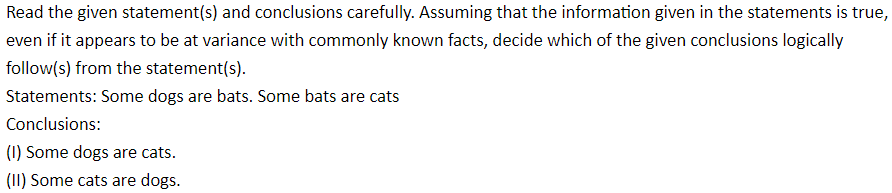
5.
- (a)

- (b)

- (c)

- (d)

Show answer
Answer: (c)
- (a)
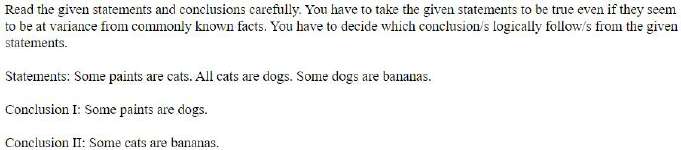
6.
- (a)

- (b)

- (c)

- (d)

Show answer
Answer: (c)
- (a)
7.

- (a)

- (b)

- (c)

- (d)

Show answer
Answer: (d)
- (a)
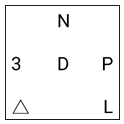
9.

- (a)
- (b)
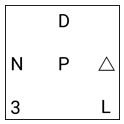
- (c)
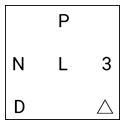
- (d)
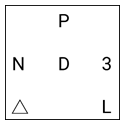
Show answer
Answer: (a)
- (a)
10.
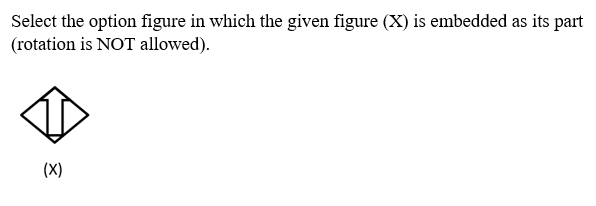
- (a)

- (b)

- (c)

- (d)

Show answer
Answer: (b)
- (a)
11.

- (a)

- (b)

- (c)

- (d)

Show answer
Answer: (a)
- (a)
12.

- (a)

- (b)

- (c)

- (d)

Show answer
Answer: (c)
- (a)
13.

- (a)

- (b)

- (c)

- (d)

Show answer
Answer: (b)
- (a)
14.
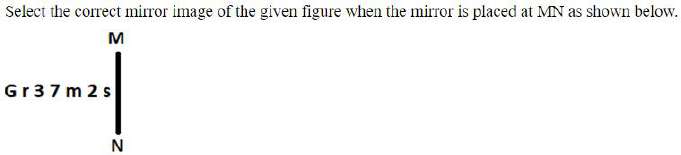
- (a)

- (b)

- (c)

- (d)

Show answer
Answer: (c)
- (a)
15. Seven people, C, F, D, K, O, L, and V are sitting in a straight line, facing south. V sits second to the right of F. Only three people sit to the right of O. K is an immediate neighbour of O and D. Only three people sit between L and V. F is not an immediate neighbour of L. Who sits to the extreme left of the line?
- (a) C
- (b) F
- (c) V
- (d) D
Show answer
Answer: (b)
16.

- (a)

- (b)

- (c)

- (d)

Show answer
Answer: (d)
- (a)
17.

- (a)

- (b)

- (c)

- (d)

Show answer
Answer: (b)
- (a)
18.

- (a)

- (b)

- (c)

- (d)

Show answer
Answer: (c)
- (a)
20.

- (a)

- (b)

- (c)

- (d)

Show answer
Answer: (b)
- (a)
General Awareness
1. Who inaugurated the 2023 World Squash Championships that was held in India?
- (a) KN Nehru
- (b) K Ponmudi
- (c) EV Velu
- (d) Udhayanidhi Stalin
Show answer
Answer: (d)
3. What is ‘Mahawat’ in India?
- (a) Cold waves during the winter season
- (b) Cloud burst during the monsoon season
- (c) Cyclonic rainfall during the winter season
- (d) Hot and dry winds during the summer season
Show answer
Answer: (c)
4.

- (a)
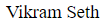
- (b)
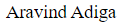
- (c)
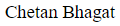
- (d)
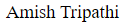
Show answer
Answer: (b)
- (a)
5. Which Article of the Constitution of India deals with the organization of village panchayat?
- (a) Article 38
- (b) Article 45
- (c) Article 40
- (d) Article 36
Show answer
Answer: (c)
6. Bharati Shivaji and Kanak Rele are exponents of ______.
- (a) Manipuri
- (b) Mohiniyattam
- (c) Kathak
- (d) Odissi
Show answer
Answer: (b)
7. Which is the most common ore of oxidised mercury that occurs in granular crusts or veins associated with volcanic activity and hot springs?
- (a) Diaspore
- (b) Siderite
- (c) Cinnabar
- (d) Corundum
Show answer
Answer: (c)
8. Women's World Boxing Championship 2023 was held in which city in India?
- (a) Goa
- (b) Punjab
- (c) New Delhi
- (d) Gujarat
Show answer
Answer: (c)
9. Who is regarded as the ‘Mother of Indian Revolution’?
- (a) Annie Besant
- (b) Usha Mehta
- (c) Madame Cama
- (d) Kasturba Gandhi
Show answer
Answer: (c)
10. Which microscopic, single-celled photosynthetic organisms are known as the primary producers of the ocean - the organisms that form the base of the aquatic food chains?
- (a) Phytoplankton
- (b) Zooplankton
- (c) Bacterioplankton
- (d) Virioplankton
Show answer
Answer: (a)
11. Which of the following novels is correctly paired with its author?
- (a) The Shadow Lines – RK Narayan
- (b) Malgudi Days – Vikram Seth
- (c) The Namesake – Jhumpa Lahiri
- (d) Train to Pakistan – Amitav Ghosh
Show answer
Answer: (c)
12. Which of the following is a communication mail channel in India?
- (a) Pink channel
- (b) Yellow channel
- (c) Red channel
- (d) Green channel
Show answer
Answer: (d)
13. Under the umbrella of Ujjwal Bharat Ujjwal Bhavishya–Power @ 2047, the PM inaugurated which of the following 100 MW Solar Projects in Telangana?
- (a) Jurala Solar Power Plant
- (b) ReNew Solar Power Plant
- (c) Ramagundam Floating Solar Project
- (d) Dharmaraopet Solar Power Plant
Show answer
Answer: (c)
14. What is the name of the geographic feature that serves as a boundary between Europe and Africa?
- (a) Bosporus Strait
- (b) Strait of Gibraltar
- (c) Dardanelles Strait
- (d) Malacca Strait
Show answer
Answer: (b)
16. What is the primary purpose of microfinance institutions (MFIs) in India?
- (a) To promote consumer spending among middle-class households
- (b) To offer financial services exclusively to large businesses
- (c) To provide small loans to low-income individuals
- (d) To facilitate foreign investment in the Indian economy
Show answer
Answer: (c)
18. Who among the following reformers initially set up a school for girls in Calcutta?
- (a) Narayana Guru
- (b) Mahatma Phule
- (c) Swami Dayanand Saraswati
- (d) Ishwar Chandra Vidyasagar
Show answer
Answer: (d)
19. Bharhut Stupa is located in which of the following states?
- (a) Punjab
- (b) Madhya Pradesh
- (c) Uttar Pradesh
- (d) Bihar
Show answer
Answer: (b)
20. The most famous of all Jain festivals, Mahamastakabhisheka is performed every 12 years at the Digambara sacred complex at _______________ in Karnataka.
- (a) Keelakuilkudi
- (b) Jinanathapura
- (c) Shravanabelagola
- (d) Puliyarmala
Show answer
Answer: (c)
21. Which religion has the maximum number of followers in Bhutan?
- (a) Hindu
- (b) Islam
- (c) Buddhism
- (d) Christian
Show answer
Answer: (c)
22. The Madhavpur fair is held at _________.
- (a) Bhatinda
- (b) Moradabad
- (c) Porbandar
- (d) Jaisalmer
Show answer
Answer: (c)
23. The former captain of the Indian women’s hockey team __________ was conferred with the BBC Lifetime Achievement Award for her contribution to Indian sports and inspiring generations of players.
- (a) Rani Rampal
- (b) Vandana Katariya
- (c) Savita Punia
- (d) Pritam Siwach
Show answer
Answer: (d)
24. Who among the following is a Bharatanatyam and Kathakali dancer?
- (a) Padma Subrahmanayam
- (b) Sonal Mansingh
- (c) Shovana Narayan
- (d) Mrinalini Sarabhai
Show answer
Answer: (d)
25. Which Article of the Constitution of India guarantees the right to move the Supreme Court for the enforcement of the fundamental rights?
- (a) Article 21
- (b) Article 32
- (c) Article 25
- (d) Article 29
Show answer
Answer: (b)
English Language and Comprehension
1. Parts of the following sentence have been given as options. Select the option that contains an error. Existentialism has a reputation for being angst-ridden and gloomy mostly because of its emphasis on pondering the meaningless of existence.
- (a) on pondering the meaningless of existence
- (b) mostly because of its emphasis
- (c) Existentialism has a reputation
- (d) for being angst-ridden and gloomy
Show answer
Answer: (a)
2. Select the most appropriate option that can substitute the underlined segment in the given sentence. To preparing the vine for plant, it should be cut back to 2 ft.
- (a) prepares in vine in plant
- (b) prepare a vine in planting
- (c) prepared the vine of plant
- (d) prepare the vine for planting
Show answer
Answer: (d)
3. Select the most appropriate ANTONYM of the word given in brackets to fill in the blank. The student provided her English teacher a short and _________(incoherent) account of her journey to Shimla with her parents.
- (a) humble
- (b) lucid
- (c) rough
- (d) genuine
Show answer
Answer: (b)
4. The following sentence has been split into four segments. Identify the segment that contains a grammatical error. I want to / give you / an information about / the missing necklace.
- (a) an information about
- (b) the missing necklace
- (c) give you
- (d) I want to
Show answer
Answer: (a)
5. Identify the most appropriate meaning of the given word. Ancient
- (a) Antique
- (b) Unworn
- (c) Contemporary
- (d) Recent
Show answer
Answer: (a)
6. Select the most appropriate option that can substitute the underlined segment in the given sentence. They are sell their company’s products to people.
- (a) are sell the company
- (b) are selling their company’s
- (c) was sell the company’s
- (d) is selling they company’s
Show answer
Answer: (b)
7. Select the most appropriate meaning of the underlined idiom. Mary is a ball of fire and is always engaged in something creative.
- (a) An active and energetic person
- (b) A dull and insipid person
- (c) To be good and beneficial for someone
- (d) A talkative person
Show answer
Answer: (a)
8. Select the most appropriate idiom to fill in the blank. By living in a rural area with access to the city, she gets _______________.
- (a) the best of both worlds
- (b) to keep an ear to the ground
- (c) on cloud nine
- (d) in for a penny in for a pound
Show answer
Answer: (a)
10. Select the most appropriate meaning of the given idiom. Get your act together
- (a) To have patience
- (b) To stay together
- (c) To act in a play
- (d) Get organised and do things better
Show answer
Answer: (d)
11. Select the option that can be used as a one-word substitute for the given group of words. Unpleasant
- (a) Nebulous
- (b) Natal
- (c) Negligible
- (d) Nasty
Show answer
Answer: (d)
12. The following sentence has been divided into four parts. Identify the part that contains an error. (A) The mother exclaimed / (B) when she saw her son / (C) stumble on the race track, / (D) “Look, he fells!”
- (a) B
- (b) D
- (c) C
- (d) A
Show answer
Answer: (b)
13. Select the most appropriate option that can rectify the underlined segment in the given sentence. If there is no need to rectify it, select ‘no rectification needed’. The conductor said that it was the worse quake he ever knew.
- (a) more bad
- (b) bad
- (c) no rectification needed
- (d) worst
Show answer
Answer: (d)
14. Select the most appropriate meaning of the underlined idiom in the following sentence. After having invested so much time and energy into the project, we are now back to square one.
- (a) Not ready for the consequence
- (b) In the same city
- (c) Fighting with each other
- (d) Having to start all over again
Show answer
Answer: (d)
15. Select the option that can be used as a one-word substitute for the given group of words. Killing of one’s own father
- (a) Matricide
- (b) Filicide
- (c) Patricide
- (d) Suicide
Show answer
Answer: (c)
16. The sentence given below has spelling errors. Select the sentence without spelling errors. Though we read and hear a lot on green initiattive, we hardly tweak our routines to suite the larger picture.
- (a) Though we read and hear a lot on green initiatives, we hardly tweak our routines to suit the larger picture.
- (b) Throug we read and hear a lot on green initiatives, we hardly tweak our routines to suite the larger picture.
- (c) Though we read and hear a lot on green initiatives, we hardly tweek our routines to suite the larger picture.
- (d) Though we read and hear a lot on green iniciatives, we hardly tweak our routines to suite the larger picture.
Show answer
Answer: (a)
17. Select the most appropriate synonym of the bracketed word in the following sentence to fill in the blank. The athlete’s injury was a ________(defeat) for the team’s chances of winning the championship.
- (a) progression
- (b) breakthrough
- (c) stress
- (d) setback
Show answer
Answer: (d)
18. Select the INCORRECTLY spelt word.
- (a) Parallel
- (b) Recommend
- (c) Irresistable
- (d) Tomorrow
Show answer
Answer: (c)
19. Select the correctly spelt word.
- (a) Millennium
- (b) Milennium
- (c) Millenum
- (d) Milenium
Show answer
Answer: (a)
20. Select the most appropriate option that can substitute the underlined segment in the following sentence. She proposed to write the life history of the famous poet.
- (a) novel
- (b) biography
- (c) mythology
- (d) autobiography
Show answer
Answer: (b)
PassageFor questions 21–25
In the following passage, some words have been deleted. Read the passage carefully and select the most appropriate option to fill in each blank.
Democracy is a form of government where the power lies ______(1) the people. It is based on the principles of equality, freedom and the rule of law. In a democratic society, ______(2) have the right to participate in the decision-making process, _________(3) directly or through elected representatives. Democracy also allows for the ________(4) of individual rights and liberties. While democracy is not without its challenges, such as the need to balance competing interests and the risk of ___________(5) movements, it remains one of the most widely embraced forms of government around the world.
21. Select the most appropriate option to fill in blank no. 1.
- (a) towards
- (b) on
- (c) by
- (d) with
Show answer
Answer: (d)
22. Select the most appropriate option to fill in blank no. 2.
- (a) lawyers
- (b) humans
- (c) politicians
- (d) citizens
Show answer
Answer: (d)
23. Select the most appropriate option to fill in blank no. 3.
- (a) either
- (b) however
- (c) neither
- (d) also
Show answer
Answer: (a)
24. Select the most appropriate option to fill in blank no. 4.
- (a) delimitation
- (b) protection
- (c) diversion
- (d) proscription
Show answer
Answer: (b)
25. Select the most appropriate option to fill in blank no. 5.
- (a) marginal
- (b) elitist
- (c) populist
- (d) negligible
Show answer
Answer: (c)
Show answers
Answer key
Answer key as marked in the Staff Selection Commission’s response sheet. “—” means the sheet did not show it clearly.
Numerical and Mathematical Ability
- Q 1
- (d)
- Q 4
- (b)
- Q 6
- (b)
- Q 7
- (d)
- Q 8
- (d)
- Q 9
- (c)
- Q 12
- (c)
- Q 14
- (d)
- Q 15
- (b)
- Q 16
- (a)
- Q 17
- (b)
- Q 18
- (d)
- Q 19
- (a)
- Q 20
- (d)
Reasoning Ability and Problem Solving
- Q 1
- (c)
- Q 2
- (c)
- Q 3
- (a)
- Q 4
- (c)
- Q 5
- (c)
- Q 6
- (c)
- Q 7
- (d)
- Q 9
- (a)
- Q 10
- (b)
- Q 11
- (a)
- Q 12
- (c)
- Q 13
- (b)
- Q 14
- (c)
- Q 15
- (b)
- Q 16
- (d)
- Q 17
- (b)
- Q 18
- (c)
- Q 20
- (b)
General Awareness
- Q 1
- (d)
- Q 3
- (c)
- Q 4
- (b)
- Q 5
- (c)
- Q 6
- (b)
- Q 7
- (c)
- Q 8
- (c)
- Q 9
- (c)
- Q 10
- (a)
- Q 11
- (c)
- Q 12
- (d)
- Q 13
- (c)
- Q 14
- (b)
- Q 16
- (c)
- Q 18
- (d)
- Q 19
- (b)
- Q 20
- (c)
- Q 21
- (c)
- Q 22
- (c)
- Q 23
- (d)
- Q 24
- (d)
- Q 25
- (b)
English Language and Comprehension
- Q 1
- (a)
- Q 2
- (d)
- Q 3
- (b)
- Q 4
- (a)
- Q 5
- (a)
- Q 6
- (b)
- Q 7
- (a)
- Q 8
- (a)
- Q 10
- (d)
- Q 11
- (d)
- Q 12
- (b)
- Q 13
- (d)
- Q 14
- (d)
- Q 15
- (c)
- Q 16
- (a)
- Q 17
- (d)
- Q 18
- (c)
- Q 19
- (a)
- Q 20
- (b)
- Q 21
- (d)
- Q 22
- (d)
- Q 23
- (a)
- Q 24
- (b)
- Q 25
- (c)