ExamBharo · SSC MTS 2023 — 5 September 2023, Shift 3 · exambharo.com/ssc-mts/previous-year-papers/ssc-mts-2023-5-sep-shift-3/
Question paper · SSC MTS & Havaldar
SSC MTS 2023 — 5 September 2023, Shift 3
5 September 2023 · 4:00 PM–6:00 PM81 of the paper’s 90 questions1 per correct answer
Questions from the Staff Selection Commission’s paper of 5 September 2023, 4:00 PM–6:00 PM.
Preparing for SSC MTS & Havaldar? Get more, free
Daily previous-year questions as quizzes, and every SSC MTS & Havaldar notice the day it is out.
Numerical and Mathematical Ability
1.

- (a)

- (b)

- (c)

- (d)

Show answer
Answer: (a)
- (a)
2.

- (a)

- (b)

- (c)

- (d)

Show answer
Answer: (c)
- (a)
3.

- (a)

- (b)

- (c)

- (d)

Show answer
Answer: (a)
- (a)
4.

- (a)

- (b)

- (c)

- (d)

Show answer
Answer: (c)
- (a)
5.

- (a)

- (b)

- (c)

- (d)

Show answer
Answer: (b)
- (a)
6.
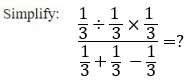
- (a)

- (b)

- (c)

- (d)

Show answer
Answer: (c)
- (a)
7.

- (a)

- (b)

- (c)

- (d)

Show answer
Answer: (a)
- (a)
9.

- (a)

- (b)

- (c)

- (d)

Show answer
Answer: (a)
- (a)
10.
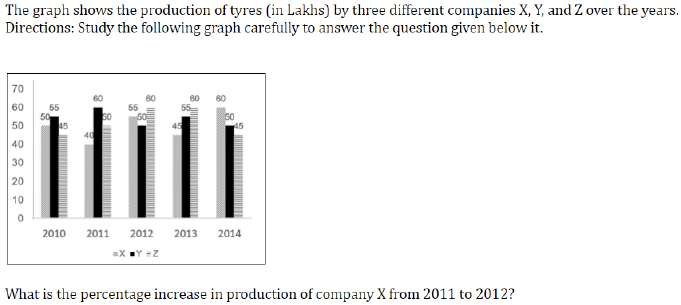
- (a)

- (b)

- (c)

- (d)

Show answer
Answer: (a)
- (a)
11. By selling 8 items, a shopkeeper gains the selling price of 2 items. The gain percentage of the shopkeeper is:
- (a)

- (b)

- (c)

- (d)

Show answer
Answer: (c)
- (a)
12.

- (a)

- (b)

- (c)

- (d)
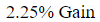
Show answer
Answer: (a)
- (a)
13.

- (a)

- (b)

- (c)

- (d)

Show answer
Answer: (a)
- (a)
14.

- (a)

- (b)
- (c)

- (d)

Show answer
Answer: (d)
- (a)
15.

- (a)

- (b)

- (c)

- (d)

Show answer
Answer: (c)
- (a)
17.

- (a)

- (b)

- (c)

- (d)

Show answer
Answer: (d)
- (a)
18.
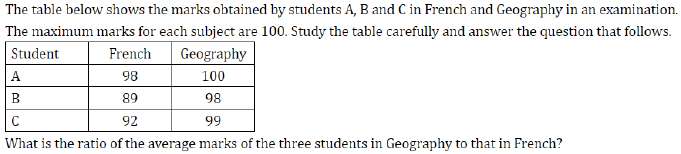
- (a)

- (b)

- (c)

- (d)

Show answer
Answer: (c)
- (a)
19.

- (a)

- (b)

- (c)

- (d)

Show answer
Answer: (b)
- (a)
20.

- (a)

- (b)

- (c)

- (d)

Show answer
Answer: (a)
- (a)
Reasoning Ability and Problem Solving
1.

- (a)

- (b)

- (c)

- (d)

Show answer
Answer: (a)
- (a)
2.

- (a)

- (b)

- (c)

- (d)

Show answer
Answer: (b)
- (a)
3.

- (a)

- (b)

- (c)

- (d)

Show answer
Answer: (a)
- (a)
4.

- (a)

- (b)

- (c)

- (d)

Show answer
Answer: (a)
- (a)
5.
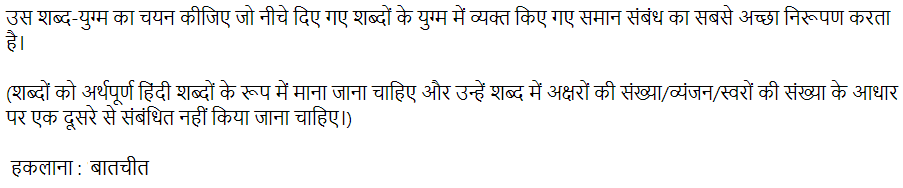
- (a)
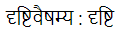
- (b)
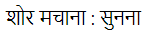
- (c)
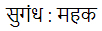
- (d)
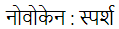
Show answer
Answer: (a)
- (a)
7.

- (a)
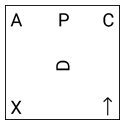
- (b)
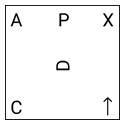
- (c)
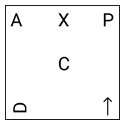
- (d)
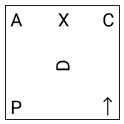
Show answer
Answer: (d)
- (a)
8.

- (a)
- (b)

- (c)

- (d)

Show answer
Answer: (a)
- (a)
9.

- (a)

- (b)

- (c)

- (d)

Show answer
Answer: (a)
- (a)
10.

- (a)

- (b)

- (c)

- (d)

Show answer
Answer: (a)
- (a)
11.
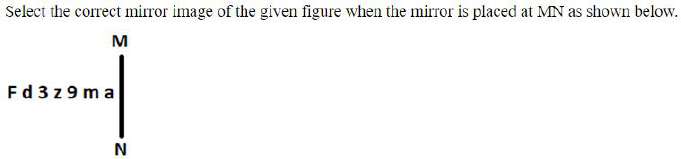
- (a)
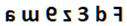
- (b)
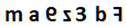
- (c)
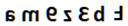
- (d)
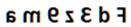
Show answer
Answer: (d)
- (a)
12.

- (a)

- (b)

- (c)

- (d)

Show answer
Answer: (b)
- (a)
13.

- (a)

- (b)

- (c)

- (d)

Show answer
Answer: (c)
- (a)
14.

- (a)

- (b)

- (c)

- (d)

Show answer
Answer: (d)
- (a)
15.

- (a)

- (b)

- (c)

- (d)

Show answer
Answer: (d)
- (a)
17.
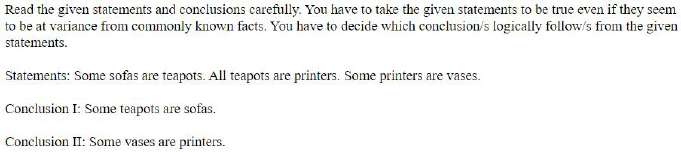
- (a)

- (b)

- (c)

- (d)

Show answer
Answer: (c)
- (a)
18.

- (a)

- (b)

- (c)

- (d)

Show answer
Answer: (a)
- (a)
19.

- (a)

- (b)

- (c)

- (d)

Show answer
Answer: (c)
- (a)
20.
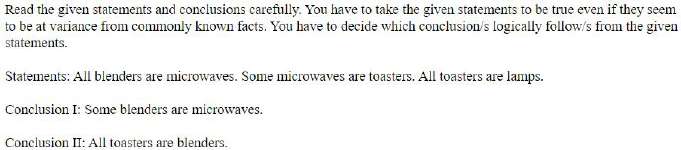
- (a)
- (b)
- (c)
- (d)
Show answer
Answer: (d)
- (a)
General Awareness
1. How many elements are listed in the modern periodic table?
- (a) 107
- (b) 81
- (c) 91
- (d) 118
Show answer
Answer: (d)
2. In which of the following States was the third edition of Khelo India University Games held?
- (a) Jharkhand
- (b) Uttar Pradesh
- (c) New Delhi
- (d) Punjab
Show answer
Answer: (b)
3. Which country did India beat in the final to win the 2023 Intercontinental Cup Football championship?
- (a) Thailand
- (b) Lebanon
- (c) Mongolia
- (d) Vanuatu
Show answer
Answer: (b)
4. In which state of India is shifting cultivation known as Bringa?
- (a) Andhra Pradesh
- (b) Manipur
- (c) Odisha
- (d) Madhya Pradesh
Show answer
Answer: (c)
5. What does the acronym ‘ATM’ stand for?
- (a) Automated Teller Machine
- (b) Automated Transaction Management
- (c) Account Tracking Module
- (d) All-Time Money
Show answer
Answer: (a)
6. Who had founded the first Women’s University in India?
- (a) Dhondo Keshav Karve
- (b) Ashutosh Mukherjee
- (c) William Hunter
- (d) Sayed Ahmed Khan
Show answer
Answer: (a)
7. Devendra Jhajharia won which medal/place in World Para Athletics Grand Prix?
- (a) Bronze
- (b) Gold
- (c) Silver
- (d) Fourth
Show answer
Answer: (c)
8. In the process of cell division, the formation of phragmoplast between the two daughter nuclei occurs during:
- (a) the G0 phase
- (b) the cytokinesis
- (c) the S phase
- (d) the karyokinesis
Show answer
Answer: (b)
9. In which type of forests are Mahogany, Rosewood and Cinchona trees found in India?
- (a) Tropical Evergreen forests
- (b) Tropical Deciduous forests
- (c) Mangrove forests
- (d) Montane forests
Show answer
Answer: (a)
10. Lebang Boomani dance is the harvest dance of ____________.
- (a) Mizoram
- (b) Tripura
- (c) Assam
- (d) Meghalaya
Show answer
Answer: (b)
12. Which of the following is NOT a directive principle of state policy?
- (a) Separation of the judiciary from executive
- (b) Reside in any part of India
- (c) Uniform civil code
- (d) Protection of monuments
Show answer
Answer: (b)
13. In which state is the Sanchi Stupa situated?
- (a) Bihar
- (b) Uttar Pradesh
- (c) Gujarat
- (d) Madhya Pradesh
Show answer
Answer: (d)
16.

- (a)
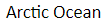
- (b)
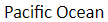
- (c)

- (d)
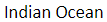
Show answer
Answer: (b)
- (a)
17. The official language of which neighbouring country of India is ‘Dhivehi'?
- (a) Maldives
- (b) Sri Lanka
- (c) Bhutan
- (d) China
Show answer
Answer: (a)
18. Under which scheme of Airport Authority of India did the Jammu and Kashmir Lieutenant Governor inaugurate UMEED Market Place at Srinagar international airport for supporting local art and artisans of Self Help Groups of J&K Rural Livelihood Mission?
- (a) AVSAR Scheme
- (b) AKASH Scheme
- (c) AAKAR Scheme
- (d) ASAR Scheme
Show answer
Answer: (a)
19. Who was the Iranian ruler who attacked the city of Delhi and took away an immense amount of wealth in 1739?
- (a) Ahmad Shah Qajar
- (b) Nadir Shah
- (c) Ahmad Shah Abdali
- (d) Abbas I
Show answer
Answer: (b)
20.

- (a)

- (b)

- (c)

- (d)

Show answer
Answer: (b)
- (a)
21. Mahari Dance and Gotipua Dance belongs to which of the following states?
- (a) Odisha
- (b) Haryana
- (c) Uttar Pradesh
- (d) Bihar
Show answer
Answer: (a)
22.

- (a)

- (b)

- (c)

- (d)

Show answer
Answer: (b)
- (a)
23. Which of the following musicians is popularly known as ‘Panchamda’?
- (a) Ravi
- (b) Khayam
- (c) Naushad
- (d) RD Burman
Show answer
Answer: (d)
24. The ‘Mukteshwar’ dance festival is held from 14th to 16th January at the Mukteshwar temple in the state of ___________.
- (a) Uttarakhand
- (b) Odisha
- (c) Madhya Pradesh
- (d) Himachal Pradesh
Show answer
Answer: (b)
English Language and Comprehension
1. Parts of the following sentence have been underlined and given as options. Select the option that contains an error. For an all-too-brief period between the late 1980s and the late 2000s, a world was characterised by convergence.
- (a) between the late
- (b) For an all-too-brief
- (c) characterised by
- (d) a world was
Show answer
Answer: (d)
2. The sentence given below has spelling errors. Select the sentence without spelling errors. Let us appriciate, support and contribute our might to the promotional efforts of the community in this direction.
- (a) Let us appriciate, support and contribute our might to the promotional efforts of the comunity in this direction.
- (b) Let us appreciate, suport and contribute our might to the promotional efforts of the community in this direction.
- (c) Let us appriciate, support and contribute our might to the promotion all efforts of the community in this direction.
- (d) Let us appreciate, support and contribute our might to the promotional efforts of the community in this direction.
Show answer
Answer: (d)
3. Select the most appropriate option to fill in the blank. The team had a _________ with respect to the proposal given by Mr. Albert.
- (a) descussion
- (b) discusion
- (c) disckassion
- (d) discussion
Show answer
Answer: (d)
4. Select the option that can be used as a one-word substitute for the given group of words. A thing which happens every two years
- (a) Century
- (b) Annual
- (c) Biennial
- (d) Bi-monthly
Show answer
Answer: (c)
5. Select the most appropriate option that can substitute the underlined words in the following sentence. Ramya’s shoes are polish by her granddaughter.
- (a) polishes
- (b) had polished
- (c) are polished
- (d) is polish
Show answer
Answer: (c)
6. Select the most appropriate idiom to fill in the blank. I don’t think you should go out in the rain, it's ________.
- (a) rain on cats and dogs
- (b) storming cats and dogs
- (c) raining cats and dogs
- (d) raining dogs and puppies
Show answer
Answer: (c)
7. Select the most appropriate meaning of the given idiom. To keep one’s temper
- (a) To meet with disaster
- (b) To become impatient
- (c) To become angry
- (d) To remain calm
Show answer
Answer: (d)
8. Select the correct spelling of the underlined word in the following sentence. Today’s lecture had a profond impact on my friend.
- (a) profoun
- (b) prufound
- (c) prefound
- (d) profound
Show answer
Answer: (d)
9. Select the most appropriate meaning of the given idiom. To get cold feet
- (a) To be afraid
- (b) To fall sick
- (c) To be indifferent
- (d) To run for life
Show answer
Answer: (a)
10. Select the most appropriate ANTONYM of the underlined word. His amazing performance made him famous.
- (a) Ordinary
- (b) Colliery
- (c) Adversary
- (d) Binary
Show answer
Answer: (a)
11. Select the most appropriate option that can substitute the underlined segment in the given sentence. The food was too salty eat this morning.
- (a) eating
- (b) ate
- (c) to ate
- (d) to eat
Show answer
Answer: (d)
12. Select the most appropriate synonym of the given word. Elegant
- (a) Mighty
- (b) Graceful
- (c) Ugly
- (d) Tall
Show answer
Answer: (b)
13. Parts of the following sentence have been underlined and given as options. Select the option that contains an error. I will going on an official tour next week.
- (a) on
- (b) will going
- (c) next week
- (d) an official tour
Show answer
Answer: (b)
14. Parts of the following sentence have been given as options. Select the option that contains an error. Shelley and Keats are great writers, but I prefer the last.
- (a) the last
- (b) are great writers
- (c) but I prefer
- (d) Shelley and Keats
Show answer
Answer: (a)
15. Select the most appropriate synonym of the given word. Design
- (a) Fabricate
- (b) Destroy
- (c) Inspect
- (d) Copy
Show answer
Answer: (a)
16. Select the option that can be used as a one-word substitute for the given phrase. A person who is known for his hatred towards the entire mankind.
- (a) Insolvent
- (b) Philogynist
- (c) Mercenary
- (d) Misanthrope
Show answer
Answer: (d)
17. Parts of the following sentence have been given as options. Select the option that contains an error. Jaya said that she will become topper in her class.
- (a) in her class
- (b) she will become topper
- (c) that
- (d) Jaya said
Show answer
Answer: (b)
18. The following sentence has been split into four segments. Identify the segment that contains a grammatical error. Some / private banks / pay their employees / good.
- (a) private banks
- (b) Some
- (c) pay their employees
- (d) good
Show answer
Answer: (d)
20. Select the option that can be used as a one-word substitute for the given phrase. A poem of lamentation on the death of someone loved and admired.
- (a) Soliloquy
- (b) Elegy
- (c) Tragedy
- (d) Epitaph
Show answer
Answer: (b)
PassageFor questions 21–25
In the following passage, some words have been deleted. Read the passage carefully and select the most appropriate option to fill in each blank. Language is (1)_______ of the most fundamental aspects of human communication and interaction. It allows people from different cultures to connect and (2) _______ ideas. While many individuals grow up learning just one language, there are a variety of reasons why learning a second language can be beneficial. (3) _________, it can improve cognitive abilities, enhance job prospects and facilitate travel and cultural immersion. (4)________ proficiency in a second language is an invaluable asset for personal growth as well as professional development. Audio-video mediums such as (5)_______ are among the best ways to learn a second language as they allow learners to engage with cultural content.
21. Select the most appropriate option to fill in blank number 1.
- (a) three
- (b) four
- (c) two
- (d) one
Show answer
Answer: (d)
22. Select the most appropriate option to fill in blank number 2.
- (a) sharing
- (b) share
- (c) shares
- (d) shared
Show answer
Answer: (b)
23. Select the most appropriate option to fill in blank number 3.
- (a) Therefore
- (b) As it is
- (c) However
- (d) For example
Show answer
Answer: (d)
24. Select the most appropriate option to fill in blank number 4.
- (a) Acquiring
- (b) Acquires
- (c) Acquire
- (d) Acquired
Show answer
Answer: (a)
25. Select the most appropriate option to fill in blank number 5.
- (a) podcasts
- (b) images
- (c) books
- (d) films
Show answer
Answer: (d)
Show answers
Answer key
Answer key as marked in the Staff Selection Commission’s response sheet. “—” means the sheet did not show it clearly.
Numerical and Mathematical Ability
- Q 1
- (a)
- Q 2
- (c)
- Q 3
- (a)
- Q 4
- (c)
- Q 5
- (b)
- Q 6
- (c)
- Q 7
- (a)
- Q 9
- (a)
- Q 10
- (a)
- Q 11
- (c)
- Q 12
- (a)
- Q 13
- (a)
- Q 14
- (d)
- Q 15
- (c)
- Q 17
- (d)
- Q 18
- (c)
- Q 19
- (b)
- Q 20
- (a)
Reasoning Ability and Problem Solving
- Q 1
- (a)
- Q 2
- (b)
- Q 3
- (a)
- Q 4
- (a)
- Q 5
- (a)
- Q 7
- (d)
- Q 8
- (a)
- Q 9
- (a)
- Q 10
- (a)
- Q 11
- (d)
- Q 12
- (b)
- Q 13
- (c)
- Q 14
- (d)
- Q 15
- (d)
- Q 17
- (c)
- Q 18
- (a)
- Q 19
- (c)
- Q 20
- (d)
General Awareness
- Q 1
- (d)
- Q 2
- (b)
- Q 3
- (b)
- Q 4
- (c)
- Q 5
- (a)
- Q 6
- (a)
- Q 7
- (c)
- Q 8
- (b)
- Q 9
- (a)
- Q 10
- (b)
- Q 12
- (b)
- Q 13
- (d)
- Q 16
- (b)
- Q 17
- (a)
- Q 18
- (a)
- Q 19
- (b)
- Q 20
- (b)
- Q 21
- (a)
- Q 22
- (b)
- Q 23
- (d)
- Q 24
- (b)
English Language and Comprehension
- Q 1
- (d)
- Q 2
- (d)
- Q 3
- (d)
- Q 4
- (c)
- Q 5
- (c)
- Q 6
- (c)
- Q 7
- (d)
- Q 8
- (d)
- Q 9
- (a)
- Q 10
- (a)
- Q 11
- (d)
- Q 12
- (b)
- Q 13
- (b)
- Q 14
- (a)
- Q 15
- (a)
- Q 16
- (d)
- Q 17
- (b)
- Q 18
- (d)
- Q 20
- (b)
- Q 21
- (d)
- Q 22
- (b)
- Q 23
- (d)
- Q 24
- (a)
- Q 25
- (d)