ExamBharo · SSC MTS 2023 — 4 September 2023, Shift 2 · exambharo.com/ssc-mts/previous-year-papers/ssc-mts-2023-4-sep-shift-2/
Question paper · SSC MTS & Havaldar
SSC MTS 2023 — 4 September 2023, Shift 2
4 September 2023 · 12:30 PM–2:30 PM77 of the paper’s 90 questions1 per correct answer
Questions from the Staff Selection Commission’s paper of 4 September 2023, 12:30 PM–2:30 PM.
Preparing for SSC MTS & Havaldar? Get more, free
Daily previous-year questions as quizzes, and every SSC MTS & Havaldar notice the day it is out.
Numerical and Mathematical Ability
1. A sum invested at the rate of 6% simple interest per annum grows to ₹1,13,880 in 5 years. What is the simple interest, If the same amount is invested for 8 years at the rate of 9% per annum?
- (a) ₹63,072
- (b) ₹60,565
- (c) ₹65,392
- (d) ₹58,050
Show answer
Answer: (a)
2.

- (a)

- (b)

- (c)

- (d)

Show answer
Answer: (d)
- (a)
3. Study the given table and answer the question that follows. The table shows the number of voters in four different villages P, Q, R, S.
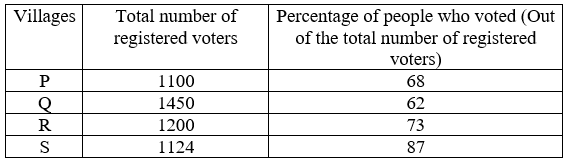 The number of people who did not vote in village P is what percentage more than that who did not vote in village R?
- (a)

- (b)

- (c)

- (d)

Show answer
Answer: (b)
- (a)
4.

- (a)

- (b)

- (c)

- (d)

Show answer
Answer: (d)
- (a)
5.

- (a)

- (b)

- (c)

- (d)

Show answer
Answer: (d)
- (a)
8.

- (a) 2 : 13
- (b) 13 : 3
- (c) 13 : 2
- (d) 1 : 13
Show answer
Answer: (d)
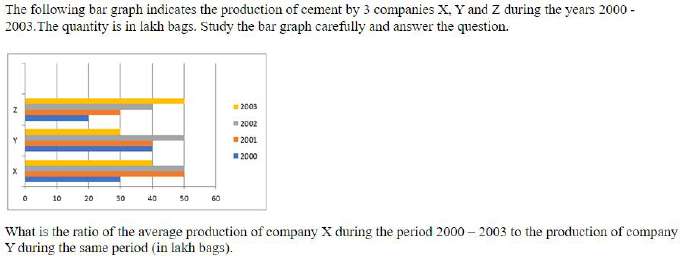
9.
- (a)

- (b)

- (c)

- (d)

Show answer
Answer: (a)
- (a)
10.

- (a)

- (b)

- (c)

- (d)

Show answer
Answer: (b)
- (a)
11.

- (a)

- (b)

- (c)

- (d)

Show answer
Answer: (b)
- (a)
15.

- (a)

- (b)

- (c)

- (d)

Show answer
Answer: (c)
- (a)
16.

- (a)
- (b)

- (c)

- (d)

Show answer
Answer: (c)
- (a)
17.

- (a)

- (b)

- (c)

- (d)

Show answer
Answer: (c)
- (a)
19.

- (a)

- (b)

- (c)

- (d)

Show answer
Answer: (d)
- (a)
20.

- (a)

- (b)

- (c)

- (d)

Show answer
Answer: (d)
- (a)
Reasoning Ability and Problem Solving
1.

- (a)

- (b)

- (c)

- (d)

Show answer
Answer: (b)
- (a)
2.

- (a)

- (b)

- (c)

- (d)

Show answer
Answer: (c)
- (a)
3.

- (a)

- (b)

- (c)

- (d)

Show answer
Answer: (c)
- (a)
4.

- (a)

- (b)

- (c)

- (d)

Show answer
Answer: (a)
- (a)
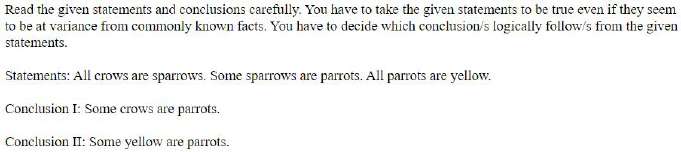
5.
- (a)

- (b)

- (c)

- (d)

Show answer
Answer: (a)
- (a)
6.

- (a)

- (b)

- (c)

- (d)

Show answer
Answer: (d)
- (a)
8.

- (a)

- (b)

- (c)

- (d)

Show answer
Answer: (c)
- (a)
9.

- (a)

- (b)

- (c)

- (d)

Show answer
Answer: (a)
- (a)
10.

- (a)

- (b)

- (c)

- (d)

Show answer
Answer: (b)
- (a)
11.

- (a)

- (b)
- (c)

- (d)

Show answer
Answer: (c)
- (a)
12.

- (a)

- (b)

- (c)

- (d)

Show answer
Answer: (d)
- (a)
14.

- (a)

- (b)

- (c)

- (d)

Show answer
Answer: (b)
- (a)
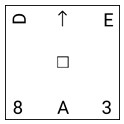
15.

- (a)
- (b)
- (c)
- (d)
Show answer
Answer: (b)
- (a)
17.
- (a)

- (b)

- (c)

- (d)

Show answer
Answer: (a)
- (a)
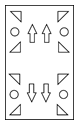
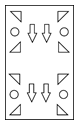
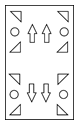
18.

- (a)
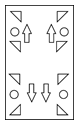
- (b)
- (c)
- (d)
Show answer
Answer: (b)
- (a)
19.

- (a)

- (b)

- (c)

- (d)

Show answer
Answer: (b)
- (a)
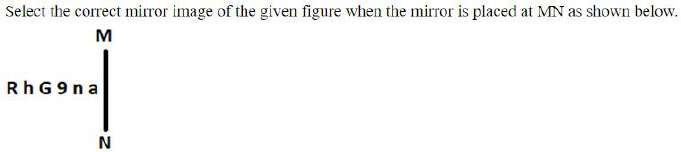
20.
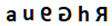
- (a)
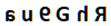
- (b)
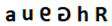
- (c)
- (d)
Show answer
Answer: (d)
- (a)
General Awareness
1. The Gua and Noamundi mines are located in with state of India?
- (a) Assam
- (b) Haryana
- (c) Rajasthan
- (d) Jharkhand
Show answer
Answer: (d)
2. What is a fiscal year?
- (a) A year that represents the financial reporting period for the government
- (b) A year with a surplus in government revenue
- (c) A year with a deficit in government revenue
- (d) A year in which tax rates are increased
Show answer
Answer: (a)
3. The Constitution (Scheduled Castes and Scheduled Tribes) Order (Second Amendment) Bill, 2022, was passed in December 2022 and is related to which state?
- (a) Bihar
- (b) Uttarakhand
- (c) Uttar Pradesh
- (d) Karnataka
Show answer
Answer: (c)
5. Buddha Purnima is marked on a full moon day in the Hindu month of ____________.
- (a) Vaisakh
- (b) Jyaistha
- (c) Bhadra
- (d) Ashadha
Show answer
Answer: (a)
6. Which of the following is the official language of Afghanistan?
- (a) Sinhala
- (b) Burmese
- (c) Dari
- (d) Dzongkha
Show answer
Answer: (c)
7. Who started the temple entry movement in 1927?
- (a) Mahadev Govind Ranade
- (b) Bhimrao Ambedkar
- (c) Mahatma Gandhi
- (d) Annie Besant
Show answer
Answer: (b)
8. In which state is Gobind Sagar (Bhakra Nangal Project) located?
- (a) Himachal Pradesh
- (b) Gujarat
- (c) Rajasthan
- (d) Punjab
Show answer
Answer: (a)
9. Pandit Ravi Shankar is known worldwide for playing which of the following musical instruments?
- (a) Mohan Veena
- (b) Sarod
- (c) Been
- (d) Sitar
Show answer
Answer: (d)
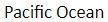
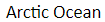
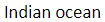
10.

- (a)
- (b)

- (c)
- (d)
Show answer
Answer: (d)
- (a)
11. Which of the following is a dimension of microfinance institutions (MFIs) in India?
- (a) Outreach to rural areas
- (b) Loan interest rates
- (c) Investment in the stock market
- (d) Availability of credit cards
Show answer
Answer: (a)
12. Shambhu Maharaj was a renowned guru of which of the following Gharanas of Kathak?
- (a) Lucknow
- (b) Jaipur
- (c) Raigarh
- (d) Banaras
Show answer
Answer: (a)
13. Which is the oldest Stupa of the Buddhist Period?
- (a) Dhamek Stupa
- (b) Mahabodhi Stupa
- (c) Kesariya Stupa
- (d) Sanchi Stupa
Show answer
Answer: (d)
14. Who conducts elections for both the houses of Parliament in India?
- (a) Ministry of Parliamentary Affairs
- (b) Election Commission
- (c) President
- (d) Prime Minister
Show answer
Answer: (b)
15. The third battle of Panipat was fought in which of the following years?
- (a) 1761
- (b) 1707
- (c) 1786
- (d) 1751
Show answer
Answer: (a)
17. Which dance form is associated with Natwari Dance?
- (a) Kathak
- (b) Kuchipudi
- (c) Odissi
- (d) Kathakali
Show answer
Answer: (a)
18. Birsa Munda hockey stadium is one of the India’s largest hockey stadium. In which state is this stadium situated?
- (a) Madhya Pradesh
- (b) Bihar
- (c) Odisha
- (d) Chhattisgarh
Show answer
Answer: (c)
19. The directive principles are largely classified into three broad categories. Which of the following is NOT the part of this classification?
- (a) Liberal
- (b) Socialistic
- (c) Gandhian
- (d) Authoritative
Show answer
Answer: (d)
20. Which of the following countries did India defeat to clinch its maiden Women's Junior Hockey Asia Cup title?
- (a) Japan
- (b) Chinese Taipei
- (c) Malaysia
- (d) South Korea
Show answer
Answer: (d)
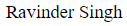
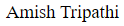
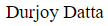
21.

- (a)
- (b)

- (c)
- (d)
Show answer
Answer: (b)
- (a)
22. Which soft metal in group 1 of the periodic table tarnishes within a few seconds of exposure to air?
- (a) Barium
- (b) Sodium
- (c) Strontium
- (d) Francium
Show answer
Answer: (b)
23. The ‘Ka Shad Mastieh’ or victory dance of the____________ tribe of Meghalaya is an ancient war dance performed during the prominent festival of the tribe.
- (a) Bhoi
- (b) War
- (c) Khasi
- (d) Jaintia
Show answer
Answer: (c)
24. What is the weight of the ball in handball for men?
- (a) 425 to 475 gm
- (b) 325 to 375 gm
- (c) 525 to 575 gm
- (d) 225 to 275 gm
Show answer
Answer: (a)
25. Which vitamin is needed for a healthy immune system, low-light vision, and healthy skin?
- (a) Vitamin K
- (b) Vitamin B2
- (c) Vitamin B9
- (d) Vitamin A
Show answer
Answer: (d)
English Language and Comprehension
1. Select the option that can be used as a one-word substitute for the given group of words. Study of sound and sound waves
- (a) Botany
- (b) Physics
- (c) Demography
- (d) Acoustics
Show answer
Answer: (d)
2. Select the most appropriate option to fill in the blank. The students of class 7 gave their teacher a gift, which was ________ to her.
- (a) revealing
- (b) shocking
- (c) confusing
- (d) surprising
Show answer
Answer: (d)
3. Select the most appropriate synonym of the given word. Obsession
- (a) Discrimination
- (b) Fascination
- (c) Unconcern
- (d) Sympathy
Show answer
Answer: (b)
5. Select the most appropriate option that can substitute the underlined segment in the given sentence. They would find someone drive the wagon back across the desert.
- (a) in drive in the
- (b) to drive
- (c) to drive the
- (d) in driving
Show answer
Answer: (c)
6. The following sentence has been split into four segments. Identify the segment that contains a grammatical error. The ball / I kicked / went highly / in the sky.
- (a) The ball
- (b) went highly
- (c) in the sky
- (d) I kicked
Show answer
Answer: (b)
7. Select the most appropriate idiom to fill in the blank. Rajat is known for his notorious nature. He will be friendly to your face but likes ____________.
- (a) to blow his trumpet
- (b) to stab you in the back
- (c) to paint the whole town red
- (d) to get all bent out of the shape
Show answer
Answer: (b)
8. Select the most appropriate meaning of the given idiom. Barking up the wrong tree
- (a) Provoke trouble
- (b) To make a bad situation worse
- (c) Getting a good start is important
- (d) To be mistaken, to be looking for solutions in the wrong place
Show answer
Answer: (d)
9. Select the option that can be used as a one-word substitute for the given group of words. A creature which depends on others
- (a) Microbes
- (b) Virus
- (c) Parasite
- (d) Bacteria
Show answer
Answer: (c)
10. Select the most appropriate idiom to fill in the blank. The play I saw last night was a ________.
- (a) hit the road
- (b) hit the hay
- (c) smash hit
- (d) hit the roof
Show answer
Answer: (c)
11. Select the most appropriate option to fill in the blank. He is _________ of many chain snatching cases in Dariyaganj.
- (a) ackused
- (b) acxused
- (c) akused
- (d) accused
Show answer
Answer: (d)
13. Select the option that correctly rectifies the spelling error that is underlined. The questionaire used by the researcher was of top quality.
- (a) quesstionnaire
- (b) questionnaire
- (c) questionnairre
- (d) questionnairee
Show answer
Answer: (b)
14. The given sentence contains an error. Select the option that correctly rectifies the error. That career competition was the difficultest exam he had ever given.
- (a) That career competition was the difficultest exam than any he had ever given.
- (b) That career competition was the most difficult exam than any he had ever given.
- (c) That career competition was the most difficultest exam he had ever given.
- (d) That career competition was the most difficult exam he had ever given.
Show answer
Answer: (d)
15. Select the most appropriate idiom for the following sentence. Shweta organises the sale of handmade pottery at a cheap rate.
- (a) Hush money
- (b) Go for a song
- (c) Having one’s cake and eating it too
- (d) Making a fuss out of something
Show answer
Answer: (b)
16. Select the most appropriate ANTONYM of the given word. Guilty
- (a) Responsible
- (b) Innocent
- (c) Criminal
- (d) Patient
Show answer
Answer: (b)
17. Identify the INCORRECTLY spelt word in the following sentence and select its correct spelling from the given options. The colours of the rainbow seemed to shine through the trianguler prism as the sun hit the object.
- (a) rainbouw
- (b) son
- (c) triangular
- (d) objact
Show answer
Answer: (c)
18. Select the most appropriate option that can substitute the underlined segment in the given sentence. The intrepid group of adventurers climbed the mountain despite of bad weather and road closures.
- (a) despite
- (b) in spite
- (c) in view of
- (d) due to
Show answer
Answer: (a)
19. Select the most appropriate option that can substitute the underlined segment in the given sentence. The airplane flowed over the mountains, offering the passengers a breath-taking view of the majestic peaks below.
- (a) flew beyond
- (b) flew over
- (c) flowed above
- (d) flowed beyond
Show answer
Answer: (b)
20. Select the most appropriate ANTONYM of the given word. Ecstasy
- (a) Euphoria
- (b) Coarse
- (c) Natural
- (d) Despair
Show answer
Answer: (d)
PassageFor questions 21–25
In the following passage, some words have been deleted. Read the passage carefully and select the most appropriate option to fill in each blank. As a boy, I was always exploring lonely places—neglected gardens and orchards, unoccupied houses, patches of scrub or wasteland, the fields outside the town, the fringes of the forest. On one of my rambles (1)________the bungalow, I pushed my way through a thicket of lantana bushes and stumbled over a thick stone slab, twisting my ankle slightly as I fell. For some time, I sat on the grass massaging my foot. When the pain eased, I looked more (2)________ at the stone slab and was surprised to find that it was a gravestone. It was almost entirely covered by ivy; obviously no one had been near it for years. I tugged at the ivy and some of it came away in my hands. There was some (3)________ lettering on the grave, half-obscured by grass and moss. I could make out a name—Rose—but little more. I sat there for some time, (4)________ over my discovery. I was wondering why ‘Rose’ should have been buried at so lonely a spot when there was a (5)________ not far away.
21. Select the most appropriate option to fill in blank number 1.
- (a) before
- (b) behind
- (c) by dint of
- (d) below
Show answer
Answer: (b)
22. Select the most appropriate option to fill in blank number 2.
- (a) closely
- (b) emptily
- (c) frankly
- (d) lawfully
Show answer
Answer: (a)
23. Select the most appropriate option to fill in blank number 3.
- (a) idiotic
- (b) sturdy
- (c) blurred
- (d) nomadic
Show answer
Answer: (c)
24. Select the most appropriate option to fill in blank number 4.
- (a) sleeping
- (b) pondering
- (c) being
- (d) pulling
Show answer
Answer: (b)
25. Select the most appropriate option to fill in blank number 5.
- (a) dormitory
- (b) kennel
- (c) sanctuary
- (d) cemetery
Show answer
Answer: (d)
Show answers
Answer key
Answer key as marked in the Staff Selection Commission’s response sheet. “—” means the sheet did not show it clearly.
Numerical and Mathematical Ability
- Q 1
- (a)
- Q 2
- (d)
- Q 3
- (b)
- Q 4
- (d)
- Q 5
- (d)
- Q 8
- (d)
- Q 9
- (a)
- Q 10
- (b)
- Q 11
- (b)
- Q 15
- (c)
- Q 16
- (c)
- Q 17
- (c)
- Q 19
- (d)
- Q 20
- (d)
Reasoning Ability and Problem Solving
- Q 1
- (b)
- Q 2
- (c)
- Q 3
- (c)
- Q 4
- (a)
- Q 5
- (a)
- Q 6
- (d)
- Q 8
- (c)
- Q 9
- (a)
- Q 10
- (b)
- Q 11
- (c)
- Q 12
- (d)
- Q 14
- (b)
- Q 15
- (b)
- Q 17
- (a)
- Q 18
- (b)
- Q 19
- (b)
- Q 20
- (d)
General Awareness
- Q 1
- (d)
- Q 2
- (a)
- Q 3
- (c)
- Q 5
- (a)
- Q 6
- (c)
- Q 7
- (b)
- Q 8
- (a)
- Q 9
- (d)
- Q 10
- (d)
- Q 11
- (a)
- Q 12
- (a)
- Q 13
- (d)
- Q 14
- (b)
- Q 15
- (a)
- Q 17
- (a)
- Q 18
- (c)
- Q 19
- (d)
- Q 20
- (d)
- Q 21
- (b)
- Q 22
- (b)
- Q 23
- (c)
- Q 24
- (a)
- Q 25
- (d)
English Language and Comprehension
- Q 1
- (d)
- Q 2
- (d)
- Q 3
- (b)
- Q 5
- (c)
- Q 6
- (b)
- Q 7
- (b)
- Q 8
- (d)
- Q 9
- (c)
- Q 10
- (c)
- Q 11
- (d)
- Q 13
- (b)
- Q 14
- (d)
- Q 15
- (b)
- Q 16
- (b)
- Q 17
- (c)
- Q 18
- (a)
- Q 19
- (b)
- Q 20
- (d)
- Q 21
- (b)
- Q 22
- (a)
- Q 23
- (c)
- Q 24
- (b)
- Q 25
- (d)