ExamBharo · SSC MTS 2021 — 22 July 2022, Shift 2 · exambharo.com/ssc-mts/previous-year-papers/ssc-mts-2021-22-jul-shift-2/
Question paper · SSC MTS & Havaldar
SSC MTS 2021 — 22 July 2022, Shift 2
22 July 2022 · 1:00 PM–2:30 PM92 of the paper’s 100 questions1 per correct answer
Questions from the Staff Selection Commission’s paper of 22 July 2022, 1:00 PM–2:30 PM.
Preparing for SSC MTS & Havaldar? Get more, free
Daily previous-year questions as quizzes, and every SSC MTS & Havaldar notice the day it is out.
General English
1. The following sentence has been split into four segments. Identify the segment that contains a grammatical error. Scholars have / studied the lives of / present-day farmer’s / who practice agriculture.
- (a) who practice agriculture
- (b) present-day farmer’s
- (c) studied the lives of
- (d) Scholars have
Show answer
Answer: (b)
2. The following sentence has been divided into parts. One of them may contain an error. Select the part that contains the error from the given options. If you don’t find any error, mark ‘No error’ as your answer. Her comfort was in her children; / her second son, Rupert, / was especially dear to her.
- (a) No error
- (b) was especially dear to her
- (c) her second son, Rupert
- (d) Her comfort was in her children
Show answer
Answer: (a)
3. Select the option that will improve the underlined part of the given sentence. In case no improvement is needed, select ‘No improvement required’. I didn’t wanted her to go out with her friends.
- (a) doesn’t wanted
- (b) No improvement required
- (c) didn’t want
- (d) didn’t wants
Show answer
Answer: (c)
4. Select the most appropriate meaning of the given idiom. All Greek to me
- (a) obvious
- (b) Invisible
- (c) incomprehensible
- (d) familiar
Show answer
Answer: (c)
5. Select the most appropriate meaning of the given idiom. An arm and a leg
- (a) Willing to do something immediately
- (b) A large amount of money
- (c) At the service
- (d) In a backward and forward motion
Show answer
Answer: (b)
6. Select the most appropriate option to fill in the blank. You don’t seem to be ______ happy with this proposal.
- (a) few
- (b) many
- (c) very
- (d) some
Show answer
Answer: (c)
7. Select the correctly spelt word.
- (a) Harness
- (b) Harnass
- (c) Harnes
- (d) Harnnes
Show answer
Answer: (a)
8. Select the most appropriate ANTONYM of the given word. Malleable
- (a) Stiff
- (b) Flexible
- (c) Variable
- (d) Resilient
Show answer
Answer: (a)
9. Select the option that will improve the underlined part of the given sentence. In case no improvement is needed, select 'No improvement required'. He indicated that a vigorous recovery programme was being carried out; 90,000 reminders had been issued and thousands of summons sent.
- (a) has been issued and thousands of summons sent
- (b) No improvement required
- (c) has been issued and thousands of summonses sent
- (d) had been issued and thousands of summonses were sent
Show answer
Answer: (d)
10. Select the option that can be used as a one-word substitute for the given group of words. Occurring after the death of the said person
- (a) Effusive
- (b) Gregarious
- (c) Fugitive
- (d) Posthumous
Show answer
Answer: (d)
11. Select the most appropriate ANTONYM of the underlined word. My husband has committed a very heinous crime.
- (a) Gruesome
- (b) Appalling
- (c) Delightful
- (d) Cynical
Show answer
Answer: (c)
12. Select the most appropriate synonym of the underlined word in the given sentence. I am not going to scold you anymore.
- (a) Laud
- (b) Chide
- (c) Placate
- (d) Startle
Show answer
Answer: (b)
13. Select the INCORRECTLY spelt word.
- (a) Beguille
- (b) Blandishment
- (c) Bereft
- (d) Assiduous
Show answer
Answer: (a)
14. The following sentence has been divided into parts. One of them may contain an error. Select the part that contains the error from the given options. If you don’t find any error, mark ‘No error’ as your answer. I liked talking to / you when you was / a small boy.
- (a) you when you was
- (b) No error
- (c) a small boy
- (d) I liked talking to
Show answer
Answer: (a)
15. Select the most appropriate synonym of the given word. Voracious
- (a) Greedy
- (b) Restrained
- (c) Moderate
- (d) Truthful
Show answer
Answer: (a)
16. Select the most appropriate ANTONYM of the given word. Preserve
- (a) Neglect
- (b) Safeguard
- (c) Treasure
- (d) Descend
Show answer
Answer: (a)
17. Select the most appropriate option to fill in the blank. I prefer to have lunch with my family ______ Sundays.
- (a) over
- (b) on
- (c) at
- (d) in
Show answer
Answer: (b)
18. Select the option that will improve the underlined part of the given sentence. In case no improvement is needed, select 'No improvement required'. Shirley have had all her children with the help of a fertility drug.
- (a) Shirley had all her children through
- (b) No improvement required
- (c) Shirley have had all her children by
- (d) Shirley has had all her children with
Show answer
Answer: (d)
19. Select the option that can be used as a one-word substitute for the given group of words. A place where dead bodies are kept for identification
- (a) Hutch
- (b) Morgue
- (c) Crematorium
- (d) Tannery
Show answer
Answer: (b)
20. Select the option that can be used as a one-word substitute for the given group of words. Feelings of great happiness and excitement
- (a) Contentment
- (b) Decadence
- (c) Euphoria
- (d) Desolation
Show answer
Answer: (c)
PassageFor questions 21–25
In the following passage, some words have been deleted. Read the passage carefully and select the most appropriate option to fill in each blank.
The role of the school and teachers (1) ______ always been vital in the all-round personality (2) ______ of students. In fact, a teacher is a role (3) ______ influencing every facet of the student’s growth and developing (4) ______ innate potential, in addition to (5) ______ a motivator, guide and friend.
21. Select the most appropriate option to fill in blank number 1.
- (a) were
- (b) has
- (c) having
- (d) have
Show answer
Answer: (b)
22. Select the most appropriate option to fill in blank number 2.
- (a) development
- (b) turbulence
- (c) occupation
- (d) validation
Show answer
Answer: (a)
23. Select the most appropriate option to fill in blank number 3.
- (a) replica
- (b) template
- (c) model
- (d) double
Show answer
Answer: (c)
24. Select the most appropriate option to fill in blank number 4.
- (a) its
- (b) there
- (c) their
- (d) our
Show answer
Answer: (c)
25. Select the most appropriate option to fill in blank number 5.
- (a) been
- (b) having
- (c) being
- (d) seeing
Show answer
Answer: (c)
General Intelligence and Reasoning
1. Select the option that will replace the question mark (?) in the given series. 45, 46, 42, 51, 35, ?
- (a) 60
- (b) 55
- (c) 50
- (d) 62
Show answer
Answer: (a)
2. Select the option that is related to the fifth number in the same way as the second number is related to the first number and the fourth number is related to the third number. 7 : 42 :: 9 : 72 :: 12 : ?
- (a) 128
- (b) 98
- (c) 132
- (d) 144
Show answer
Answer: (c)
3.
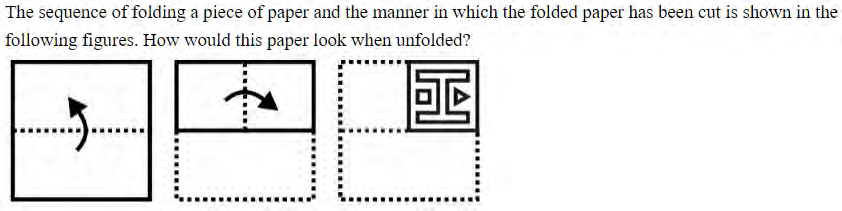
- (a)

- (b)

- (c)

- (d)

Show answer
Answer: (b)
- (a)
4. Select the letter-cluster from among the given options that can replace the question mark (?) in the following series. KRA, IQZ, ?, EOX, CNW
- (a) GQY
- (b) GPY
- (c) HQX
- (d) HPY
Show answer
Answer: (b)
5. Which of the numbers (not digits) should be interchanged in the given equation to make it mathematically correct? 104 ÷ 4 − 6 + 13 × 5 = 22
- (a) 13 and 4
- (b) 6 and 4
- (c) 6 and 5
- (d) 13 and 6
Show answer
Answer: (a)
6. In a certain code language, ‘Milk are exhausting’ is coded as ‘# tg 5’, and ‘Are water super milk’ is coded as ‘pa 5 6 #’. What is the code for ‘super’ in that language?
- (a) tg
- (b) 5 or 6
- (c) pa or 6
- (d) # or 5
Show answer
Answer: (c)
7. In a certain code language, 'shoes are shining' is coded as '235', 'shining stars rotate' is coded as '458', and 'stars are round' is coded as '829'. How will 'are' be coded in that language?
- (a) 3
- (b) 8
- (c) 9
- (d) 2
Show answer
Answer: (d)
8.

- (a)
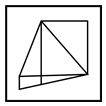
- (b)

- (c)
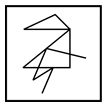
- (d)
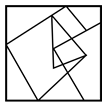
Show answer
Answer: (d)
- (a)
9.

- (a)

- (b)

- (c)

- (d)

Show answer
Answer: (b)
- (a)
10. By interchanging the given two numbers (not digits), which of the following equations will NOT be correct? 11 and 17 I. 400 + 17 – 71 × 85 ÷ 11 = 58 II. 1331 ÷ 17 – 50 + 6 × 11 = 173
- (a) Only I
- (b) Both I and II
- (c) Only II
- (d) Neither I nor II
Show answer
Answer: (a)
11. Read the given statements and conclusions carefully. Assuming that the information given in the statements is true, even if it appears to be at variance with commonly known facts, decide which of the given conclusions logically follow(s) from the statements. Statement I: All criminals are thieves. Statement II: Rakesh is a thief. Conclusion I: Rakesh is a criminal. Conclusion II: Some thieves may not be criminals.
- (a) Only conclusion II follows.
- (b) Both conclusions I and II follow.
- (c) Neither conclusion I nor II follows.
- (d) Only conclusion I follows.
Show answer
Answer: (a)
12. In a certain code language, 'POEM' is written as 'ODQO', 'HARD' is written as 'FQCG'. How will 'RNGC' be written in that language?
- (a) FEPQ
- (b) EEPQ
- (c) FFPQ
- (d) EFPQ
Show answer
Answer: (d)
13. A, B, R, D, I, S, and T are sitting around a circular table facing away from the circle. A does not sit adjacent to I and T. B does not sit adjacent to A. R sits fourth to the left of A. D and B sit adjacent to each other. S sits third to the left of I. Who is the immediate neighbour of both T and A?
- (a) S
- (b) T
- (c) B
- (d) R
Show answer
Answer: (a)
14. In a certain code language, 'LUNCH' is written as 'NWPEJ', and 'FAITH' is written as 'HCKVJ'. How will 'SPACE' be written in that language?
- (a) USCEG
- (b) URBEG
- (c) URCFG
- (d) URCEG
Show answer
Answer: (d)
16. Among seven persons A, B, C, D, E, F and G, who are of different ages, D is younger than only A and E. E is younger to A and older than B. C is third youngest. F and G are second youngest and youngest respectively. Who is the fourth eldest?
- (a) D
- (b) C
- (c) B
- (d) E
Show answer
Answer: (c)
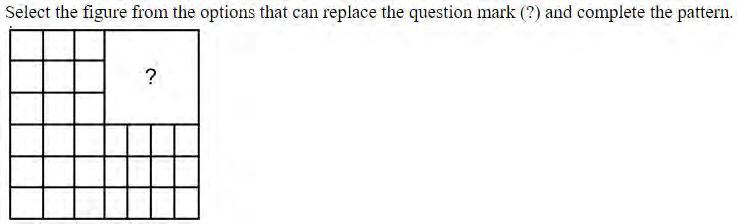
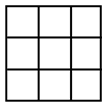
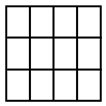
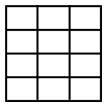
17.
- (a)
- (b)
- (c)
- (d)
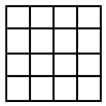
Show answer
Answer: (b)
- (a)
18. Read the given statements and conclusions carefully. Assuming that the information given in the statements is true, even if it appears to be at variance with commonly known facts, decide which of the given conclusions logically follow(s) from the statements. Statements: Some Parrots are Birds. All Birds are Mammals. Conclusions: I. All Mammals are Birds. II. Some Mammals are Parrots.
- (a) Neither conclusion I nor II follow.
- (b) Only conclusion II follows.
- (c) Both conclusions I and II follow.
- (d) Only conclusion I follows.
Show answer
Answer: (b)
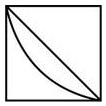
19.
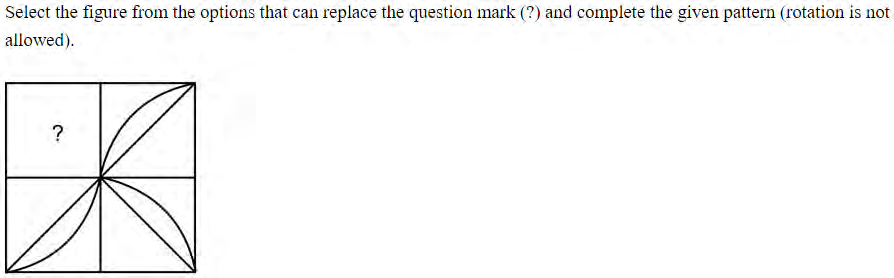
- (a)
- (b)
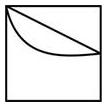
- (c)
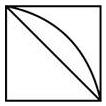
- (d)
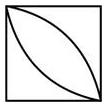
Show answer
Answer: (a)
- (a)
20. Select the option that is related to the third letter-cluster in the same way as the second letter-cluster is related to the first letter-cluster. RL : OQ :: GO : ?
- (a) DT
- (b) CT
- (c) DS
- (d) ES
Show answer
Answer: (a)
22.

- (a)
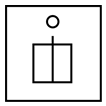
- (b)
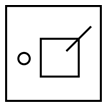
- (c)
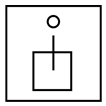
- (d)

Show answer
Answer: (a)
- (a)
23. Select the number from among the given options that can replace the question mark (?) in the following series. 94, 95, 100, 109, 122, ?
- (a) 133
- (b) 137
- (c) 139
- (d) 141
Show answer
Answer: (c)
24. Select the option that is related to the fifth letter-cluster in the same way as the second letter-cluster is related to the first letter-cluster and the fourth letter-cluster is related to the third letter-cluster. SIPL : AQXT :: ADGJ : ILOR :: UMEB : ?
- (a) CUMJ
- (b) MCUF
- (c) CUFM
- (d) JCUM
Show answer
Answer: (a)
25. Five men Z, X, H, I and J are sitting around a circular table, facing towards the centre (but not necessarily in the same order). Z is sitting second to the left of I. H is sitting second to the right of X. J is not the immediate neighbour of Z. Who is sitting third to the right of X?
- (a) I
- (b) Z
- (c) H
- (d) J
Show answer
Answer: (a)
Numerical Aptitude
1.

- (a)

- (b)

- (c)

- (d)

Show answer
Answer: (d)
- (a)
2.

- (a)

- (b)

- (c)

- (d)

Show answer
Answer: (c)
- (a)
3.

- (a)

- (b)

- (c)

- (d)
Show answer
Answer: (b)
- (a)
4.

- (a)

- (b)

- (c)

- (d)

Show answer
Answer: (b)
- (a)
6.

- (a)
- (b)

- (c)

- (d)
Show answer
Answer: (a)
- (a)
7.

- (a)

- (b)

- (c)

- (d)

Show answer
Answer: (d)
- (a)
8.

- (a)

- (b)

- (c)

- (d)

Show answer
Answer: (b)
- (a)
9.

- (a)

- (b)

- (c)

- (d)

Show answer
Answer: (a)
- (a)
10.

- (a)

- (b)

- (c)

- (d)

Show answer
Answer: (d)
- (a)
11.

- (a)

- (b)

- (c)

- (d)

Show answer
Answer: (d)
- (a)
12.
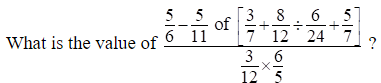
- (a)

- (b)

- (c)

- (d)

Show answer
Answer: (d)
- (a)
13.
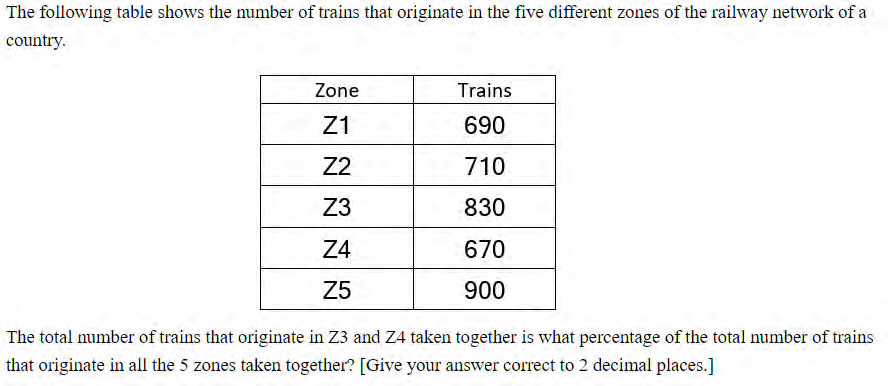
- (a)

- (b)

- (c)

- (d)

Show answer
Answer: (c)
- (a)
14.
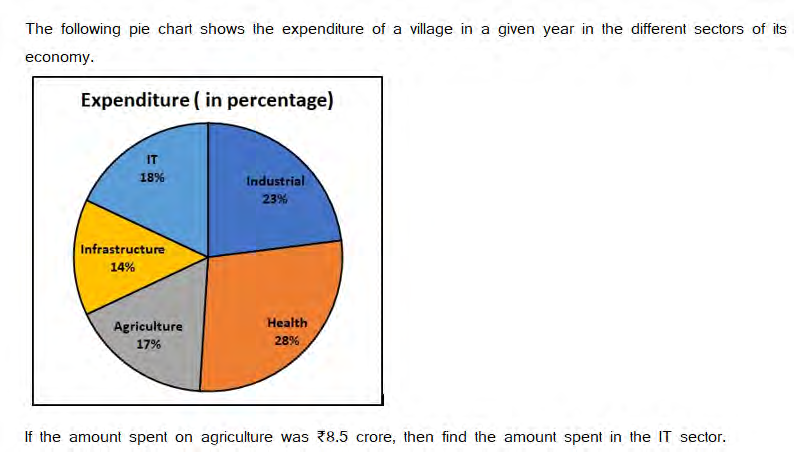
- (a)

- (b)

- (c)

- (d)

Show answer
Answer: (d)
- (a)
16.

- (a)

- (b)

- (c)

- (d)

Show answer
Answer: (d)
- (a)
17.

- (a)

- (b)

- (c)

- (d)

Show answer
Answer: (b)
- (a)
18.

- (a)
- (b)

- (c)

- (d)

Show answer
Answer: (a)
- (a)
19.

- (a)

- (b)

- (c)

- (d)

Show answer
Answer: (c)
- (a)
21.

- (a)

- (b)

- (c)

- (d)

Show answer
Answer: (a)
- (a)
22.

- (a)

- (b)

- (c)

- (d)

Show answer
Answer: (c)
- (a)
23.

- (a)

- (b)

- (c)

- (d)

Show answer
Answer: (b)
- (a)
24.

- (a)

- (b)

- (c)

- (d)

Show answer
Answer: (d)
- (a)
25.
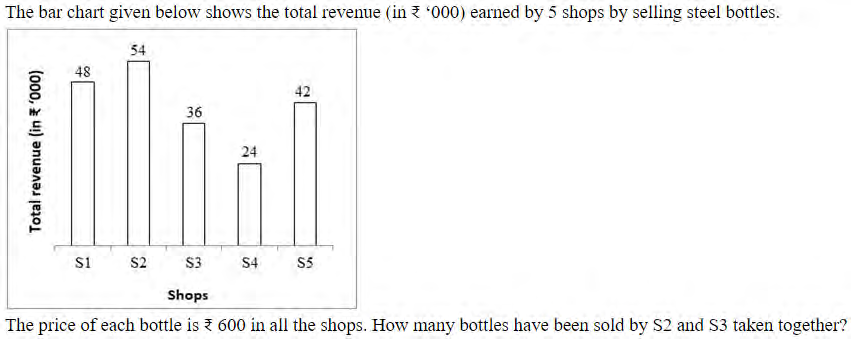
- (a)

- (b)

- (c)
- (d)

Show answer
Answer: (c)
- (a)
General Awareness
1. Which of the following is the fifth state of matter?
- (a) Gas
- (b) Liquid
- (c) Plasma
- (d) Bose-Einstein condensates
Show answer
Answer: (d)
2. Who has been appointed the first deputy managing director of the International Monetary Fund?
- (a) Urjit Patel
- (b) Gita Gopinath
- (c) V Anantha Nageswaran
- (d) Raghuram Rajan
Show answer
Answer: (b)
3. Which famous Kathak dancer was called to perform for Queen Elizabeth II coronation festivities, in 1953 and was awarded with Padma Bhushan in 1970?
- (a) Sridevi
- (b) Kumari Kamala
- (c) Kanaka Raju
- (d) Mallika Sarabhai
Show answer
Answer: (b)
5. Who was India's first Olympian who went on to star in Hollywood and Broadway?
- (a) Milkha Singh
- (b) Norman Pritchard
- (c) Virat Kohli
- (d) PT Usha
Show answer
Answer: (b)
6. The tax imposed on goods imported into and exported out of India is called ______.
- (a) corporation tax
- (b) excise tax
- (c) capital gain tax
- (d) custom duty
Show answer
Answer: (d)
7. Which of the following is the largest moon of Saturn?
- (a) Europa
- (b) Atlas
- (c) Titan
- (d) Carme
Show answer
Answer: (c)
8. Chennai Super Kings defeated which team to win IPL 2021?
- (a) Mumbai Indians
- (b) Sunrisers Hyderabad
- (c) Kolkata Night Riders
- (d) Delhi Capitals
Show answer
Answer: (c)
9. As of April 2022, who is the Chairman of Rajya Sabha?
- (a) Shri Om Birla
- (b) Shri M Venkaiah Naidu
- (c) Shri Narendra Modi
- (d) Shri Amit Shah
Show answer
Answer: (b)
10. The Rajya Sabha passed the National Institute of Pharmaceutical Education and Research (NIPER) Amendment Bill, 2021. The institutes mentioned in the bill are of national importance and fall under the aegis of the Department of Pharmaceutical, Ministry of ___________________.
- (a) Chemicals and Fertilisers
- (b) Health and Family Welfare
- (c) Consumer Affairs, Food and Public Distribution
- (d) AYUSH
Show answer
Answer: (a)
11. Which state has the highest reserves of manganese in India, as of April 2022?
- (a) Odisha
- (b) Chhattisgarh
- (c) Bihar
- (d) Maharashtra
Show answer
Answer: (a)
12. Which of the following architectural styles had an entrance gateway called ‘gopuram’?
- (a) Buddhist architecture
- (b) Nagara architecture
- (c) Dravidian architecture
- (d) Indo-Islamic architecture
Show answer
Answer: (c)
13. Citric acid is commonly found in __________.
- (a) onions
- (b) apples
- (c) oranges
- (d) bananas
Show answer
Answer: (c)
14. Which of the following statements is correct? I. Tipu Sultan is also known as the Tiger of Mysore. II. Tipu Sultan ruled over Mysore from 1782 to 1799.
- (a) Neither I nor II
- (b) Only I
- (c) Only II
- (d) Both I and II
Show answer
Answer: (d)
15. Which Indian musician was conferred with the Lifetime achievement Grammy Award?
- (a) Sonu Nigam
- (b) Pandit Ravi Shankar
- (c) Zubin Mehta
- (d) AR Rahman
Show answer
Answer: (b)
17. Which freedom fighter of India composed the song, ‘Saare Jahan Se Achha’?
- (a) Jawaharlal Nehru
- (b) Jyotiba Phule
- (c) Mahatma Gandhi
- (d) Muhammad Iqbal
Show answer
Answer: (d)
19. The green plants in a terrestrial ecosystem capture about ______ of the energy of sunlight that falls on their leaves and convert it into food energy.
- (a) 5%
- (b) 14%
- (c) 8%
- (d) 1%
Show answer
Answer: (d)
20. Pulakeshin II was a ruler of which dynasty?
- (a) Chera
- (b) Chola
- (c) Chalukya
- (d) Pallava
Show answer
Answer: (c)
21. Who among the following rulers of Mewar was defeated by Babur in the Battle of Khanwa (1527 AD)?
- (a) Rana Sanga
- (b) Ahmed Shah I
- (c) Rana Kumbha Karan
- (d) Alauddin Khalji
Show answer
Answer: (a)
22. Ugadi is an important festival of which state?
- (a) Karnataka
- (b) Haryana
- (c) Bihar
- (d) Goa
Show answer
Answer: (a)
23. Which of the following was formed to maintain and develop road networks in Indian border areas for easy accessibility and connectivity?
- (a) Border Roadways Authority
- (b) Border Roads Organisation
- (c) Indian Border Roadways
- (d) Border Authority of India
Show answer
Answer: (b)
24. Kalbelia is a tribal dance form of which Indian state?
- (a) Rajasthan
- (b) Kerala
- (c) Meghalaya
- (d) Goa
Show answer
Answer: (a)
25. Which Article of the Constitution of India states the 'Right to freedom of speech and expression'?
- (a) Article 370
- (b) Article 200
- (c) Article 19
- (d) Article 377
Show answer
Answer: (c)
Show answers
Answer key
Answer key as marked in the Staff Selection Commission’s response sheet. “—” means the sheet did not show it clearly.
General English
- Q 1
- (b)
- Q 2
- (a)
- Q 3
- (c)
- Q 4
- (c)
- Q 5
- (b)
- Q 6
- (c)
- Q 7
- (a)
- Q 8
- (a)
- Q 9
- (d)
- Q 10
- (d)
- Q 11
- (c)
- Q 12
- (b)
- Q 13
- (a)
- Q 14
- (a)
- Q 15
- (a)
- Q 16
- (a)
- Q 17
- (b)
- Q 18
- (d)
- Q 19
- (b)
- Q 20
- (c)
- Q 21
- (b)
- Q 22
- (a)
- Q 23
- (c)
- Q 24
- (c)
- Q 25
- (c)
General Intelligence and Reasoning
- Q 1
- (a)
- Q 2
- (c)
- Q 3
- (b)
- Q 4
- (b)
- Q 5
- (a)
- Q 6
- (c)
- Q 7
- (d)
- Q 8
- (d)
- Q 9
- (b)
- Q 10
- (a)
- Q 11
- (a)
- Q 12
- (d)
- Q 13
- (a)
- Q 14
- (d)
- Q 16
- (c)
- Q 17
- (b)
- Q 18
- (b)
- Q 19
- (a)
- Q 20
- (a)
- Q 22
- (a)
- Q 23
- (c)
- Q 24
- (a)
- Q 25
- (a)
Numerical Aptitude
- Q 1
- (d)
- Q 2
- (c)
- Q 3
- (b)
- Q 4
- (b)
- Q 6
- (a)
- Q 7
- (d)
- Q 8
- (b)
- Q 9
- (a)
- Q 10
- (d)
- Q 11
- (d)
- Q 12
- (d)
- Q 13
- (c)
- Q 14
- (d)
- Q 16
- (d)
- Q 17
- (b)
- Q 18
- (a)
- Q 19
- (c)
- Q 21
- (a)
- Q 22
- (c)
- Q 23
- (b)
- Q 24
- (d)
- Q 25
- (c)
General Awareness
- Q 1
- (d)
- Q 2
- (b)
- Q 3
- (b)
- Q 5
- (b)
- Q 6
- (d)
- Q 7
- (c)
- Q 8
- (c)
- Q 9
- (b)
- Q 10
- (a)
- Q 11
- (a)
- Q 12
- (c)
- Q 13
- (c)
- Q 14
- (d)
- Q 15
- (b)
- Q 17
- (d)
- Q 19
- (d)
- Q 20
- (c)
- Q 21
- (a)
- Q 22
- (a)
- Q 23
- (b)
- Q 24
- (a)
- Q 25
- (c)