ExamBharo · SSC CHSL 2022 Tier I — 21 March 2023, Shift 2 · exambharo.com/ssc-chsl/previous-year-papers/ssc-chsl-2022-tier-1-21-mar-shift-2/
Question paper · SSC CHSL
SSC CHSL 2022 Tier I — 21 March 2023, Shift 2
21 March 2023 · 11:45 AM–12:45 PM94 of the paper’s 100 questions+2 for a correct answer, −0.5 for a wrong one
Left out of the original paper: 6 (any question that needs a figure, symbol or formatting we cannot show, or whose text or answer did not come through cleanly from the official document).
Questions from the Staff Selection Commission’s paper of 21 March 2023, 11:45 AM–12:45 PM. Each question’s answer is under it, hidden until you open it, and the full answer key is at the end. Take the paper as a timed practice test to be scored.
English Language
1. Choose the word that means the same as the given word. Soar
- (a) Sweet
- (b) Fly
- (c) Bitter
- (d) Sour
Show answer
Answer: (b)
2. In the following question, out of the given four alternatives, select the alternative which best expresses the meaning of the Idiom/Phrase. To miss the bus
- (a) Short lived glory
- (b) To lose an opportunity
- (c) Escape by a thin margin
- (d) A problem in a situation
Show answer
Answer: (b)
3. Find the part of the given sentence that has an error in it. If there is no error, choose ‘No error’. Workers and companies in all sectors can contribute their skills to meet society new needs.
- (a) sectors can contribute their skills
- (b) No error
- (c) to meet society new needs.
- (d) Workers and companies in all
Show answer
Answer: (c)
4. Improve the underlined part of the sentence. Choose ‘No improvement’ as an answer if the sentence is grammatically correct. We keeps a horse, two cows, and six chickens.
- (a) has keeps a
- (b) keep a
- (c) keeping a
- (d) No improvement
Show answer
Answer: (b)
5. Select the correct indirect form of the given sentence. Miranda said to her teacher, “I was sick for a day.”
- (a) Miranda told her teacher that she has been sick for a day.
- (b) Miranda told her teacher that she is sick for a day.
- (c) Miranda told her teacher that she was sick for a day.
- (d) Miranda told her teacher that she had been sick for a day.
Show answer
Answer: (d)
6. Select the word that is opposite in meaning (ANTONYM) to the word given below. Fanatic
- (a) Militant
- (b) Moderate
- (c) Sectarian
- (d) Zealot
Show answer
Answer: (b)
7. Choose the sentence with no spelling error.
- (a) He semed to be taller than him.
- (b) He seemed to be taller than him.
- (c) He seemed to be taler than him.
- (d) He seemed to bee taller then him.
Show answer
Answer: (b)
8. Choose the word that is opposite in meaning to the given word. Recondite
- (a) Abstruse
- (b) Phlegm
- (c) Clear
- (d) Abstract
Show answer
Answer: (c)
9. Choose the word that can substitute the given group of words. A fall of water from a great height
- (a) River
- (b) Stream
- (c) Typhoon
- (d) Cascade
Show answer
Answer: (d)
10. Rearrange the parts of the sentence in correct order. P. undermining the strict application of comparative anthropology Q. in the early 20th century it was almost universally assumed R. that traditional cultures would be completely assimilated S. into colonial cultures within a few decades, thus
- (a) PQRS
- (b) PSQR
- (c) QPRS
- (d) QRSP
Show answer
Answer: (d)
11. Select the correct passive form of the given sentence. Susan writes recipes for the cookbook.
- (a) Recipes are write by Susan for the cookbook.
- (b) Recipes were written by Susan for the cookbook.
- (c) Recipes are written by Susan for the cookbook.
- (d) Recipes are being written by Susan for the cookbook.
Show answer
Answer: (c)
12. Rearrange the parts of the sentence in correct order. Some algal blooms P. beneficial to aquatic life, since these tiny Q. nutrient conditions are optimal, and they can be R. occur naturally when temperature, water, and S. organisms form the base of the food chain
- (a) RQPS
- (b) PRSQ
- (c) QPRS
- (d) RQSP
Show answer
Answer: (a)
13. Improve the underlined part of the sentence. Choose ‘No improvement’ as an answer if the sentence is grammatically correct. If proper treat, the wound should heal within a few weeks.
- (a) proper treated
- (b) properly treated
- (c) properly treatment
- (d) No improvement
Show answer
Answer: (b)
14. Find the part of the given sentence that has an error in it. If there is no error, choose ‘No error’. We have more then 6 years of experience in field hockey.
- (a) then 6 years of
- (b) We have more
- (c) experience in field hockey.
- (d) No error
Show answer
Answer: (a)
15. Choose the word that is opposite in meaning to the given word. Algid
- (a) Algae
- (b) Gelid
- (c) Igneous
- (d) Clean
Show answer
Answer: (c)
17. Choose the incorrectly spelt word.
- (a) Cream
- (b) Sleam
- (c) Beam
- (d) Steam
Show answer
Answer: (b)
18. Given below are four jumbled sentences. Pick the option that gives their correct order. P. In July 1977, Marley was found to have a type of malignant melanoma (cancer) under the nail of a toe. Q. He died on 11 May 1981 at Cedars of Lebanon Hospital in Miami (now University of Miami Hospital) at the age of 36. R. Despite his illness, he continued touring until his health deteriorated as the cancer had spread throughout his body. S. Marley turned down his doctors' advice to have his toe amputated, citing his religious beliefs.
- (a) PSRQ
- (b) PQSR
- (c) RSQP
- (d) PSQR
Show answer
Answer: (a)
19. In the following question, out of the given four alternatives, select the alternative which best expresses the meaning of the Idiom/Phrase. To have a nodding acquaintance
- (a) To have a great experience
- (b) To neglect all the parameters
- (c) Know somebody/something slightly
- (d) To have nothing in common
Show answer
Answer: (c)
20. Fill in the blank with an appropriate option. Taking a deep, ______ breath, I start again, successfully loading the filter and placing the cup underneath.
- (a) penetrating
- (b) surrogating
- (c) calming
- (d) jamming
Show answer
Answer: (c)
PassageFor questions 21–25
In the following passage some of the words have been deleted. Read the passage carefully and select the correct answer for the given blank out of the four alternatives. Yes, there’s definitely something to be said about (1) ______ the perfect cup of coffee. I’m staring (2) ______ the machine again, but today I’m smiling. I’ve done it – the correct amount of foam, the (3) ______ like silk and the little dusting of chocolate, (4) ______ a perfect heart on the top. It’s just a shame that it’s me who is drinking it, not a/an (5) ______ customer.
21. Select the most appropriate option to fill in blank number 1.
- (a) sobbing
- (b) making
- (c) breaking
- (d) loading
Show answer
Answer: (b)
22. Select the most appropriate option to fill in blank number 2.
- (a) of
- (b) at
- (c) to
- (d) on
Show answer
Answer: (b)
23. Select the most appropriate option to fill in blank number 3.
- (a) cruelty
- (b) irrationality
- (c) rigidity
- (d) smoothness
Show answer
Answer: (d)
24. Select the most appropriate option to fill in blank number 4.
- (a) forming
- (b) formerly
- (c) forcing
- (d) formation
Show answer
Answer: (a)
25. Select the most appropriate option to fill in blank number 5.
- (a) appreciative
- (b) calculative
- (c) famished
- (d) satiated
Show answer
Answer: (a)
General Intelligence
1.

- (a)

- (b)

- (c)

- (d)

Show answer
Answer: (a)
- (a)
2. After arranging the given words according to dictionary order, which word will come at ‘Fourth’ position? 1. Morning 2. More 3. Moral 4. Morbid 5. Morale
- (a) More
- (b) Moral
- (c) Morale
- (d) Morning
Show answer
Answer: (a)
3. In a certain code language, ‘INTERNAL’ is coded as ‘91320221813115’, ‘MOUNTAIN’ is coded as ‘131221132026913’. What is the code for ‘PAYMENTS’ in that code language?
- (a) 16262514413208
- (b) 16262514513280
- (c) 16262514513208
- (d) 16252614513208
Show answer
Answer: (c)
4. By interchanging the given two signs which of the following equation will be correct? × and – I. 11 + 6 × 8 – 8 ÷ 2 = 15 II. 15 – 4 × 3 + 6 ÷ 1 = 63
- (a) Only II
- (b) Both I and II
- (c) Only I
- (d) Neither I nor II
Show answer
Answer: (a)
5. In the following question, select the odd letter/letters from the given alternatives.
- (a) RTW
- (b) PSV
- (c) ADG
- (d) ILO
Show answer
Answer: (a)
6. Words given on the left side of (::) are related with each other by some Logic/Rule /Relation. Select the missing word/word pair on the right side of (::) from the given alternatives based on the same Logic/Rule/Relation. Den : Lion :: Web :?
- (a) Eskimo
- (b) Mouse
- (c) Spider
- (d) Bird
Show answer
Answer: (c)
7. Select the option in which the numbers share the same relationship in set as that shared by the numbers in the given set. (NOTE: Operations should be performed on the whole numbers, without breaking down the numbers into its constituent digits. E.g.13 – Operations on 13 such as adding /subtracting /multiplying etc. to 13 can be performed. Breaking down 13 into 1 and 3 and then performing mathematical operations on 1 and 3 is not allowed) (286, 456, 340) (347, 592, 490)
- (a) (456, 666, 400)
- (b) (782, 907, 230)
- (c) (198, 279, 162)
- (d) (324, 419, 210)
Show answer
Answer: (c)
8.

- (a)

- (b)

- (c)

- (d)

Show answer
Answer: (a)
- (a)
9.
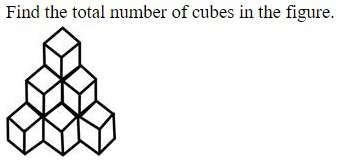
- (a)

- (b)

- (c)

- (d)

Show answer
Answer: (c)
- (a)
10.

- (a)

- (b)

- (c)

- (d)
Show answer
Answer: (a)
- (a)
11.
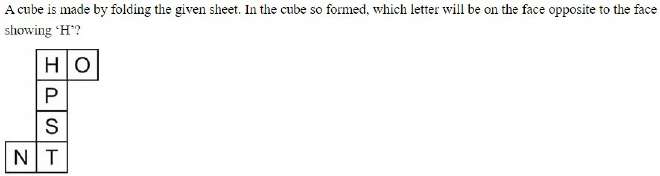
- (a)

- (b)

- (c)

- (d)

Show answer
Answer: (c)
- (a)
12. Words given on the left side of (::) are related with each other by some Logic/Rule /Relation. Select the missing word/word pair on the right side of (::) from the given alternatives based on the same Logic/Rule/Relation. Scooter : Vehicle :: Pencil : ?
- (a) Pen
- (b) Stationery
- (c) Write
- (d) Lead
Show answer
Answer: (b)
13. In the following question below are given some statements followed by some conclusions based on those statements. Taking the given statements to be true even if they seem to be at variance from commonly known facts. Read all the conclusions and then decide which of the given conclusion logically follows the given statements. Statements: I. Some jungle are green. II. No blue is green. Conclusion: I. No green is blue. II. Some green are jungle. III. No jungle is blue.
- (a) Only conclusion III follows
- (b) Both conclusions II and III follows
- (c) Only conclusion II follows
- (d) Both conclusions I and II follows
Show answer
Answer: (d)
14. Select the option in which the numbers share the same relationship in set as that shared by the numbers in the given set. (NOTE: Operations should be performed on the whole numbers, without breaking down the numbers into its constituent digits. E.g.13 – Operations on 13 such as adding /subtracting /multiplying etc. to 13 can be performed. Breaking down 13 into 1 and 3 and then performing mathematical operations on 1 and 3 is not allowed) (413, 662, 911) (387, 636, 885)
- (a) (287, 536, 785)
- (b) (403, 652, 907)
- (c) (521, 770, 1009)
- (d) (311, 560, 799)
Show answer
Answer: (a)
15. H is the brother of I. G is the brother of H. I is the son of J. J is the sister of K. How is J related to G?
- (a) Mother in law
- (b) Daughter
- (c) Paternal Aunt
- (d) Mother
Show answer
Answer: (d)
16.
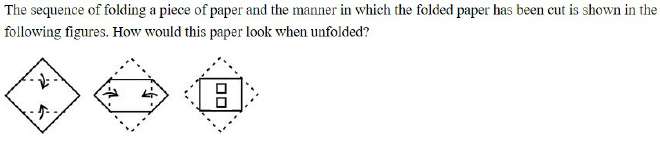
- (a)
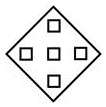
- (b)
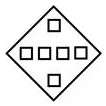
- (c)

- (d)
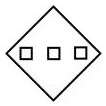
Show answer
Answer: (c)
- (a)
17.

- (a)
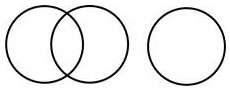
- (b)

- (c)
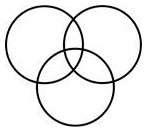
- (d)

Show answer
Answer: (c)
- (a)
18. A series is given with one term missing. Select the correct alternative from the given ones that will complete the series. OLR, REZ, UXH, XQP, ?
- (a) ALX
- (b) BJY
- (c) AJX
- (d) AQX
Show answer
Answer: (c)
19. Select the option in which the numbers shares the same relationship in set as that shared by the numbers in the given set. (NOTE: Operations should be performed on the whole numbers, without breaking down the numbers into its constituent digits. E.g.13 – Operations on 13 such as adding /subtracting /multiplying etc. to 13 can be performed. Breaking down 13 into 1 and 3 and then performing mathematical operations on 1 and 3 is not allowed) (17, 51, 153) (32, 96, 288)
- (a) (73, 229, 657)
- (b) (81, 343, 729)
- (c) (16, 48, 154)
- (d) (42, 126, 378)
Show answer
Answer: (d)
21. In a certain code language, ‘DECENT’ is coded as ‘VPGEGF’. What is the code for ‘ENERGY’ in that code language?
- (a) AITGQG
- (b) AITGPG
- (c) AIIGPG
- (d) AITHPG
Show answer
Answer: (b)
22. Words given on the left side of (::) are related with each other by some Logic/Rule /Relation. Select the missing word/word pair on the right side of (::) from the given alternatives based on the same Logic/Rule/Relation. Ring : Boxing :: Rink : ?
- (a) Athletics
- (b) Skating
- (c) Badminton
- (d) Cricket
Show answer
Answer: (b)
23. In the following question, select the odd word pair from the given alternatives.
- (a) Physiology – Body
- (b) Pedology – Fishes
- (c) Entomology – Insects
- (d) Selenography – Moon
Show answer
Answer: (b)
24. In the following question, select the missing number from the given series. 2, 4, 7, 11, 16, ?
- (a) 22
- (b) 25
- (c) 23
- (d) 24
Show answer
Answer: (a)
25. Select the option that is related to the fourth number in the same way as the first number is related to the second number and fifth number is related to sixth number. 8 : 128 :: ? : 176 :: 16 : 256
- (a) 22
- (b) 2
- (c) 14
- (d) 11
Show answer
Answer: (d)
Quantitative Aptitude
1.

- (a)

- (b)

- (c)

- (d)

Show answer
Answer: (c)
- (a)
2.

- (a)

- (b)

- (c)

- (d)

Show answer
Answer: (c)
- (a)
3.

- (a)

- (b)

- (c)

- (d)

Show answer
Answer: (c)
- (a)
4.

- (a)
- (b)

- (c)

- (d)

Show answer
Answer: (b)
- (a)
5.

- (a)

- (b)

- (c)

- (d)

Show answer
Answer: (b)
- (a)
6.

- (a)

- (b)

- (c)

- (d)

Show answer
Answer: (d)
- (a)
8.
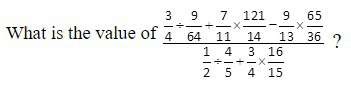
- (a)

- (b)

- (c)

- (d)

Show answer
Answer: (b)
- (a)
9.

- (a)

- (b)

- (c)

- (d)

Show answer
Answer: (d)
- (a)
10.

- (a)

- (b)

- (c)

- (d)

Show answer
Answer: (d)
- (a)
11.

- (a)

- (b)

- (c)

- (d)

Show answer
Answer: (b)
- (a)
12.
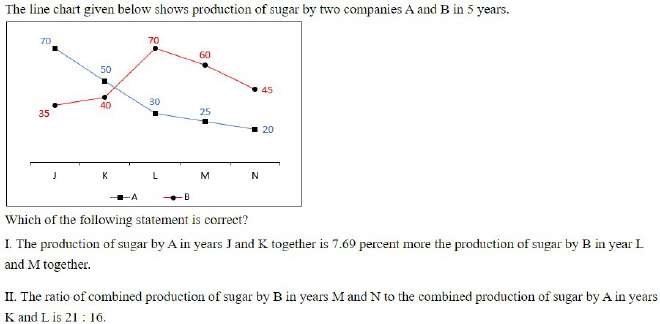
- (a)

- (b)

- (c)
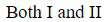
- (d)

Show answer
Answer: (a)
- (a)
13.

- (a)

- (b)

- (c)

- (d)

Show answer
Answer: (c)
- (a)
15.

- (a)

- (b)

- (c)

- (d)

Show answer
Answer: (a)
- (a)
16.

- (a)

- (b)

- (c)

- (d)

Show answer
Answer: (c)
- (a)
17.
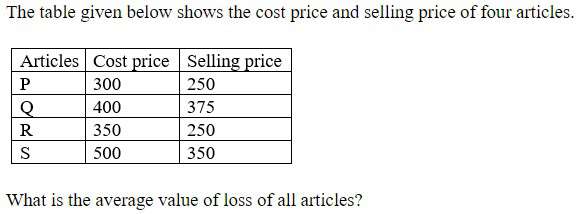
- (a)

- (b)

- (c)

- (d)

Show answer
Answer: (c)
- (a)
18.

- (a)

- (b)

- (c)

- (d)

Show answer
Answer: (c)
- (a)
19.

- (a)

- (b)

- (c)

- (d)

Show answer
Answer: (d)
- (a)
20.

- (a)
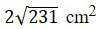
- (b)
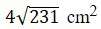
- (c)
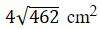
- (d)
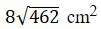
Show answer
Answer: (b)
- (a)
21.

- (a)

- (b)

- (c)

- (d)

Show answer
Answer: (d)
- (a)
22.
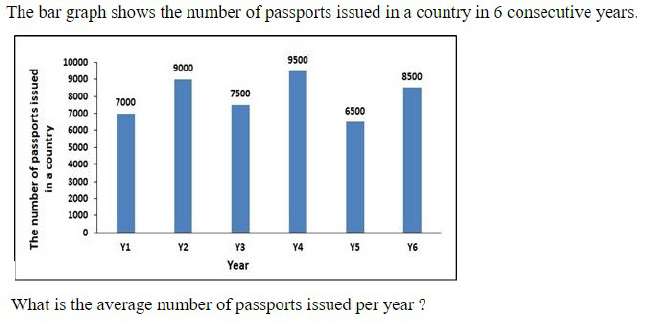
- (a)

- (b)

- (c)

- (d)

Show answer
Answer: (c)
- (a)
23.

- (a)

- (b)

- (c)

- (d)

Show answer
Answer: (d)
- (a)
24.
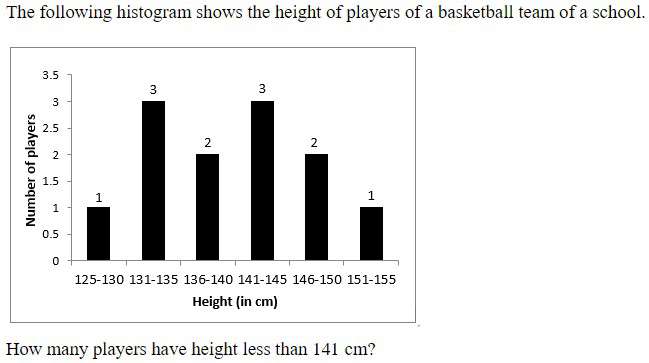
- (a)
- (b)

- (c)

- (d)

Show answer
Answer: (c)
- (a)
General Awareness
1. What is the sex ratio of India as per 2011 census?
- (a) 843 females per 1000 males
- (b) 943 females per 1000 males
- (c) 643 females per 1000 males
- (d) 743 females per 1000 males
Show answer
Answer: (b)
2. Which of the following is NOT a permanent wind?
- (a) Westerlies
- (b) Loo
- (c) Easterlies
- (d) Trade winds
Show answer
Answer: (b)
3. Graphical User Interface (GUI) was developed during which of the following generations of computer?
- (a) Fourth Generation
- (b) Second Generation
- (c) First Generation
- (d) Third Generation
Show answer
Answer: (a)
4. In July 2022, who among the following has notified the detailed framework for Social Stock Exchange (SSE)?
- (a) Ministry of corporate affairs
- (b) RBI
- (c) SEBI
- (d) NITI Aayog
Show answer
Answer: (c)
5. “Statue of Equality” has been inaugurated in Hyderabad in the memory of ______.
- (a) Saint Ramanujacharya
- (b) Swami Vivekananda
- (c) Swami Dayananda
- (d) Shri Ravi Das
Show answer
Answer: (a)
6. In which of the following cities of the Indus valley civilization has a dockyard been found?
- (a) Lothal
- (b) Chanhudaro
- (c) Kalibangan
- (d) Dholavira
Show answer
Answer: (a)
7. A free-market economy is a crucial aspect of __________.
- (a) Socialism
- (b) Capitalism
- (c) Feudalism
- (d) Functionalist
Show answer
Answer: (b)
8. What is the maximum number of electrons that the third orbit or M-shell can have?
- (a) 32
- (b) 8
- (c) 18
- (d) 2
Show answer
Answer: (c)
9. Qutub Minar is an example of ______ architecture.
- (a) Indo-Islamic
- (b) Dravidian
- (c) Sufi
- (d) Mauryan
Show answer
Answer: (a)
10. Swami Vivekananda’s death anniversary is observed on ______.
- (a) July 1
- (b) July 4
- (c) August 1
- (d) August 4
Show answer
Answer: (b)
11. The sensation of feeling full is because of a centre associated with hunger, which is in a separate part of the ______.
- (a) Pituitary gland
- (b) Midbrain
- (c) Forebrain
- (d) Hindbrain
Show answer
Answer: (c)
12. Who among the following Indian athletes won a silver medal in 2022 Commonwealth Games? I. Avinash Sable II. Ravi Kumar Dahiya
- (a) Both I and II
- (b) Only II
- (c) Neither I nor II
- (d) Only I
Show answer
Answer: (d)
13. Who among the following was awarded with the 2022 Pulitzer Prize in Feature Photography category?
- (a) K.R. Meera
- (b) Syeda Hameed
- (c) Bibek Debroy
- (d) Amit Dave
Show answer
Answer: (d)
14. Which of the following is correct regarding the National Income? I. Intermediate goods are not included in the calculation of national income. II. Final goods are included in the calculation of national income.
- (a) Only II
- (b) Neither I nor II
- (c) Only I
- (d) Both I and II
Show answer
Answer: (d)
16. Which of the following is a vulnerable species?
- (a) Himalayan brown bear
- (b) Hornbill
- (c) Asiatic cheetah
- (d) Asiatic elephant
Show answer
Answer: (d)
17. Which of the following straits is located between the Java Sea and the Indian Ocean?
- (a) Palk
- (b) Malacca
- (c) Sunda
- (d) Cook
Show answer
Answer: (c)
18. Which country hosted the ICC Women’s T20 World Cup 2023?
- (a) England
- (b) South Africa
- (c) Australia
- (d) India
Show answer
Answer: (b)
19. Which of the following is NOT a type of paragraph formatting in MS-Word 365?
- (a) Right
- (b) Precise
- (c) Justify
- (d) Centre
Show answer
Answer: (b)
20. Aditi Mangaldas is a leading dancer & Choreographer in the classical Indian dance form of ______.
- (a) Bharatanatyam
- (b) Kuchipudi
- (c) Kathak
- (d) Kathakali
Show answer
Answer: (c)
21. Which among the following is the oldest High Court in India?
- (a) Allahabad
- (b) Telangana
- (c) Calcutta
- (d) Andhra Pradesh
Show answer
Answer: (c)
22. Article 76 of the Indian constitution is related with the office of which of the following?
- (a) Prime Minister of India
- (b) President of India
- (c) Vice – President of India
- (d) Attorney General of India
Show answer
Answer: (d)
23. How many bronze medals did India win in the 2022 Commonwealth Games?
- (a) 27
- (b) 25
- (c) 21
- (d) 23
Show answer
Answer: (d)
24. Who was the Indian captain for ICC Men's T20 World Cup 2022?
- (a) Rohit Sharma
- (b) Rishabh Pant
- (c) Hardik Pandya
- (d) Virat Kohli
Show answer
Answer: (a)
25. The Pitts India Act of ______ distinguished between the commercial and political functions of the British East India Company.
- (a) 1818
- (b) 1792
- (c) 1784
- (d) 1802
Show answer
Answer: (c)
Show answers
Answer key
Answer key as marked in the Staff Selection Commission’s response sheet. “—” means the sheet did not show it clearly.
English Language
- Q 1
- (b)
- Q 2
- (b)
- Q 3
- (c)
- Q 4
- (b)
- Q 5
- (d)
- Q 6
- (b)
- Q 7
- (b)
- Q 8
- (c)
- Q 9
- (d)
- Q 10
- (d)
- Q 11
- (c)
- Q 12
- (a)
- Q 13
- (b)
- Q 14
- (a)
- Q 15
- (c)
- Q 17
- (b)
- Q 18
- (a)
- Q 19
- (c)
- Q 20
- (c)
- Q 21
- (b)
- Q 22
- (b)
- Q 23
- (d)
- Q 24
- (a)
- Q 25
- (a)
General Intelligence
- Q 1
- (a)
- Q 2
- (a)
- Q 3
- (c)
- Q 4
- (a)
- Q 5
- (a)
- Q 6
- (c)
- Q 7
- (c)
- Q 8
- (a)
- Q 9
- (c)
- Q 10
- (a)
- Q 11
- (c)
- Q 12
- (b)
- Q 13
- (d)
- Q 14
- (a)
- Q 15
- (d)
- Q 16
- (c)
- Q 17
- (c)
- Q 18
- (c)
- Q 19
- (d)
- Q 21
- (b)
- Q 22
- (b)
- Q 23
- (b)
- Q 24
- (a)
- Q 25
- (d)
Quantitative Aptitude
- Q 1
- (c)
- Q 2
- (c)
- Q 3
- (c)
- Q 4
- (b)
- Q 5
- (b)
- Q 6
- (d)
- Q 8
- (b)
- Q 9
- (d)
- Q 10
- (d)
- Q 11
- (b)
- Q 12
- (a)
- Q 13
- (c)
- Q 15
- (a)
- Q 16
- (c)
- Q 17
- (c)
- Q 18
- (c)
- Q 19
- (d)
- Q 20
- (b)
- Q 21
- (d)
- Q 22
- (c)
- Q 23
- (d)
- Q 24
- (c)
General Awareness
- Q 1
- (b)
- Q 2
- (b)
- Q 3
- (a)
- Q 4
- (c)
- Q 5
- (a)
- Q 6
- (a)
- Q 7
- (b)
- Q 8
- (c)
- Q 9
- (a)
- Q 10
- (b)
- Q 11
- (c)
- Q 12
- (d)
- Q 13
- (d)
- Q 14
- (d)
- Q 16
- (d)
- Q 17
- (c)
- Q 18
- (b)
- Q 19
- (b)
- Q 20
- (c)
- Q 21
- (c)
- Q 22
- (d)
- Q 23
- (d)
- Q 24
- (a)
- Q 25
- (c)