ExamBharo · SSC CHSL 2022 Tier I — 21 March 2023, Shift 1 · exambharo.com/ssc-chsl/previous-year-papers/ssc-chsl-2022-tier-1-21-mar-shift-1/
Question paper · SSC CHSL
SSC CHSL 2022 Tier I — 21 March 2023, Shift 1
21 March 2023 · 9:00 AM–10:00 AM94 of the paper’s 100 questions+2 for a correct answer, −0.5 for a wrong one
Left out of the original paper: 6 (any question that needs a figure, symbol or formatting we cannot show, or whose text or answer did not come through cleanly from the official document).
Questions from the Staff Selection Commission’s paper of 21 March 2023, 9:00 AM–10:00 AM. Each question’s answer is under it, hidden until you open it, and the full answer key is at the end. Take the paper as a timed practice test to be scored.
English Language
1. Select the most appropriate meaning of the given idiom. Be my guest
- (a) Please do it
- (b) Stop, don't go ahead
- (c) Be with me
- (d) Come with me
Show answer
Answer: (a)
2. Identify the segment in the sentence which contains a grammatical error. If there is no error, then select the option "No error". And, indeed, there was/ hardly picture in Rome I was unable/ to reattribute to its rightful owner.
- (a) to reattribute to its rightful owner.
- (b) No error
- (c) And, indeed, there was
- (d) hardly picture in Rome I was unable
Show answer
Answer: (d)
4. Choose the word that can substitute the given group of words. Belonging to the same kind
- (a) Sebaceous
- (b) Heterogeneous
- (c) Homogeneous
- (d) Casserole
Show answer
Answer: (c)
5. Select the word that is closest in meaning (SYNONYM) to the word given below. BOGUS
- (a) HUMANE
- (b) STRONG
- (c) FALSE
- (d) CRITICIZE
Show answer
Answer: (c)
6. Choose the correctly spelt word.
- (a) HEIRARCHY
- (b) APPAULLING
- (c) PESTILLENTIAL
- (d) MALODOROUS
Show answer
Answer: (d)
7. Select the most appropriate one-word substitution for the given group of words. A person who is experiencing dementia brought about by old age
- (a) Senile
- (b) Sentinel
- (c) Primal
- (d) Primitive
Show answer
Answer: (a)
8. Select the word that is opposite in meaning (ANTONYM) to the word given below Polarize
- (a) Combine
- (b) Orchestrate
- (c) Conjoin
- (d) Segregate
Show answer
Answer: (d)
9. Choose the incorrectly spelt word.
- (a) SUPPORT
- (b) TUNNEL
- (c) RAPPORT
- (d) TREBBLE
Show answer
Answer: (d)
10. Select the most appropriate one-word substitution for the given group of words. Dependent on chance or uncertainty
- (a) Precarious
- (b) Paradox
- (c) Presume
- (d) Presumptuous
Show answer
Answer: (a)
11. Rearrange the parts of the sentence in correct order. Our study goes P. beyond LDL cholesterol levels to get Q. and the impact of eating walnuts daily R. a complete picture of all of the lipoproteins S. on their potential to improve cardiovascular risk
- (a) SRPQ
- (b) PQSR
- (c) PRQS
- (d) SPQR
Show answer
Answer: (c)
12. Select the most appropriate meaning of the given idiom. Buy a lemon
- (a) To buy something that is of much less value.
- (b) To lose foundation
- (c) To work through the day and shop in the evening
- (d) To give importance to little things
Show answer
Answer: (a)
13. Select the option that will improve the bracketed part of the sentence. In case no improvement is needed, select ‘No improvement’. He spent many an hours playing the chess across the city.
- (a) No improvement
- (b) He have spent many an hours playing the chess across the
- (c) He had spent many an hours playing the chess across the
- (d) He spent many an hour playing the chess across the
Show answer
Answer: (d)
14. Choose the word that is opposite in meaning to the given word. Desiccate
- (a) Honour
- (b) Ascend
- (c) Hydrate
- (d) Venerate
Show answer
Answer: (c)
16. Choose the word that is opposite in meaning to the given word. Sane
- (a) Paranoid
- (b) Reposeful
- (c) Stoical
- (d) Halcyon
Show answer
Answer: (a)
17. Improve the underlined part of the sentence. Choose ‘No improvement’ as an answer if the sentence is grammatically correct. His shoes were soaked from walk through the dew.
- (a) soaked from walking
- (b) soak from walking
- (c) No improvement
- (d) soaks from walk
Show answer
Answer: (a)
18. Choose the option that is the correct passive form of the sentence. We had eaten the cake.
- (a) The cake had been eaten by us.
- (b) The cake will be eaten by us.
- (c) The cake is eaten by us.
- (d) The cake was eaten by us.
Show answer
Answer: (a)
19. Some parts of a few sentences have been jumbled up, and labelled A, B, C and D. Select the option that gives the correct sequence in which these parts can be rearranged to form a meaningful and grammatically correct sentence. I didn’t speak to the sage again for many years, A. seer, born on a dark island of a union between an ascetic and a fisher princess B. because of the many hefty books, he’d written. Vyasa the C. though I heard of him from time to time. I learned D. his name: Vyasa the Compendious,
- (a) ABCD
- (b) DCAB
- (c) CDBA
- (d) BADC
Show answer
Answer: (c)
20. Choose the word that can substitute the given group of words. A leader who sways his followers by his oratory
- (a) Fugitive
- (b) Narcissist
- (c) Impostor
- (d) Demagogue
Show answer
Answer: (d)
PassageFor questions 21–25
In the following passage some words have been deleted. Fill in the blanks with the help of the alternatives given. Select the most appropriate option for each number. I would uncover the story that lay (1) ______ between the lines of the men’s exploits. Better still, I (2) ______ one of them tell it herself, with all her joys and doubts, her struggles and her triumphs, her heartbreaks, her achievements, the unique female way (3) ______ which she sees her world and her place in it. And who could be (4) ______ for this than Panchaali? It is her life, her voice, her questions, and her vision that I invite you (5) ______ 'The Palace of Illusions'.
21. Select the most appropriate option to fill in the blank No. 1.
- (a) visible
- (b) detectable
- (c) obvious
- (d) invisible
Show answer
Answer: (d)
22. Select the most appropriate option to fill in the blank No. 2.
- (a) would have
- (b) could
- (c) will
- (d) will have
Show answer
Answer: (a)
23. Select the most appropriate option to fill in the blank No. 3.
- (a) though
- (b) through
- (c) by
- (d) in
Show answer
Answer: (d)
24. Select the most appropriate option to fill in the blank No. 4.
- (a) better suited
- (b) better performed
- (c) better meant
- (d) best matched
Show answer
Answer: (a)
25. Select the most appropriate option to fill in the blank No. 5.
- (a) into
- (b) of
- (c) upon
- (d) on to
Show answer
Answer: (a)
General Intelligence
1.
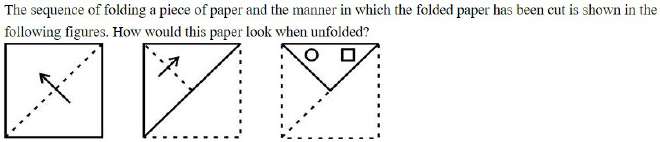
- (a)
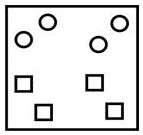
- (b)
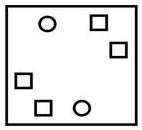
- (c)
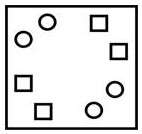
- (d)
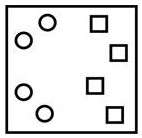
Show answer
Answer: (c)
- (a)
2. Words given on the left side of (::) are related with each other by some Logic/Rule /Relation. Select the missing word/word pair on the right side of (::) from the given alternatives based on the same Logic/Rule/Relation. Fan : Blade :: Car : ?
- (a) Road
- (b) Steering
- (c) Vehicle
- (d) Four
Show answer
Answer: (b)
3. Select the option in which the numbers shares the same relationship in set as that shared by the numbers in the given set. (NOTE: Operations should be performed on the whole numbers, without breaking down the numbers into its constituent digits. E.g.13 – Operations on 13 such as adding /subtracting /multiplying etc. to 13 can be performed. Breaking down 13 into 1 and 3 and then performing mathematical operations on 1 and 3 is not allowed) (7, 41, 211) (12, 66, 336)
- (a) (10, 45, 205)
- (b) (9, 51, 255)
- (c) (14, 76, 385)
- (d) (11, 61, 311)
Show answer
Answer: (d)
5.
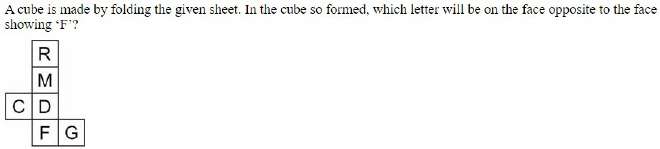
- (a)

- (b)

- (c)

- (d)

Show answer
Answer: (c)
- (a)
6. In the following question, select the odd word pair from the given alternatives.
- (a) 6 – Hexagon
- (b) 5 – Rectangle
- (c) 3 – Triangle
- (d) 4 – Square
Show answer
Answer: (b)
7.
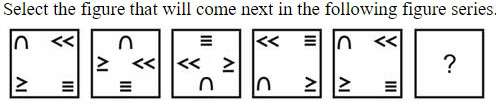
- (a)

- (b)

- (c)

- (d)

Show answer
Answer: (a)
- (a)
8. In a certain code language, 'DEER' is written as 'EGHV' and 'ROOM' is written as ‘SQRQ’. How will 'SOAP' be written in that language?
- (a) TQCT
- (b) TQET
- (c) TQDT
- (d) TQDS
Show answer
Answer: (c)
9. Anjali is the sister of Mukesh. Nikhil has two children and is the son-in-law of Archana. Anjali is the maternal granddaughter of Archana. Archana has only one child. How is Nikhil's wife related to Archana?
- (a) Daughter
- (b) Sister
- (c) Mother
- (d) Granddaughter
Show answer
Answer: (a)
10.

- (a)

- (b)

- (c)

- (d)

Show answer
Answer: (a)
- (a)
11. In the following question, select the missing number from the given series. 532, 667, 802, 937, ?
- (a) 1092
- (b) 1094
- (c) 1072
- (d) 1172
Show answer
Answer: (c)
12.
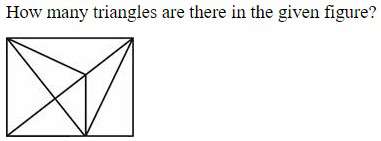
- (a)

- (b)

- (c)

- (d)

Show answer
Answer: (d)
- (a)
13. Which one set of letters when sequentially placed in the gaps in the given letter series shall complete it? t _ n s _ r t h _ s o _ t h _ s _ r
- (a) nonrho
- (b) honrno
- (c) hornnr
- (d) hoonor
Show answer
Answer: (b)
14. ‘Bangladesh' is related to 'Taka’ in the same way as 'Kuwait’ is related to ‘______’.
- (a) Euro
- (b) Sol
- (c) Dollar
- (d) Dinar
Show answer
Answer: (d)
15.

- (a)

- (b)

- (c)

- (d)

Show answer
Answer: (a)
- (a)
16. In the question two statements are given, followed by two conclusions, I and II. You have to consider the statements to be true even if they seem to be at variance from commonly known facts. You have to decide which of the given conclusions, if any, follows from the given statements. Statements: I. All blankets are bedsheet. II. No bedsheet is a curtain. Conclusions: I. Some bedsheet are blanket. II. No curtain is a blanket.
- (a) Both conclusion I and II follow.
- (b) Only conclusion I follows.
- (c) Neither conclusion I nor II follow.
- (d) Only conclusion II follows.
Show answer
Answer: (a)
18. Select the option that is related to the fourth number in the same way as the first number is related to the second number and fifth number is related to sixth number. 54 : 162 :: ? : 216 :: 38 : 114
- (a) 68
- (b) 94
- (c) 72
- (d) 74
Show answer
Answer: (c)
19. In a certain code language, 'PAIN' is written as '20' and 'HER' is written as '11'. How will 'TIER' be written in that code language?
- (a) 34
- (b) 42
- (c) 32
- (d) 52
Show answer
Answer: (c)
20. Three of the following four letter clusters are alike in a certain way and one is different. Pick the cluster that is different from the rest.
- (a) NOS
- (b) GHM
- (c) BCG
- (d) JKO
Show answer
Answer: (b)
21. Select the correct option that indicates the arrangement of the given words in a logical and meaningful order. 1. Eyes 2. Lips 3. Stomach 4. Neck 5. Legs
- (a) 3,2,4,1,5
- (b) 1,2,4,3,5
- (c) 3,2,1,4,5
- (d) 1,2,3,4,5
Show answer
Answer: (b)
22. In the following question, select the related letters from the given alternatives. SH : IT :: LM : ?
- (a) XU
- (b) PV
- (c) NM
- (d) XB
Show answer
Answer: (c)
23.
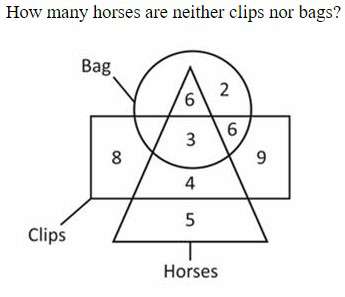
- (a)

- (b)

- (c)

- (d)

Show answer
Answer: (c)
- (a)
24. Select the option in which the numbers shares the same relationship in set as that shared by the numbers in the given set. (NOTE: Operations should be performed on the whole numbers, without breaking down the numbers into its constituent digits. E.g.13 – Operations on 13 such as adding /subtracting /multiplying etc. to 13 can be performed. Breaking down 13 into 1 and 3 and then performing mathematical operations on 1 and 3 is not allowed) (141, 13, 128) (238, 164, 402)
- (a) (64, 42, 32)
- (b) (51, 32, 85)
- (c) (48, 31, 79)
- (d) (39, 33, 62)
Show answer
Answer: (c)
25. Select the option in which the numbers shares the same relationship in set as that shared by the numbers in the given set. (NOTE: Operations should be performed on the whole numbers, without breaking down the numbers into its constituent digits. E.g.13 – Operations on 13 such as adding /subtracting /multiplying etc. to 13 can be performed. Breaking down 13 into 1 and 3 and then performing mathematical operations on 1 and 3 is not allowed) (80, 72, 64) (64, 56, 48)
- (a) (100, 90, 75)
- (b) (42, 35, 24)
- (c) (81, 72, 64)
- (d) (63, 56, 49)
Show answer
Answer: (d)
Quantitative Aptitude
2.

- (a)

- (b)

- (c)

- (d)

Show answer
Answer: (c)
- (a)
3.

- (a)

- (b)

- (c)

- (d)

Show answer
Answer: (c)
- (a)
4.

- (a)
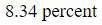
- (b)
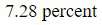
- (c)
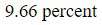
- (d)

Show answer
Answer: (a)
- (a)
5.
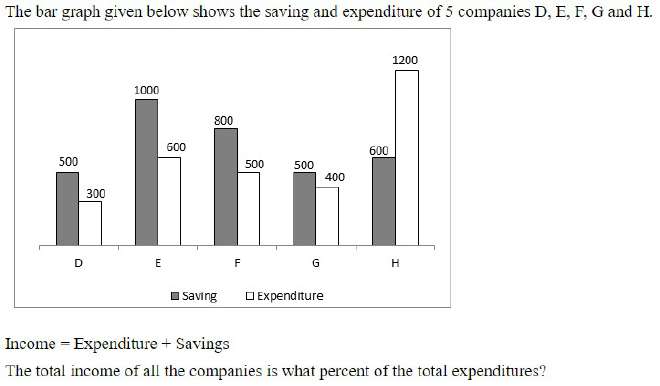
- (a)
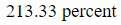
- (b)
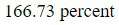
- (c)
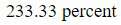
- (d)
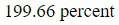
Show answer
Answer: (a)
- (a)
6.
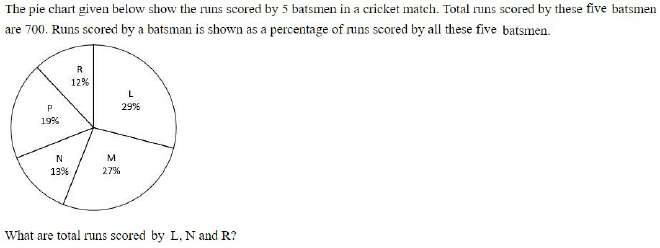
- (a)

- (b)

- (c)

- (d)

Show answer
Answer: (d)
- (a)
7.

- (a)
- (b)

- (c)

- (d)
Show answer
Answer: (c)
- (a)
8.

- (a)

- (b)

- (c)

- (d)

Show answer
Answer: (d)
- (a)
9.

- (a)

- (b)

- (c)

- (d)

Show answer
Answer: (b)
- (a)
10.

- (a)

- (b)

- (c)

- (d)

Show answer
Answer: (c)
- (a)
11.

- (a)

- (b)

- (c)

- (d)

Show answer
Answer: (a)
- (a)
12.

- (a)

- (b)

- (c)

- (d)

Show answer
Answer: (a)
- (a)
13.

- (a)

- (b)

- (c)

- (d)

Show answer
Answer: (d)
- (a)
14.

- (a)

- (b)

- (c)

- (d)

Show answer
Answer: (b)
- (a)
15.

- (a)

- (b)

- (c)

- (d)

Show answer
Answer: (a)
- (a)
16.

- (a)

- (b)

- (c)

- (d)

Show answer
Answer: (d)
- (a)
17.

- (a)

- (b)

- (c)

- (d)

Show answer
Answer: (b)
- (a)
18.

- (a)

- (b)

- (c)

- (d)

Show answer
Answer: (a)
- (a)
19.
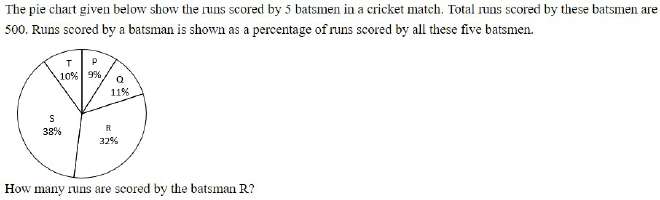
- (a)

- (b)

- (c)

- (d)

Show answer
Answer: (b)
- (a)
20.

- (a)

- (b)

- (c)

- (d)
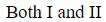
Show answer
Answer: (b)
- (a)
21.
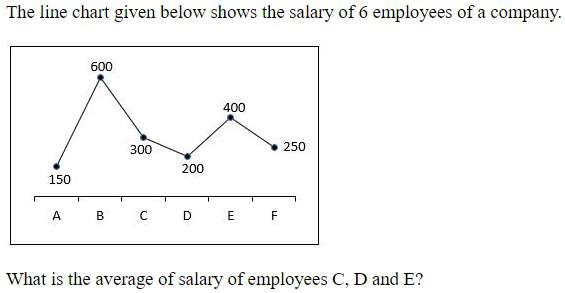
- (a)

- (b)

- (c)

- (d)
Show answer
Answer: (b)
- (a)
22.

- (a)

- (b)

- (c)

- (d)

Show answer
Answer: (b)
- (a)
23.

- (a)
- (b)
- (c)
- (d)
Show answer
Answer: (d)
- (a)
24.

- (a)

- (b)

- (c)

- (d)

Show answer
Answer: (a)
- (a)
25.

- (a)
- (b)
- (c)

- (d)

Show answer
Answer: (b)
- (a)
General Awareness
1. Who among the following became India’s 76th Chess Grandmaster in the year 2022?
- (a) Viswanathan Anand
- (b) Pranav Anand
- (c) Pentala Harikrishna
- (d) Rameshbabu Praggnanandhaa
Show answer
Answer: (b)
2. Who among the following was the first-ever badminton player from India to clinch an Olympic medal?
- (a) Srikanth Kidambi
- (b) Saina Nehwal
- (c) Chirag Shetty
- (d) PV Sindhu
Show answer
Answer: (b)
3. Which of the following disease is caused by fungi?
- (a) Covid-19
- (b) Ring Worm
- (c) Tuberculosis
- (d) Cholera
Show answer
Answer: (b)
4. The city of Fatehpur Sikri was built by ______.
- (a) Akbar
- (b) Aurangzeb
- (c) Shah Jahan
- (d) Jahangir
Show answer
Answer: (a)
5. How many silver medals did Indian athletes win in the 2022 Commonwealth Games?
- (a) 14
- (b) 18
- (c) 20
- (d) 16
Show answer
Answer: (d)
6. What is the approximate literacy rate of India as per the 2011 census?
- (a) 70.01 percent
- (b) 78.2 percent
- (c) 74.04 percent
- (d) 83.35 percent
Show answer
Answer: (c)
7. At which Indian institution did President of India, Smt Droupadi Murmu, inaugurate 'PARAM KAMRUPA' Supercomputer facility in October 2022?
- (a) IIT Guwahati
- (b) University of Mumbai
- (c) IIT Kharagpur
- (d) NIT Warangal
Show answer
Answer: (a)
8. The S-400 Triumf (Russian for Triumph) Missile System is ______ missile defense system designed in Russia.
- (a) air-to-underwater
- (b) surface-to-air
- (c) surface-to-surface
- (d) air-to-air
Show answer
Answer: (b)
9. A type of loan that allows borrowers to make low payments in the initial phases but repayment of the balance amount in lump sum at maturity is known as ______.
- (a) Balloon Mortgage
- (b) English Mortgage
- (c) Income - Sensitive Payment
- (d) Payday Loans
Show answer
Answer: (a)
10. Which among the following is a unit of measurement that describes the rate at which the universe is expanding?
- (a) Faraday constant
- (b) Planck's constant
- (c) Electric constant
- (d) Hubble constant
Show answer
Answer: (d)
12. Which country's space agency has launched project “DART Mission”?
- (a) USA
- (b) Russia
- (c) India
- (d) China
Show answer
Answer: (a)
13. In ______, Ambedkar started a temple entry movement, in which his Mahar caste followers participated.
- (a) 1923
- (b) 1927
- (c) 1925
- (d) 1921
Show answer
Answer: (b)
14. What is the public healthcare spending percentage as GDP of India, as per Economic Survey 2020-21?
- (a) 2.5%
- (b) 1%
- (c) 4.5%
- (d) 5.5%
Show answer
Answer: (b)
15. Which Indian was awarded the Nobel Prize in Physics in the year 1930?
- (a) Vikram Sarabhai
- (b) C. V. Raman
- (c) Rabindranath Tagore
- (d) Amartya Sen
Show answer
Answer: (b)
16. Which of the following statement regarding ocean currents is correct?
- (a) The Labrador Ocean current is warm current.
- (b) The areas where the warm and cold currents meet provide the best fishing grounds.
- (c) The cold ocean currents move towards the poles.
- (d) The warm ocean currents move towards the equator.
Show answer
Answer: (b)
17. Which among the following is a database software?
- (a) MS-PowerPoint
- (b) MS-Word
- (c) dBase
- (d) Word Pad
Show answer
Answer: (c)
18. Which among the following Indian cities received World Green City Award 2022?
- (a) New Delhi
- (b) Hyderabad
- (c) Mumbai
- (d) Pune
Show answer
Answer: (b)
19. Article 143 of the Indian constitution is related with which of the following?
- (a) Power of the President to enlarge jurisdiction of the Supreme Court
- (b) Power of the President to consult the Supreme Court
- (c) Power of the President to appoint National Judicial Appointments Commission
- (d) Power of the President to transfer certain cases from High Courts to Supreme Court
Show answer
Answer: (b)
20. Article 72 of the Indian constitution is related with the power of the ______ to grant pardons, etc. and to suspend, remit or commute sentences in certain cases.
- (a) Chief Minister
- (b) Governor
- (c) President
- (d) Prime Minister
Show answer
Answer: (c)
21. When did Indigo revolt, a peasant movement, start in India?
- (a) 1857
- (b) 1861
- (c) 1859
- (d) 1889
Show answer
Answer: (c)
22. What is the official language of Bhutan, a neighbouring country of India?
- (a) Kyat
- (b) Dzongkha
- (c) Yuan
- (d) Ngultrum
Show answer
Answer: (b)
23. What is the zone between the arctic circle and north pole called?
- (a) Torrid zone
- (b) Frigid zone
- (c) North temperate zone
- (d) South temperate zone
Show answer
Answer: (b)
24. Sir Tim Berners-Lee — a British computer scientist invented the revolutionary World Wide Web in ______.
- (a) 1982
- (b) 1995
- (c) 1990
- (d) 1985
Show answer
Answer: (c)
25. How many Vedas are there in Indian literature of classical Hinduism?
- (a) Three
- (b) Four
- (c) One
- (d) Two
Show answer
Answer: (b)
Show answers
Answer key
Answer key as marked in the Staff Selection Commission’s response sheet. “—” means the sheet did not show it clearly.
English Language
- Q 1
- (a)
- Q 2
- (d)
- Q 4
- (c)
- Q 5
- (c)
- Q 6
- (d)
- Q 7
- (a)
- Q 8
- (d)
- Q 9
- (d)
- Q 10
- (a)
- Q 11
- (c)
- Q 12
- (a)
- Q 13
- (d)
- Q 14
- (c)
- Q 16
- (a)
- Q 17
- (a)
- Q 18
- (a)
- Q 19
- (c)
- Q 20
- (d)
- Q 21
- (d)
- Q 22
- (a)
- Q 23
- (d)
- Q 24
- (a)
- Q 25
- (a)
General Intelligence
- Q 1
- (c)
- Q 2
- (b)
- Q 3
- (d)
- Q 5
- (c)
- Q 6
- (b)
- Q 7
- (a)
- Q 8
- (c)
- Q 9
- (a)
- Q 10
- (a)
- Q 11
- (c)
- Q 12
- (d)
- Q 13
- (b)
- Q 14
- (d)
- Q 15
- (a)
- Q 16
- (a)
- Q 18
- (c)
- Q 19
- (c)
- Q 20
- (b)
- Q 21
- (b)
- Q 22
- (c)
- Q 23
- (c)
- Q 24
- (c)
- Q 25
- (d)
Quantitative Aptitude
- Q 2
- (c)
- Q 3
- (c)
- Q 4
- (a)
- Q 5
- (a)
- Q 6
- (d)
- Q 7
- (c)
- Q 8
- (d)
- Q 9
- (b)
- Q 10
- (c)
- Q 11
- (a)
- Q 12
- (a)
- Q 13
- (d)
- Q 14
- (b)
- Q 15
- (a)
- Q 16
- (d)
- Q 17
- (b)
- Q 18
- (a)
- Q 19
- (b)
- Q 20
- (b)
- Q 21
- (b)
- Q 22
- (b)
- Q 23
- (d)
- Q 24
- (a)
- Q 25
- (b)
General Awareness
- Q 1
- (b)
- Q 2
- (b)
- Q 3
- (b)
- Q 4
- (a)
- Q 5
- (d)
- Q 6
- (c)
- Q 7
- (a)
- Q 8
- (b)
- Q 9
- (a)
- Q 10
- (d)
- Q 12
- (a)
- Q 13
- (b)
- Q 14
- (b)
- Q 15
- (b)
- Q 16
- (b)
- Q 17
- (c)
- Q 18
- (b)
- Q 19
- (b)
- Q 20
- (c)
- Q 21
- (c)
- Q 22
- (b)
- Q 23
- (b)
- Q 24
- (c)
- Q 25
- (b)