ExamBharo · UP TGT 2016 — Social Science: Economics (Series A) · exambharo.com/up-tgt/previous-year-papers/up-tgt-2016-social-science-economics-series-a/
प्रश्न पत्र · यूपी टीजीटी
UP TGT 2016 — Social Science: Economics (Series A)
8 or 9 March 201963 प्रश्नसही उत्तर पर +3.4, गलत उत्तर पर −0
प्रश्न उत्तर प्रदेश माध्यमिक शिक्षा सेवा चयन बोर्ड के 8 or 9 March 2019 के पेपर से। हर प्रश्न का उत्तर उसके नीचे है, खोलने पर ही दिखता है, और पूरी उत्तर कुंजी अंत में है। स्कोर पाने के लिए पेपर को समयबद्ध प्रैक्टिस टेस्ट के रूप में दें।
आधिकारिक पुस्तिका बिना पाठ वाला स्कैन है, इसलिए ExamBharo ने यह पेपर उससे हाथ से टाइप किया है। टाइपिंग की चूक संभव है; संपर्क पेज से बताएँ।
बोर्ड ने अपनी अंतिम उत्तर कुंजी में प्रश्न 16 और 56 हटा दिए: ये यहाँ दिखाए गए हैं, बिना उत्तर के, और स्कोर में नहीं गिने जाते।
प्रश्न अंग्रेज़ी में हैं, जैसे मूल पेपर में थे।
Economics
1. The quantity of a good that a consumer purchases in a market at a particular price, at a particular time is known as
- (a) Supply
- (b) Demand
- (c) Utility
- (d) Desire
उत्तर देखें
उत्तर: (b)
2. The open market operations aim at
- (a) Regulation of the use of credit
- (b) Determination of cash reserves of banks
- (c) Switch operations
- (d) Sale and purchase of Govt. securities
उत्तर देखें
उत्तर: (d)
3. Ricardo explained the law of comparative advantage on the basis of
- (a) Opportunity cost
- (b) The law of diminishing returns
- (c) Economies of scale
- (d) The labour theory of value
उत्तर देखें
उत्तर: (d)
4. The transfer of assets or service functions from public to private ownership is known as
- (a) Liberalization
- (b) Nationalization
- (c) Globalization
- (d) Privatisation
उत्तर देखें
उत्तर: (d)
5. Most of the unemployment in India is
- (a) Technical
- (b) Cyclical
- (c) Disguised
- (d) Structural
उत्तर देखें
उत्तर: (c)
6. Giffen goods refers to
- (a) Prestige goods
- (b) Necessary goods
- (c) Speculative goods
- (d) Inferior goods
उत्तर देखें
उत्तर: (d)
7. On the basis of which of the following we have perfect competition and imperfect market ?
- (a) Area
- (b) Time
- (c) Volume of business
- (d) Competition
उत्तर देखें
उत्तर: (d)
8. _______ function is the relationship between physical inputs and physical output of a firm.
- (a) Production
- (b) Consumption
- (c) Investment
- (d) Demand
उत्तर देखें
उत्तर: (a)
9. The sum total of the transactions demand, precautionary demand and speculative demand for money is called
- (a) Speculative motive
- (b) Supply of money
- (c) Loanable fund
- (d) Liquidity preference for money
उत्तर देखें
उत्तर: (d)
10. Classical economists advocated which of the following for public finance ?
- (a) Principle of economy
- (b) Principle of minimum collective sacrifice
- (c) Principle of minimum taxation
- (d) Principle of maximum social advantage
उत्तर देखें
उत्तर: (c)
11. Who wrote “External aid is like a sulpha drug. We must know when to use it, when to stop it and we should always have a B-complex to neutralise its effects” ?
- (a) Otto Eickstein
- (b) V. K. R. V. Rao
- (c) David Ricardo
- (d) J. S. Mill
उत्तर देखें
उत्तर: (b)
12. P = KR/M is the Cambridge equation given by
- (a) A. C. Pigou
- (b) J. M. Keynes
- (c) Robertson
- (d) Marshall
उत्तर देखें
उत्तर: (a)
13. Notes issued by the Central Government are unlimited legal tender. It is also called
- (a) Credit money
- (b) Electronic money
- (c) Fiat money
- (d) Metallic money
उत्तर देखें
उत्तर: (c)
14. The rate at which the currency of one country is converted into the currency of another country is known as
- (a) Devaluation
- (b) Rate of exchange
- (c) Foreign exchange
- (d) Foreign liquidity
उत्तर देखें
उत्तर: (b)
15. Which Agency gives “Soft loans” to the member countries ?
- (a) I.D.A.
- (b) I.M.F.
- (c) I.A.F.
- (d) I.F.C.
उत्तर देखें
उत्तर: (a)
16. Who has classified public expenditure under two heads ?
- (a) Dr. Hugh Dalton
- (b) Prof. Adam Smith
- (c) Prof. Pigou
- (d) Prof. J. S. Mill
उत्तर देखें
उत्तर: —
17. 1/cash reserve ratio or 1/r is
- (a) Statutory liquidity ratio
- (b) Liquidity ratio
- (c) Credit multiplier
- (d) Investment multiplier
उत्तर देखें
उत्तर: (c)
18. The most important outcome of the Uruguay Round Agreement was the establishment of
- (a) GATT
- (b) WTO
- (c) OECD
- (d) European Union
उत्तर देखें
उत्तर: (b)
19. _______ is the sum of the gross domestic product and net factor incomes from abroad.
- (a) N. N. P.
- (b) G. N. P.
- (c) G. D. P.
- (d) N. D. P.
उत्तर देखें
उत्तर: (b)
20. In the production process, point of equilibrium is where
- (a) Marginal cost = Marginal product
- (b) Marginal cost = Average cost
- (c) Marginal cost = Marginal revenue
- (d) Marginal cost = Average revenue
उत्तर देखें
उत्तर: (c)
21. The types of measures of central tendency are except which of the following ?
- (a) Mean
- (b) Median
- (c) Mode
- (d) Correlation
उत्तर देखें
उत्तर: (d)
22. If two goods are substitutes (like tea and coffee), the cross elasticity between them is
- (a) Negative
- (b) Positive
- (c) Infinite
- (d) Zero
उत्तर देखें
उत्तर: (b)
23. Theory of demographic transition correlates population growth and
- (a) Economic development
- (b) Per-capita income
- (c) Standard of living
- (d) Food supply
उत्तर देखें
उत्तर: (a)
24. A monopolist is able to maximize his profits when
- (a) His output is maximum
- (b) His average cost is minimum
- (c) He charges a high price
- (d) His marginal cost is equal to marginal revenue
उत्तर देखें
उत्तर: (d)
25. K = 1/MPs The above formula speaks about the
- (a) Multiplier
- (b) Accelerator
- (c) MPC
- (d) Investment
उत्तर देखें
उत्तर: (a)
26. Which are levied on exports and imports ?
- (a) Excise duties
- (b) Customs duties
- (c) Wealth tax
- (d) Corporation tax
उत्तर देखें
उत्तर: (b)
27. Finance Commission is appointed by the President of India, under Article
- (a) 180
- (b) 35
- (c) 280
- (d) 275
उत्तर देखें
उत्तर: (c)
28. The inverse relation between inflation and unemployment is called the
- (a) Inflationary Gap
- (b) Multiplier
- (c) Phillips Curve
- (d) Production Possibility Curve
उत्तर देखें
उत्तर: (c)
29. That portion of total deposits which a Commercial Bank has to keep with the Central Bank in the form of cash reserves is known as
- (a) Repo rate
- (b) Statutory Liquidity Ratio
- (c) Bank rate
- (d) Cash Reserve Ratio
उत्तर देखें
उत्तर: (d)
30. The ratio of internal purchasing power of two currencies is called the
- (a) Comparative cost theory
- (b) Payment equilibrium theory
- (c) Absolute cost theory
- (d) Purchasing power parity
उत्तर देखें
उत्तर: (d)
31. Where is the headquarter of Asian Development Bank situated ?
- (a) New Delhi
- (b) Manila
- (c) Kathmandu
- (d) Sri Lanka
उत्तर देखें
उत्तर: (b)
32. Which debt is a permanent burden on tax-payers ?
- (a) Long-term debt
- (b) External debt
- (c) Forced debt
- (d) Non-redeemable debt
उत्तर देखें
उत्तर: (d)
33. The Regional Rural Banks were established for the first time in which year ?
- (a) 1960
- (b) 1971
- (c) 1975
- (d) 1980
उत्तर देखें
उत्तर: (c)
34. The most controversial topic in the yet to conclude in the Doha Agenda is
- (a) Trade in manufactured goods
- (b) Trade in Intellectual Property Rights based goods
- (c) Trade in agricultural goods
- (d) Market-access to goods from developed countries
उत्तर देखें
उत्तर: (c)
35. _______ programme was started in 2005 to provide electricity to all the villages.
- (a) Rajiv Gandhi Grameen Vidhyutikaran
- (b) Compact fluorescent lamps
- (c) Ultra-mega power plants
- (d) Partnership in excellence programme
उत्तर देखें
उत्तर: (a)
36. According to the law of variable proportions, the best stage of production is
- (a) 1ˢᵗ stage
- (b) 2ⁿᵈ stage
- (c) 3ʳᵈ stage
- (d) None of the above
उत्तर देखें
उत्तर: (b)
37. A change in demand caused by a change in purchasing power of a consumer is called
- (a) Income effect
- (b) Price effect
- (c) Substitution effect
- (d) Demonstration effect
उत्तर देखें
उत्तर: (b)
38. A consumer is said to be in equilibrium when he derives maximum _______
- (a) Profit
- (b) Benefit
- (c) Satisfaction
- (d) None of the above
उत्तर देखें
उत्तर: (c)
39. Which stage of population transition is being experienced by India ?
- (a) First
- (b) Third
- (c) Second
- (d) Fourth
उत्तर देखें
उत्तर: (b)
40. “Rent is that portion of the earth which is paid to the landlord for the use of the original and indestructible powers of the soil” – is given by
- (a) J. S. Mill
- (b) Adam Smith
- (c) David Ricardo
- (d) J. M. Keynes
उत्तर देखें
उत्तर: (c)
41. M₁ in the money stock of India refers to
- (a) Post office saving deposits
- (b) Time deposits with banks
- (c) Total post office deposits
- (d) Currency + demand deposits + other deposits with RBI
उत्तर देखें
उत्तर: (d)
42. Burden of taxation must be distributed equally among all citizens in relation to ability to pay taxes refers to
- (a) Canon of certainty
- (b) Canon of equality
- (c) Canon of economy
- (d) Canon of diversity
उत्तर देखें
उत्तर: (b)
43. The value of money is the reciprocal of the level of
- (a) Income
- (b) Quantity
- (c) Prices
- (d) Expenditure
उत्तर देखें
उत्तर: (c)
44. “Banks are not merely purveyors of money but also, in an important sense, manufacturers of money”. This statement was given by
- (a) R. S. Sayers
- (b) Prof. Edwin Cannon
- (c) Hawtrey
- (d) Johnson
उत्तर देखें
उत्तर: (a)
45. Policy of non-interference by government in foreign trade is referred as
- (a) Liberalisation
- (b) Free trade
- (c) Globalization
- (d) Protectionist trade
उत्तर देखें
उत्तर: (b)
46. I.M.F. and I.B.R.D. came into existence simultaneously in 1944 as a result of
- (a) GATT
- (b) WTO
- (c) Bretton Woods Conference
- (d) Dunkel Agreement
उत्तर देखें
उत्तर: (c)
47. When the economic burden of the tax is passed onto other person by the tax payer, it is known as
- (a) Tax evasion
- (b) Shifting of taxation
- (c) Impact of tax
- (d) None of the above
उत्तर देखें
उत्तर: (b)
48.
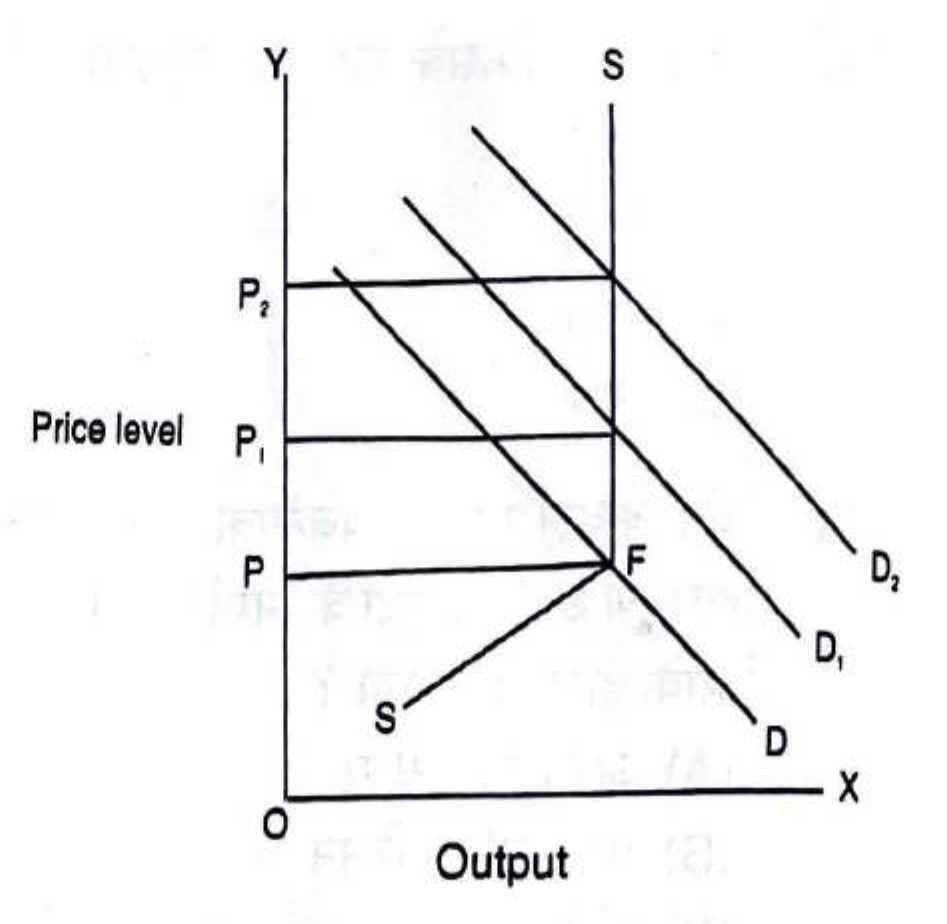 The above diagram speaks about the
- (a) Cost-push theory of inflation
- (b) Phillips curve
- (c) Demand-pull theory of inflation
- (d) Inflationary gap
उत्तर देखें
उत्तर: (c)
49. Who propounded the theory of comparative costs ?
- (a) Adam Smith
- (b) David Ricardo
- (c) J. S. Mill
- (d) G. V. Haberler
उत्तर देखें
उत्तर: (b)
50. _______ is the difference between total receipts and total expenditure.
- (a) Budget deficit
- (b) Fiscal deficit
- (c) Revenue deficit
- (d) Deficit budget
उत्तर देखें
उत्तर: (a)
51. Under New Industrial Policy, obtaining of industrial licence is compulsory for all of the below sector except
- (a) Clothes
- (b) Electronic aerospace
- (c) Cigarettes or tobacco
- (d) Specified hazardous chemicals
उत्तर देखें
उत्तर: (a)
52. “Numerical facts systematically collected” is the definition of statistics from the viewpoint of
- (a) Singular sense
- (b) Plural
- (c) Economics
- (d) Mathematical
उत्तर देखें
उत्तर: (b)
53. The elasticity can be found out by using the following formula.
- (a) Eₚ = (q₁ − q₂)/(q₂ + q₂) × (p₁ + p₂)/(p₁ − p₂)
- (b) Eₚ = q/p × p/q
- (c) Eₚ = Δq/Δp × p/q
- (d) Eₚ = Δq/Δy × y/q
उत्तर देखें
उत्तर: (c)
54. _______ explain the physical relationship between input and output in the long-run.
- (a) Law of variable proportions
- (b) Laws of returns
- (c) Laws of returns to scale
- (d) Isoquants
उत्तर देखें
उत्तर: (c)
55. Product differentiation is one of the characteristics of
- (a) Monopolistic competition
- (b) Monopoly
- (c) Duopoly
- (d) Oligopoly
उत्तर देखें
उत्तर: (a)
56. According to Prof. Knight, profit is due to
- (a) Insurable risk
- (b) Non-insurable risk
- (c) Uncertainties
- (d) Risk-taking
उत्तर देखें
उत्तर: —
57. The taxes which are not shifted to others are known as
- (a) Direct taxes
- (b) Indirect taxes
- (c) Sales taxes
- (d) G. S. T.
उत्तर देखें
उत्तर: (a)
58. Which of the following is not an instrument of fiscal policy ?
- (a) Taxation
- (b) Public expenditure
- (c) Bank rate
- (d) Public debt
उत्तर देखें
उत्तर: (c)
59. Prices being pushed up by an increase in production costs is known as
- (a) Demand-pull inflation
- (b) Cost-push inflation
- (c) Stagflation
- (d) Partial inflation
उत्तर देखें
उत्तर: (b)
60. “International trade is but a special case of interlocal or interregional trade” – the statement was given by
- (a) David Ricardo
- (b) Adam Smith
- (c) Bertil Ohlin
- (d) Heckscher
उत्तर देखें
उत्तर: (c)
61. Identify the bilateral method in the following.
- (a) Payments agreement
- (b) Clearing agreement
- (c) Transfer moratoria
- (d) All the above
उत्तर देखें
उत्तर: (d)
62. Who contributed Principle of Minimum Taxation ?
- (a) J. B. Say
- (b) J. M. Keynes
- (c) H. Dalton
- (d) Hicks
उत्तर देखें
उत्तर: (a)
63. The Fourth Five Year Plan was launched in
- (a) 1969
- (b) 1966
- (c) 1968
- (d) 1962
उत्तर देखें
उत्तर: (a)
उत्तर देखें
उत्तर कुंजी
उत्तर कुंजी इस परीक्षा की उत्तर प्रदेश माध्यमिक शिक्षा सेवा चयन बोर्ड की आधिकारिक उत्तर कुंजी से है। “—” का अर्थ है कि कुंजी में उत्तर नहीं दिया गया: प्रश्न हटाया गया।
Economics
- प्र. 1
- (b)
- प्र. 2
- (d)
- प्र. 3
- (d)
- प्र. 4
- (d)
- प्र. 5
- (c)
- प्र. 6
- (d)
- प्र. 7
- (d)
- प्र. 8
- (a)
- प्र. 9
- (d)
- प्र. 10
- (c)
- प्र. 11
- (b)
- प्र. 12
- (a)
- प्र. 13
- (c)
- प्र. 14
- (b)
- प्र. 15
- (a)
- प्र. 16
- —
- प्र. 17
- (c)
- प्र. 18
- (b)
- प्र. 19
- (b)
- प्र. 20
- (c)
- प्र. 21
- (d)
- प्र. 22
- (b)
- प्र. 23
- (a)
- प्र. 24
- (d)
- प्र. 25
- (a)
- प्र. 26
- (b)
- प्र. 27
- (c)
- प्र. 28
- (c)
- प्र. 29
- (d)
- प्र. 30
- (d)
- प्र. 31
- (b)
- प्र. 32
- (d)
- प्र. 33
- (c)
- प्र. 34
- (c)
- प्र. 35
- (a)
- प्र. 36
- (b)
- प्र. 37
- (b)
- प्र. 38
- (c)
- प्र. 39
- (b)
- प्र. 40
- (c)
- प्र. 41
- (d)
- प्र. 42
- (b)
- प्र. 43
- (c)
- प्र. 44
- (a)
- प्र. 45
- (b)
- प्र. 46
- (c)
- प्र. 47
- (b)
- प्र. 48
- (c)
- प्र. 49
- (b)
- प्र. 50
- (a)
- प्र. 51
- (a)
- प्र. 52
- (b)
- प्र. 53
- (c)
- प्र. 54
- (c)
- प्र. 55
- (a)
- प्र. 56
- —
- प्र. 57
- (a)
- प्र. 58
- (c)
- प्र. 59
- (b)
- प्र. 60
- (c)
- प्र. 61
- (d)
- प्र. 62
- (a)
- प्र. 63
- (a)